It's A Pity To Say Goodnight Sheet Music Preview

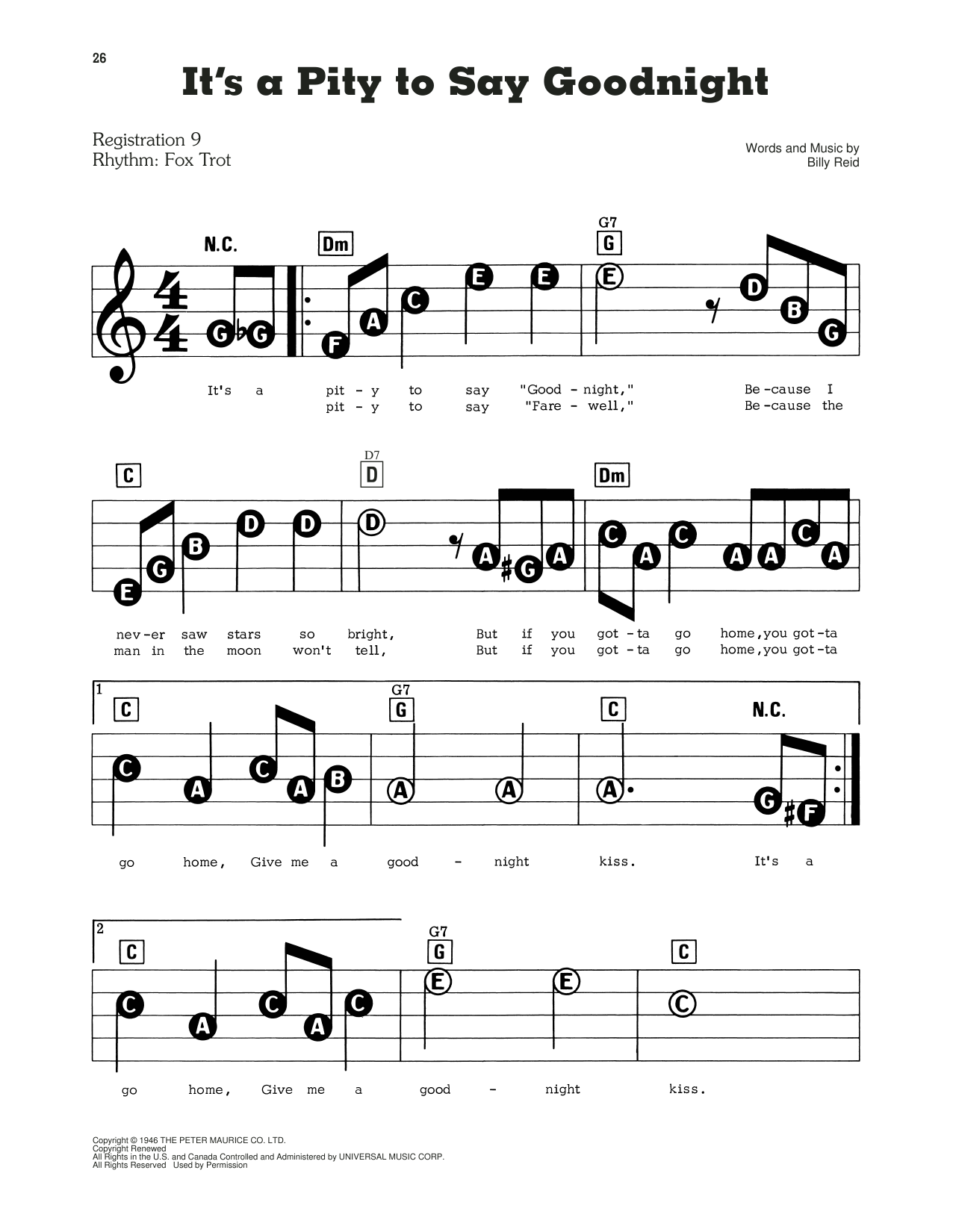
It's A Pity To Say Goodnight: E-Z Play Today

As performed by Ella Fitzgerald

Item: 35-DS01833264

Digital Download
$4.99
Description

It's A Pity To Say Goodnight: E-Z Play Today isn't in MakeMusic Cloud just yet...but it could be. Let us know you'd like to see it, and you'll help shape what comes next. In the meantime, start a free trial and dive into thousands of interactive titles your students can play along with today.

Sample Audio
No sample audio found.
Sample Video
Additional Details
Publisher: Hal Leonard
Page Count: 2
SKU: 35-DS01833264

More about this title

About the Artist: Ella Fitzgerald

Ella Fitzgerald stands as one of the most technically accomplished vocalists in jazz history, with a career spanning nearly six decades. Her impeccable intonation, rhythmic precision, and ability to navigate complex harmonic changes set the standard for jazz singing and continue to inform vocal pedagogy in classrooms and studios worldwide.

Why we love this

This standard showcases the kind of sophisticated harmonic language and conversational phrasing that makes jazz repertoire so valuable for pianists developing ear and taste. The two-page length keeps it accessible for intermediate students while the big band arrangement provides a genuine context for learning how to comp and support vocal lines.

What to expect

A bittersweet moment at the close of an evening, where resignation meets warmth. The melody carries a wistful, resigned quality, while the harmony underneath suggests acceptance and gentle resignation rather than heartbreak.

Who it's for

Intermediate pianists working on jazz repertoire and learning to comp in a big band context. This suits students who are ready to move beyond lead sheet reading and want to understand how to support and respond to vocal phrasing.

How to get the most out of it

  • Listen closely to the vocal melody and leave space for it to breathe; your role is dialogue, not domination.
  • Shape the harmonic movement by bringing out color changes in the voicings rather than maintaining static chord blocks.
  • Keep the rhythm section pocket steady and relaxed; tension in your comping will telegraph throughout the band.

How to use it

Include this in a jazz or popular standards concert program as a bridge piece between instrumental numbers and showcase selections. It works well in spring performances where mixed repertoire featuring vocalists and instrumental soloists reflects the breadth of your ensemble's musicality.

Skills your students will build

  • Comping for vocals with appropriate harmonic texture and space
  • Reading and interpreting big band chord notation
  • Balancing rhythmic precision with conversational flexibility
  • Understanding how accompaniment shapes song form and phrasing

You May Also Like