
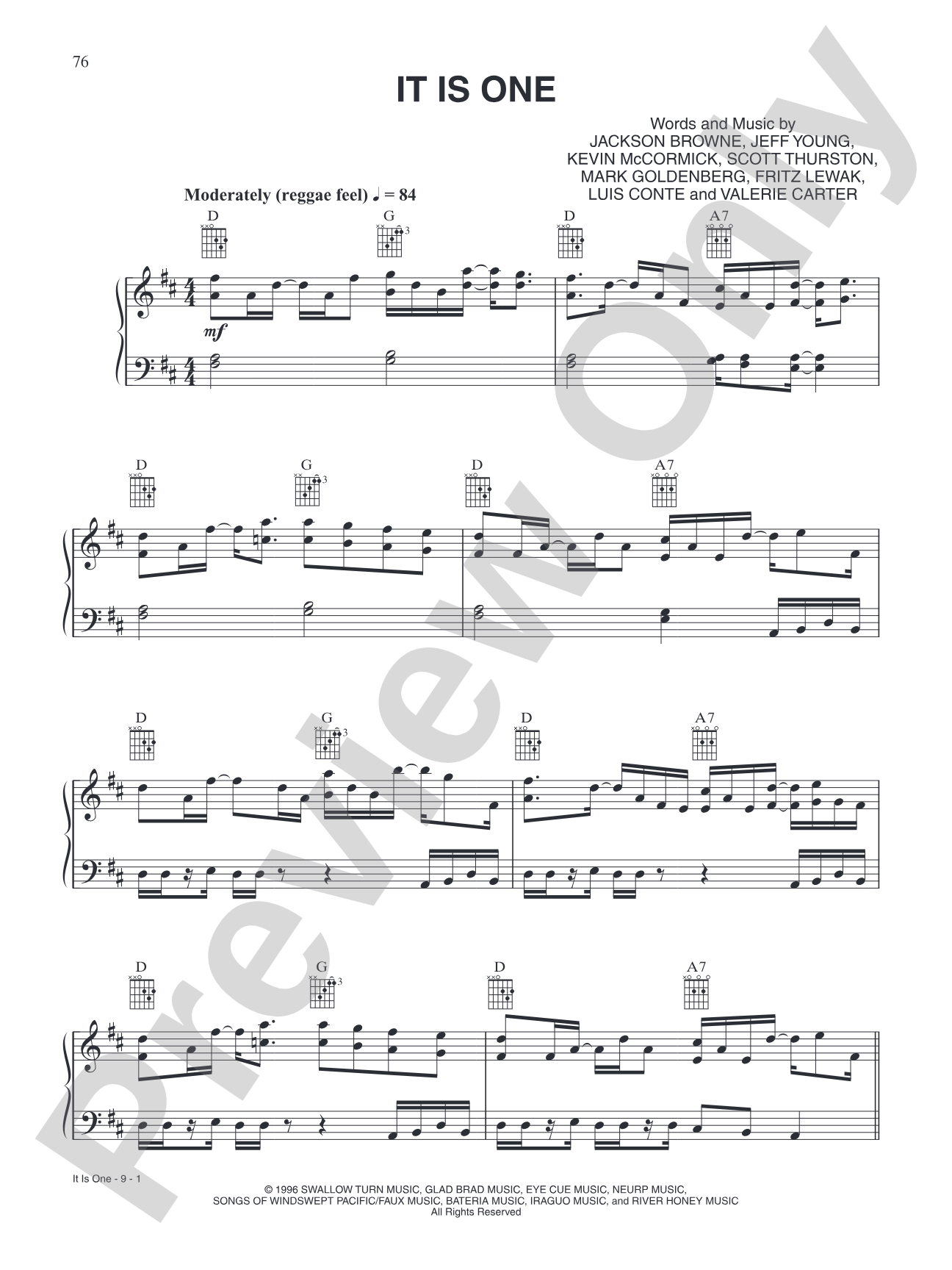
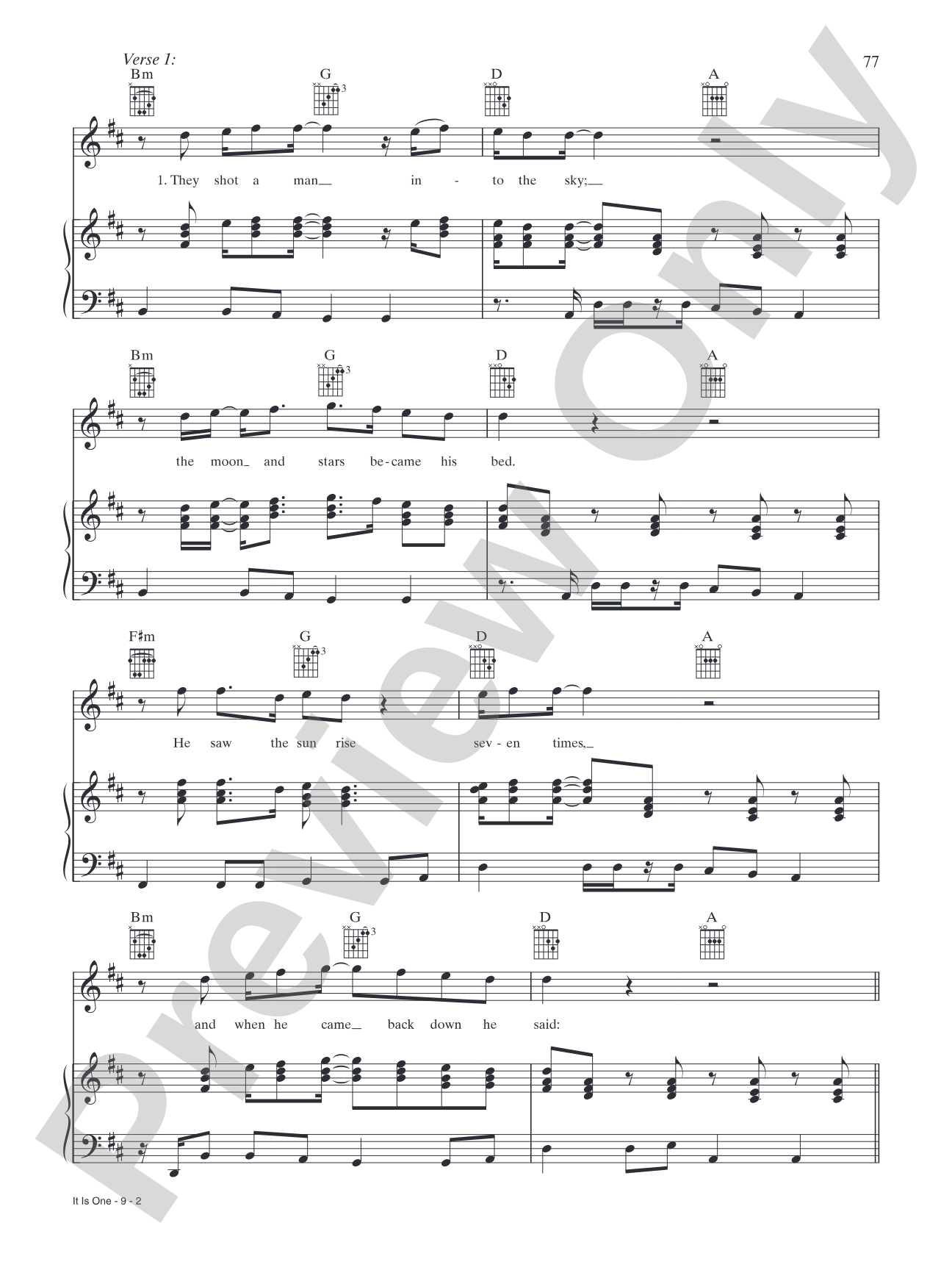

It Is One: Piano/Vocal/Chords
Jackson Browne
Item: 00-PS-0011193
$5.99
One moment…
Related Items
Some Bridges: Piano/Vocal/Chords |
$5.99
|
View | |
Culver Moon: Piano/Vocal/Chords |
$5.99
|
View | |
Im the Cat: Piano/Vocal/Chords |
$5.99
|
View | |
Looking East: Piano/Vocal/Chords |
$9.99
|
View | |
The Barricades of Heaven: Piano/Vocal/Chords |
$5.99
|
View | |
Nino: Piano/Vocal/Chords |
$5.99
|
View | |
Information Wars: Piano/Vocal/Chords |
$5.99
|
View |
Description
The first piano/vocal songbook for this stunningly beautiful recording. Looking East featured many of the greatest artists and sidemen in rock and roll history. Titles: Looking East * The Barricades of Heaven * Some Bridges * Information Wars * I'm the Cat * Culver Moon * Baby How Long * Niño * Alive In the World.


It Is One: Piano/Vocal/Chords isn't in MakeMusic Cloud just yet...but it could be. Let us know you'd like to see it, and you'll help shape what comes next. In the meantime, start a free trial and dive into thousands of interactive titles your students can play along with today.
Request This Title
Tell us you want it.
Start Your Free Trial
Explore everything that's ready to play right now.
Sample Audio
No sample audio found.
Sample Video
No sample videos found.
Additional Details
Publisher:
Alfred Music
Page Count:
84
SKU:
00-PS-0011193
More about this title
About the Composer: Jackson Browne
Jackson Browne has spent five decades as one of American rock's most introspective and socially conscious songwriters. His career spans from the 1970s to the present, marked by a distinctive ability to weave personal narrative with broader questions about politics, faith, and human connection. His influence on singer-songwriters and rock musicians across generations remains substantial, and his body of work continues to resonate with audiences who value lyrical depth and musical sophistication.
Browne's collaborative approach is evident throughout his discography. Working with accomplished musicians like Kevin McCormick, Scott Thurston, Mark Goldenberg, and others allows him to expand his sonic palette while maintaining the emotional clarity that defines his writing. This collection represents his commitment to crafting songs that speak to both the head and the heart.
Why we love this
This piano/vocal collection captures songs from one of rock's most literate and politically aware catalogs, offering pianists and singers material with real lyrical substance. The arrangements preserve the sophisticated harmonic language Browne employs while remaining accessible for serious music students and performers who want to explore contemporary rock songwriting beyond typical pop fare. Programming selections from this book signals artistic ambition and appeals to audiences hungry for substance.
What to expect
These songs carry a reflective, often searching quality. The music moves between moments of intimate vulnerability and broader social observation, with harmonic sophistication that suggests folk-influenced writing filtered through decades of rock and roll experience. Melodies tend toward the conversational rather than the anthemic, inviting performers and listeners into quiet moments of recognition.
Who it's for
Pianists and singer-pianists with intermediate to advanced technical skills who seek substantial contemporary rock material for recitals, studio recording, or performance study. This collection appeals to musicians interested in understanding modern songwriting craft and exploring the work of a canonical figure in American rock.
How to get the most out of it
- Study the chord voicings carefully; Browne's harmonic choices often include extended and altered chords that require thoughtful hand positioning and voicing decisions from the pianist.
- Pay attention to the relationship between melody and lyric phrasing. These songs reward singers who follow the natural speech rhythms rather than forcing strict metering.
- Use the piano part to anchor dynamics and emotional arc. The instrumental introduction and transitions between verses often establish the emotional tone that the vocal line then inhabits.
- Balance vocal prominence with pianistic texture. Many of these arrangements work best when the piano provides harmonic and rhythmic support without overwhelming the storytelling quality of the lyrics.
How to use it
Selections work well as recital centerpieces for solo piano or singer-pianist contexts, particularly in programs exploring American songwriting from the 1970s onward. Consider pairing songs thematically rather than performing them in strict album order; grouping pieces by emotional character or subject matter can create compelling narrative arcs for a concert set.
Skills your students will build
- Reading and voicing extended chords (9ths, 11ths, alterations) in a contemporary rock context
- Coordinating vocal phrasing with piano accompaniment patterns
- Interpreting chord symbols and realizing them musically across different registers
- Understanding song form and arrangement choices in modern singer-songwriter repertoire
- Balancing lyrical interpretation with rhythmic precision