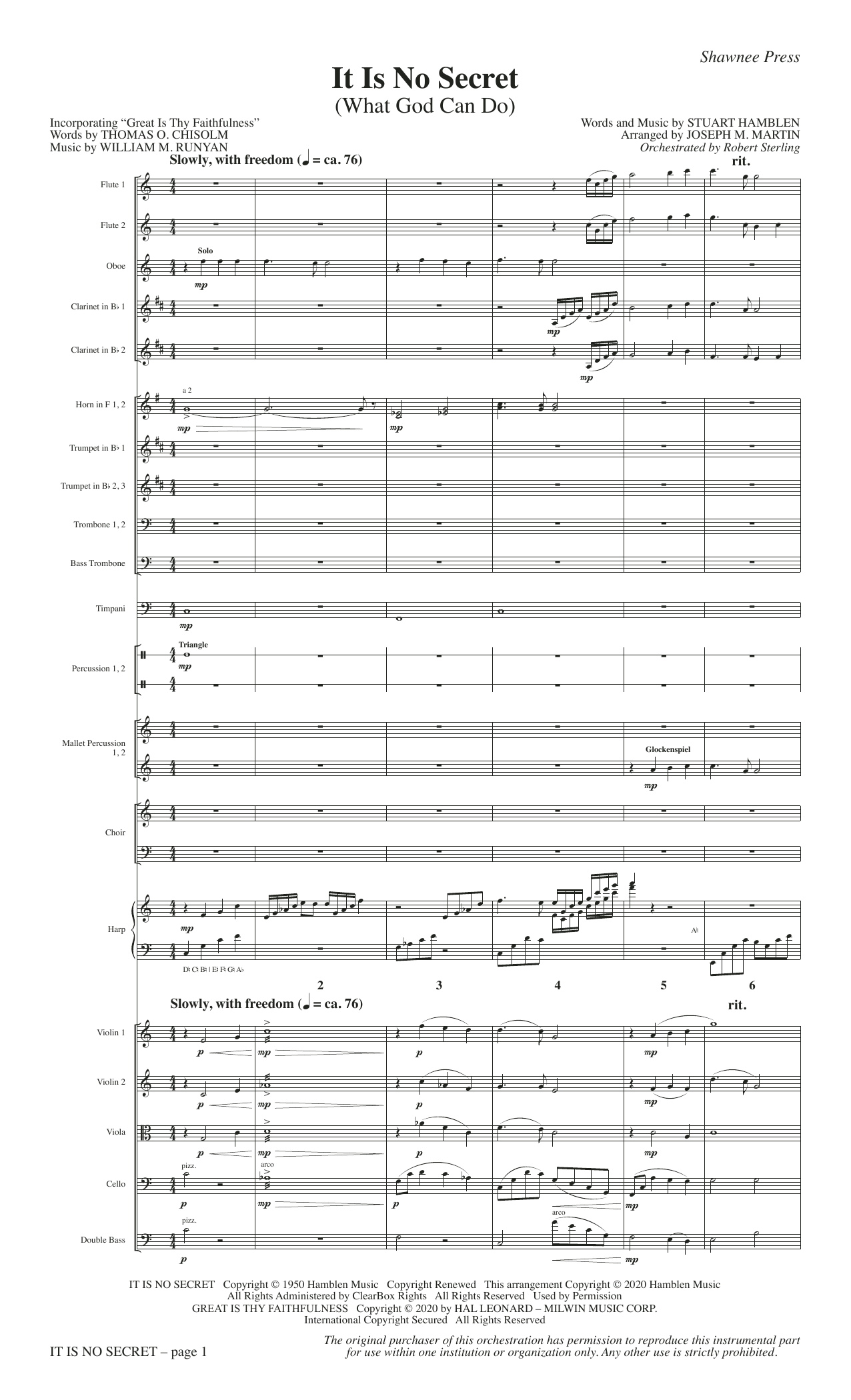
It Is No Secret (What God Can Do) (with "Great Is Thy Faithfulness") (arr. Joseph M. Martin) Sheet Music Preview

It Is No Secret (What God Can Do) (with "Great Is Thy Faithfulness") (arr. Joseph M. Martin): Choral Instrumental Pak

By Stuart Hamblen / Arranged by Joseph M. Martin

Item: 35-PK00468443

Digital Download
$75.00

One moment…

Description
From the opening 12 chimes representing the origins of the classic gospel song, this arrangement is a true inspiration. One of the most recognized sacred pieces of all time, it has been covered by artists such as Elvis Presley, Mahalia Jackson, Wayne Newton, Anne Murray nd Johnny Cash. A testimony of God's saving grace, the song was used in Billy Graham crusades and has been sung in thousands of churches. This arrangement joins the piece with a quote from the beloved hymn "Great Is Thy Faithfulness" and the result is outstanding. Score and Parts (fl 1-2, ob, cl 1-2, hn 1-2, tpt 1-3, tbn 1-2, btbn, timp, perc 1-3, glock, hp, vn 1-2, va, vc, db) available as a digital download.

It Is No Secret (What God Can Do) (with "Great Is Thy Faithfulness") (arr. Joseph M. Martin): Choral Instrumental Pak isn't in MakeMusic Cloud just yet...but it could be. Let us know you'd like to see it, and you'll help shape what comes next. In the meantime, start a free trial and dive into thousands of interactive titles your students can play along with today.

Sample Audio
No sample audio found.
Sample Video
Additional Details
Publisher: Hal Leonard
SKU: 35-PK00468443

More about this title

About the Composer: Stuart Hamblen

Stuart Hamblen (1908-1989) was a singer, songwriter, and entertainer whose career spanned radio, film, and recording. Born in Texas, he became known for his work in Western swing and popular music before turning to gospel songwriting. His 1950 composition "It Is No Secret (What God Can Do)" emerged from his own spiritual conversion and became one of the most enduring sacred songs in American music.

Why we love this

Joseph M. Martin's orchestration transforms this beloved gospel standard into a substantial choral work without losing its directness or emotional core. The pairing with "Great Is Thy Faithfulness" creates a natural theological conversation between two songs about divine faithfulness and grace, giving your ensemble material that feels both familiar and freshly conceived. The opening bell gesture and full instrumental palette make this feel like a genuine event piece while remaining accessible for typical school and community ensembles.

What to expect

Quiet reverence opens into quiet joy. The piece moves from contemplative bells into testimony, carrying the familiar melody through rich harmonic language before the hymn tune arrives like an answer to a prayer. Throughout, there is an undercurrent of certainty and peace that never tips into sentimentality.

Who it's for

This arrangement serves worship services, concert programs, and special services where you need repertoire that honors both musical substance and spiritual content. It works equally well for experienced church choirs, school choruses with solid instrumental support, and community ensembles seeking material with genuine cultural weight.

How to get the most out of it

  • Balance the opening 12 chimes so they establish reverence without overwhelming the choir's first entrance; think of them as an invocation rather than accompaniment
  • Mark the transition into "Great Is Thy Faithfulness" clearly in rehearsal so singers understand the theological shift and can adjust their tone accordingly
  • Give your rhythm section (timpani, percussion, bass) special attention to the gospel groove; their pocket determines whether the piece swings or sits

How to use it

Reserve this for a concert moment where you want to shift the emotional landscape completely, or use it as the centerpiece of a sacred music service that explores themes of faith and assurance. Its recognition factor makes it ideal for fundraising or outreach events where you want immediate audience connection alongside substantive music-making.

Skills your students will build

  • Singing gospel style phrasing and articulation within an orchestral context
  • Reading hymn tune harmonization and understanding functional harmonic language
  • Blending voices with a full orchestra while maintaining choral integrity
  • Ensemble balance between accompaniment textures and choir dynamics

You May Also Like