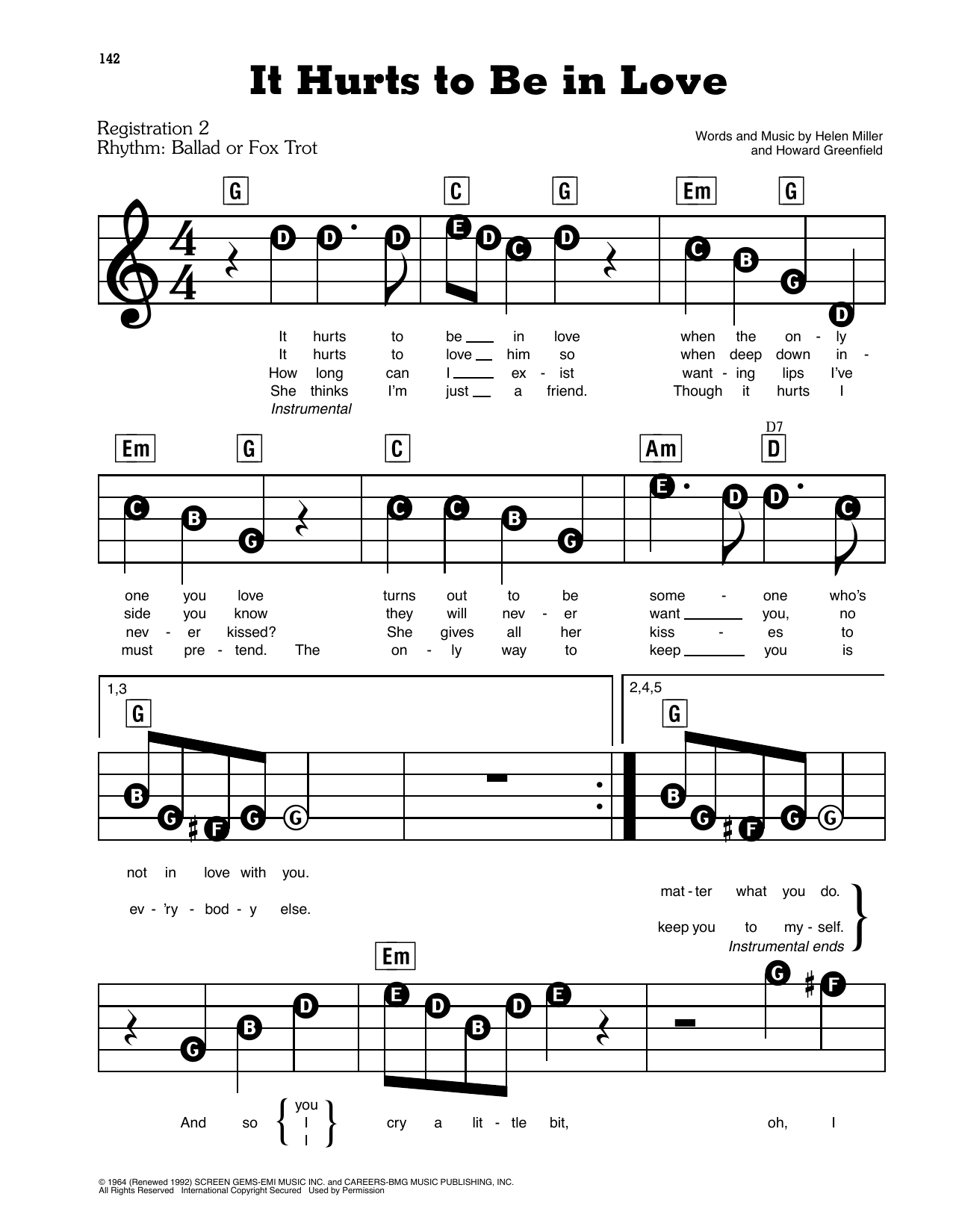
It Hurts To Be In Love Sheet Music Preview

It Hurts To Be In Love: E-Z Play Today

As performed by Gene Pitney

Item: 35-DS00460068

Digital Download
$4.99
Description

It Hurts To Be In Love: E-Z Play Today isn't in MakeMusic Cloud just yet...but it could be. Let us know you'd like to see it, and you'll help shape what comes next. In the meantime, start a free trial and dive into thousands of interactive titles your students can play along with today.

Sample Audio
No sample audio found.
Sample Video
Additional Details
Publisher: Hal Leonard
Page Count: 2
SKU: 35-DS00460068

More about this title

About the Artist: Gene Pitney

Gene Pitney was a versatile singer and songwriter who became a major force in 1960s pop and rock music. Known for his distinctive tenor voice and emotional delivery, he crafted several chart hits and collaborated with some of the era's most important producers and songwriters, establishing himself as a skilled interpreter of contemporary material.

Why we love this

This arrangement captures the emotional pull of a 1960s pop standard in a format that lets pianists focus on tasteful interpretation rather than technical display. The two-page format makes it accessible without sacrificing the song's genuine melodic and harmonic character, making it ideal for students exploring how to color a familiar tune with their own musicality.

What to expect

Tender and yearning, this ballad sits in the intimate space where vulnerability becomes strength. The melody pulls at the heart while the harmonic movement supports a kind of bittersweet longing that defined so much of 1960s pop songwriting.

Who it's for

This arrangement works well for pianists tackling pop and rock standards from the 1960s, as well as singers who want a straightforward, reliable accompaniment. It's also useful for students exploring how to approach a song with emotional authenticity without requiring advanced technical facility.

How to get the most out of it

  • Shape the melody with dynamic control; the title itself signals emotional stakes, so resist playing it straight. Lean into the phrasing to underscore the vulnerability in the lyric.
  • Balance the left hand accompaniment so it supports without overwhelming the vocal line. This isn't about filling space; it's about giving the singer room to breathe.
  • Pay attention to the rhythmic pocket in the rhythm section figures. Even though you're on piano, locking in the groove matters as much as playing all the right notes.
  • Experiment with touch to distinguish between verse and chorus sections. Softer voicings in the verse can make the emotional climax of the chorus land with more impact.

How to use it

Add this to a concert exploring 1960s pop standards or pair it with other emotionally direct songs from the era. It also serves well as a solo feature for a student pianist developing their interpretive voice, or as a reliable accompaniment choice for a vocalist in a chamber or solo context.

Skills your students will build

  • Interpreting melody with dynamic shape and phrasing
  • Balancing vocal line support with left-hand accompaniment
  • Understanding groove and rhythmic pocket in pop-rock settings
  • Voicing decisions that enhance emotional content

You May Also Like