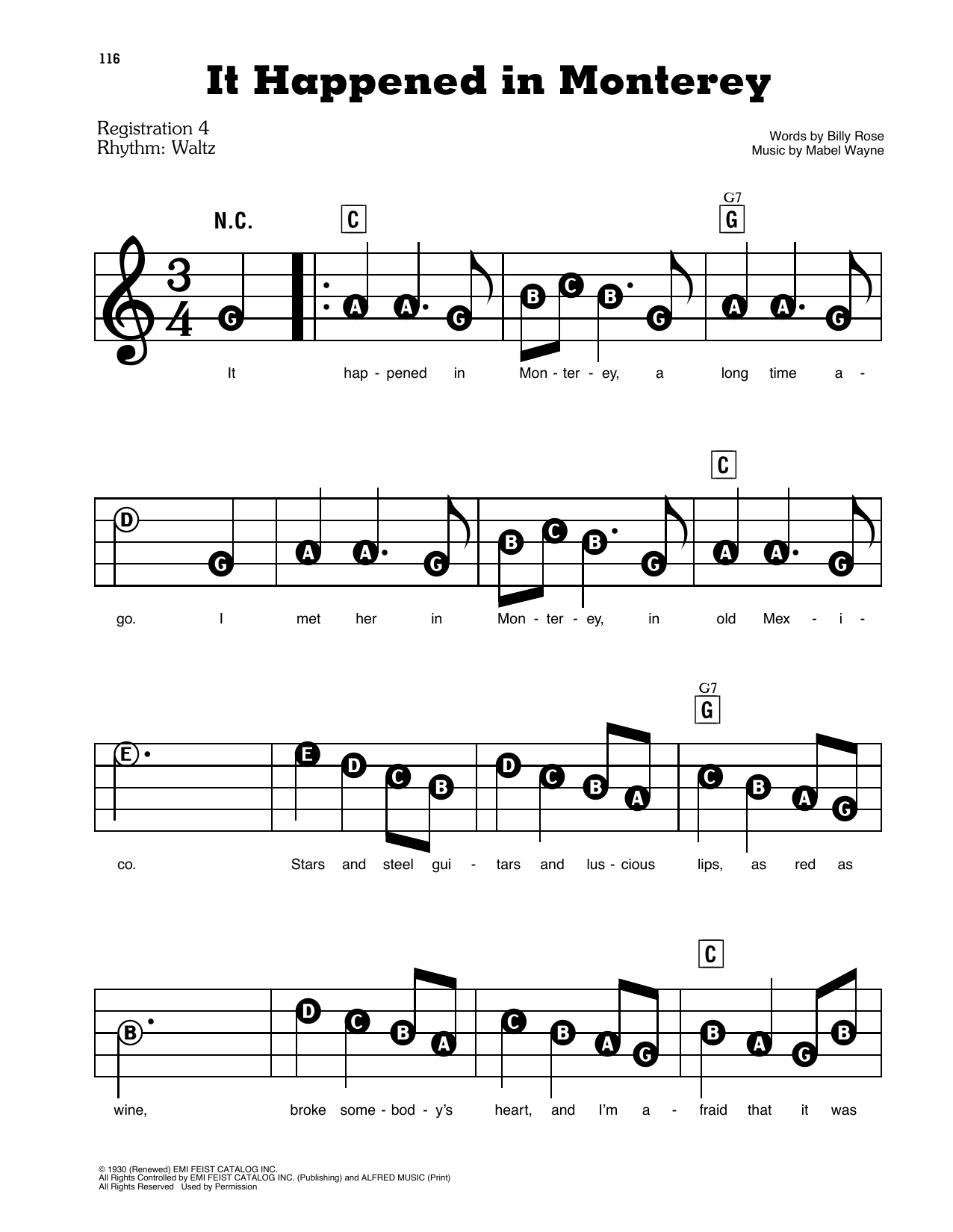
It Happened In Monterey Sheet Music Preview

It Happened In Monterey: E-Z Play Today

As performed by Frank Sinatra

Item: 35-DS00447853

Digital Download
$4.99
Description

It Happened In Monterey: E-Z Play Today isn't in MakeMusic Cloud just yet...but it could be. Let us know you'd like to see it, and you'll help shape what comes next. In the meantime, start a free trial and dive into thousands of interactive titles your students can play along with today.

Sample Audio
No sample audio found.
Sample Video
Additional Details
Publisher: Hal Leonard
Page Count: 2
SKU: 35-DS00447853

More about this title

About the Artist: Frank Sinatra

Frank Sinatra (1915-1998) shaped American popular music across seven decades, combining technical vocal mastery with interpretive depth. His influence on phrasing, rhythm, and emotional nuance set the standard for jazz and standard repertoire that musicians still study and perform today.

Why we love this

Sinatra's songbook offers pianists a direct entry into the language of American standards. This arrangement captures the melodic elegance and harmonic sophistication that make these songs enduring teaching tools for voice leading and jazz comping.

What to expect

The California coastal romance suggested by the title unfolds through warm, swaying harmonic movement and a melody that seems to float over the accompaniment. There is an unhurried sophistication here, the kind of elegance that comes from clear melodies supported by thoughtful harmonic choices.

Who it's for

Pianists developing fluency with jazz standards and American songbook repertoire will find this accessible and musically substantive. Voice teachers and their accompanists benefit from a reliable arrangement that respects both the vocal line and harmonic content.

How to get the most out of it

  • Shape the melody line with the rubato and phrasing that defines the Great American Songbook; these standards live and breathe rather than tick metronomically
  • Listen closely to how the harmony moves beneath the melody to understand the chord changes and voice leading that make standards worth learning
  • Balance accompaniment density with the vocalist's needs; leave room for breathing and lyrical storytelling rather than filling every moment with notes

How to use it

Include this in a recital devoted to American standards or pair it alongside other Sinatra standards to explore the consistency of his artistic vision. It works equally well as a teaching piece for students learning to interpret jazz repertoire or as a performance vehicle for pianists comfortable with the idiom.

Skills your students will build

  • Reading and interpreting jazz chord symbols and lead sheet notation
  • Voicing jazz chords and comping patterns appropriate to the style
  • Maintaining tasteful rhythmic flexibility while accompanying a melody
  • Understanding the harmonic language of mid-century American songwriting

You May Also Like