It Had to Be You: B-flat Tenor Saxophone Sheet Music Preview

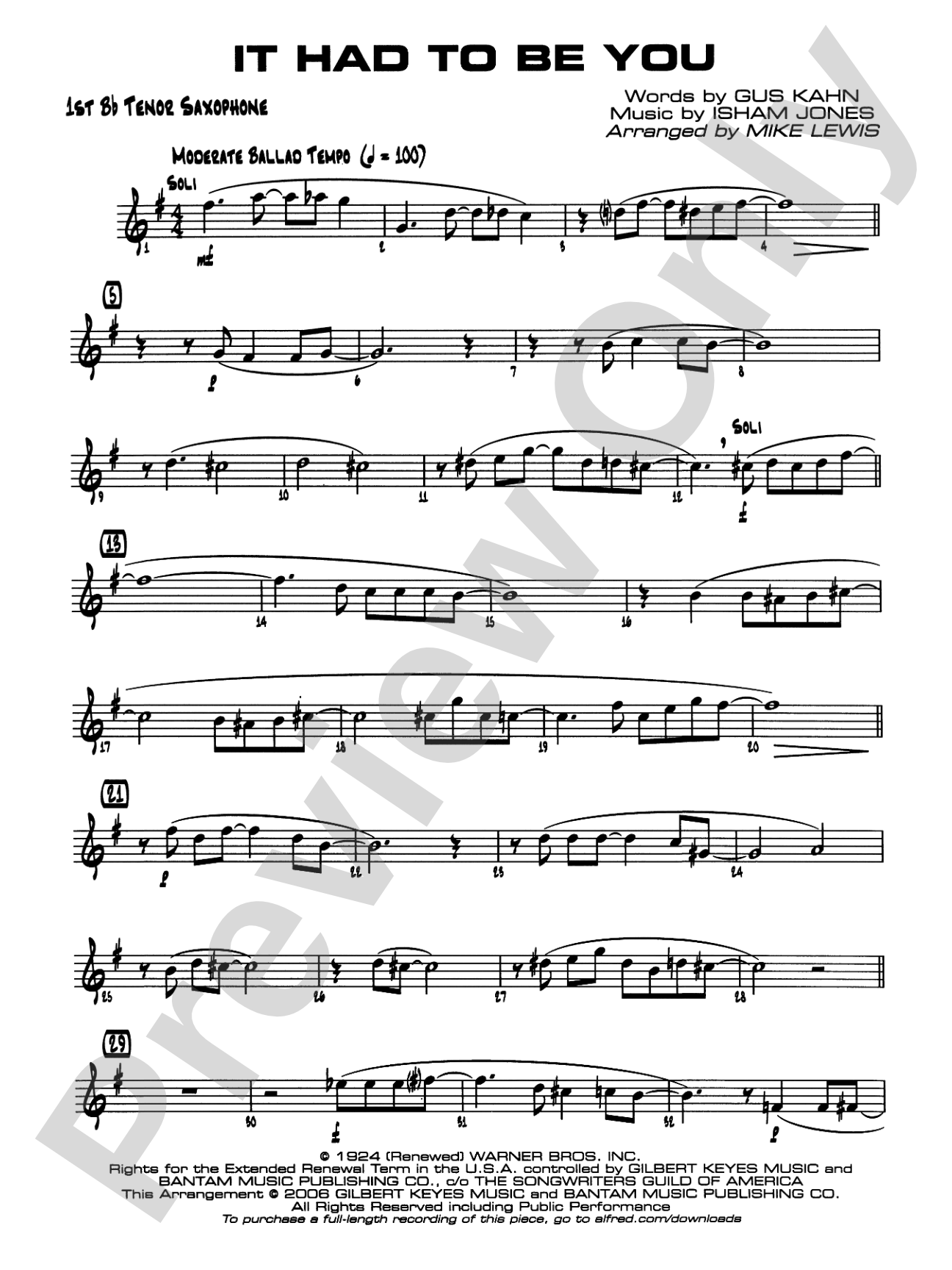
It Had to Be You: B-flat Tenor Saxophone

Words by Gus Kahn, music by Isham Jones / arr. Mike Lewis

Grade: 1 (Easy)

Item: 00-PC-0014800_TX1

Digital Download
$3.00
Description
Arranger Mike Lewis presents this moderate swing ballad featuring the 1st trumpet and the sax section. Easy ranges and easy rhythms will allow this tasty chart to come together quickly and effectively.

Don't just read it, hear it, play along with it, and watch your students grow with it. In MakeMusic Cloud, It Had to Be You: B-flat Tenor Saxophone comes alive with professional accompaniment, adjustable tempo, and built-in practice tools that turn solo practice into real progress.

Sample Audio
0:00
0:00
Sample Video
Additional Details
Series: First Year Charts for Jazz Ensemble
Publisher: Alfred Music
Page Count: 64
SKU: 00-PC-0014800_TX1

More about this title

About the Composer: Isham Jones

Isham Jones (1894-1956) was a prolific composer and bandleader whose sophisticated pop songs became standards of the American songbook. Working primarily in the 1920s and 1930s, Jones crafted memorable melodies with elegant harmonic structures that have endured through countless recordings and arrangements. His songs remain essential study material for jazz musicians learning to navigate classic swing-era harmony and phrasing.

Why we love this

Mike Lewis's arrangement brings this timeless ballad within reach of developing ensembles without sacrificing the sophisticated swing feel that makes it memorable. The featured writing for trumpet and saxes gives multiple sections spotlight moments, while the accessible ranges and straightforward rhythms mean your ensemble can focus on interpretation and tone rather than wrestling with technical demands. It's a genuine standard that sounds mature from day one.

What to expect

Warm, unhurried, and deeply sentimental. The easy ranges invite singers and players into the melody without strain, while the moderate swing rhythm creates an intimate ballad atmosphere that feels sophisticated despite its accessibility. This is what a standard should feel like: effortless and emotionally direct.

Who it's for

First-year jazz ensemble directors looking for accessible charts that sound polished and feel rewarding to play. Your developing musicians will experience genuine swing repertoire without the technical barriers that usually accompany early jazz programming.

How to get the most out of it

  • Shape the melody through the sax section first, establishing the ballad's lyrical quality before full ensemble enters; straightforward rhythms free players to concentrate on phrasing and dynamic control.
  • Balance the trumpet feature against the sax section parts so neither overwhelms; the chart lives in the interplay between these voices rather than soloistic display.
  • Approach the swing feel as relaxed and vocally influenced rather than mechanically rigid; let the rhythm section breathe beneath what the horns are doing.
  • Draw out the harmonic richness of this standard by allowing space between phrases and avoiding the temptation to rush the tempo.

How to use it

Pair this with other first-year charts from the same series for a cohesive early-season concert that demonstrates to students and audiences what jazz ensemble musicianship sounds like. Its ballad character makes it an ideal pairing with up-tempo swingers, giving you natural programming contrast within a single set.

Skills your students will build

  • Reading and interpreting swing notation and feel
  • Featured playing and section voice interaction
  • Phrasing and dynamic shaping in ballad contexts
  • Chord reading and harmonic listening within a standard form

You May Also Like