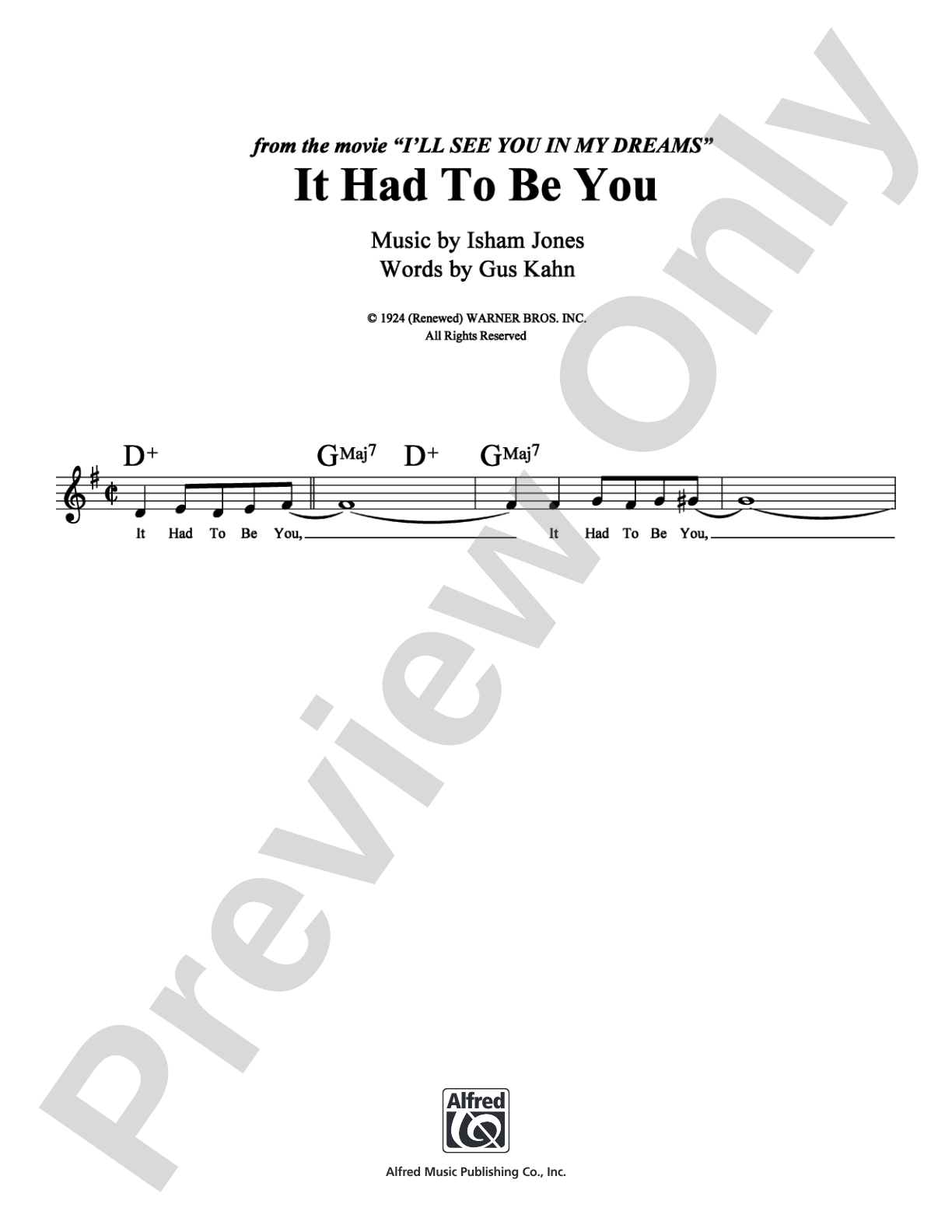
It Had to Be You: Lead Sheet Digital Sheet Music

It Had to Be You: Lead Sheet Digital Sheet Music

Isham Jones, Cliff Edwards

Item: 00-PS-0008488

Digital Download
$1.99
Description

It Had to Be You: Lead Sheet Digital Sheet Music isn't in MakeMusic Cloud just yet...but it could be. Let us know you'd like to see it, and you'll help shape what comes next. In the meantime, start a free trial and dive into thousands of interactive titles your students can play along with today.

Sample Audio
No sample audio found.
Sample Video
Additional Details
SKU: 00-PS-0008488

More about this title

About the Artist: Cliff Edwards

Cliff Edwards was a singer, ukulele player, and actor who brought jazz-inflected vocal charm to popular music in the 1920s and 1930s. Best known for his work in early sound films and his distinctive high tenor voice, Edwards helped define the sound of the Great American Songbook era, collaborating with top composers and arrangers of the day.

Isham Jones was a bandleader, composer, and saxophonist whose orchestra was one of the most recorded ensembles of the 1920s and 1930s. A prolific songwriter, Jones composed or co-composed numerous standards that remain central to the jazz and popular music repertoire, influencing generations of musicians who followed.

Why we love this

This is a standard that works equally well in jazz combos, piano studios, and vocal recitals. The melody is memorable enough for beginners to grasp quickly yet sophisticated enough to sustain serious harmonic exploration, making it ideal for students transitioning from classical training into standards repertoire.

What to expect

Warm, conversational, and deeply romantic. The melody floats over the harmonic foundation with the ease of someone confident enough to speak softly, knowing they'll be heard. There is both vulnerability and certainty here, a quality that has kept this song alive across nearly a century.

Who it's for

Jazz pianists and guitarists learning to comp standards, singers developing a standards repertoire, and music students exploring lead sheet notation and harmonic analysis. This piece works for intermediate players who understand chord symbols and want to build fluency reading and interpreting jazz notation.

How to get the most out of it

  • Balance the vocal line against comping chords. The melody should speak clearly, but the accompaniment needs enough presence to support the harmonic movement without disappearing.
  • Lean into the conversational phrasing. The lyrics suggest an intimate moment, so avoid rigid metering; let the natural speech rhythm of the words guide your tempo flexibility.
  • Explore the chromatic motion in the bridge. Many interpretations glide through these passing tones; decide whether to highlight them or let them flow transparently beneath the main line.
  • Use dynamics to shape the arc. A gentle opening builds naturally into the emotional peak of the bridge before settling into the final statement.

How to use it

Pair this with other standards from the same era in a jazz recital or cabaret-style concert program. It also serves as an excellent bridge repertoire piece for classical students entering jazz studies, and works beautifully as part of a themed recital exploring classic American songwriting.

Skills your students will build

  • Reading and interpreting lead sheet notation with chord symbols
  • Comping changes with awareness of harmonic function and voice leading
  • Phrasing melody over chord changes with rhythmic flexibility
  • Navigating chromaticism and passing tones in the bridge section
  • Developing interpretive choices within the framework of a standard arrangement

You May Also Like