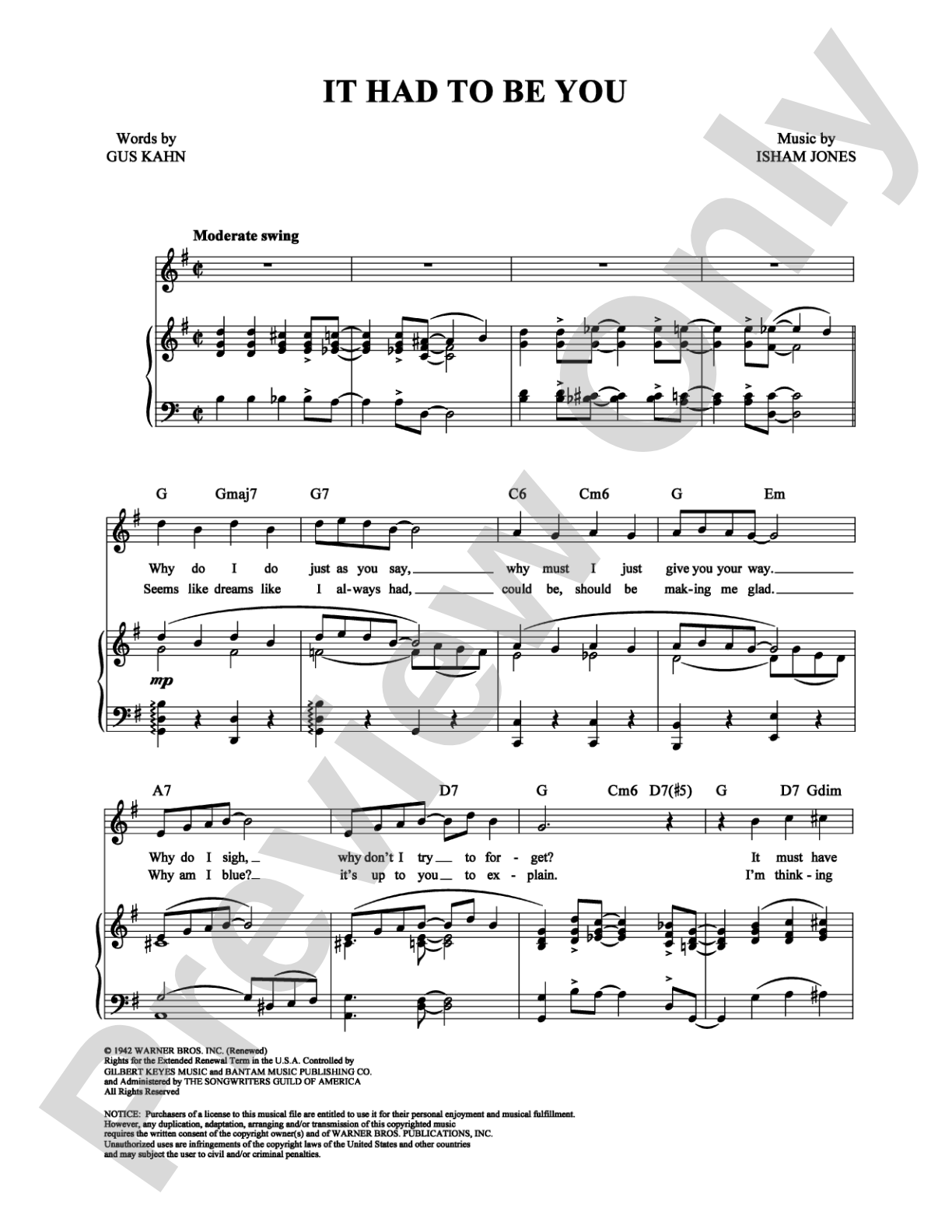
It Had To Be You: Piano/Vocal/Chords Digital Sheet Music

It Had To Be You: Piano/Vocal/Chords Digital Sheet Music

Artie Shaw, Cliff Edwards, Dick Haymes, Danny Thomas, Helen Forrest

Item: 00-PS-0002040

Digital Download
$3.99
Description

It Had To Be You: Piano/Vocal/Chords Digital Sheet Music isn't in MakeMusic Cloud just yet...but it could be. Let us know you'd like to see it, and you'll help shape what comes next. In the meantime, start a free trial and dive into thousands of interactive titles your students can play along with today.

Sample Audio
No sample audio found.
Sample Video
Additional Details
SKU: 00-PS-0002040

More about this title

About the Artist: Cliff Edwards

Cliff Edwards was a singer, ukulele player, and actor who brought infectious energy to American popular music and film throughout the 1920s and 1930s. Known for his distinctive falsetto and his work in early sound films, Edwards helped define the vocal style of the jazz age and remained a vital presence in entertainment for decades.

Why we love this

This standard has endured because it captures the emotional clarity of acceptance and inevitability in love. The melody sits naturally for singers while the harmonic movement offers pianists genuine interpretive choices about texture and accompaniment style.

What to expect

The song moves with quiet conviction, building from introspective openness into affirmation. There's no struggle here, just the recognition that some things are simply meant to be, delivered with the warmth and directness of mid-century popular song.

Who it's for

Singers preparing jazz standards, cabaret material, or classic American songbook repertoire will find this a foundation piece. Pianists accompanying vocalists or performing solo arrangements benefit from the clear harmonic framework and the opportunity to develop interpretive voice-leading skills.

How to get the most out of it

  • Explore the rhythmic freedom of the vocal line; this song rewards subtle rubato, especially on the bridge where the melody reaches its emotional peak.
  • Balance the voice and piano so the lyrics remain intelligible without requiring the singer to push; the standard's strength is in its conversational intimacy.
  • Use the chord symbols to shape harmonic color rather than playing them uniformly; consider which inversions and voicings support each phrase.
  • Pay attention to the relationship between the verse and chorus; the familiarity of the refrain creates its own kind of power after the opening setup.

How to use it

This works beautifully in a program featuring classic American standards, whether as part of a jazz or cabaret concert or alongside other Great American Songbook selections. It's also an excellent choice for recitals where you want to demonstrate both vocal artistry and pianistic accompaniment sensitivity.

Skills your students will build

  • Interpreting jazz and popular music phrasing conventions
  • Reading and realizing chord symbols in accompaniment
  • Balancing vocal projection with lyrical clarity
  • Understanding harmonic movement in standards-era songwriting

You May Also Like