
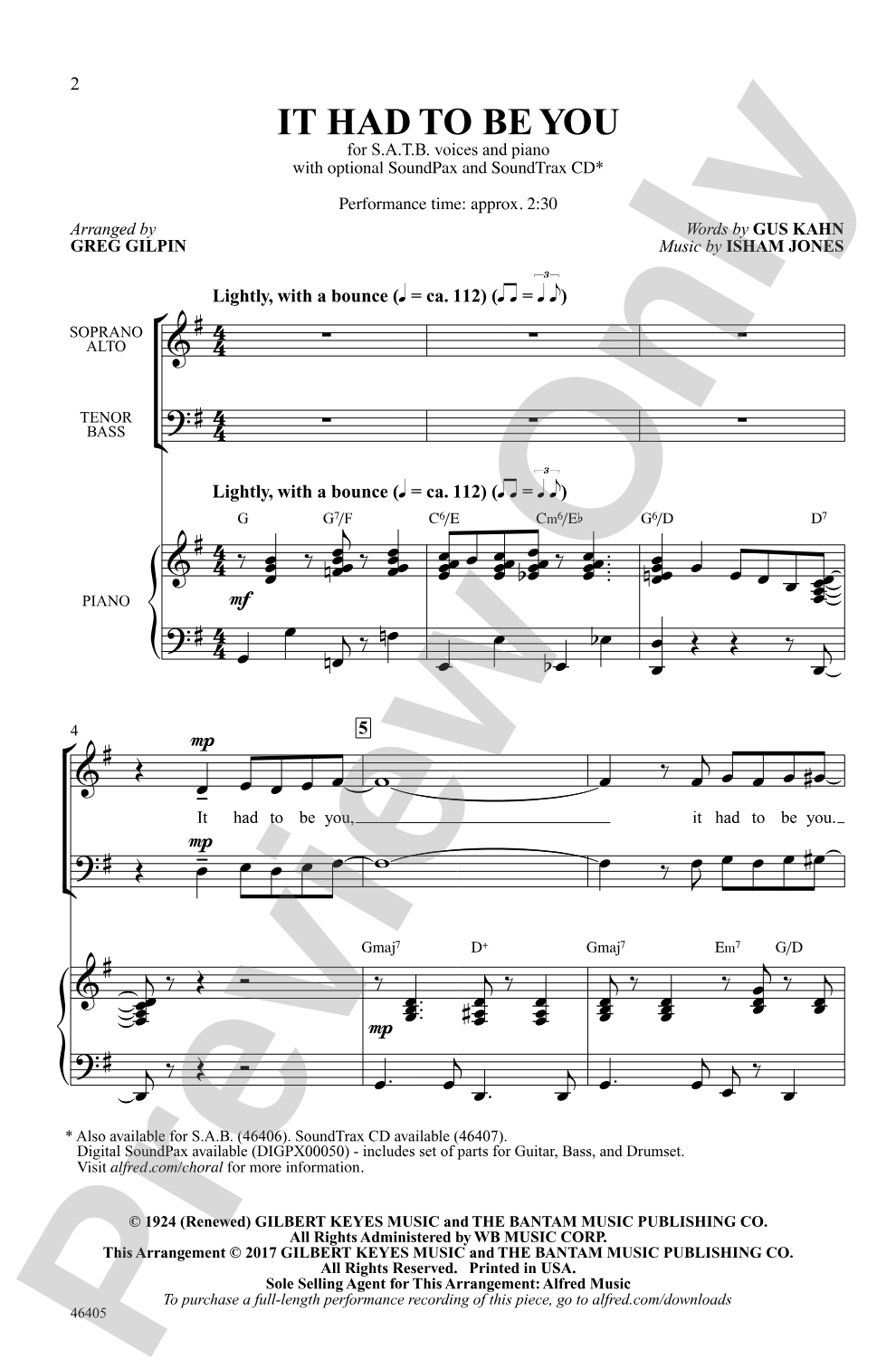
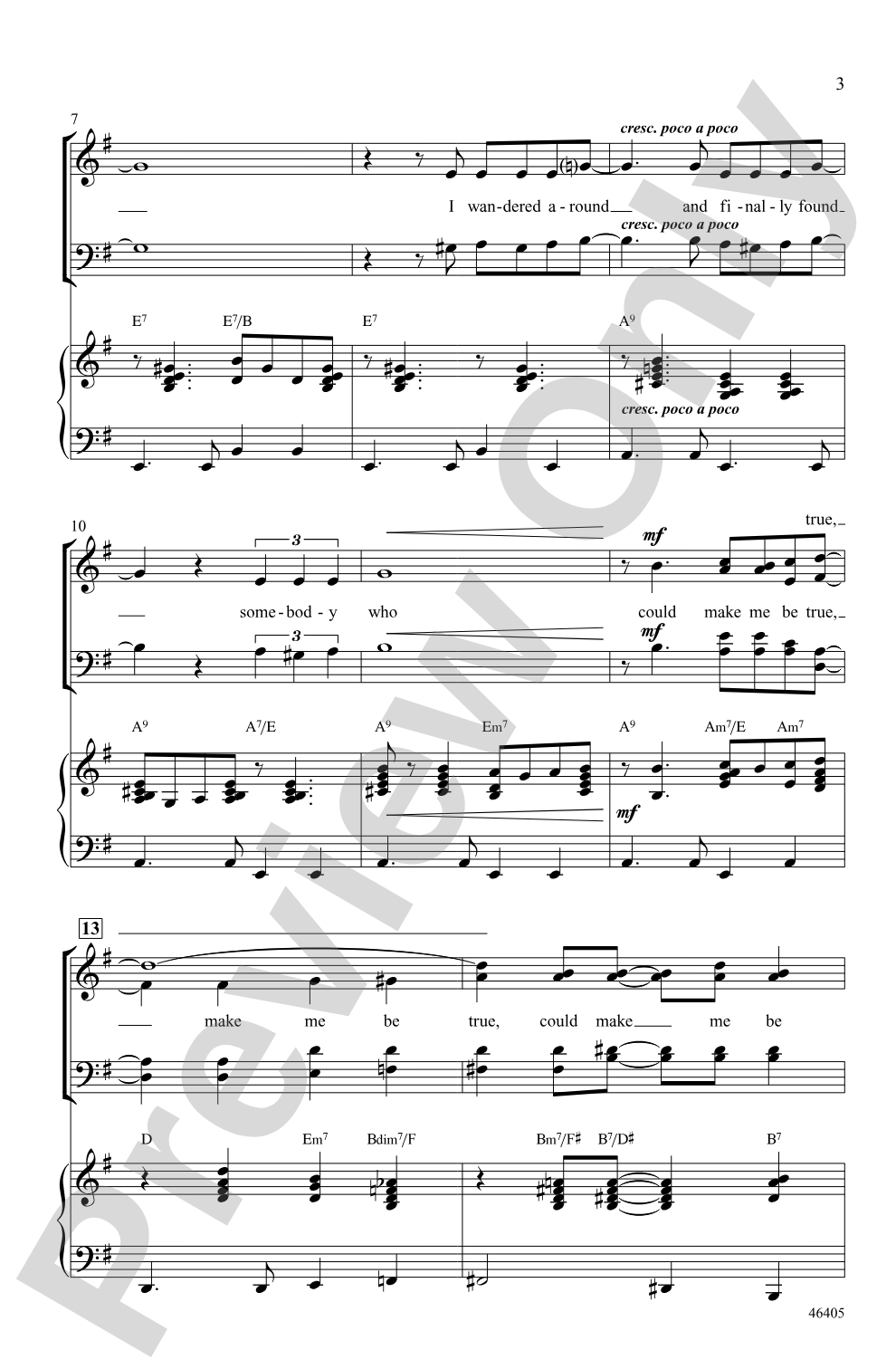

It Had to Be You: SATB Choral Octavo
Words by Gus Kahn, music by Isham Jones / arr. Greg Gilpin
Item: 00-PO-0005646
$2.00
Minimum order quantity: 20 copies
One moment…
Related Items
It Had to Be You: SoundTrax Digital Audio Download |
$27.99
|
View | |
It Had to Be You: SAB Choral Octavo |
$2.00
|
View | |
It Had to Be You: Choral SoundPax |
$15.00
|
View | |
It Had to Be You: SATB Choral Octavo |
$2.00
|
View | |
It Had to Be You: SAB Choral Octavo |
$2.00
|
View | |
It Had to Be You: Choral Octavo SoundTrax CD |
$27.99
|
View | |
It Had to Be You: Choral SoundPax |
$15.00
|
View |
Description
First published in 1924, this beautiful melody has been recorded by a wide variety of hit-makers including Ray Charles, Tony Bennett, Michael Bublé, and Carrie Underwood. Quickly-learned choral parts make this an easy feature for groups of all types.


It Had to Be You: SATB Choral Octavo isn't in MakeMusic Cloud just yet...but it could be. Let us know you'd like to see it, and you'll help shape what comes next. In the meantime, start a free trial and dive into thousands of interactive titles your students can play along with today.
Request This Title
Tell us you want it.
Start Your Free Trial
Explore everything that's ready to play right now.
Sample Audio
1
Audio File
--:--
0:00
0:00
Sample Video
Additional Details
Series:
Alfred Pop Choral Series
Publisher:
Alfred Music
Page Count:
12
SKU:
00-PO-0005646
More about this title
About the Composer: Isham Jones
Isham Jones (1894-1968) was a bandleader, violinist, and composer who shaped popular music during the Jazz Age and beyond. His gift for melody made him one of the most recorded composers of the early twentieth century, with "It Had to Be You" standing as his most enduring standard.
Beyond this iconic ballad, Jones composed and arranged for his own orchestra and for film, establishing himself as a bridge between the classical tradition and American popular song. His work remains a cornerstone of the Great American Songbook, offering educators accessible entry points into jazz-era repertoire.
Why we love this
Greg Gilpin's arrangement captures everything that makes this standard timeless while keeping the voicing approachable for singers at all levels. The quickly-learned parts mean your choir spends rehearsal time on phrasing and interpretation rather than note-learning, freeing you to build the emotional depth this song deserves. It's a showstopper that actually works in performance.
What to expect
Romantic, wistful, and timeless. The song carries the warmth of a 1920s ballroom and the intimacy of a late-night conversation. There's a gentle inevitability to the harmony that makes singers feel the emotional weight of the lyrics without needing theatrical production.
Who it's for
Directors seeking a sophisticated yet accessible feature for mixed choirs of any experience level. The familiar melody and quick-learning arrangement work equally well for concert choirs, show choirs, and community ensembles, making this ideal when you need a crowd-pleasing number that doesn't require weeks of preparation.
How to get the most out of it
- Balance the melody across sections rather than anchoring it solely in the soprano line. A unified, conversational approach to the tune makes the arrangement feel less like a pop tune and more like the jazz standard it is.
- Shape the phrase endings with a gentle lift rather than a full stop. The chords underneath suggest motion even at phrase breaks, so let the accompaniment carry the line forward.
- Lean into the harmonic richness of the lower voices. The arrangement likely features interesting voicings in the alto, tenor, and bass parts; drawing attention to these adds sophistication and keeps the sound full without oversinging.
- If using the recorded accompaniment, rehearse with it early and often. Let singers hear how their parts interact with the piano, strings, or ensemble sound they'll be singing with.
How to use it
Program this as a centerpiece feature in a pops concert or alongside other Great American Songbook standards to anchor a themed set. It also works beautifully as a Valentine's Day program highlight or as an encore that leaves audiences humming on their way out of the theater. The familiarity makes it perfect for building audience connection in community or schools concerts.
Skills your students will build
- Phrasing jazz-influenced melodies with attention to lyrical shape rather than strict metric counting
- Balancing harmonic color across four parts while maintaining a unified melodic line
- Interpreting swing-era style and interpretive flexibility
- Reading mid-range to low clefs and complex jazz voicings