
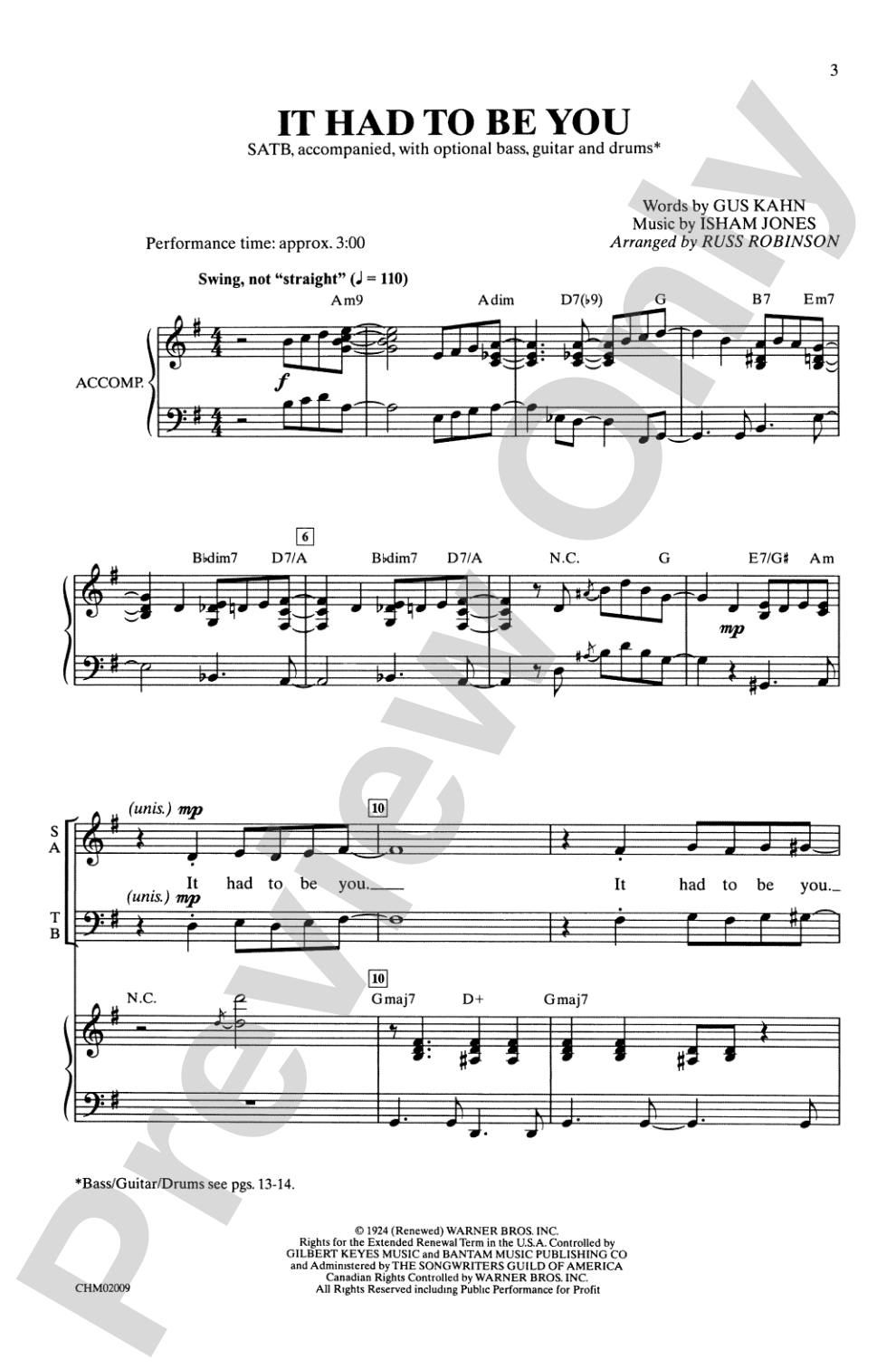
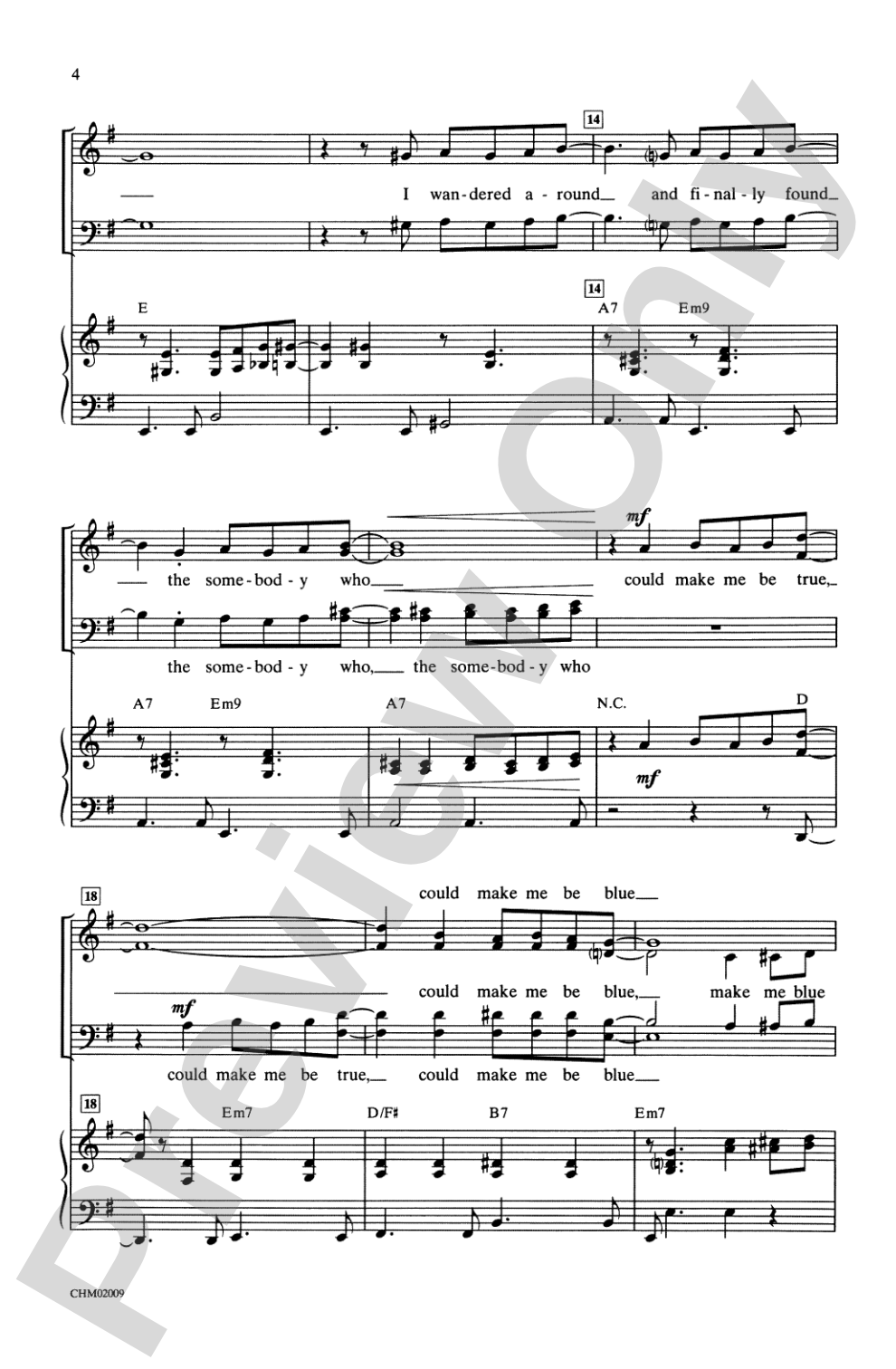
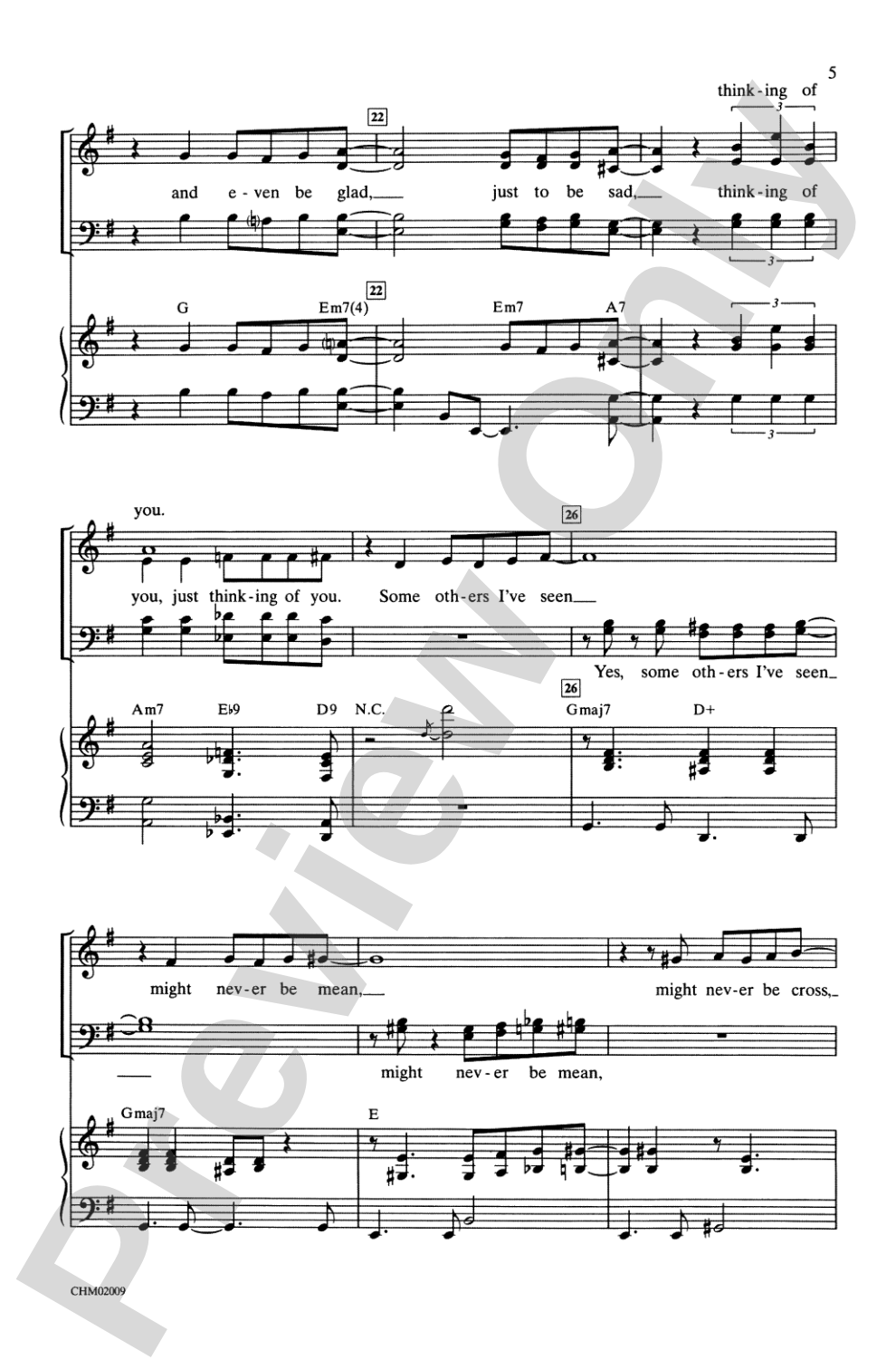

It Had to Be You: SATB Choral Octavo
Words by Gus Kahn, music by Isham Jones / arr. Russell Robinson
Level: Moderate
Item: 00-PO-0004795
$2.95
Minimum order quantity: 20 copies
One moment…
Description
This enduring song from the '20s comes to life once more in this exceptionally creative arrangement by Russell Robinson. Solo opportunities abound. Don't miss this one!


It Had to Be You: SATB Choral Octavo isn't in MakeMusic Cloud just yet...but it could be. Let us know you'd like to see it, and you'll help shape what comes next. In the meantime, start a free trial and dive into thousands of interactive titles your students can play along with today.
Request This Title
Tell us you want it.
Start Your Free Trial
Explore everything that's ready to play right now.
Sample Audio
1
Audio File
--:--
0:00
0:00
Sample Video
No sample videos found.
Additional Details
Series:
Alfred Archive Edition: Alfred Pop Choral Series
Publisher:
Alfred Music
Page Count:
16
SKU:
00-PO-0004795
More about this title
About the Composer: Isham Jones
Isham Jones (1894-1956) was a bandleader, violinist, and composer who defined the sound of 1920s dance music. His gift for melody shaped popular music of the Jazz Age, and "It Had to Be You" stands among his most enduring compositions. Jones understood what made a song stick in people's minds: clear hooks, singable lines, and emotional directness.
Why we love this
Russell Robinson's arrangement harnesses everything that makes this standard resonate while building in generous solo moments that let your singers shine. The writing sits comfortably for a Grade 3 choir but never feels simplistic; it's the kind of piece that sounds bigger than it is when sung well.
What to expect
Sophisticated yet approachable, this arrangement captures the romantic warmth and rhythmic swagger of 1920s popular song. The piece glows with standards-era sophistication, yet its straightforward harmonic language and singable lines keep it from feeling precious or dated. Performing it feels like stepping into a warm, dimly lit supper club where the music matters.
Who it's for
Intermediate choirs ready to explore the Great American Songbook with confidence. This arrangement works for choirs comfortable with jazz harmony and singers who relish the chance to step out on solo passages. The moderate difficulty makes it accessible while the style and solo opportunities keep it engaging for more experienced ensembles.
How to get the most out of it
- Balance the solo passages so they cut through without overwhelming the choir. These moments are where individual voices get featured, so encourage soloists to sing through to an engaged ending rather than backing off.
- Shape the harmonic progressions with gentle dynamic swells on the jazz chords; this piece breathes on those lush moments between the melody phrases.
- Use the recorded accompaniment in rehearsal to lock in the swing feel, but consider performing live if your accompanist can capture that '20s groove with rubato and jazz voicing.
- Articulate the text crisply, especially on shorter syllables, to match the rhythmic snap of the era without sounding stiff.
How to use it
Pair this with other jazz-age or contemporary pop arrangements for a concert that celebrates American song traditions. It lands perfectly in a spring pops concert, a musical theater showcase, or a program exploring the evolution of popular melody. The multiple solo opportunities also make it an excellent choice for a concert that spotlights ensemble singers.
Skills your students will build
- Singing jazz harmonies and chromatic voice leading
- Balancing solo and ensemble textures
- Interpreting swing rhythm and jazz articulation
- Sustaining confident solo lines within a choral context