
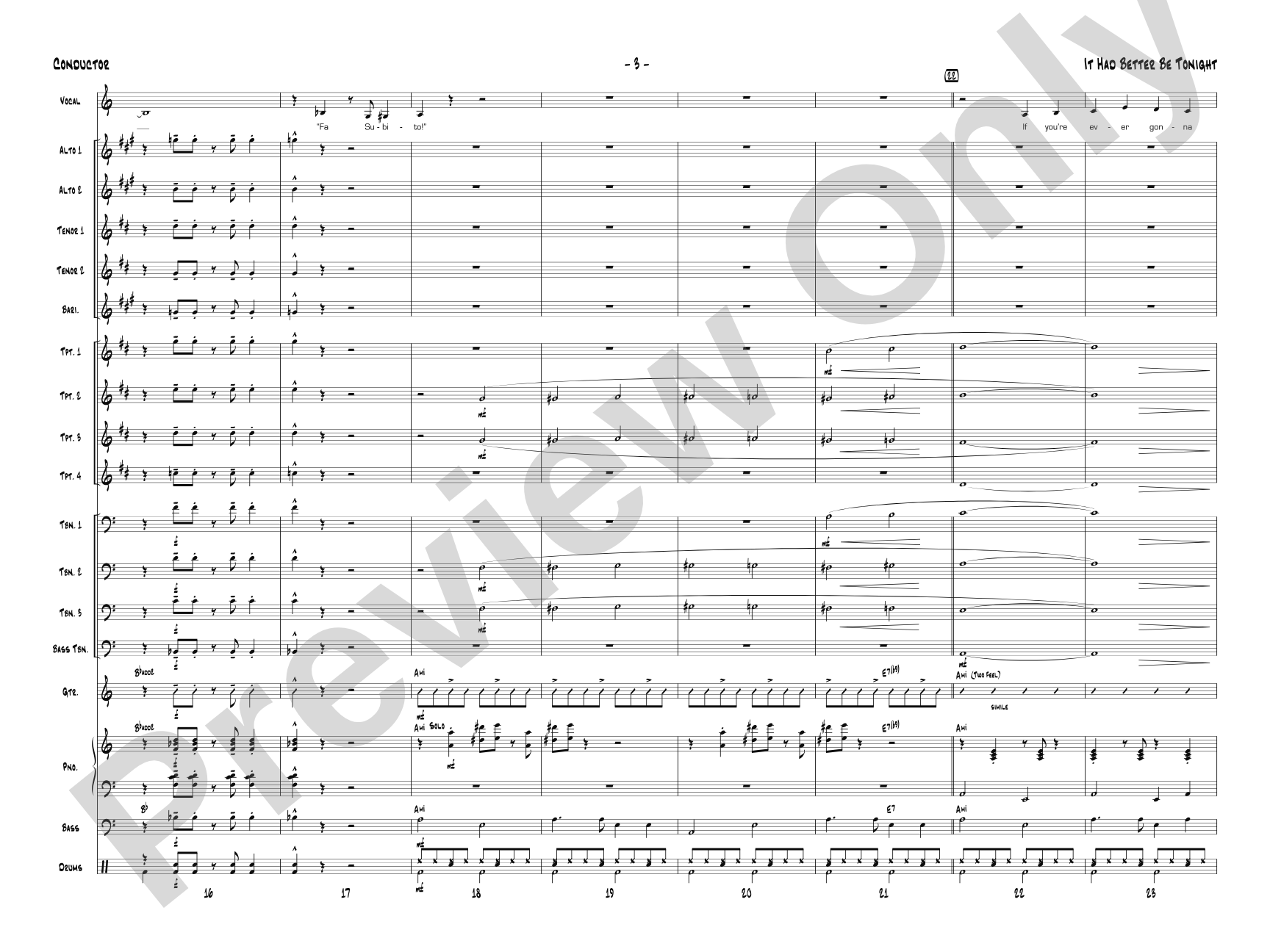
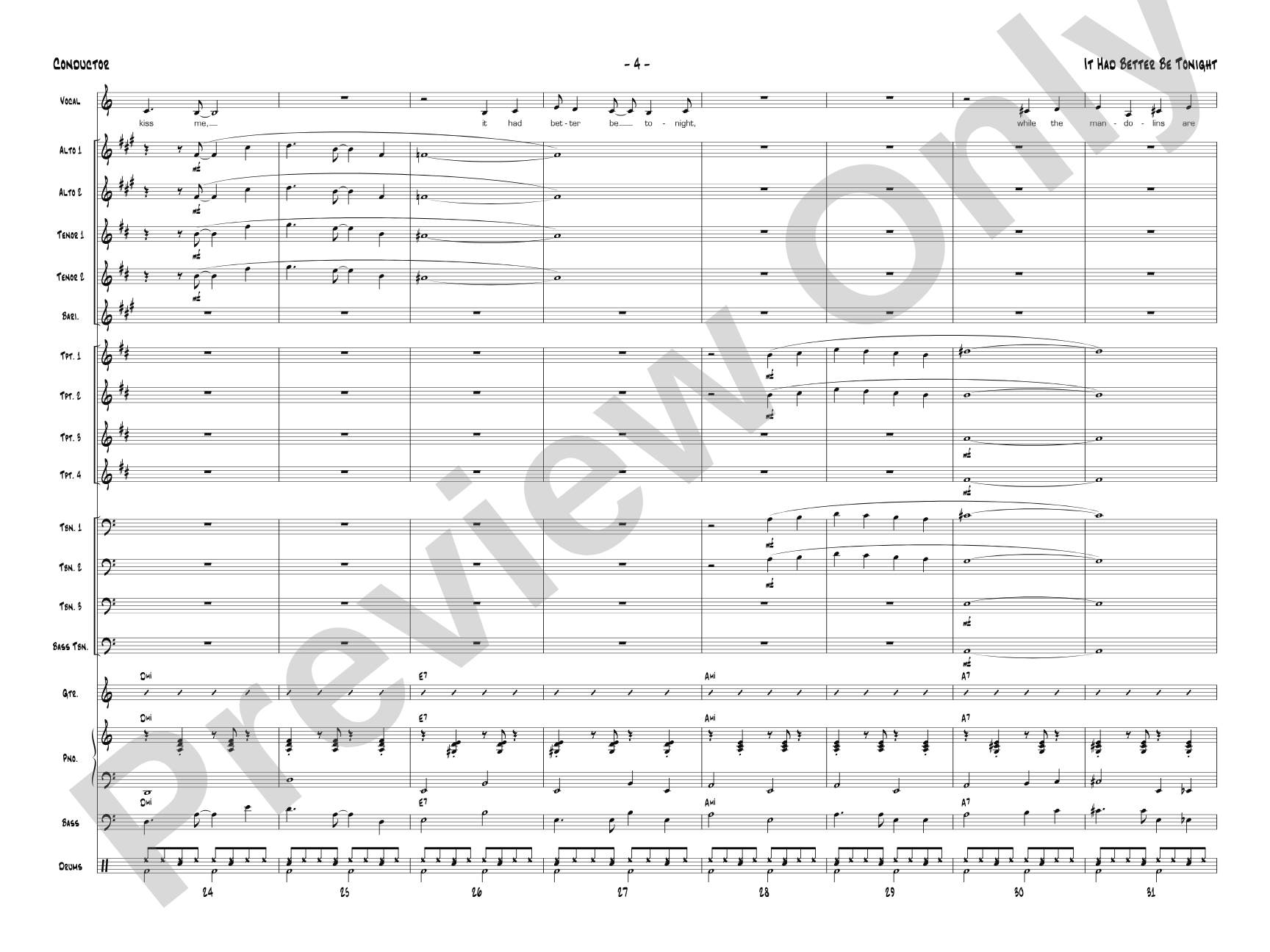
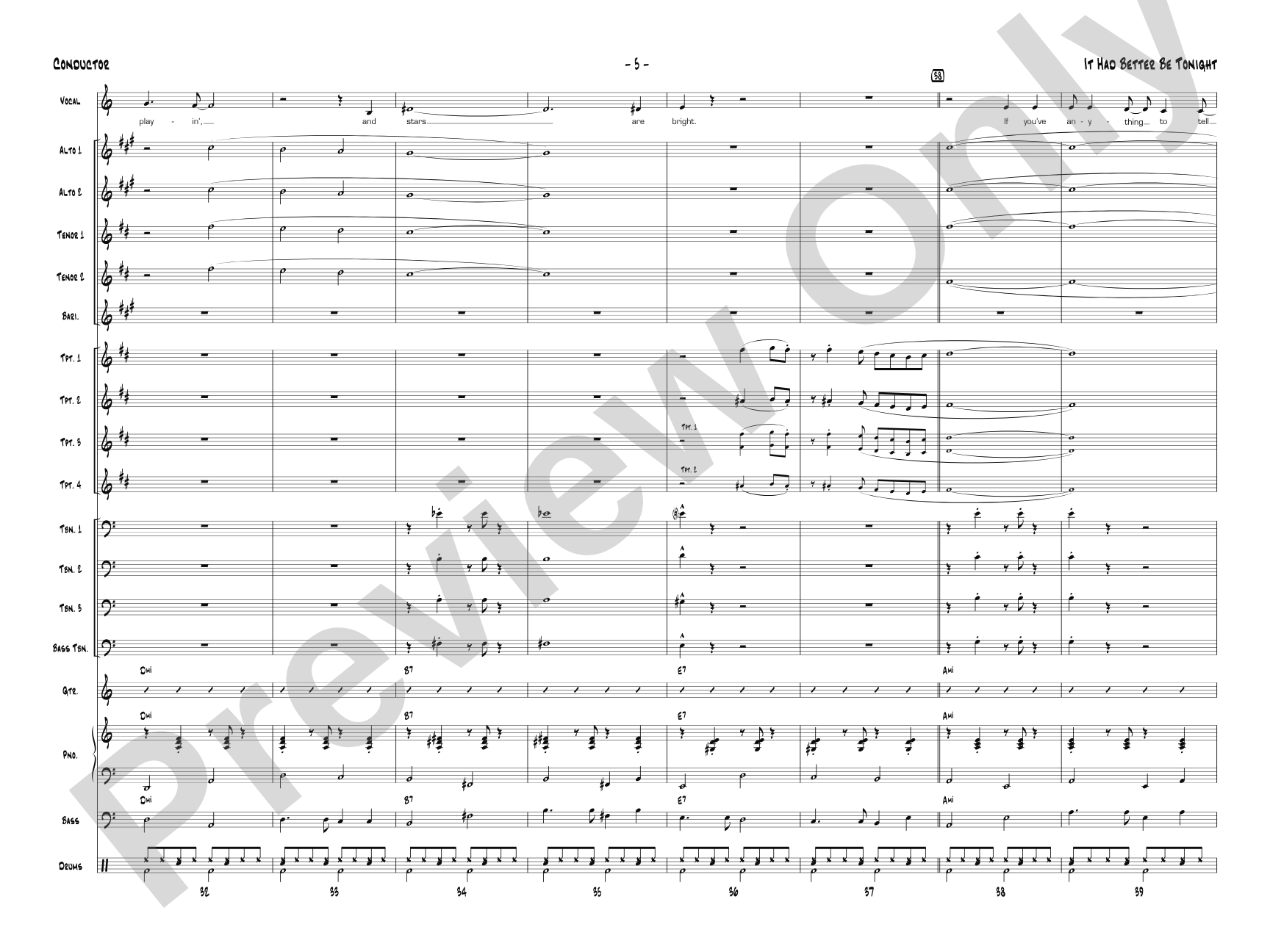
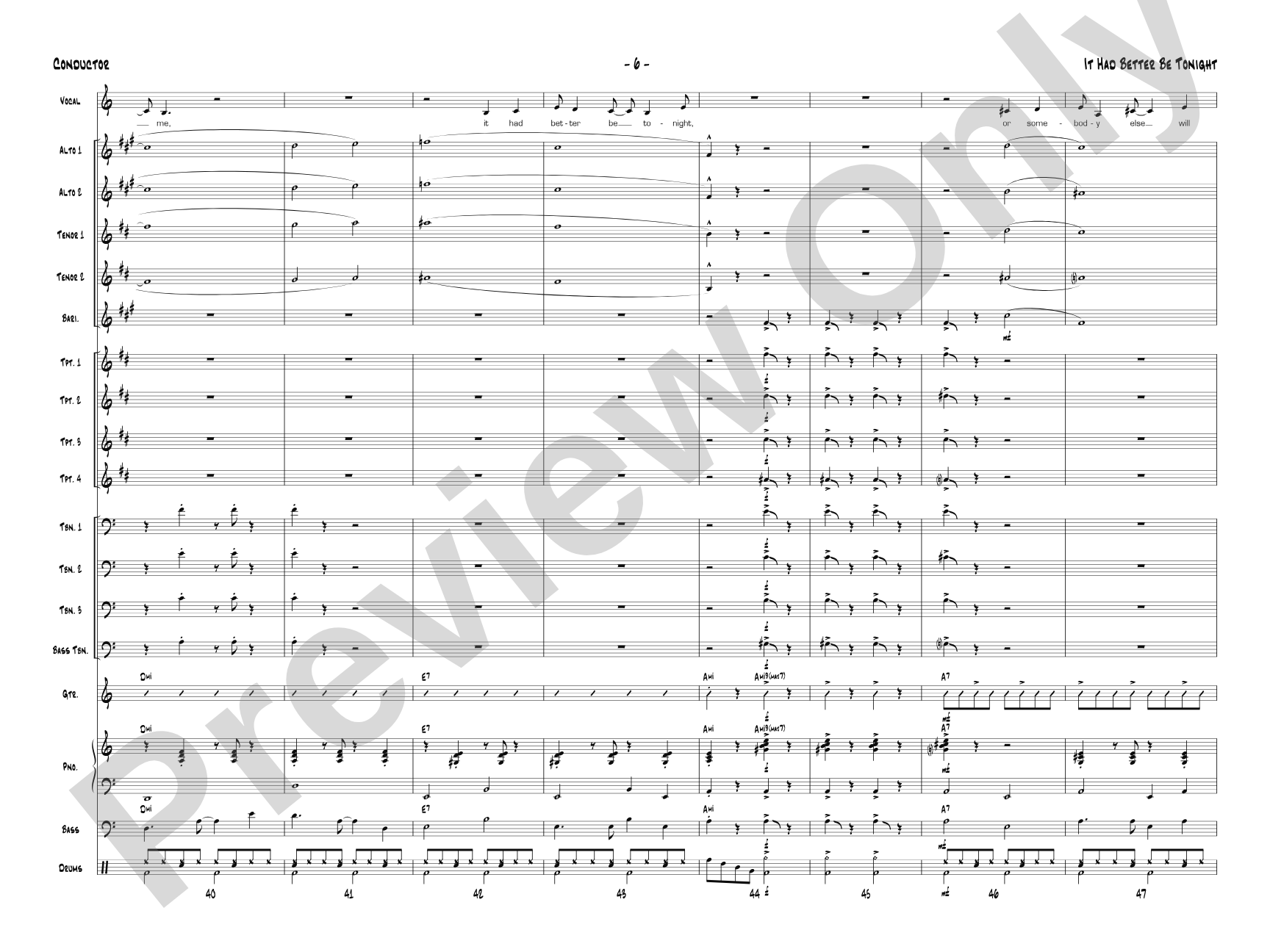
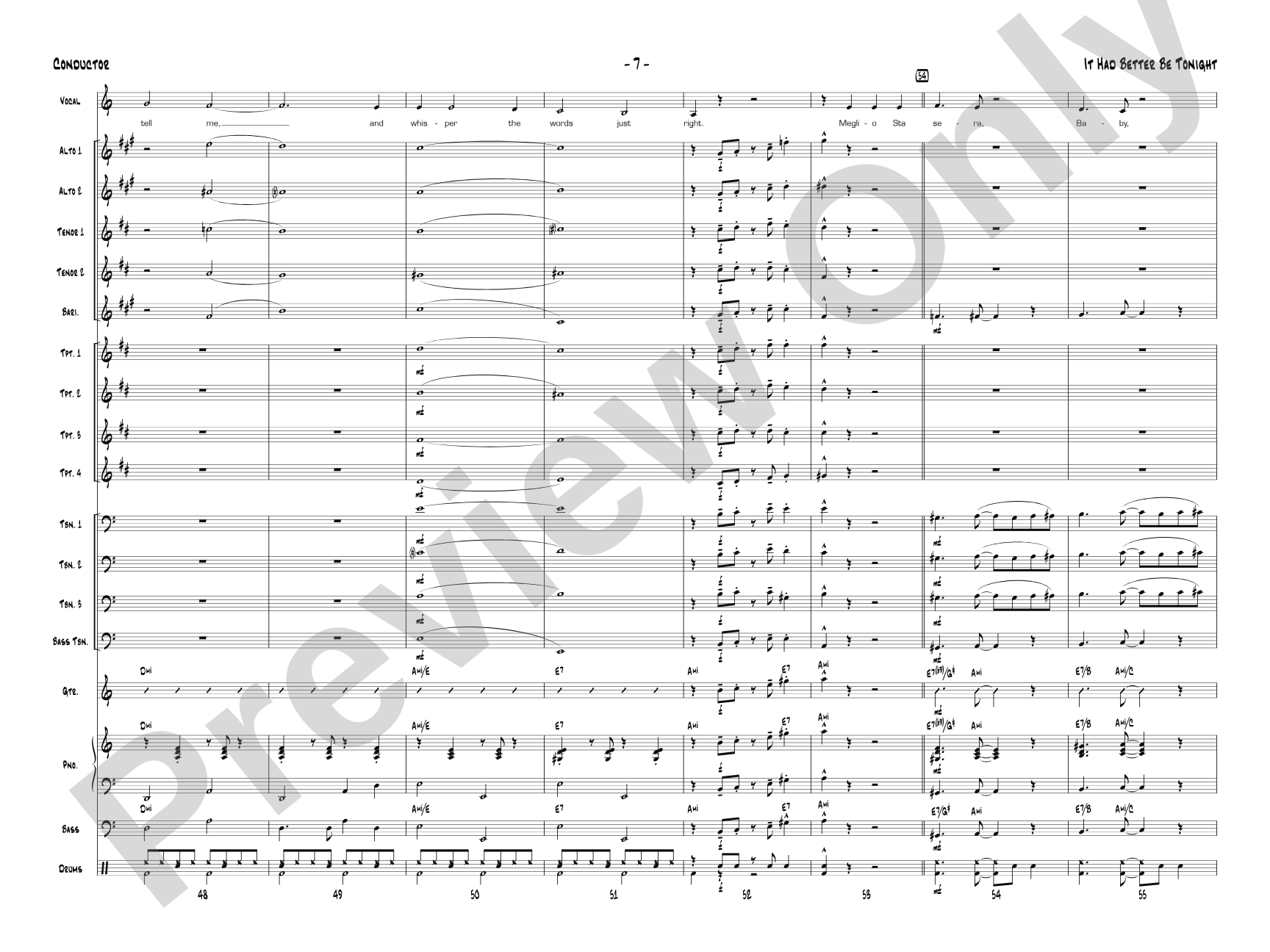
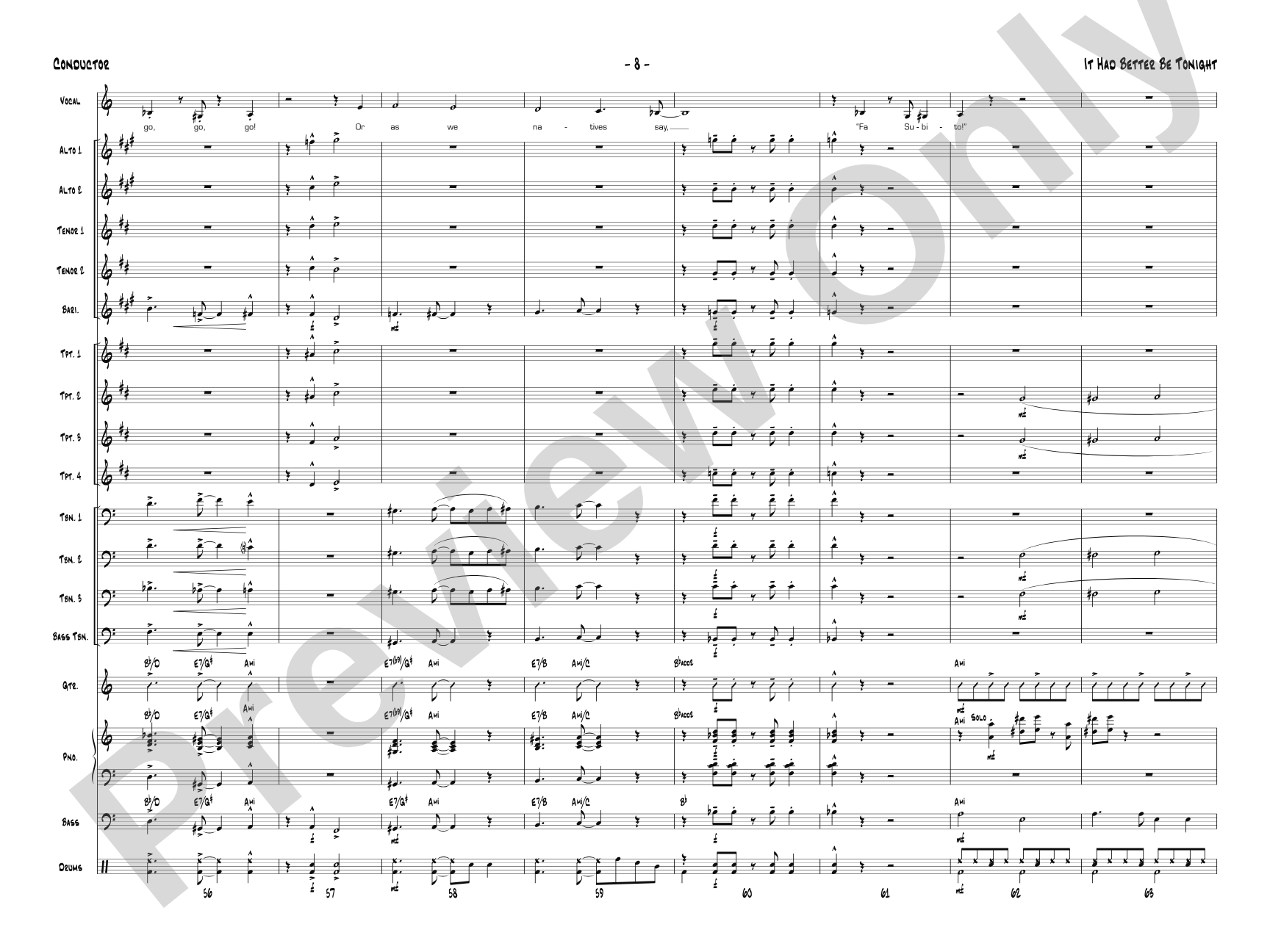
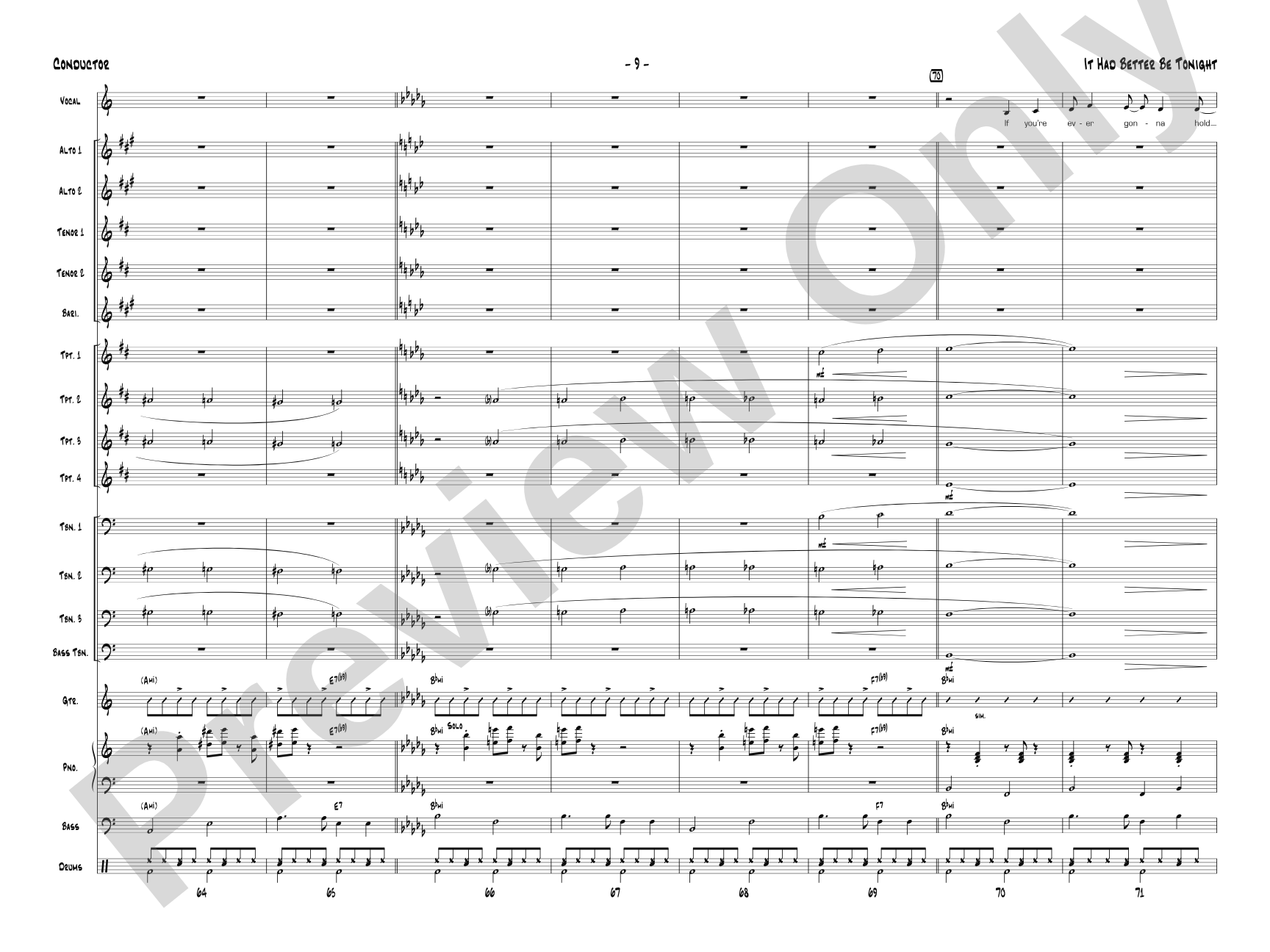
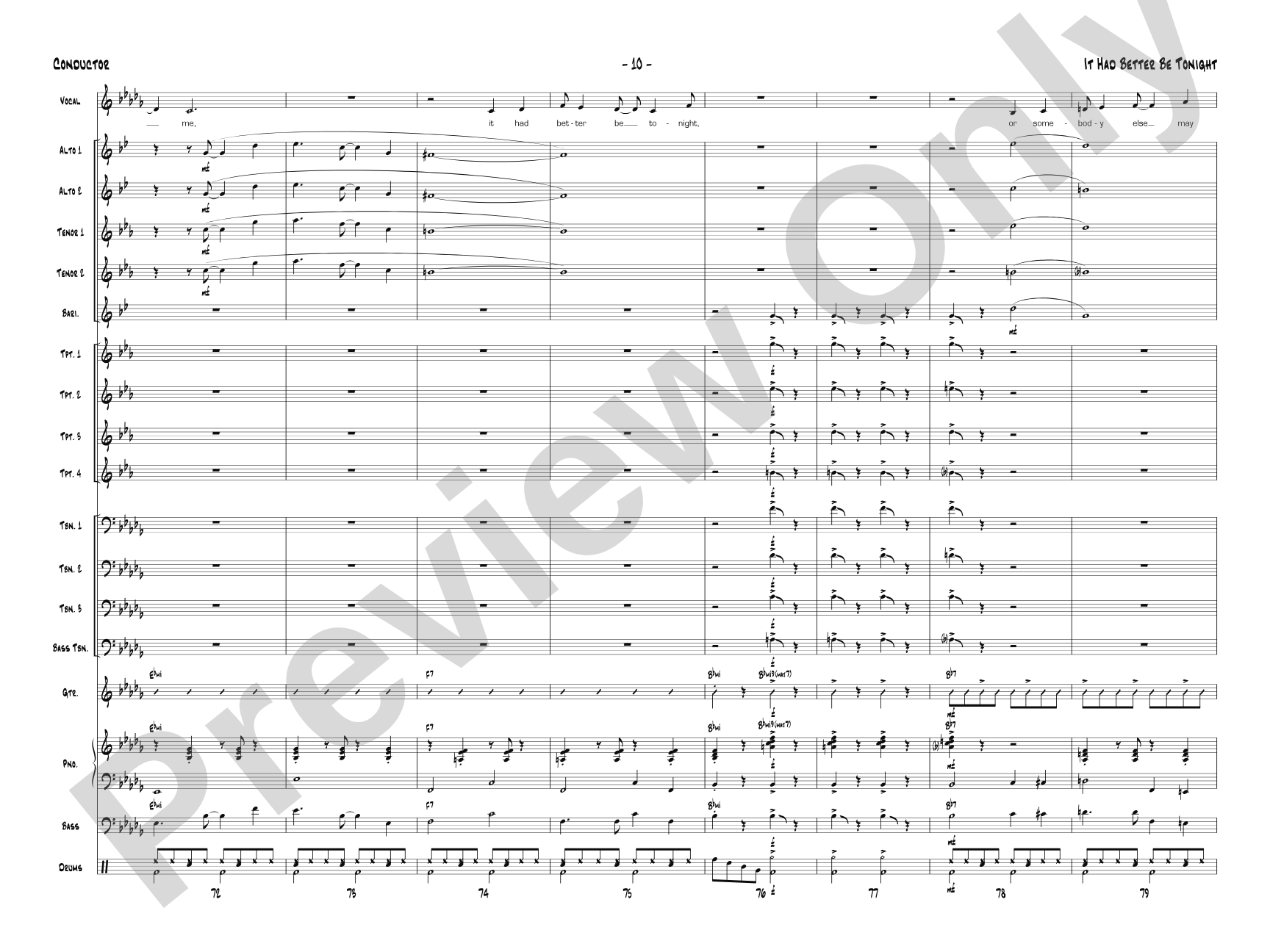
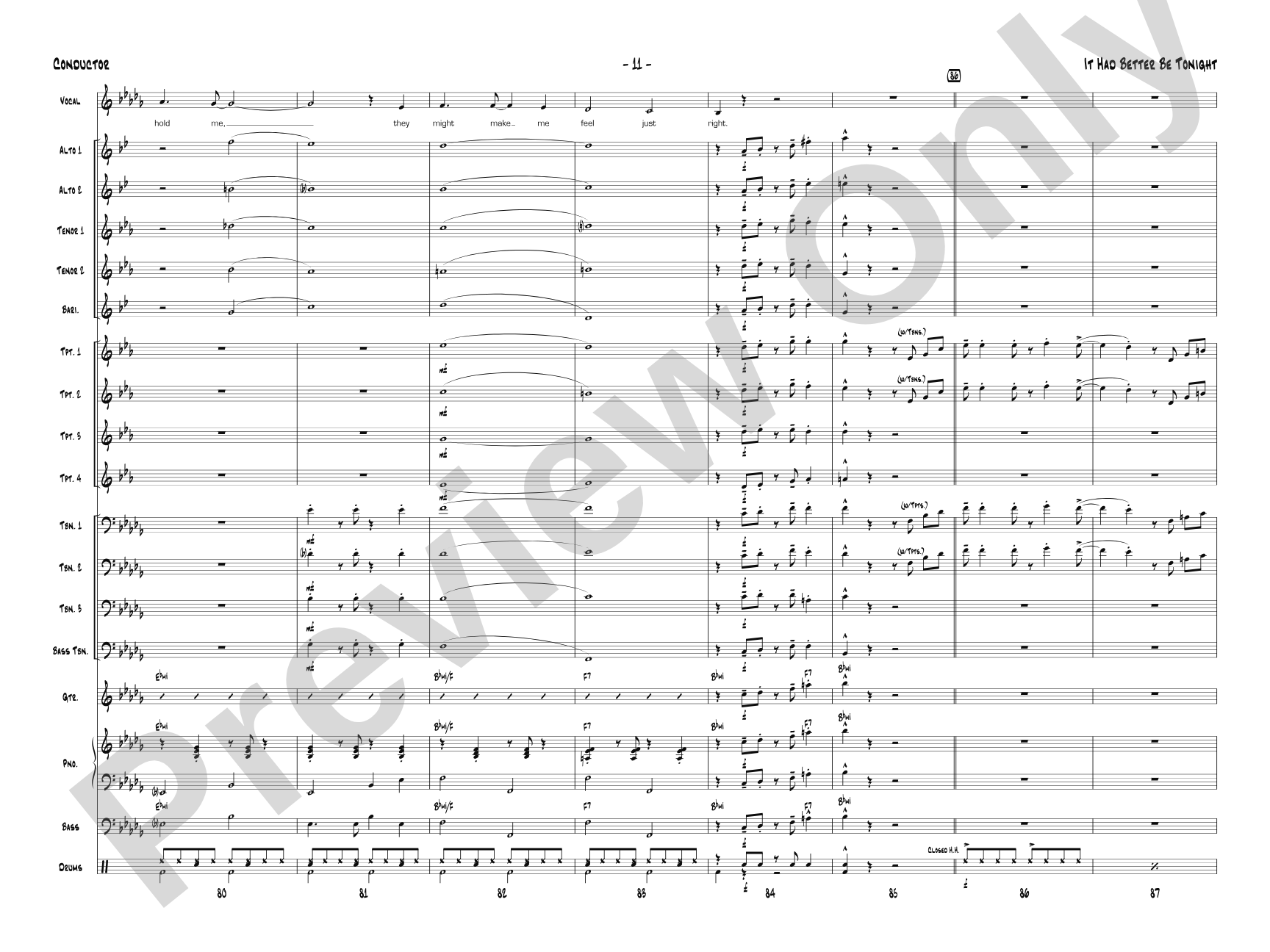
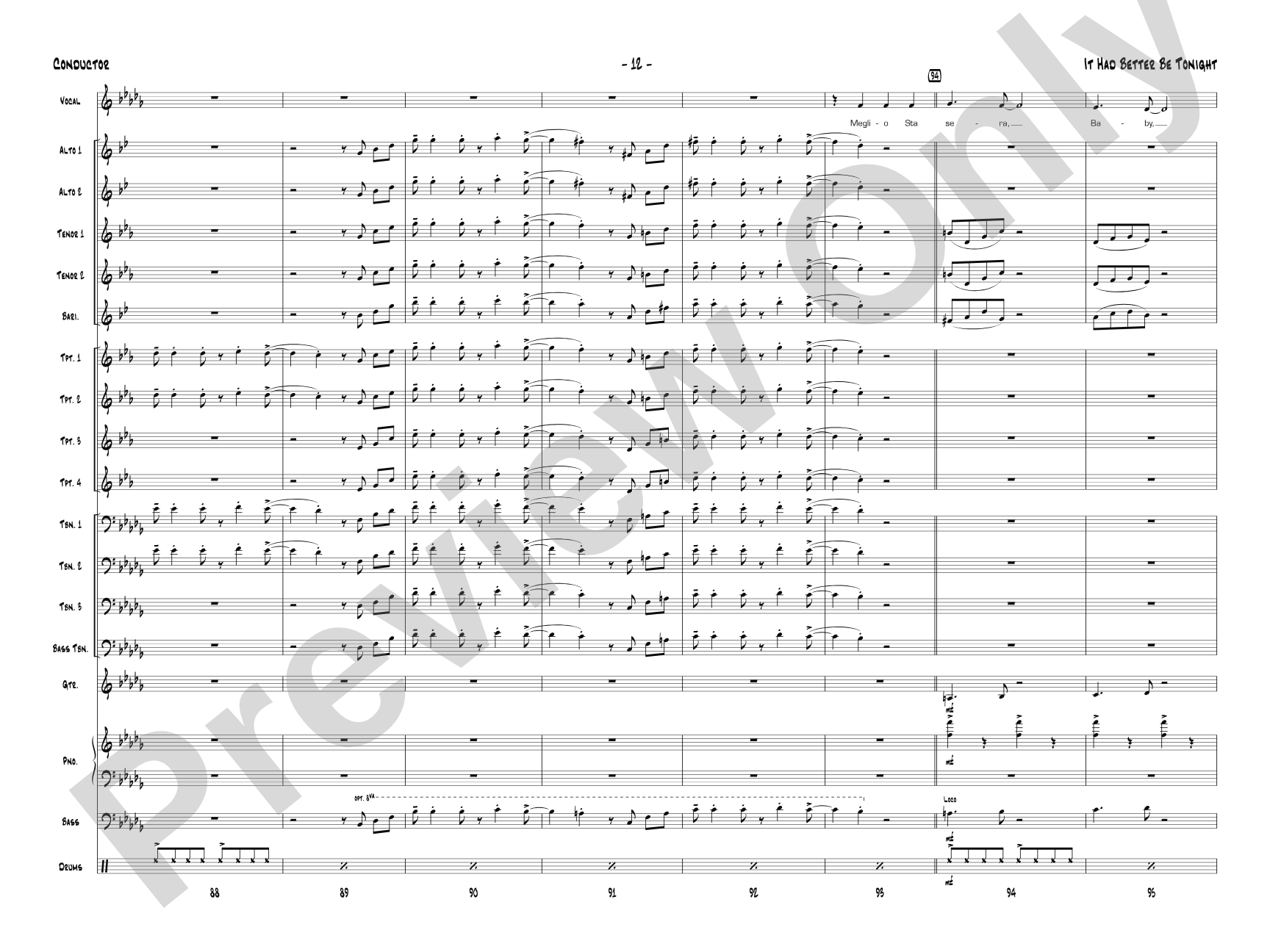
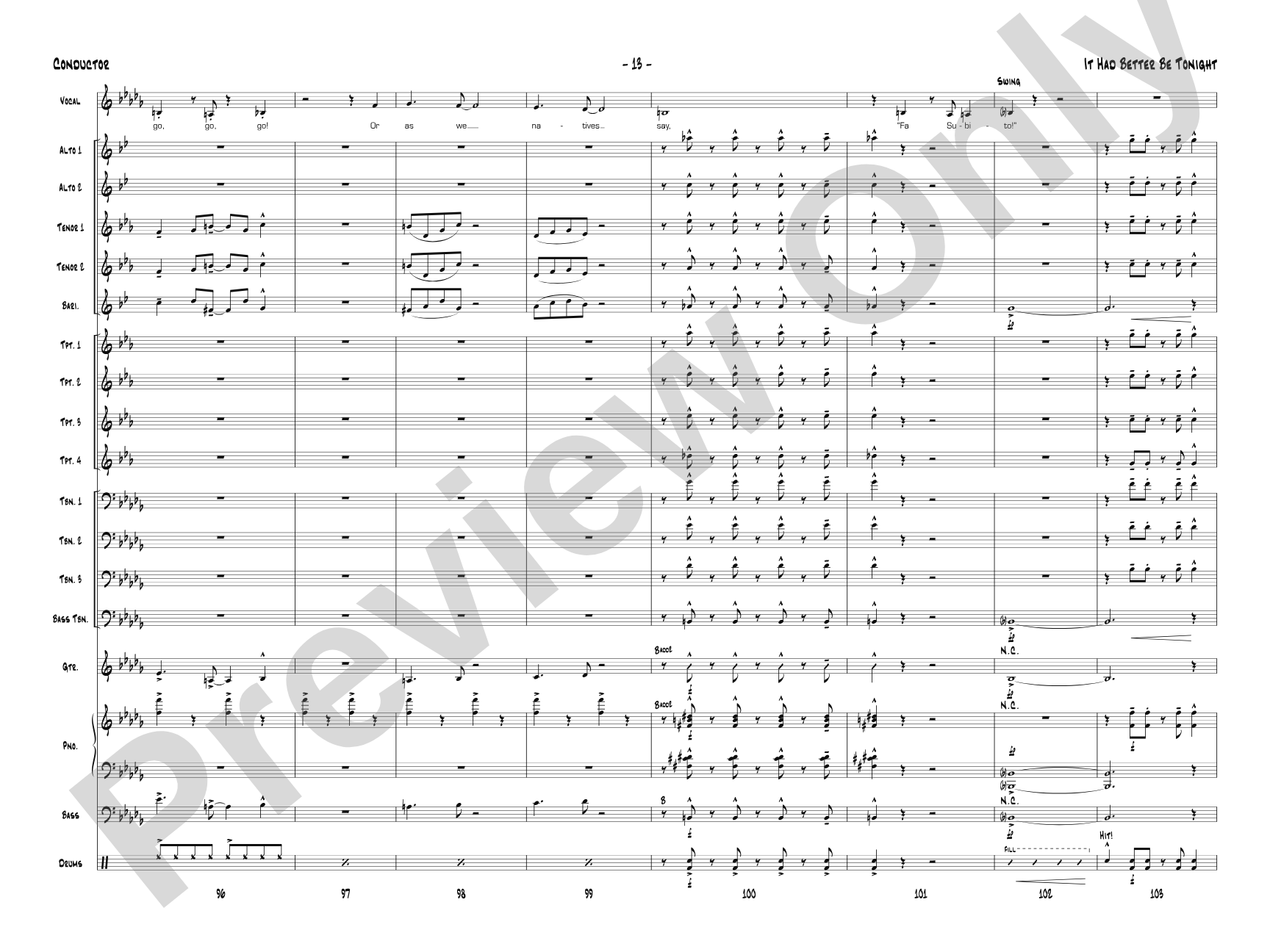
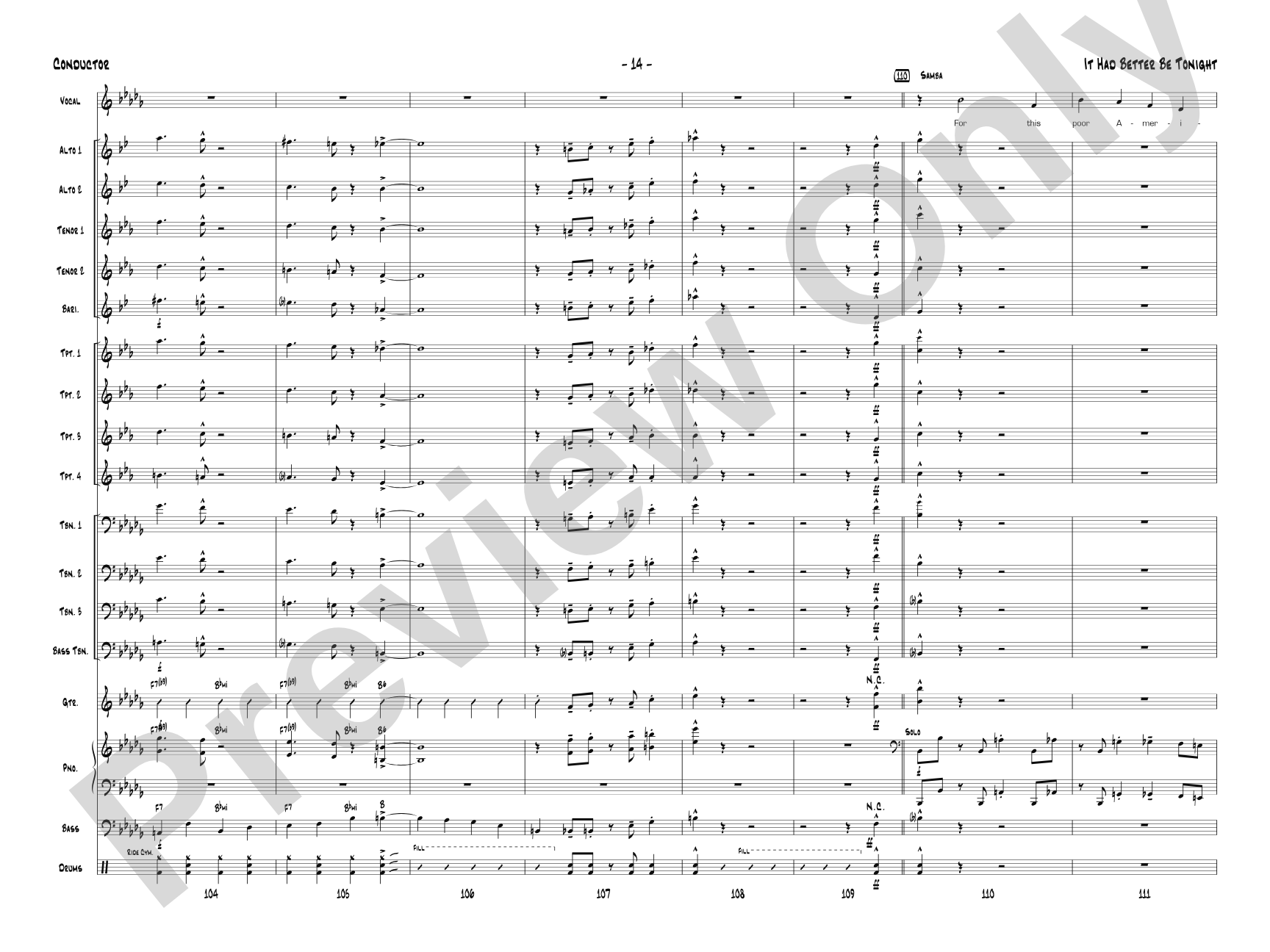
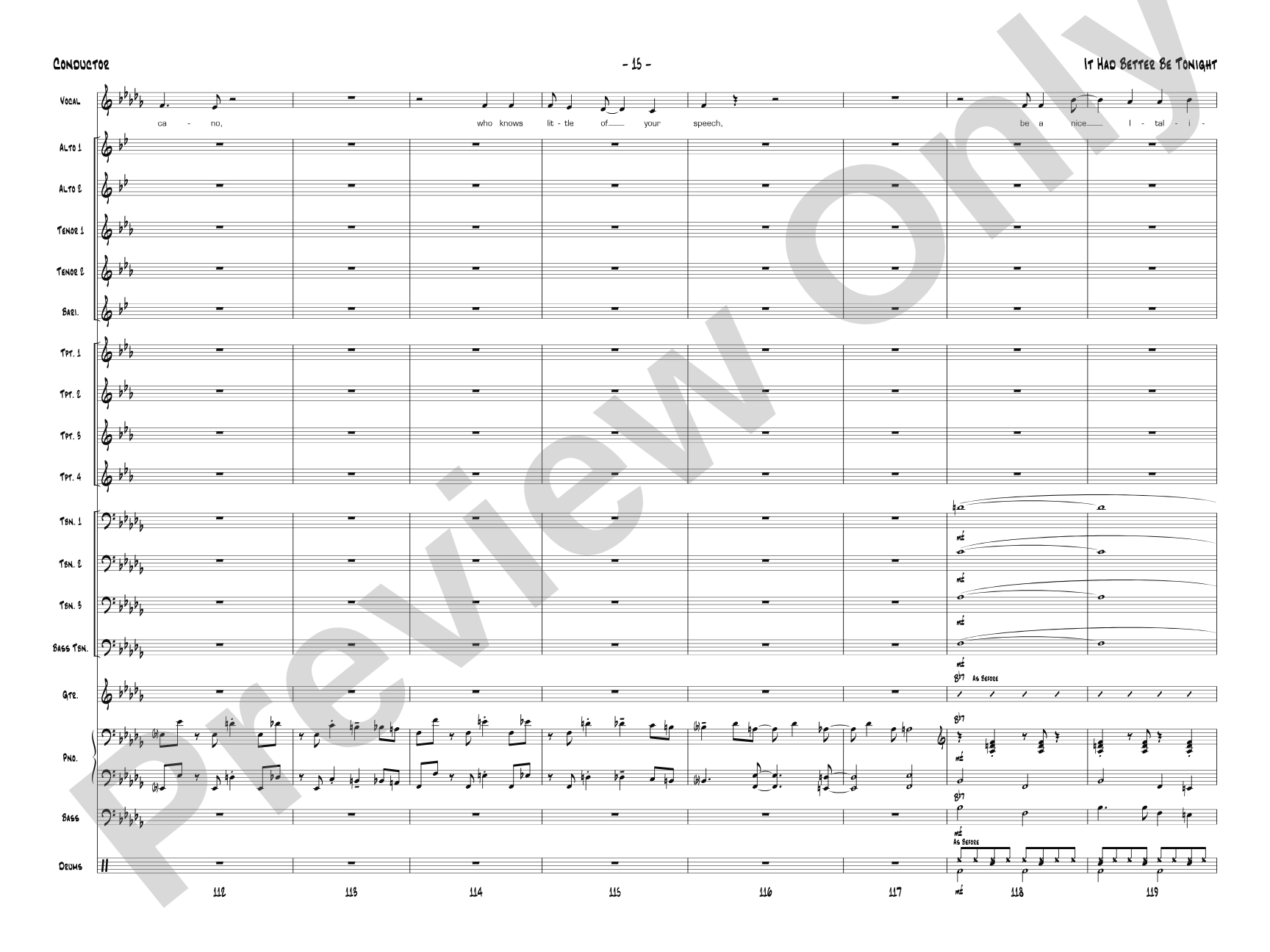
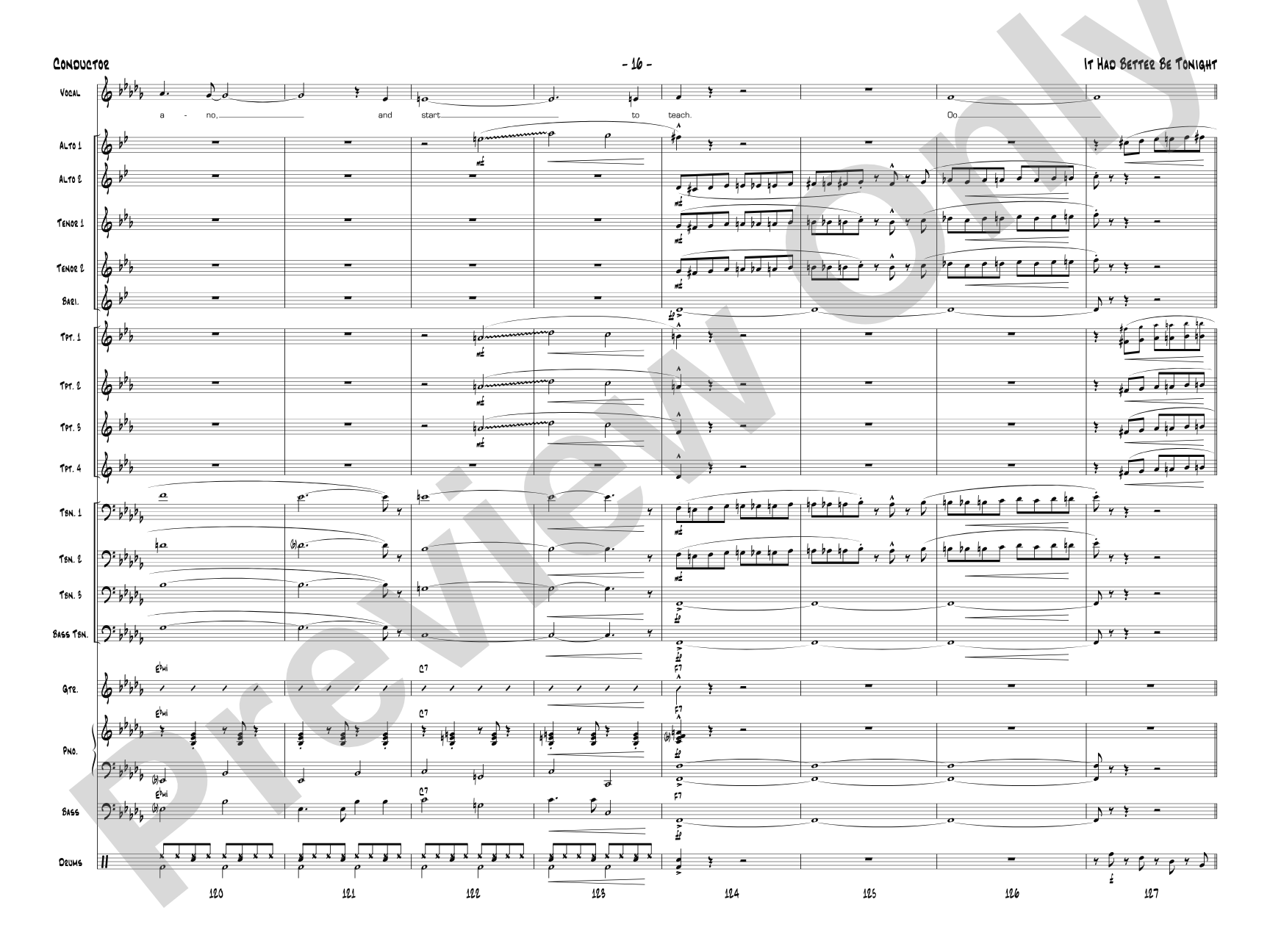
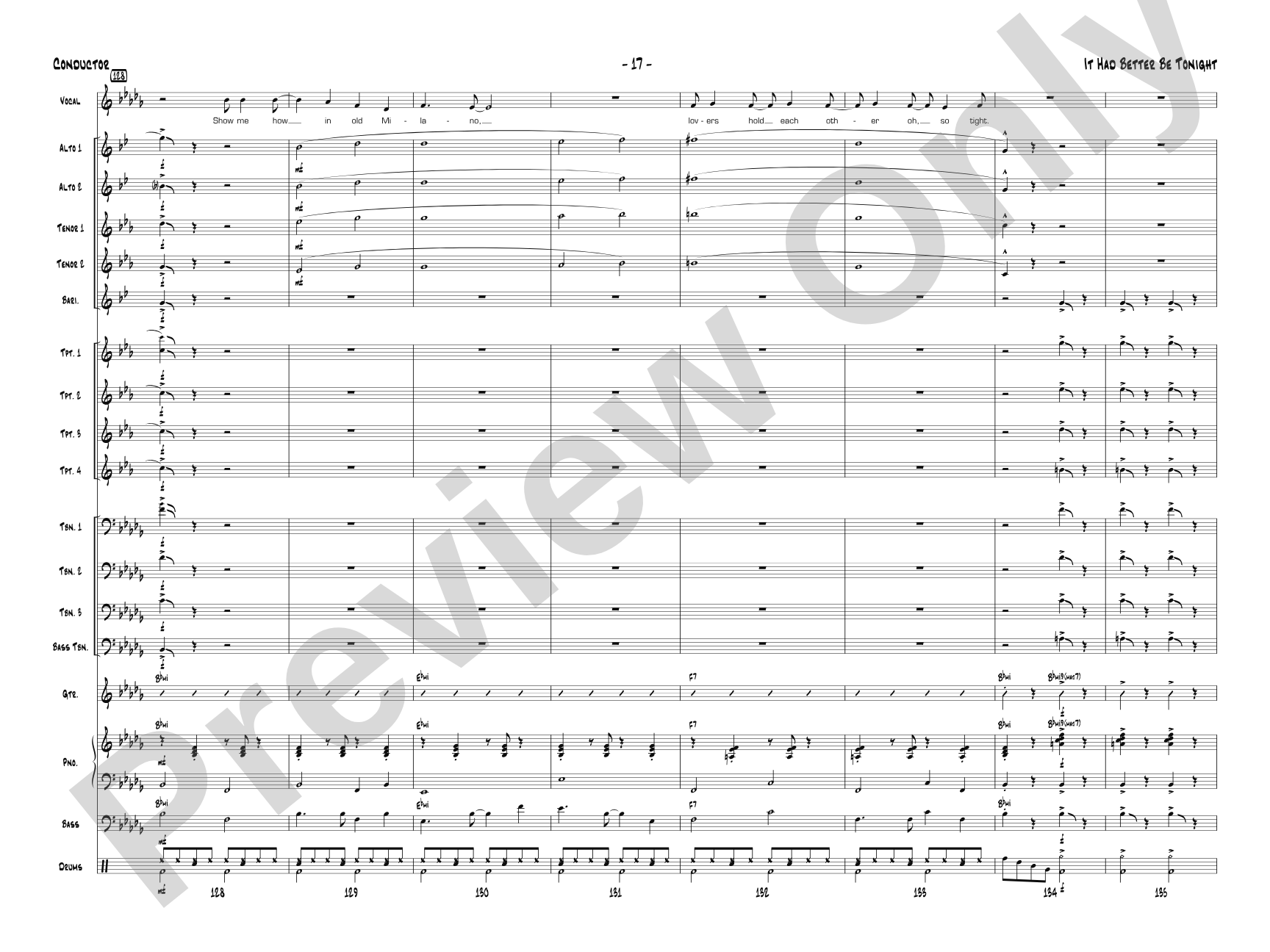
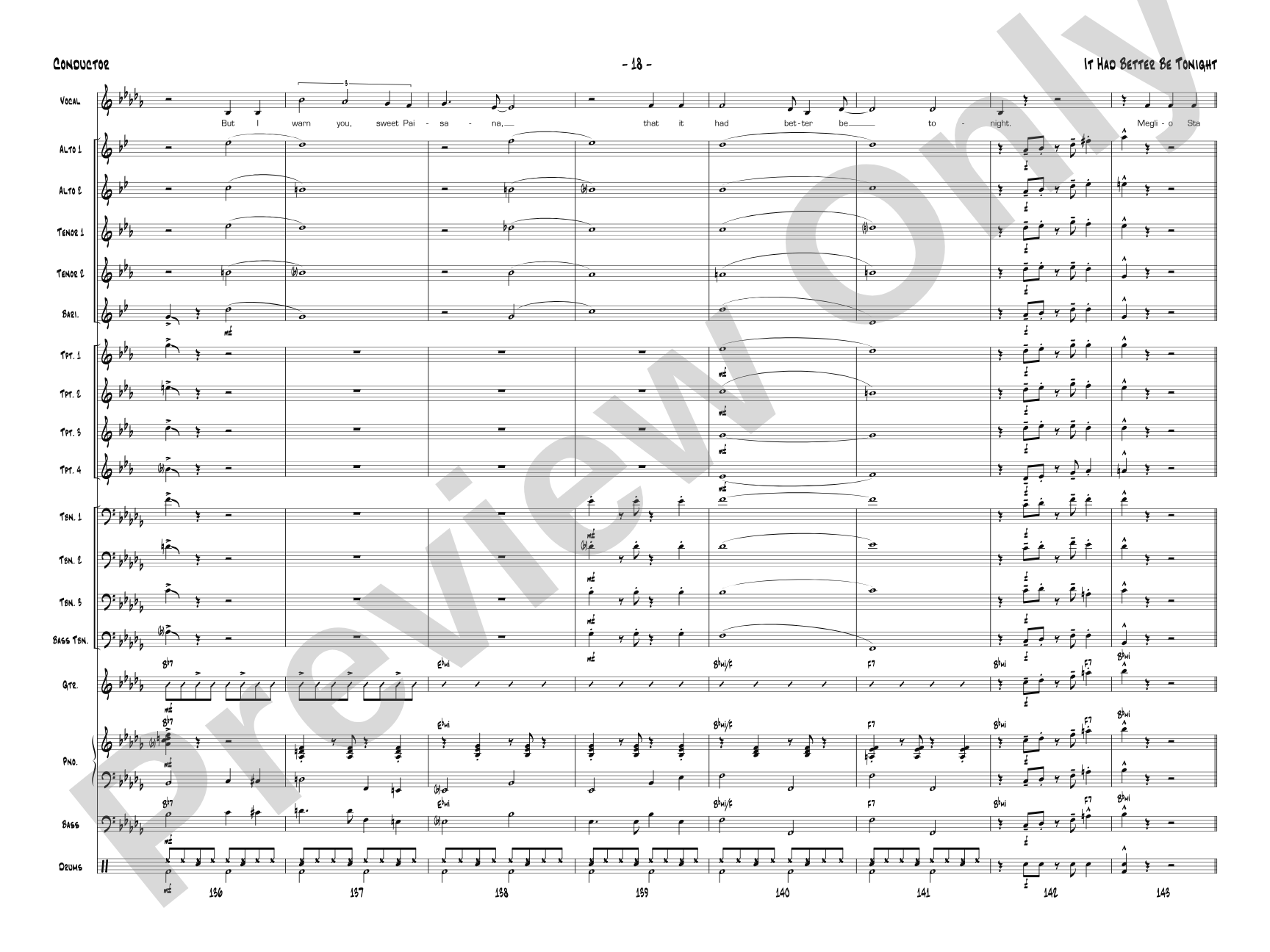
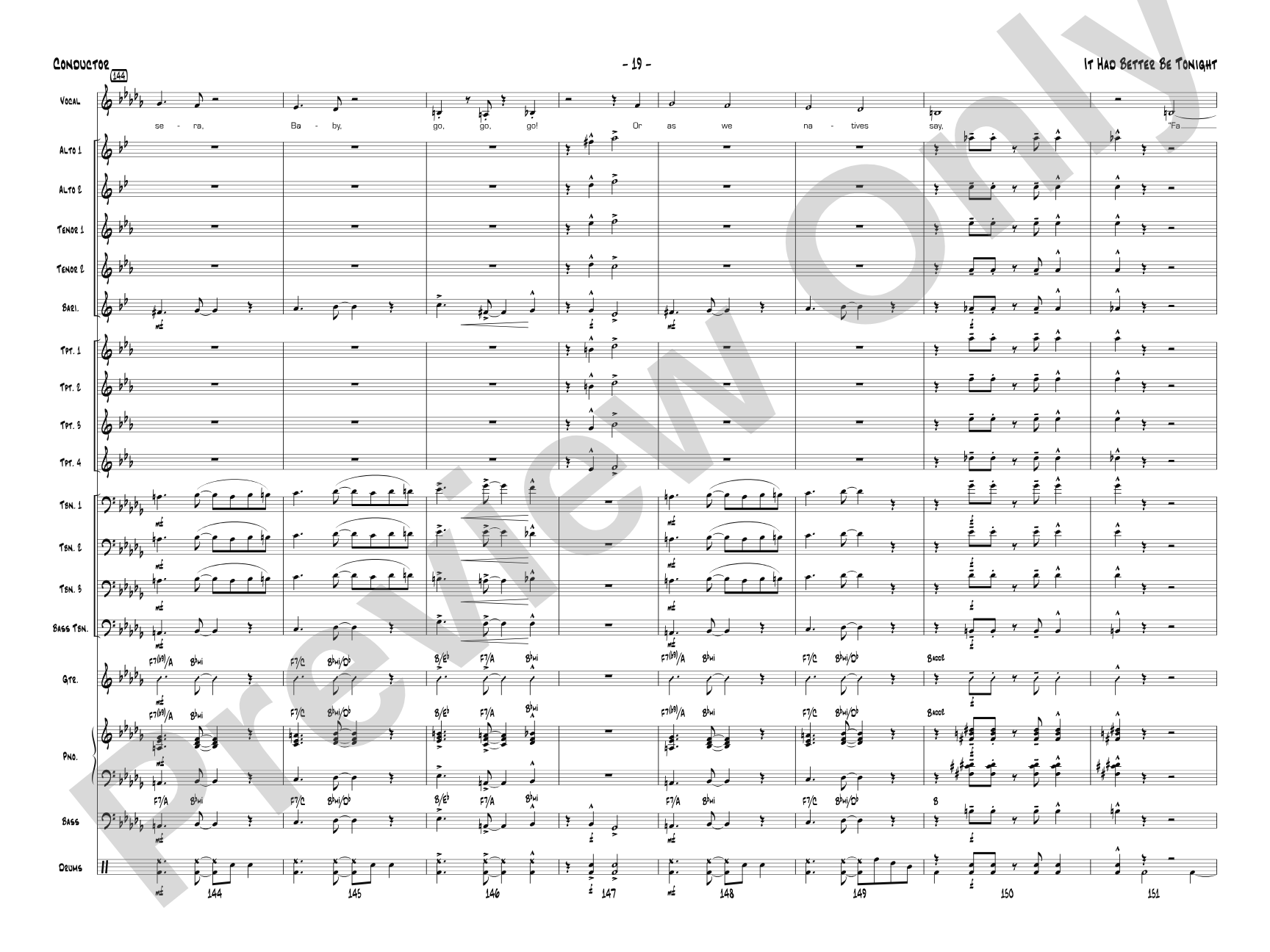
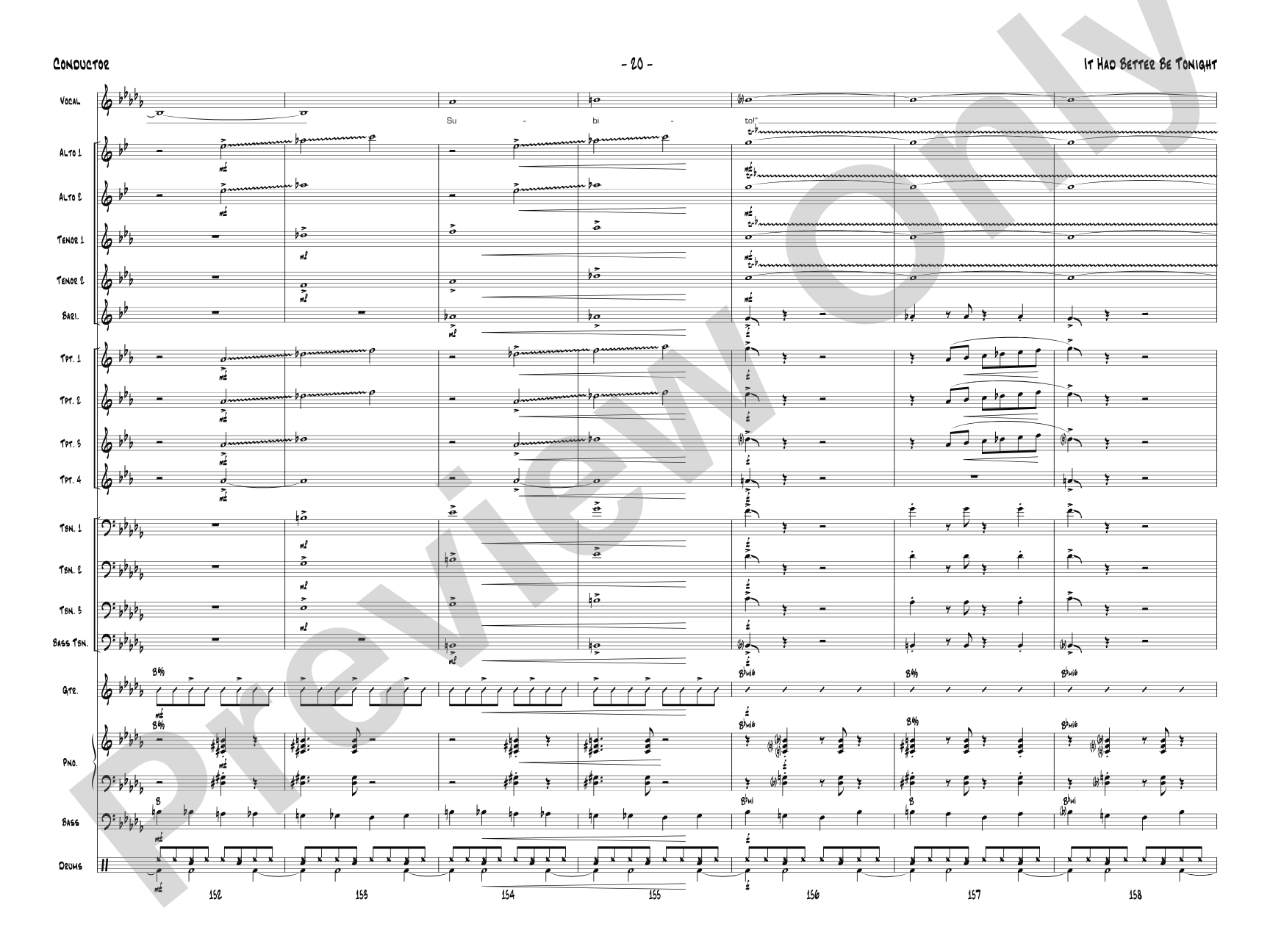
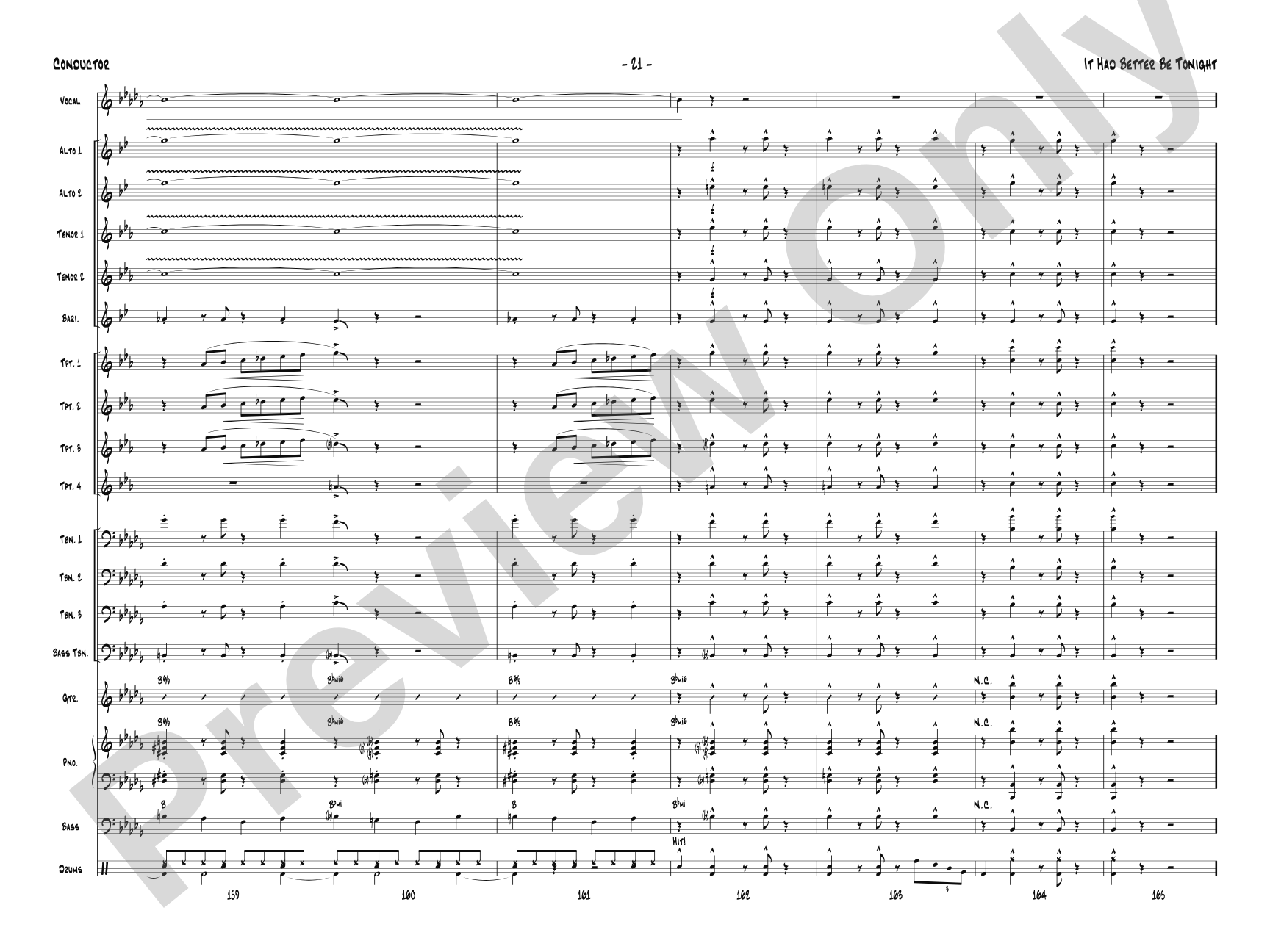

It Had Better Be Tonight: Score
Music by Henry Mancini, words by Johnny Mercer / arr. Scott Ragsdale
Grade: 3.5 (Medium)
Item: 00-PR-0004852
$10.00
Pickup currently not available
Description
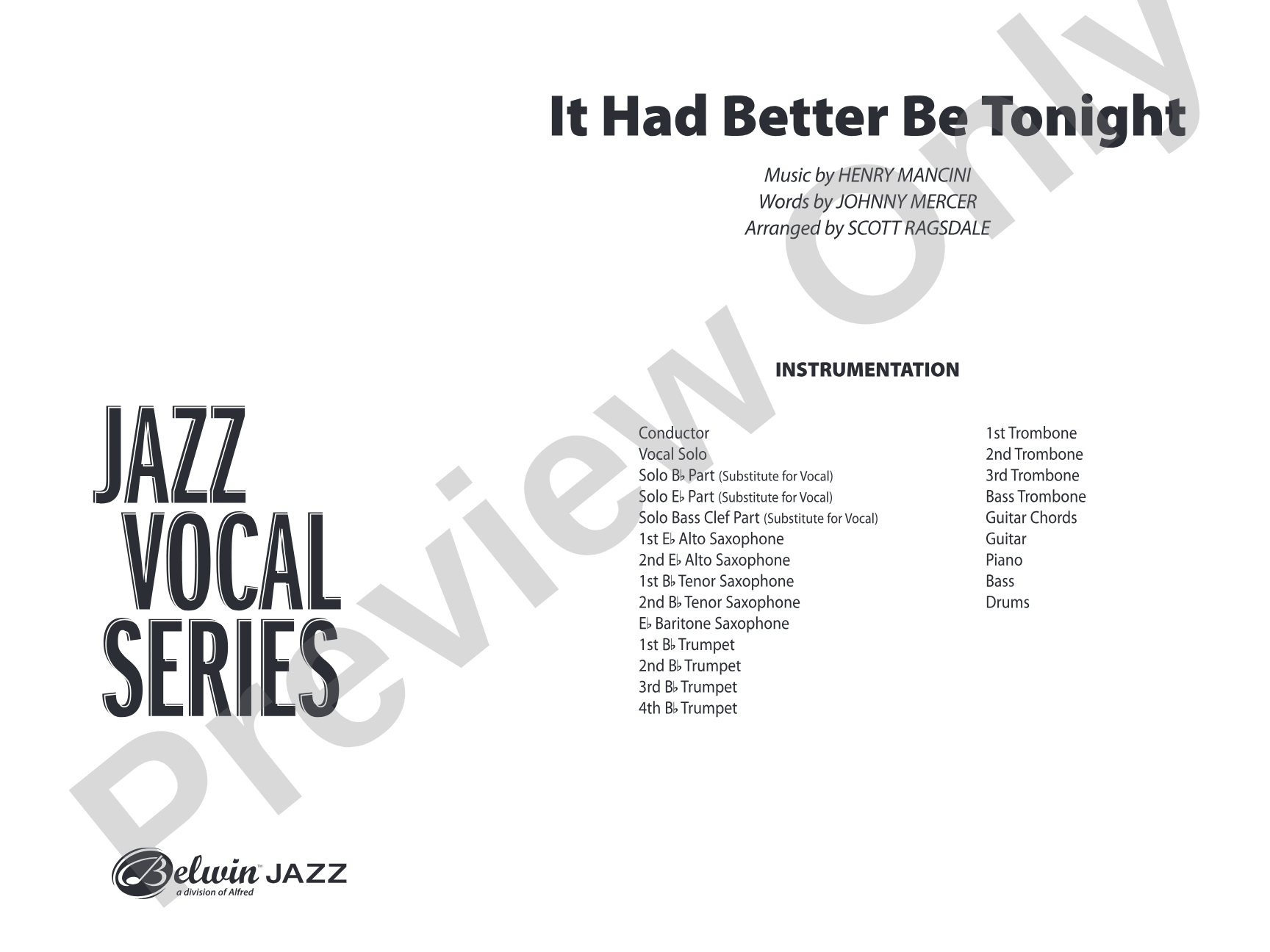
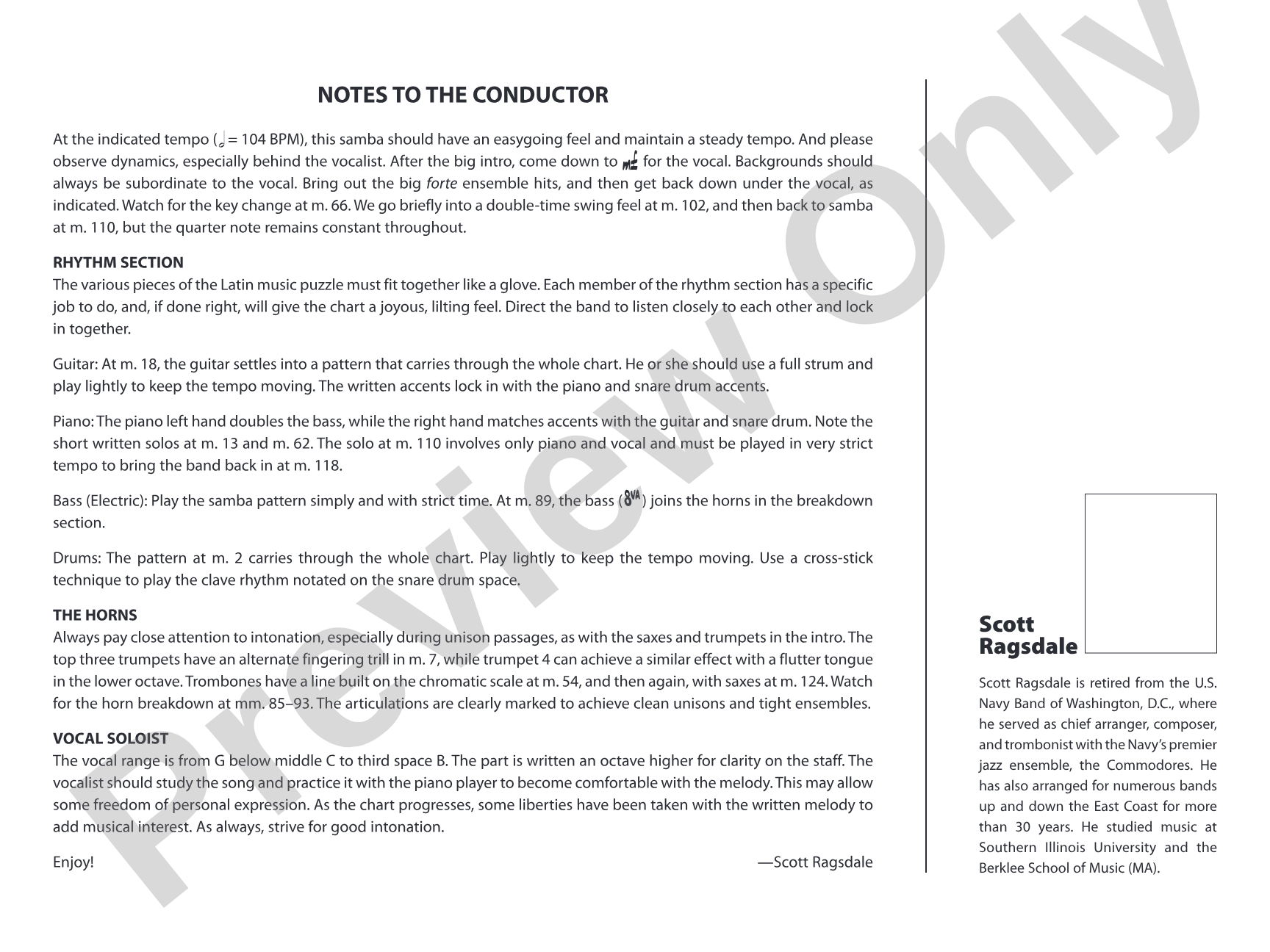
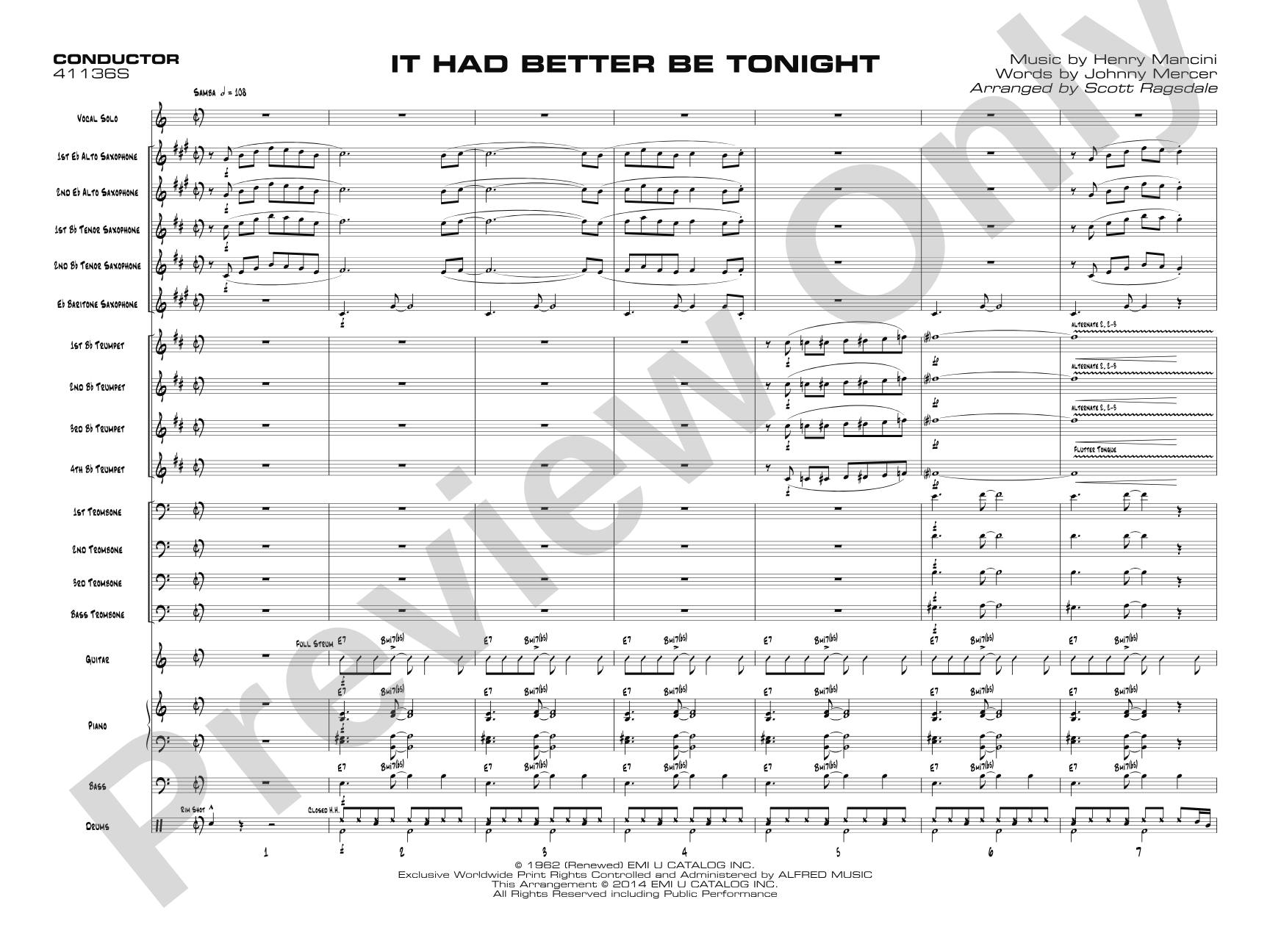
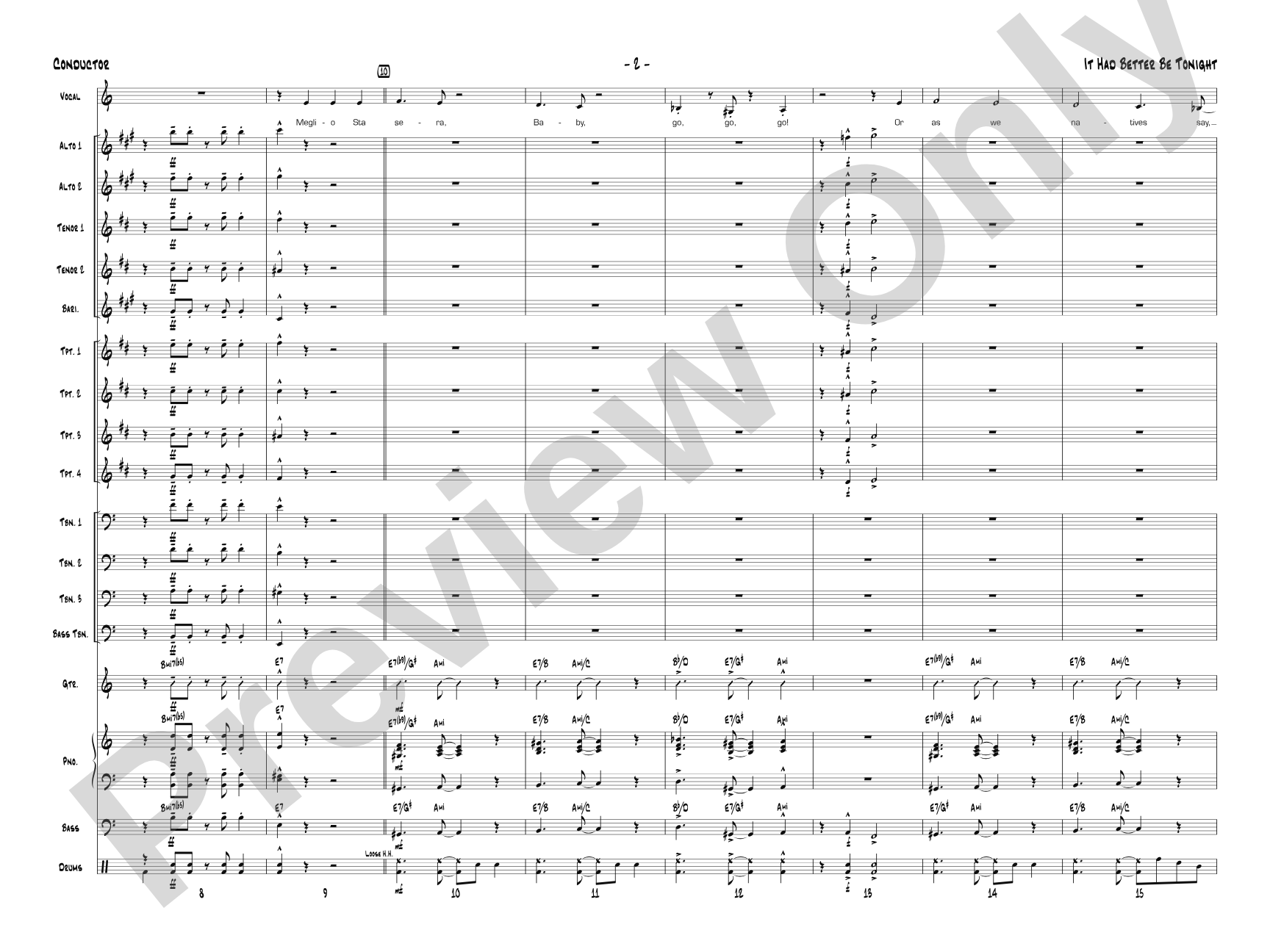
It Had Better Be Tonight arranged by Scott Ragsdale is a great vocal chart! A samba treatment of this popular song, the vocalist range is G below the staff to middle line B. With great horn parts, lead trumpet range to written A, and a tempo around 104 BPM in cut time, this is an excellent vocal chart. Includes optional lead parts for B-flat, E-flat, and bass clef instruments. (3:19)


Don't just read it, hear it, play along with it, and watch your students grow with it. In MakeMusic Cloud, It Had Better Be Tonight: Score comes alive with professional accompaniment, adjustable tempo, and built-in practice tools that turn solo practice into real progress.
Open in the Player
Jump straight in and assign it today.
Start Your Free Trial
Open this title and explore the full library in minutes.
Sample Audio
1
Audio File
--:--
0:00
0:00
Sample Video
Additional Details
Series:
Jazz Vocal Series
Publisher:
Alfred Music
Page Count:
90
SKU:
00-PR-0004852
More about this title
About the Composer: Henry Mancini
Henry Mancini (1924-1994) composed some of the most recognizable melodies in film and popular music, earning four Academy Awards and eighteen Grammy Awards over his prolific career. His gift for crafting singable, sophisticated melodies that work equally well in classical orchestration and jazz settings made him a bridge between concert music and commercial songwriting. For music educators, Mancini's output offers accessible entry points into understanding film scoring, orchestration, and the craft of memorable melody writing.
Why we love this
Scott Ragsdale's samba arrangement keeps the vocal line front and center while giving your rhythm section and horns a genuinely fun vehicle that doesn't require high technical chops from the ensemble. The optional lead parts open this up to bands and mixed ensembles, making it programmable in multiple settings without sacrificing the groove or Mancini's elegant songwriting.
What to expect
Warm, sophisticated, and rhythmically alive. The samba treatment gives the classic Mancini ballad a lilting, dance-floor confidence without losing the understated elegance of the melody. It feels like a late-night lounge set where the bandstand and the dance floor finally agree with each other.
Who it's for
Bands or jazz ensembles at the intermediate level looking for a vocal feature that doesn't demand a technically advanced vocalist. Directors programming mixed instrumentation will appreciate the flexible lead parts that let you adapt the arrangement to your available players.
How to get the most out of it
- Lock the tempo in cut time at 104 BPM before the vocalist enters; the samba clave pattern needs to feel secure in the rhythm section so the vocalist can breathe naturally across the melody.
- Balance the vocalist's range (G below staff to B on the middle line) with the ensemble; at a medium grade level, singers often undershape longer phrases, so marking breath points and dynamic contours in rehearsal prevents sagging.
- Have the lead trumpet player (written range to A) listen to the vocal line during rehearsal; the horn parts weave around the melody, and clarity comes when the trumpet knows exactly where the voice is going.
- Bring out the samba rhythm's cross-rhythmic energy without letting it overwhelm the lyrical content of the song; this arrangement succeeds when the dance and the song both breathe.
How to use it
Slot this into a jazz or pops concert as a solo feature that showcases your vocalist while keeping the ensemble engaged and audible. It works equally well as a concert opener (the tempo and upbeat samba groove set an inviting tone) or as a mid-set palate cleanser between harder-driving charts.
Skills your students will build
- Reading and executing samba rhythms and clave patterns
- Balancing ensemble dynamics around a featured vocalist
- Playing written ranges for trumpet and saxophone in a jazz context
- Cut time conducting and ensemble coordination at moderate tempos
- Adapting parts for different instrument families using optional lead voicings