
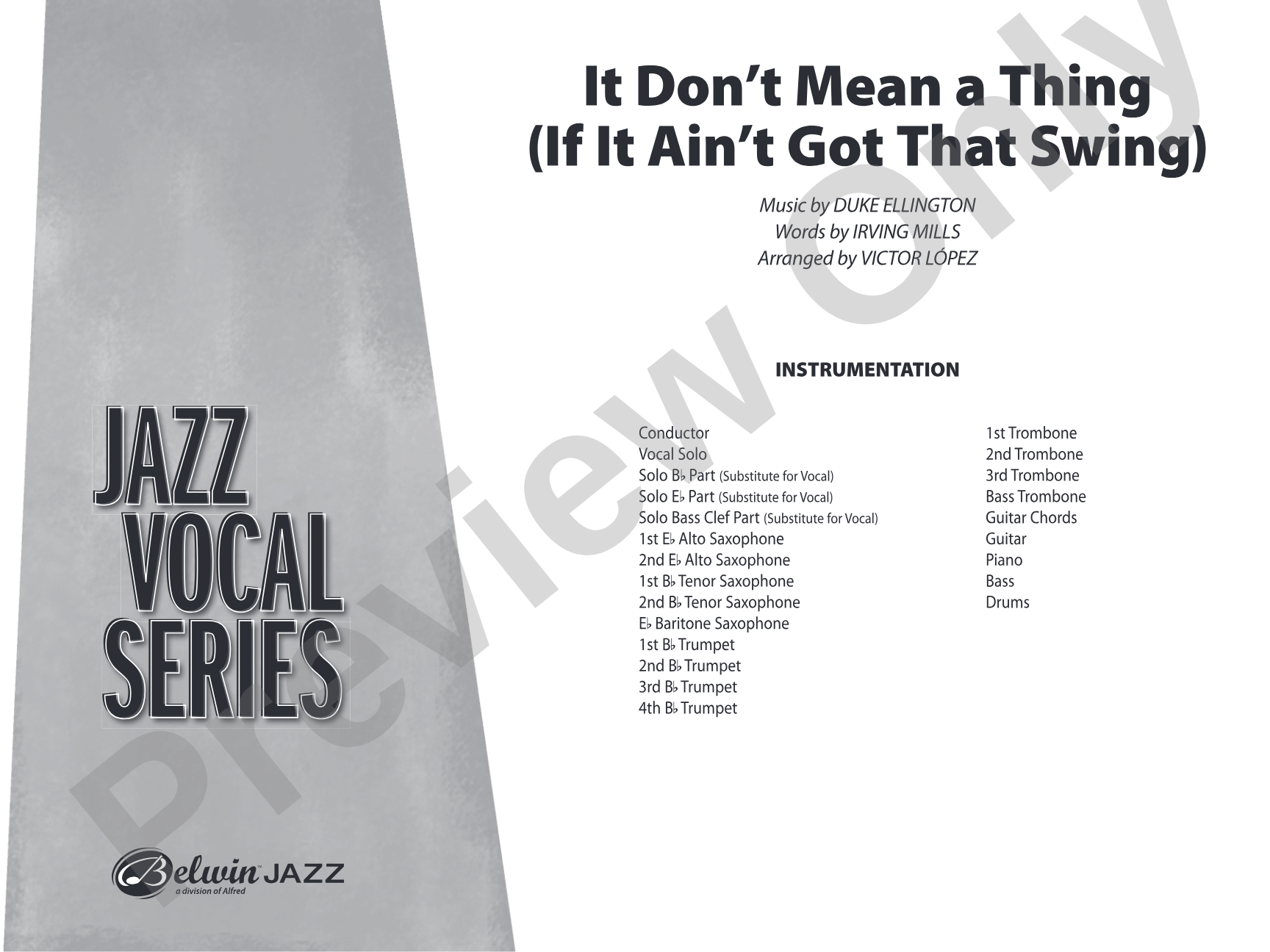
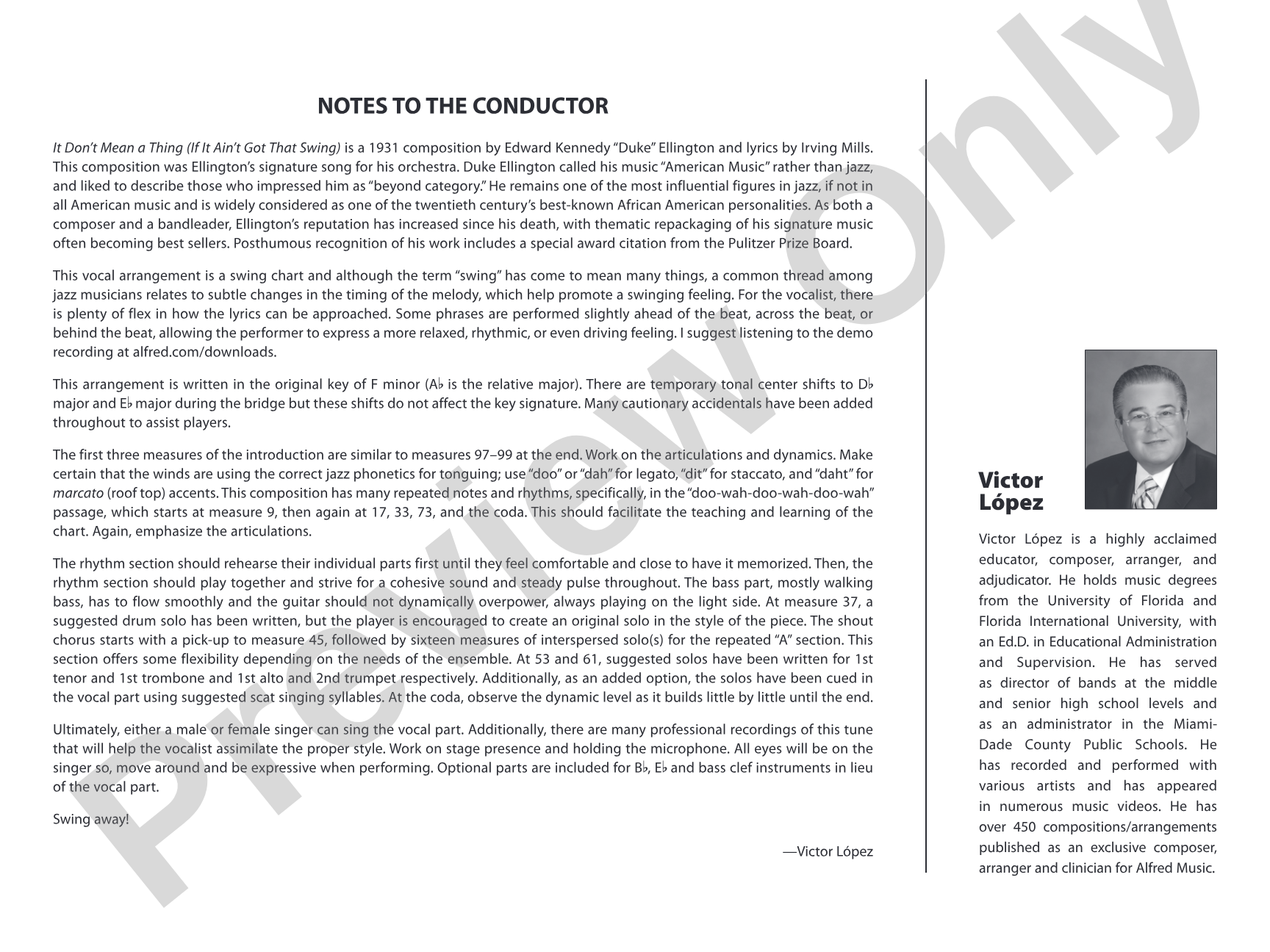
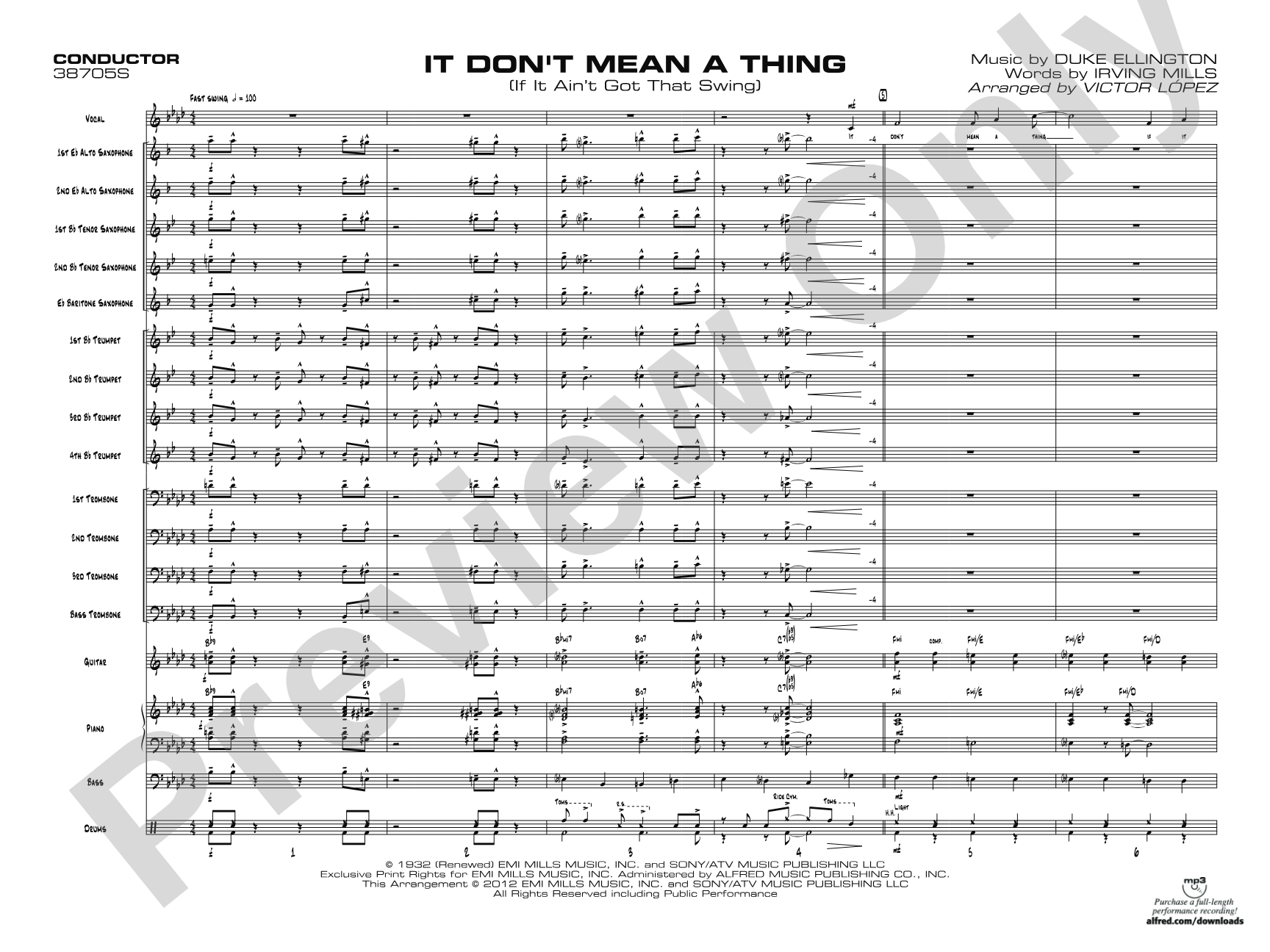
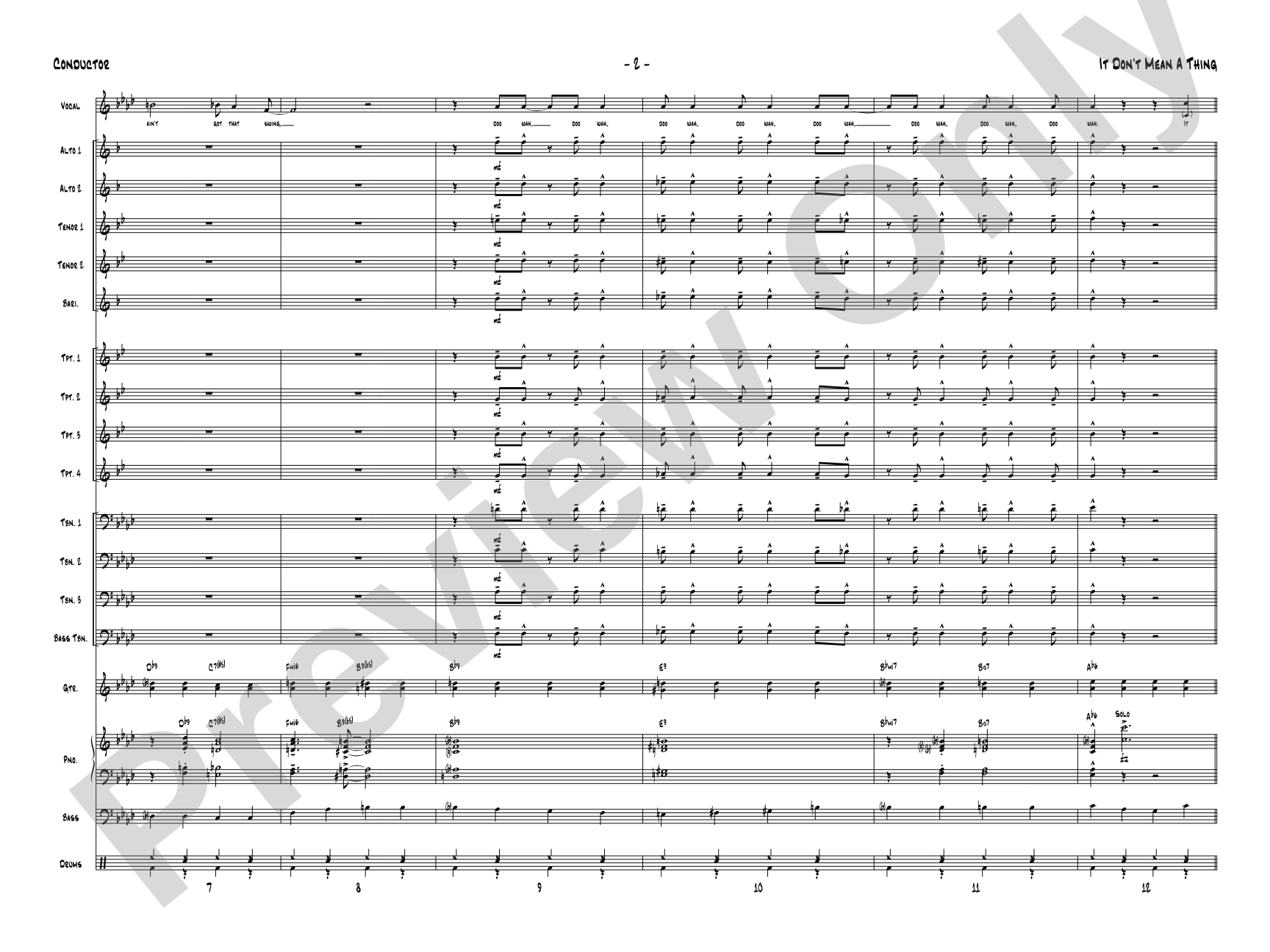
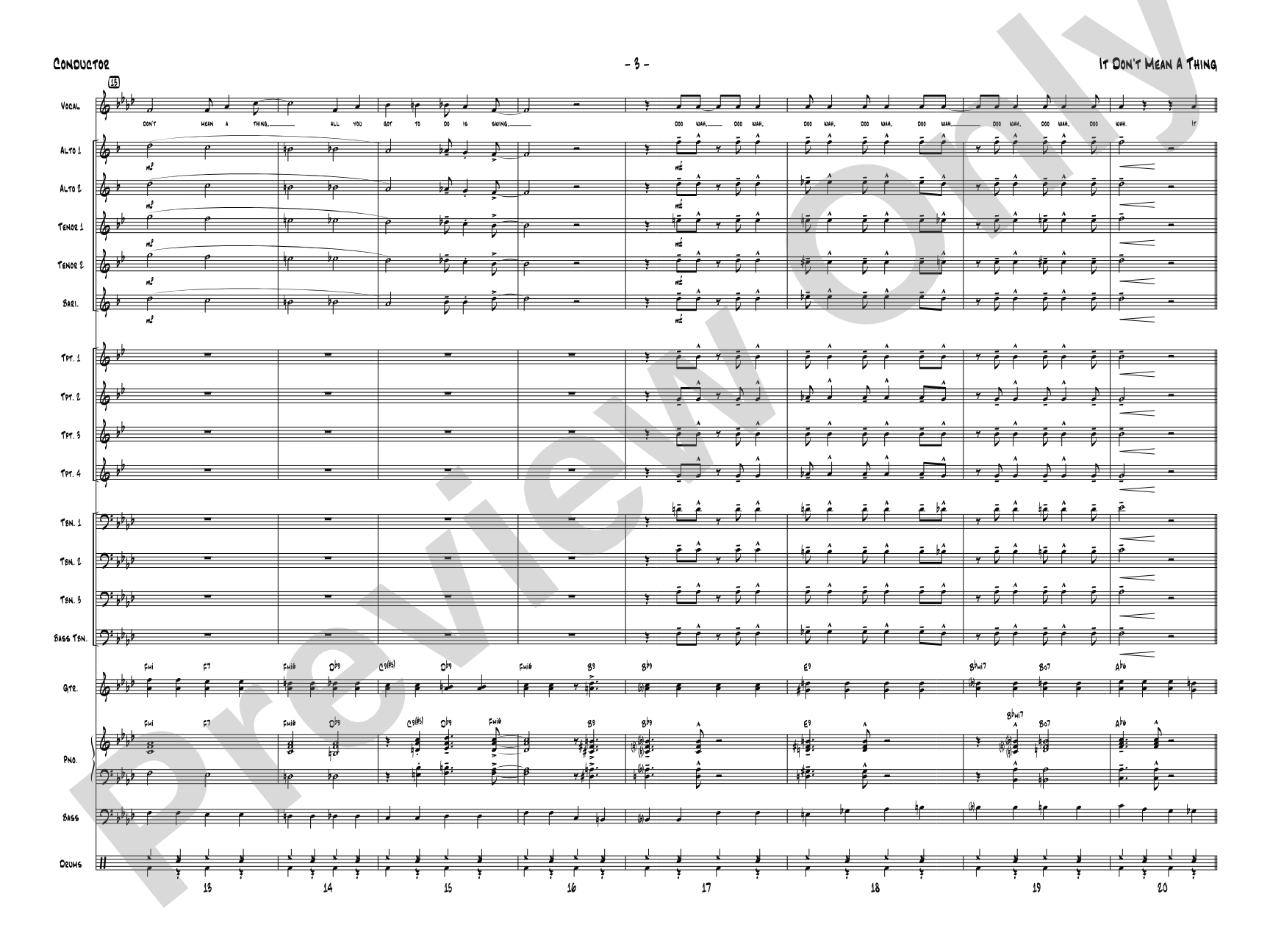
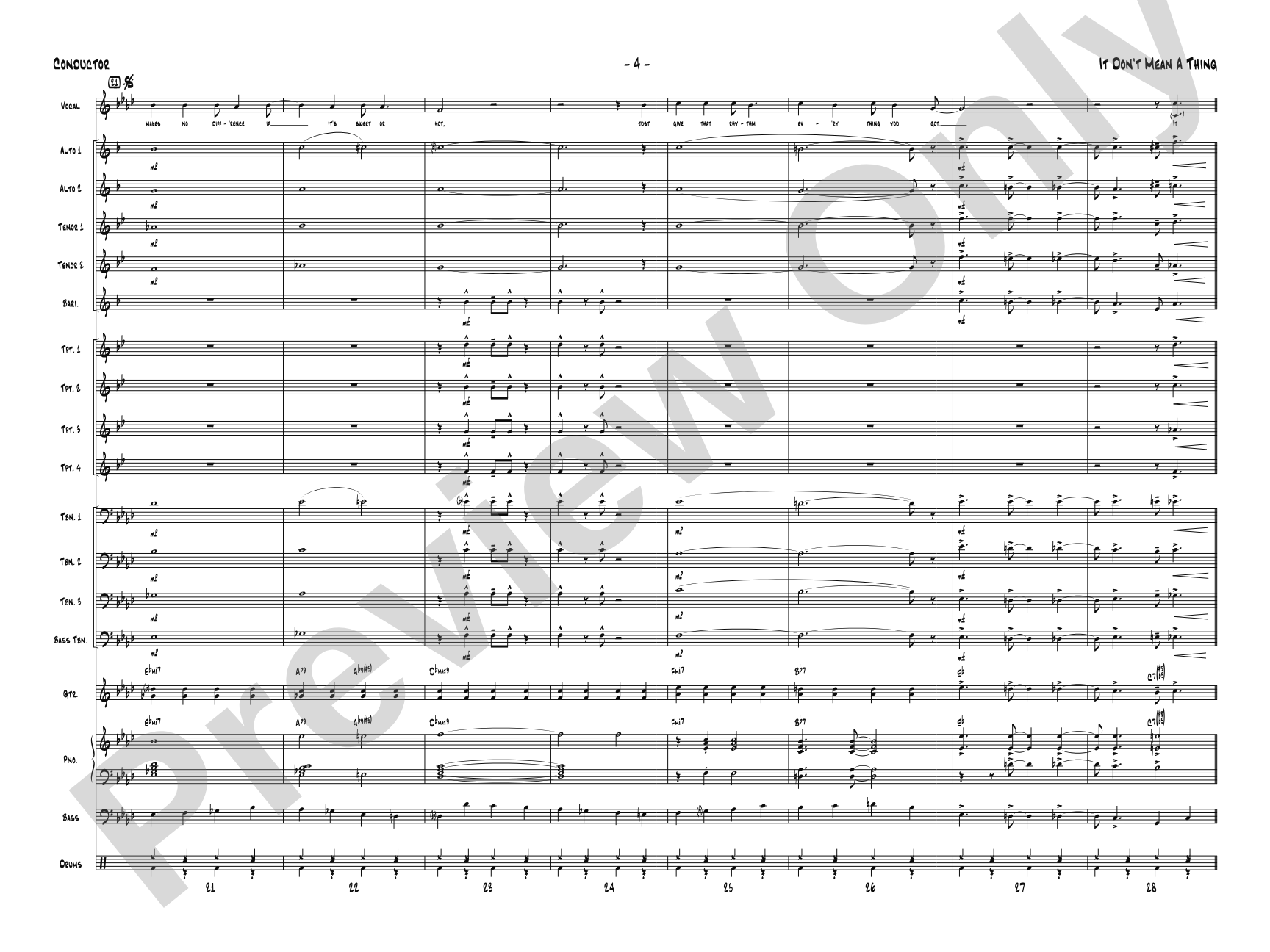
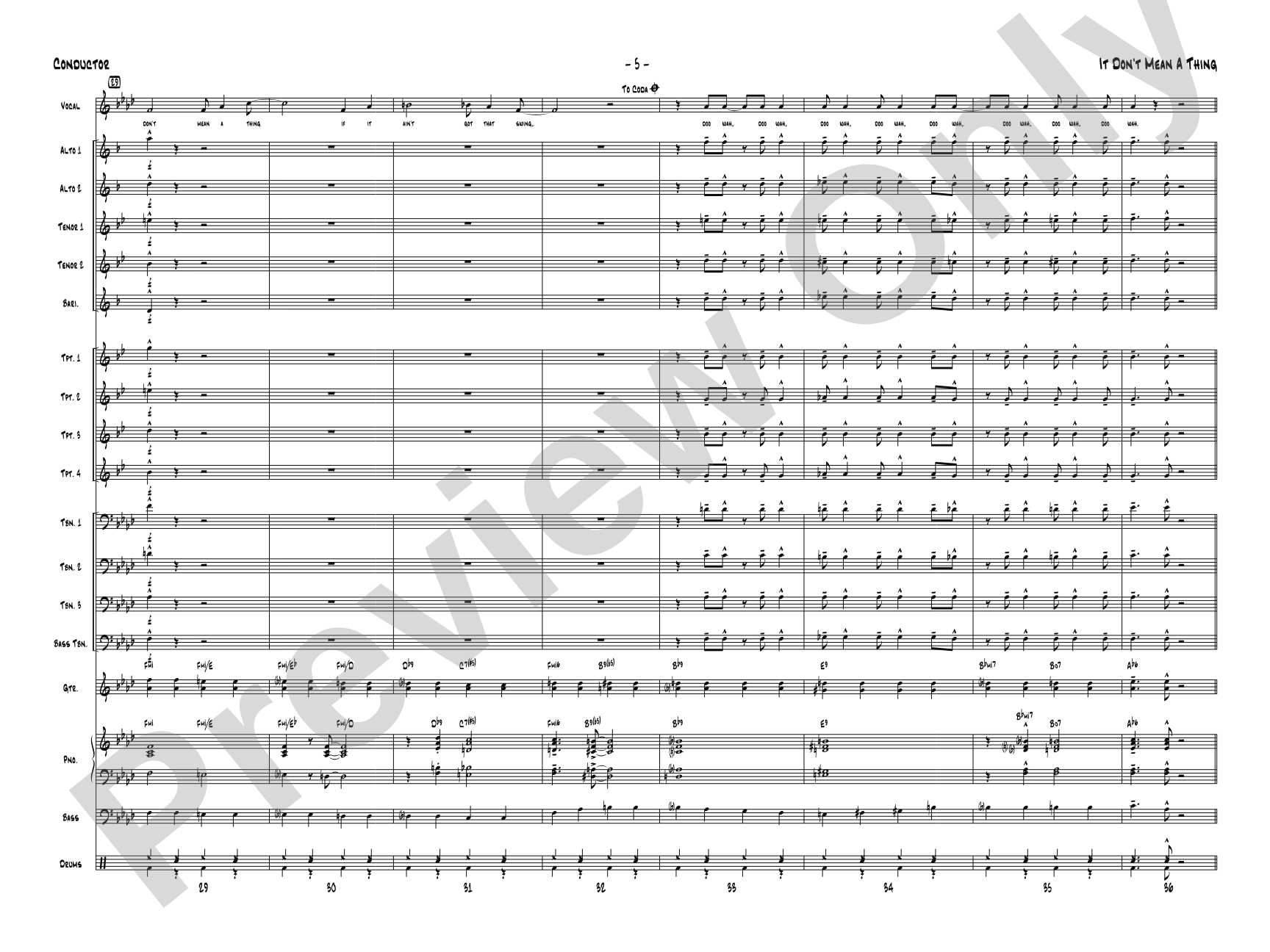
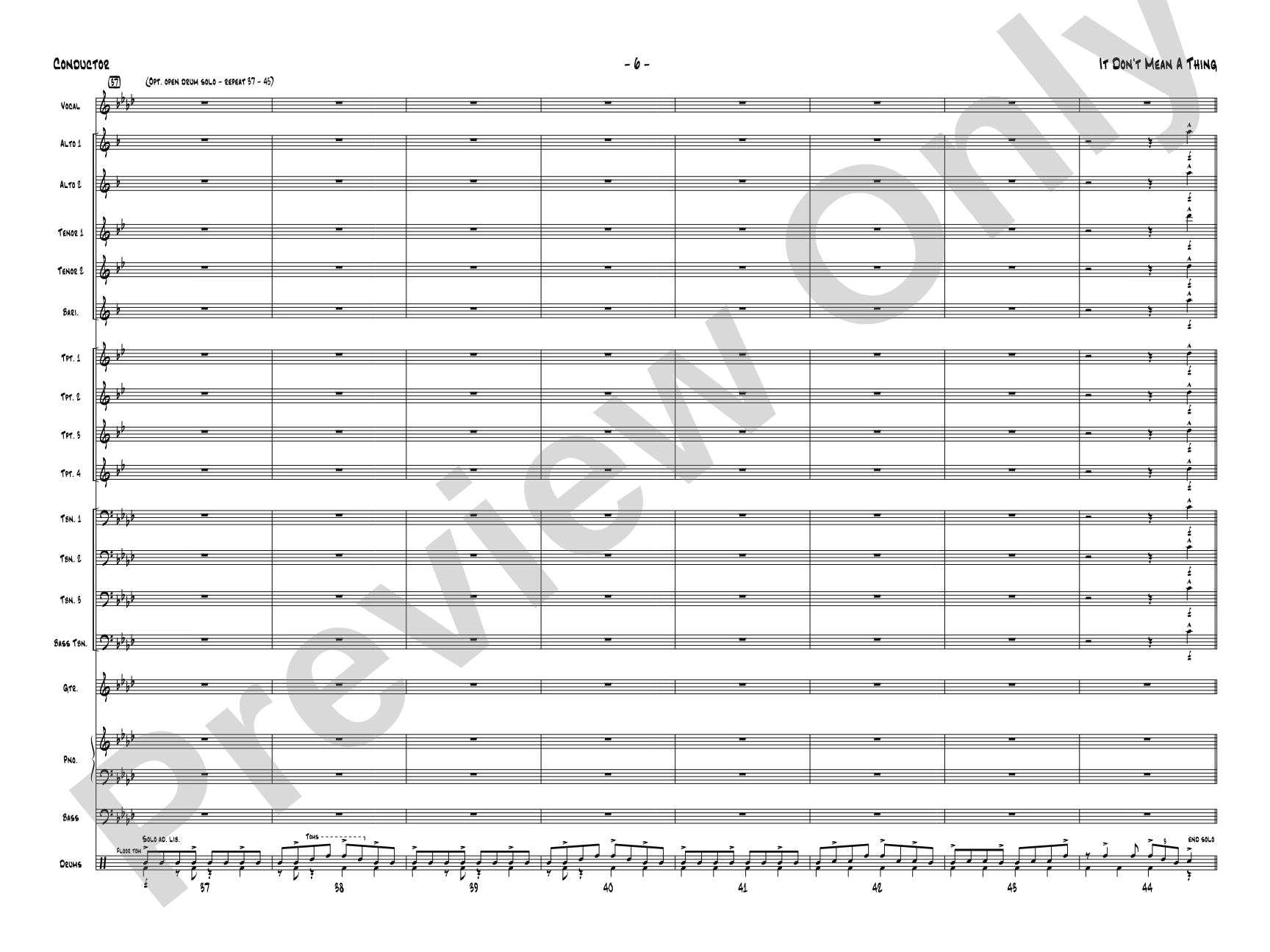
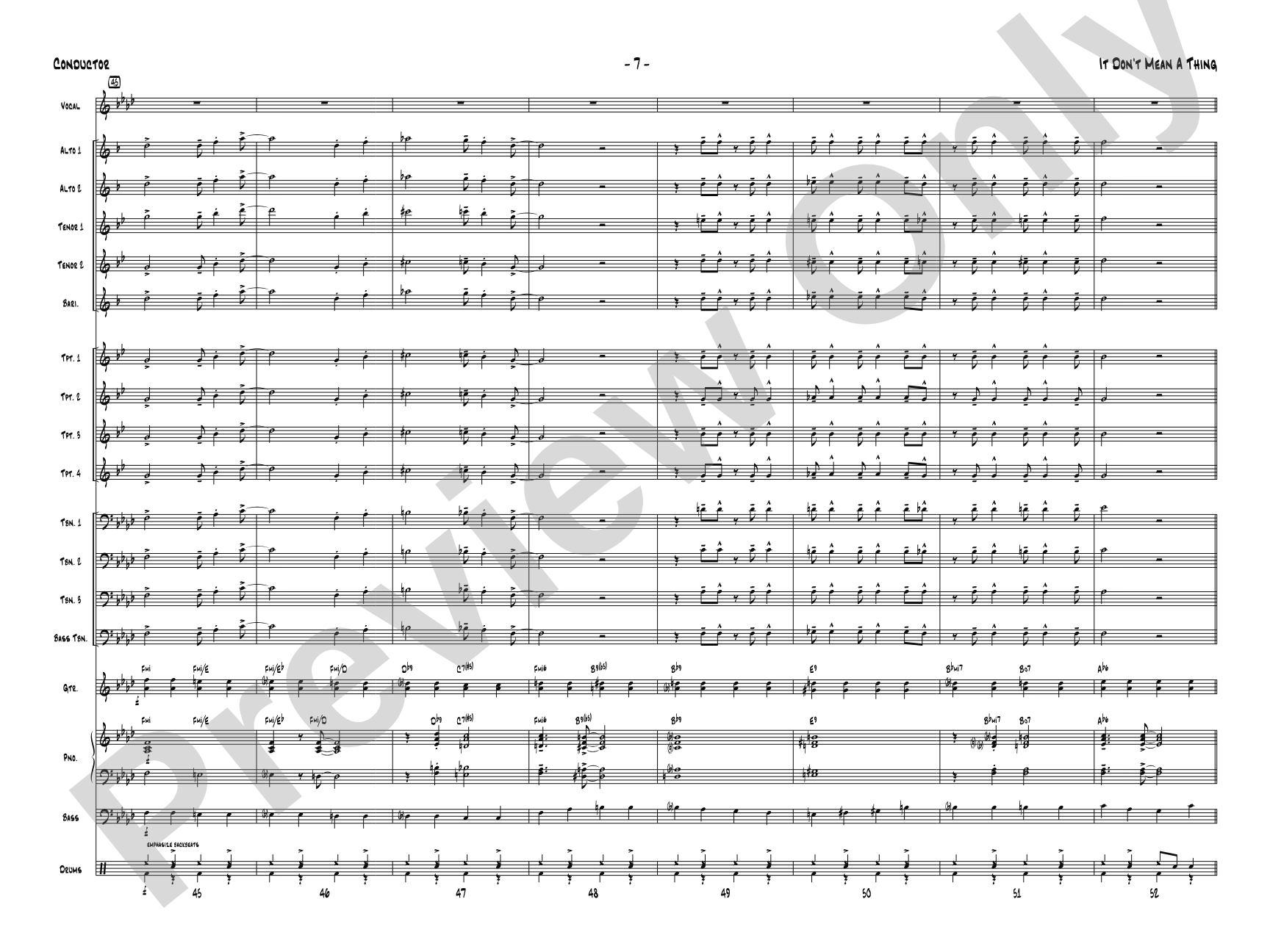
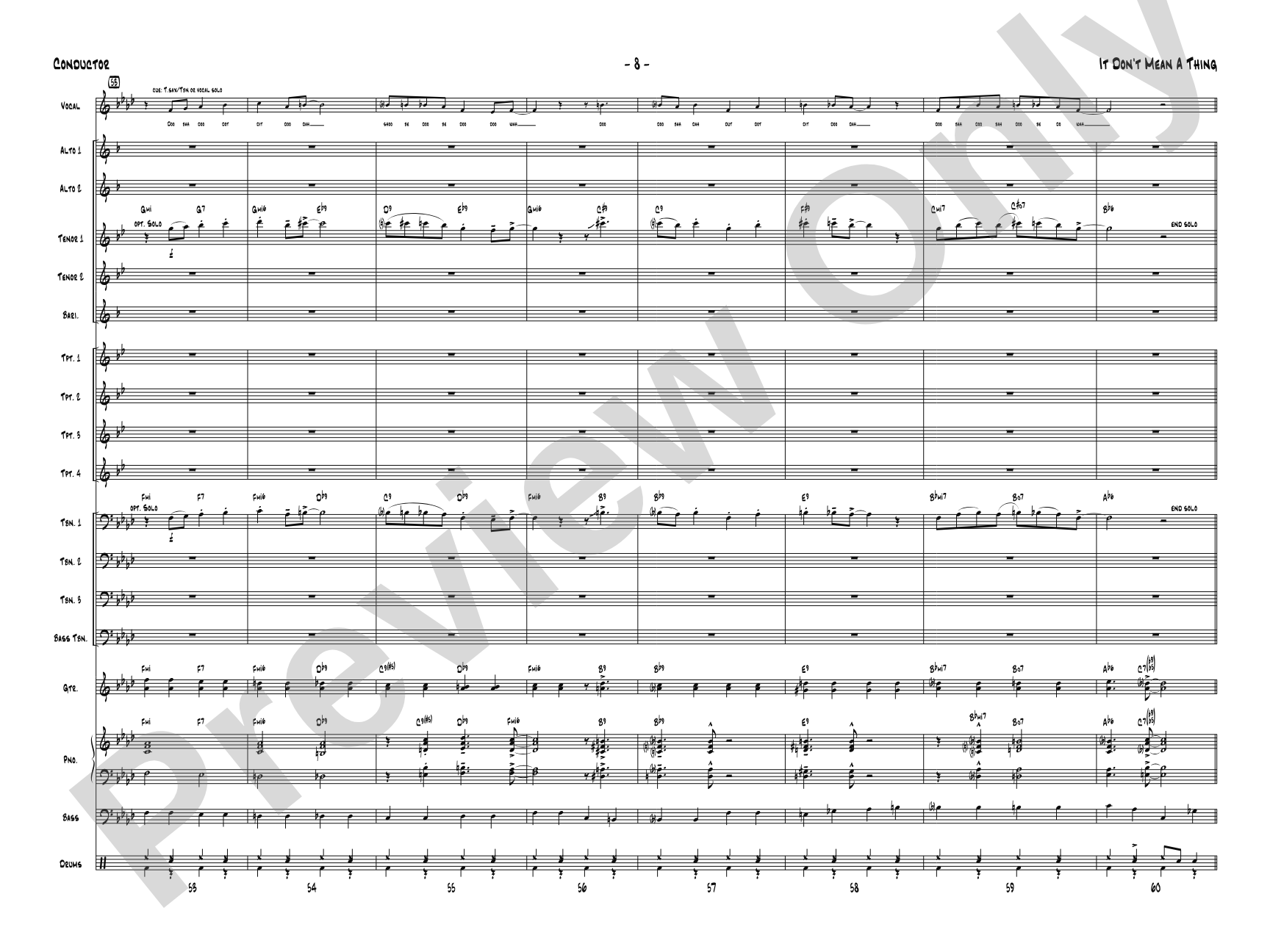
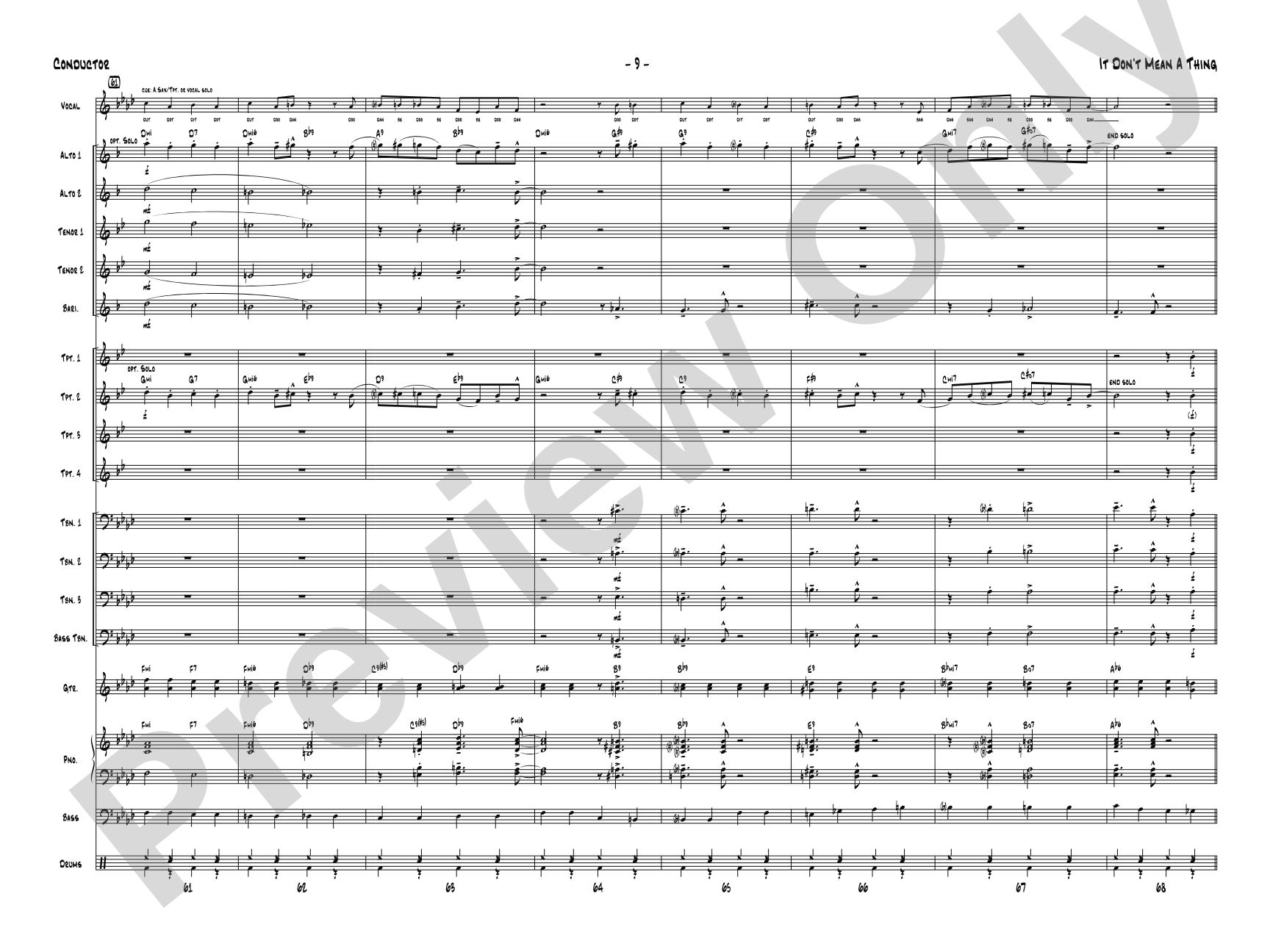
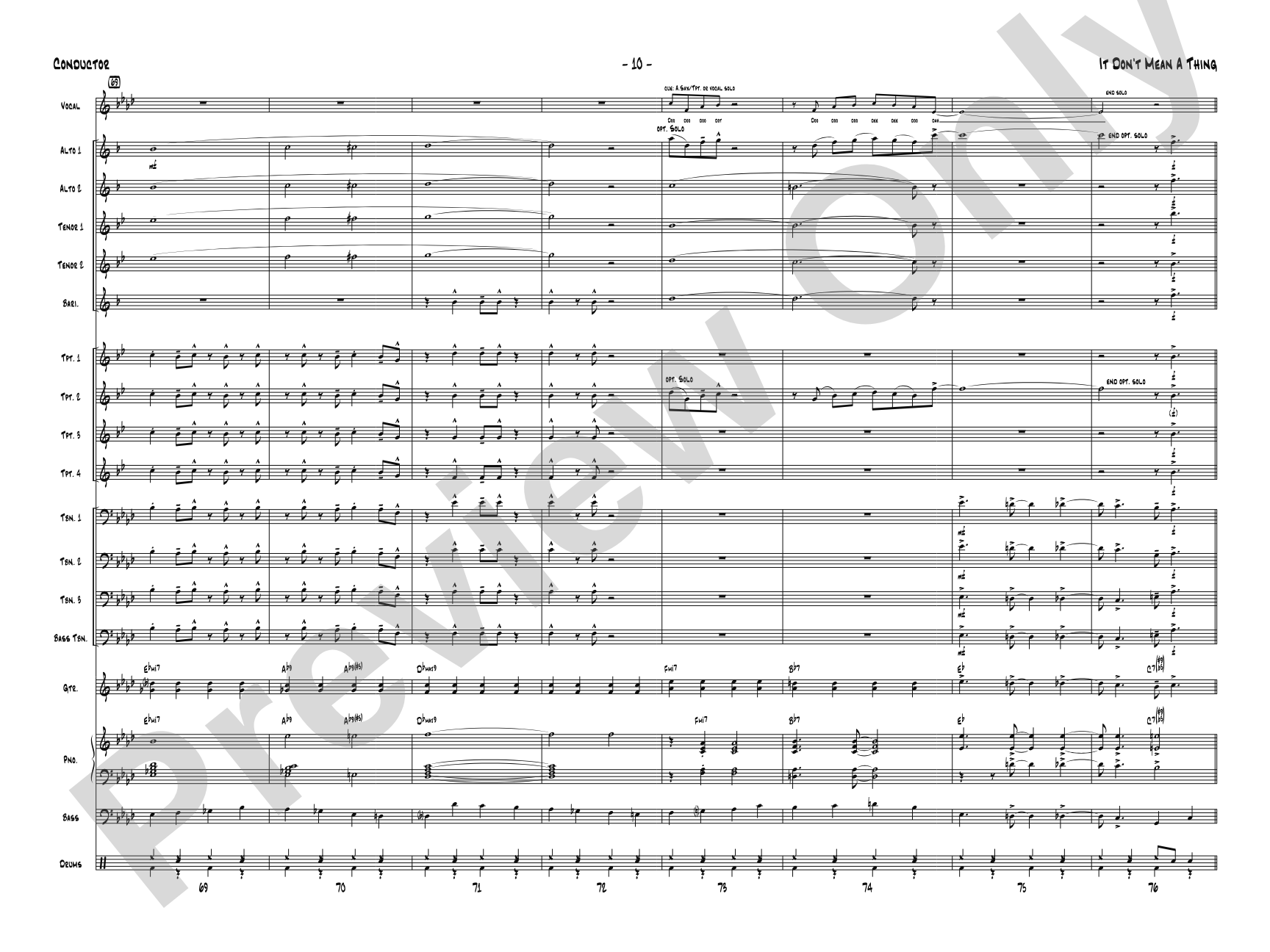
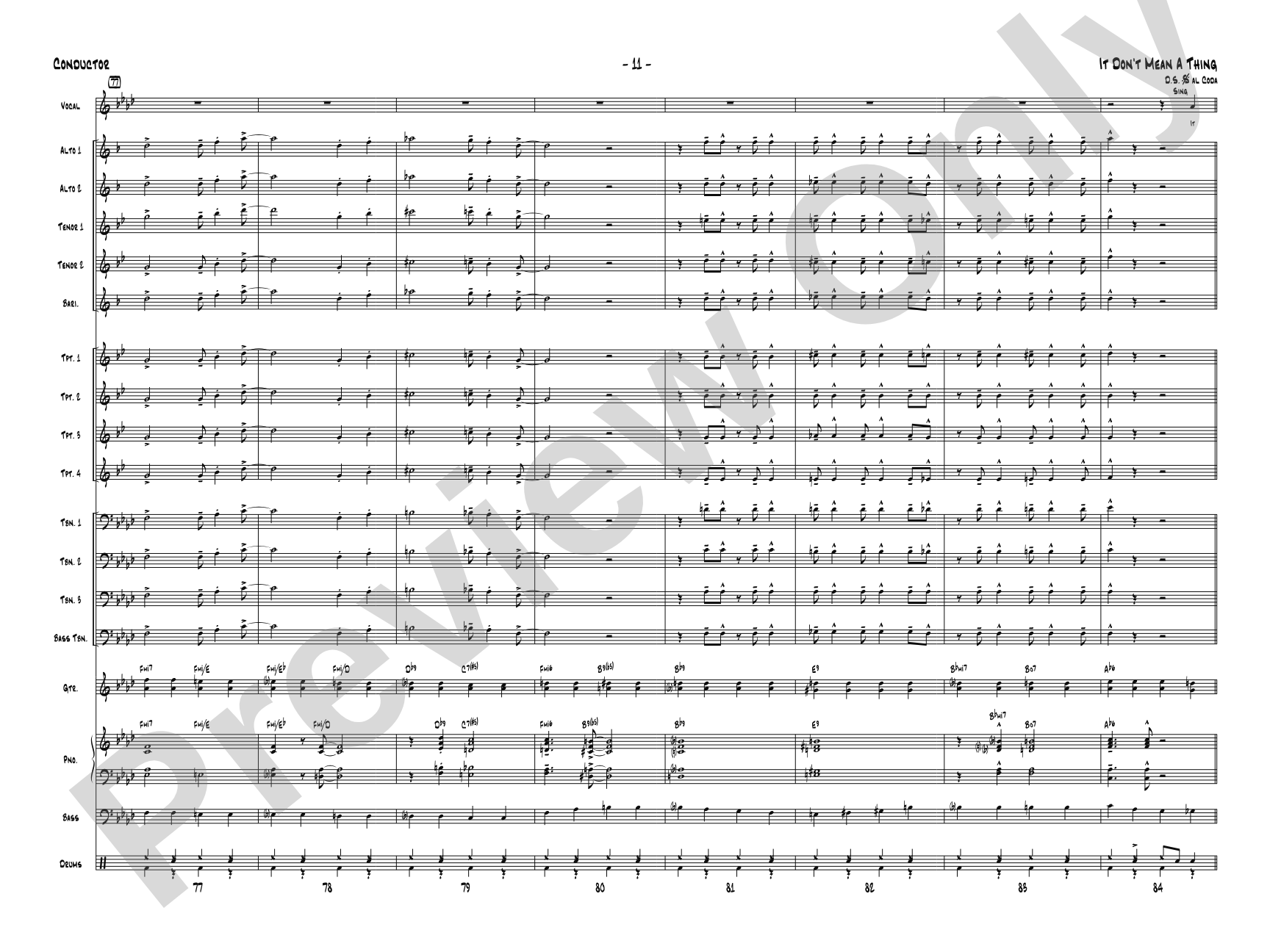
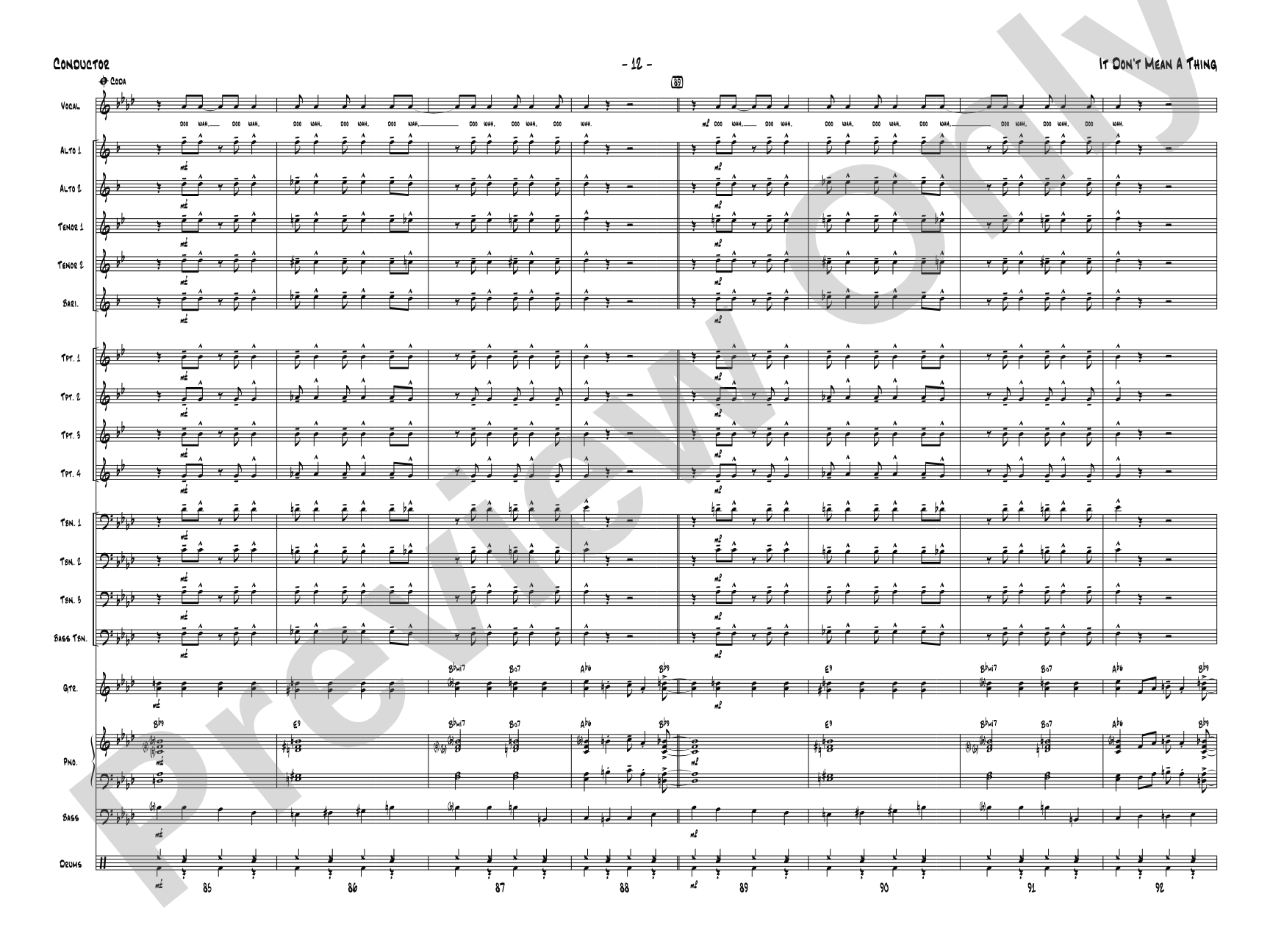
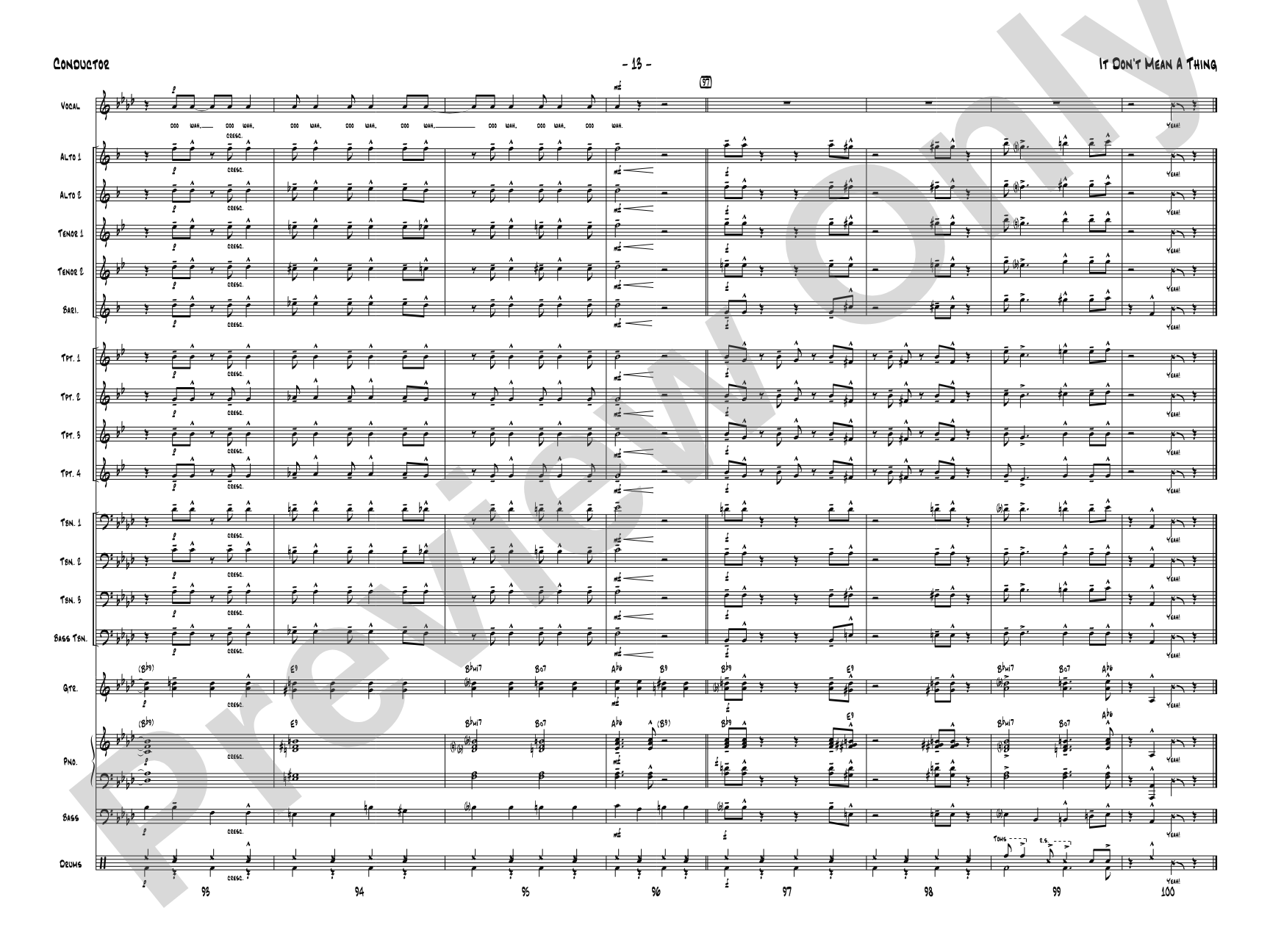

It Don't Mean a Thing (If It Ain't Got That Swing): Vocal Solo with Jazz Ensemble Conductor Score & Parts
Music by Duke Ellington, words by Irving Mills / arr. Victor López
Grade: 2 (Medium Easy)
Item: 00-PK-0006988

$57.00
Pickup currently not available
Buy Extra Parts (Digital PDF Download)
Parts Added to Cart!
Description
Swingin' and singin' with big band! This chart practically plays itself. The key is F minor, the vocal range is middle C to 3rd space C, and the lead trumpet range is to written F top line. Solo space is for tenor, trombone, alto, and trumpet, or optional vocal scat, all written-out.


Don't just read it, hear it, play along with it, and watch your students grow with it. In MakeMusic Cloud, It Don't Mean a Thing (If It Ain't Got That Swing): Vocal Solo with Jazz Ensemble Conductor Score & Parts comes alive with professional accompaniment, adjustable tempo, and built-in practice tools that turn solo practice into real progress.
Open in the Player
Jump straight in and assign it today.
Start Your Free Trial
Open this title and explore the full library in minutes.
Sample Audio
1
Audio File
--:--
0:00
0:00
Sample Video
Additional Details
Series:
Jazz Vocal Series
Publisher:
Alfred Music
Page Count:
90
SKU:
00-PK-0006988
More about this title
About the Composer: Duke Ellington
Duke Ellington fundamentally reshaped jazz composition by bringing sophisticated harmonic language, extended forms, and orchestral thinking to a music often dismissed as ephemeral entertainment. His output spanned nearly five decades and ranged from three-minute pop songs to extended concert works, yet he maintained an unflinching commitment to craft and originality in every format. Educators return to Ellington repeatedly because his arrangements teach voice leading, section balance, and the art of writing for specific musicians, principles that transcend jazz.
Why we love this
Victor López's arrangement respects the song's essential swing while making it genuinely playable by student ensembles. The written-out solos for tenor, trombone, alto, and trumpet remove the improvisation barrier that can derail young jazz groups, yet the chart never feels didactic or lifeless. It's the rare Grade 2 jazz vocal that sounds complete and musically satisfying without depending on soloist virtuosity.
What to expect
Pure joy and sophistication in a compact frame. The F minor tonality lends the tune a sophisticated warmth, while the straightforward big-band groove invites players to lock in and feel the swing immediately. Every note sounds like it belongs, and the arrangement never winks at the audience or apologizes for its accessibility.
Who it's for
Jazz ensembles at the high school and early college level who need a vocalist-centered chart that feels authentic without overwhelming emerging soloists. Directors seeking a fast-learning Grade 2 vehicle for concert programs, jazz festivals, or competitions will find all the musicianship and sophistication they need without extended rehearsal time.
How to get the most out of it
- Plant the rhythm section's groove from the first rehearsal; this tune's magic lives entirely in the collective feel of the band behind the vocalist.
- Balance the vocal line carefully against ensemble passages. The written range (middle C to 3rd space C) sits naturally for many singers, but the band must leave room for the lyric to breathe.
- Frame each of the four solos as a distinct character within the same tune rather than identical repetitions. Tenor and alto should contrast in tone; trumpet and trombone should differ in attack and phrasing.
- Let the optional vocal scat sections happen only if your soloist demonstrates genuine rhythmic security and comfort with the idiom. Otherwise, stick with the written instrumental solos.
How to use it
Open a jazz concert or festival set with this number to establish energy and ensemble cohesion before moving into more demanding repertoire. It also pairs naturally with other Ellington standards in a swing-era showcase or serves as an engaging finale that leaves audiences smiling.
Skills your students will build
- Maintaining consistent swing articulation across section entrances
- Balancing vocal soloist projection against ensemble dynamics
- Stylistic phrasing and melodic interpretation within jazz idiom
- Reading and executing written-out solo passages with lyrical fluency
- Ensemble coordination in medium-tempo big band contexts