
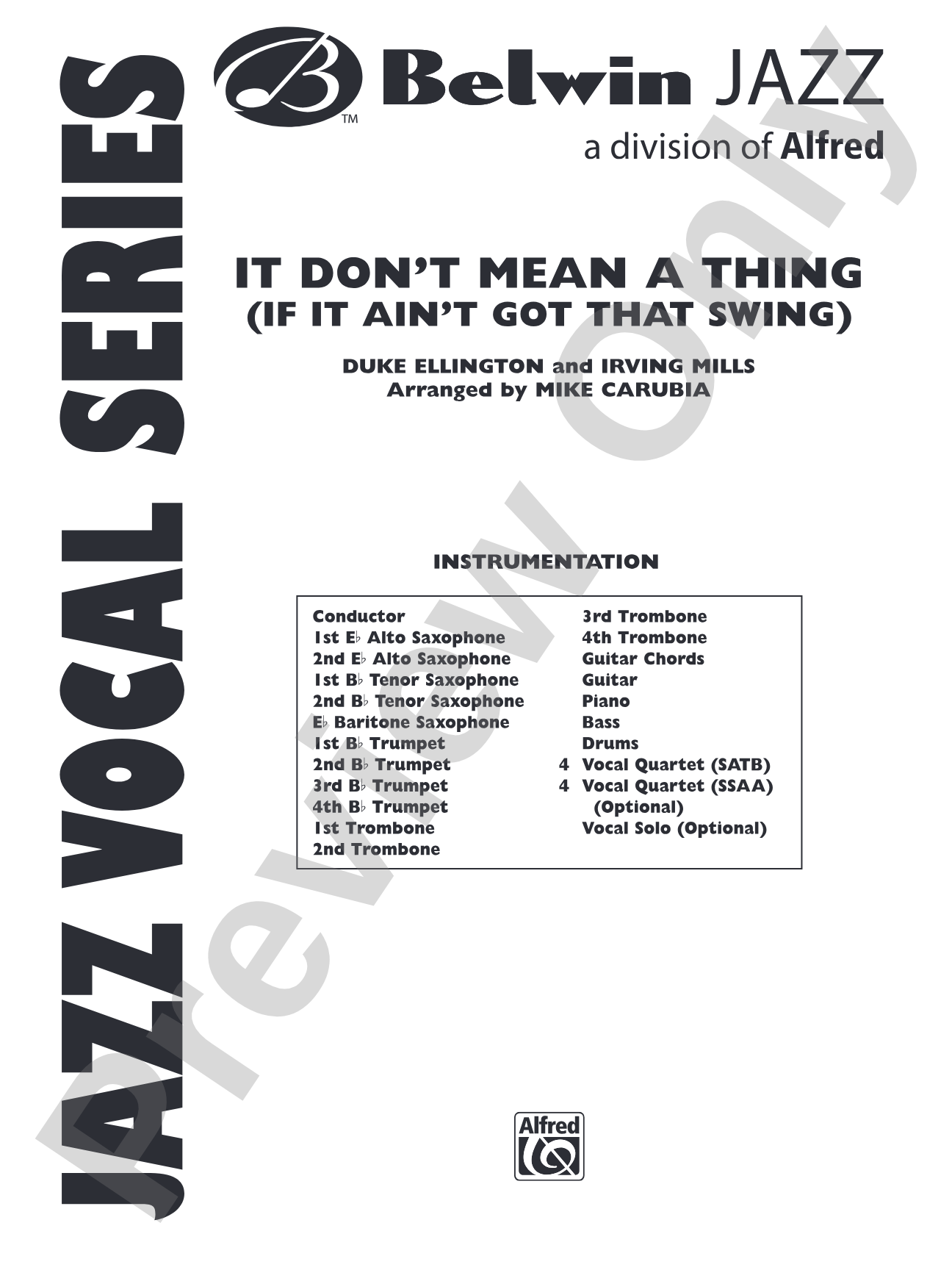

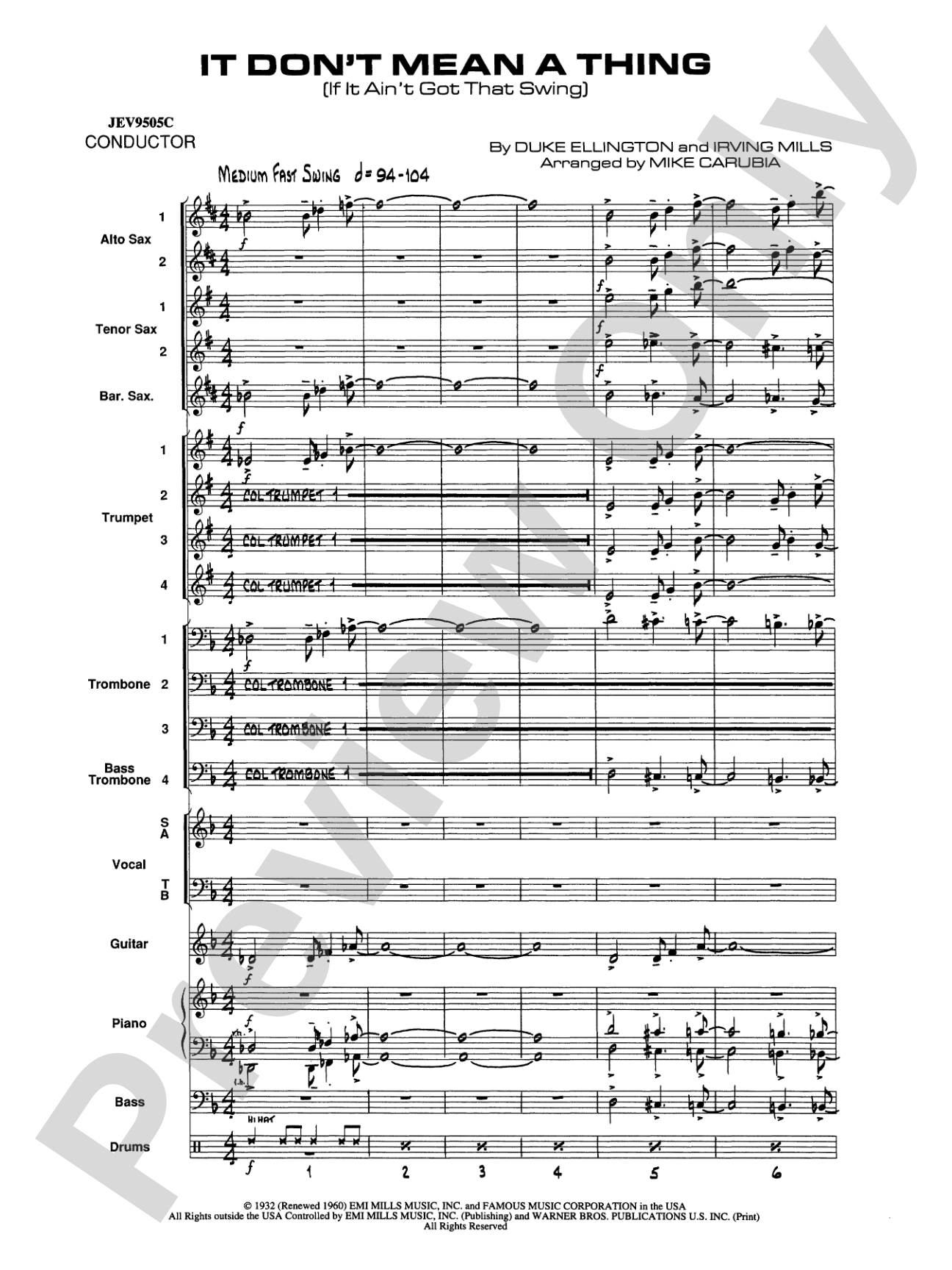
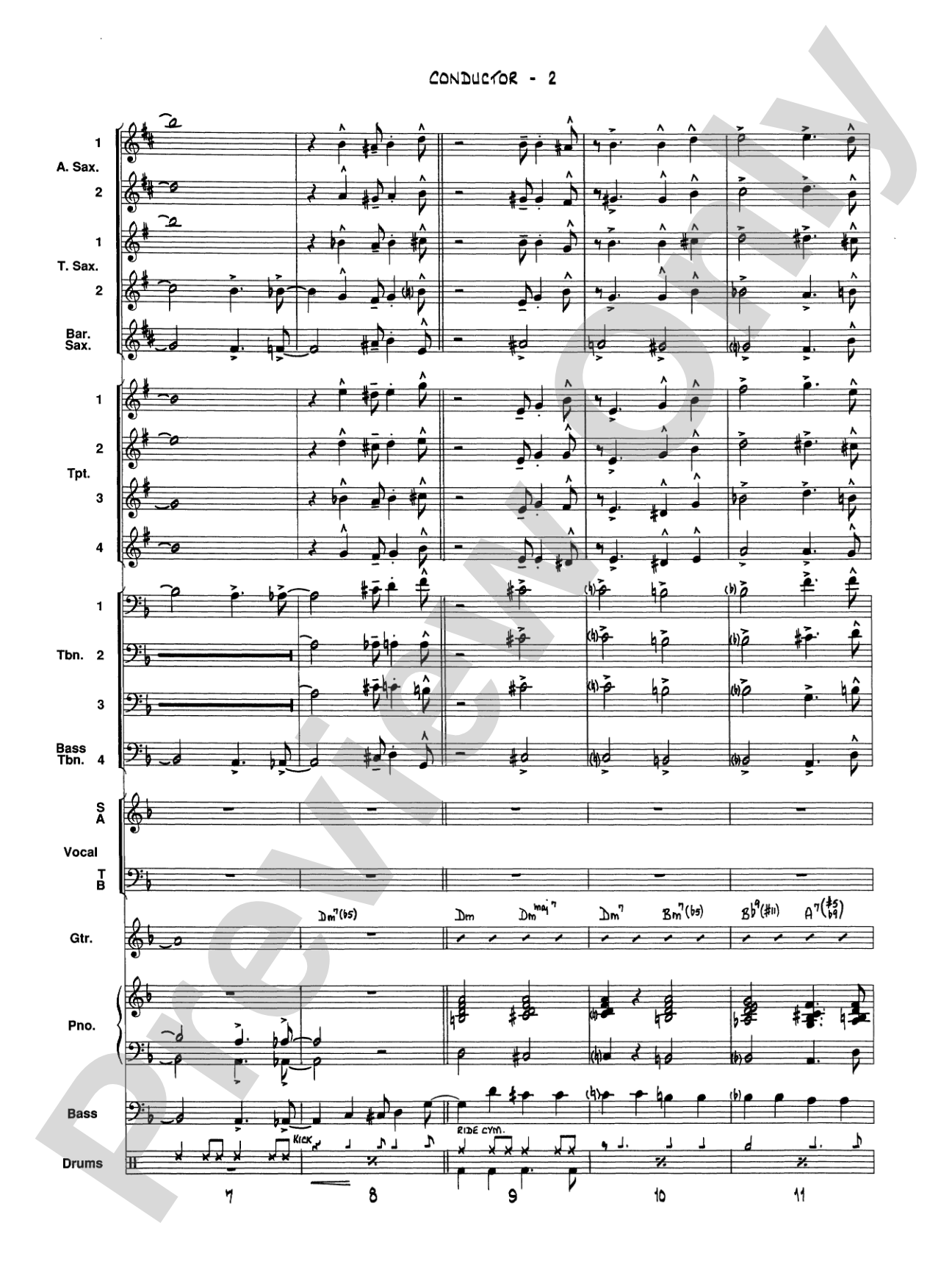
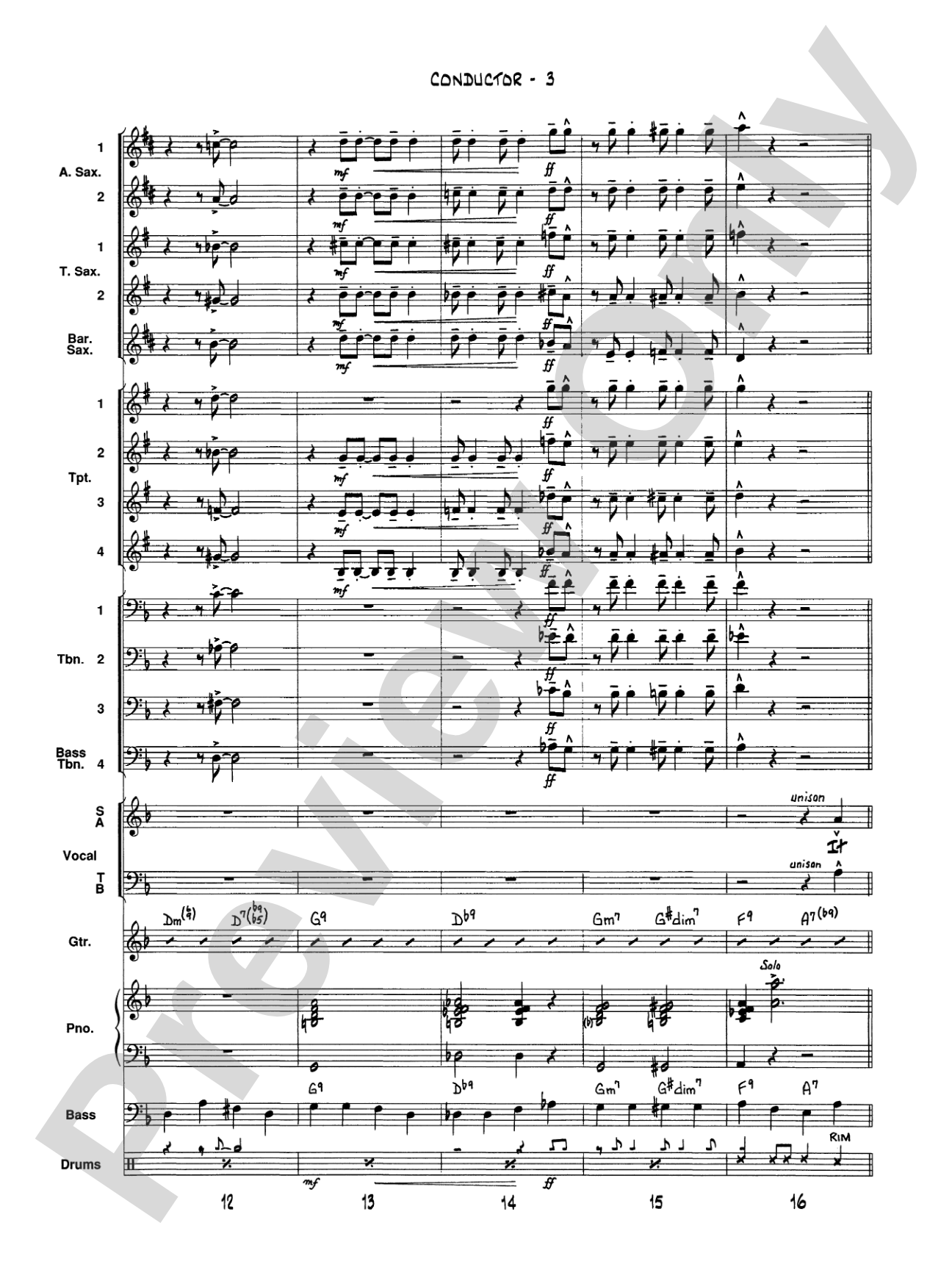
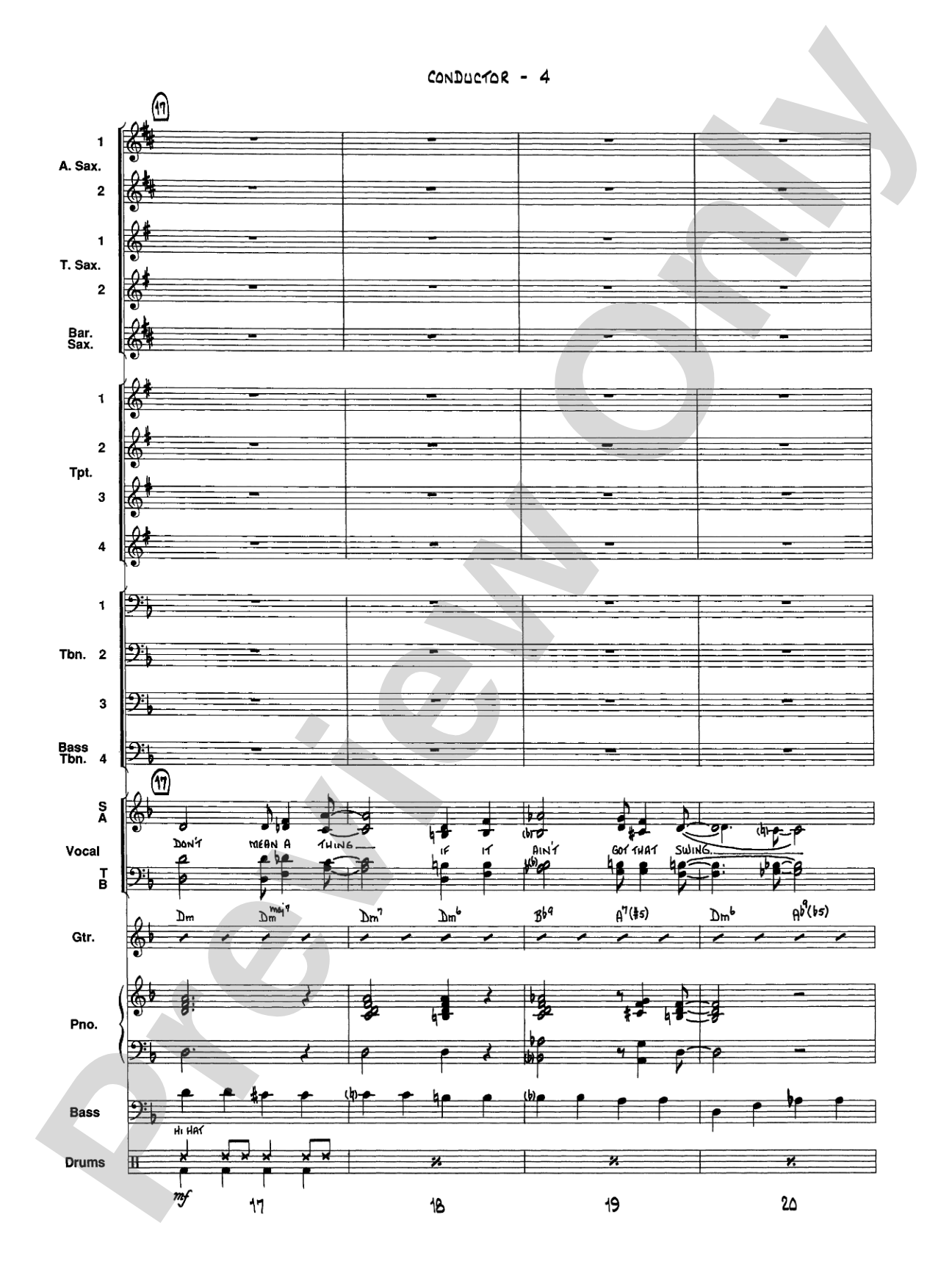
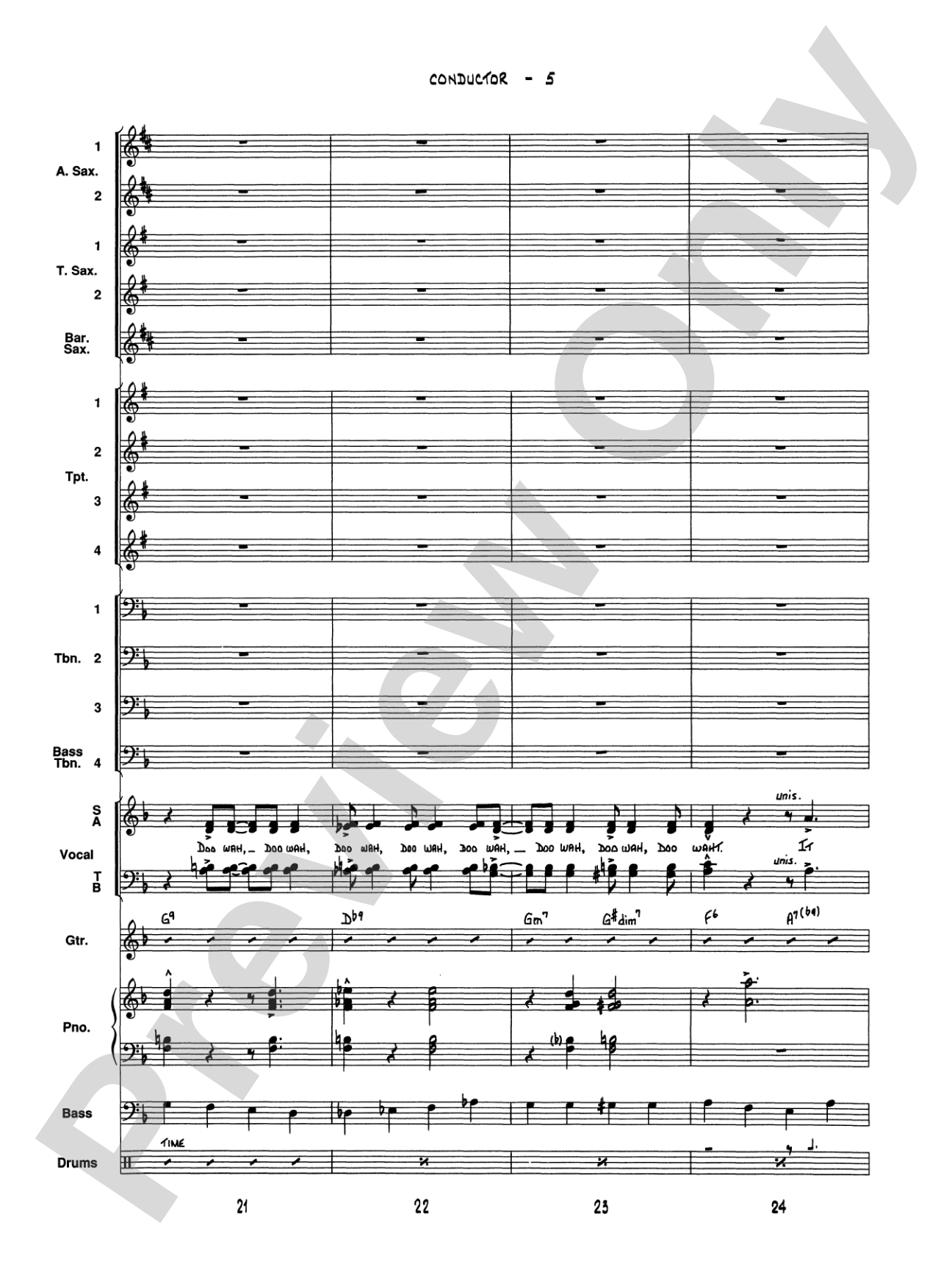
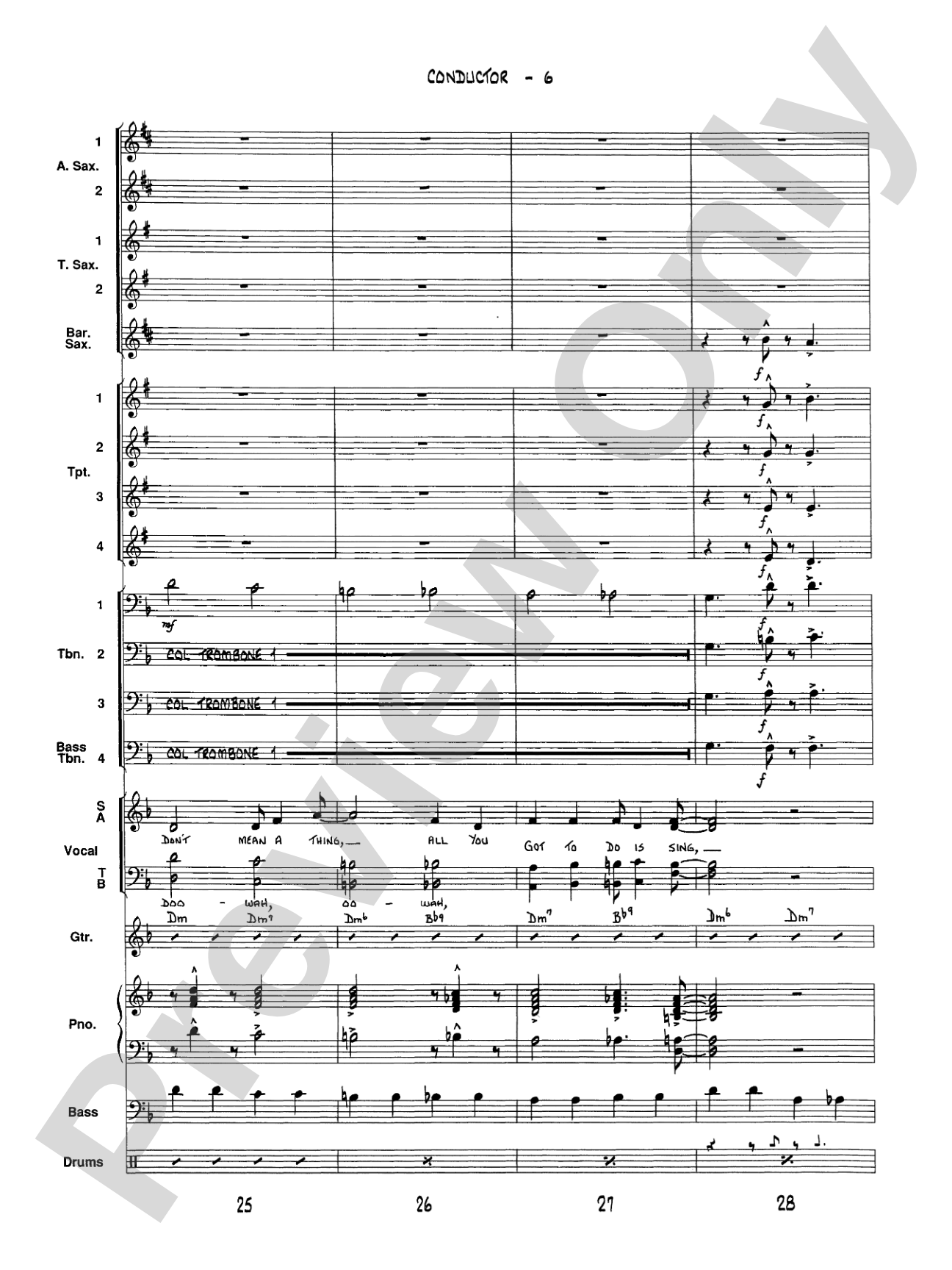
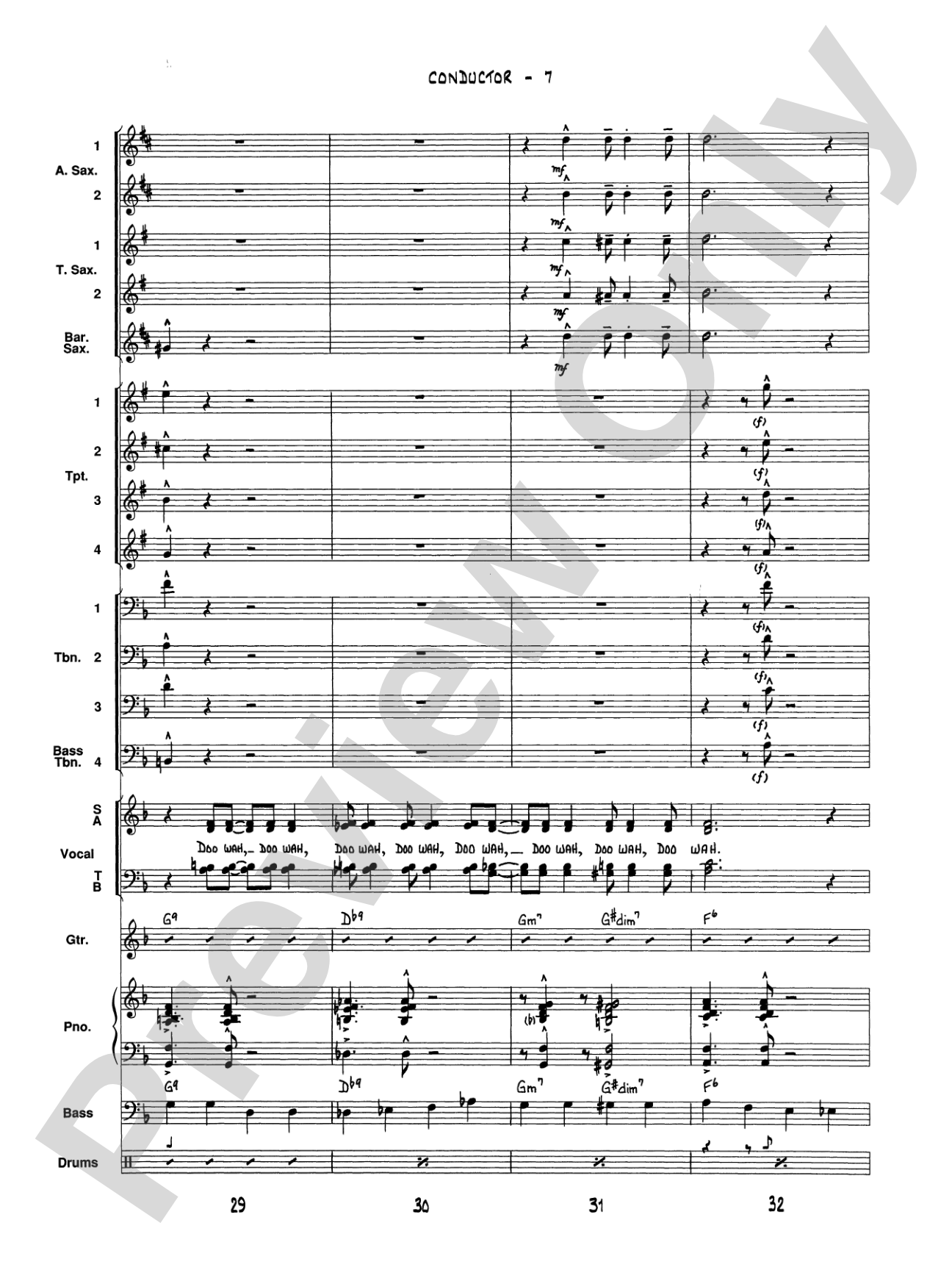
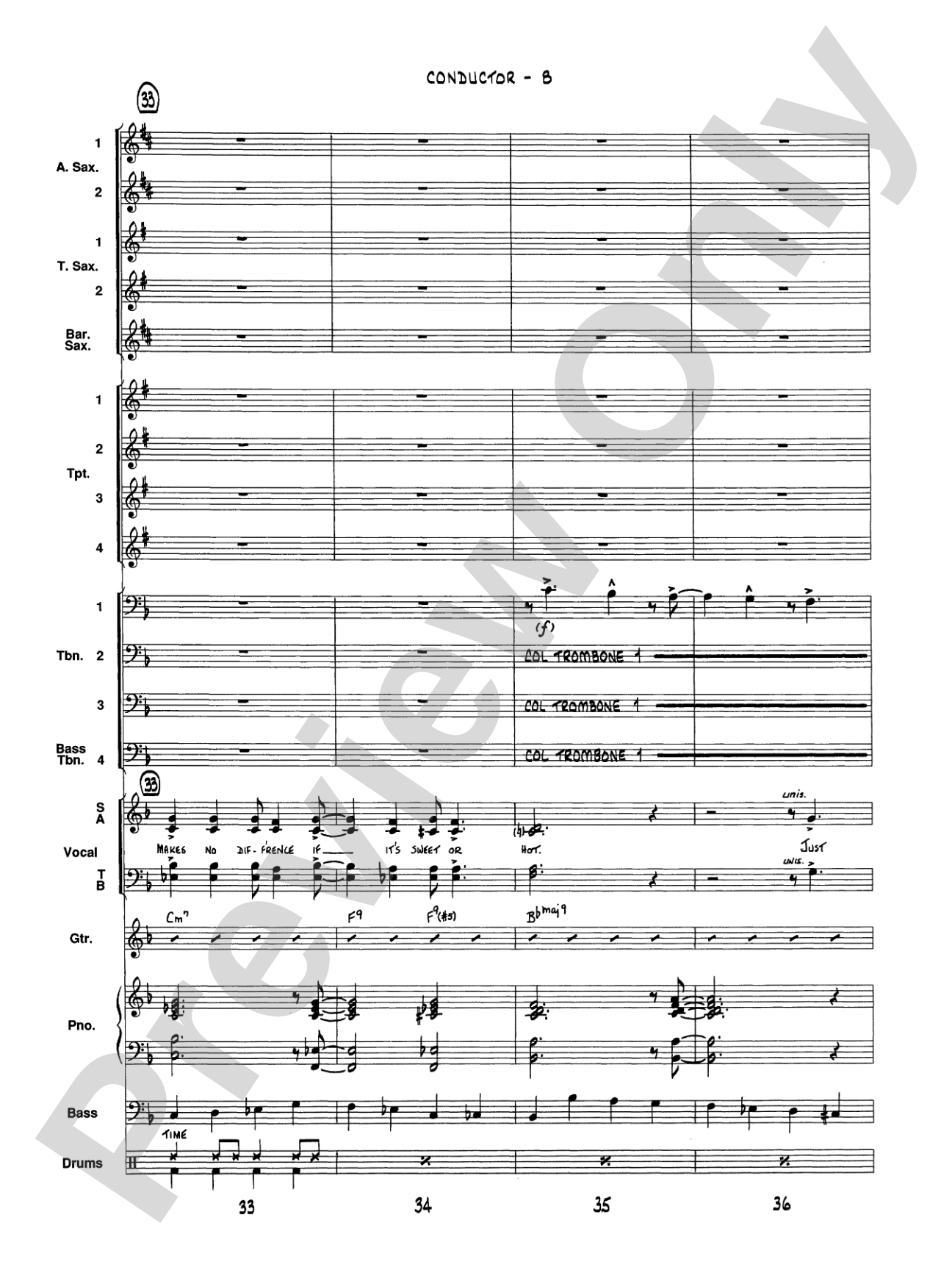
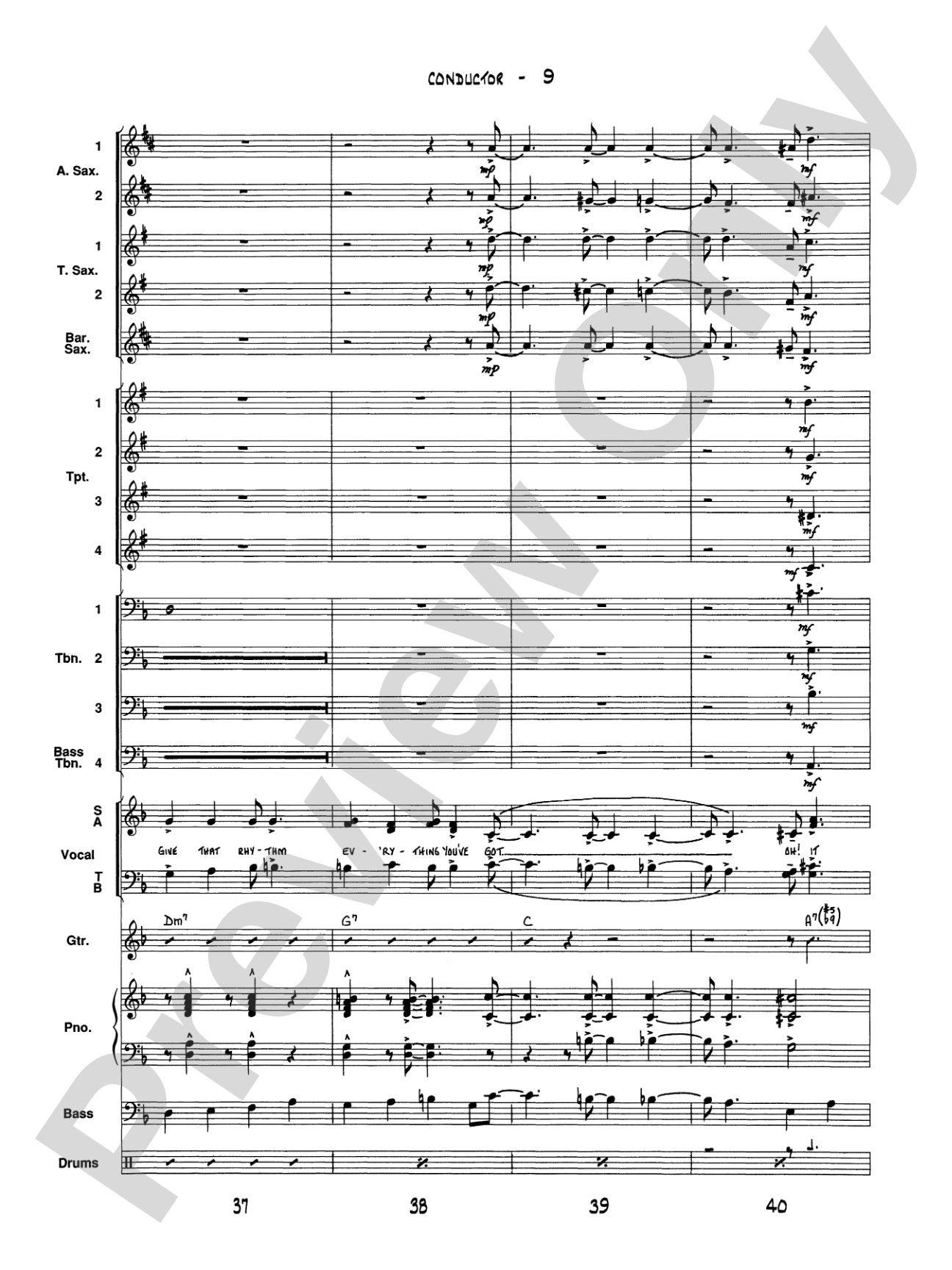
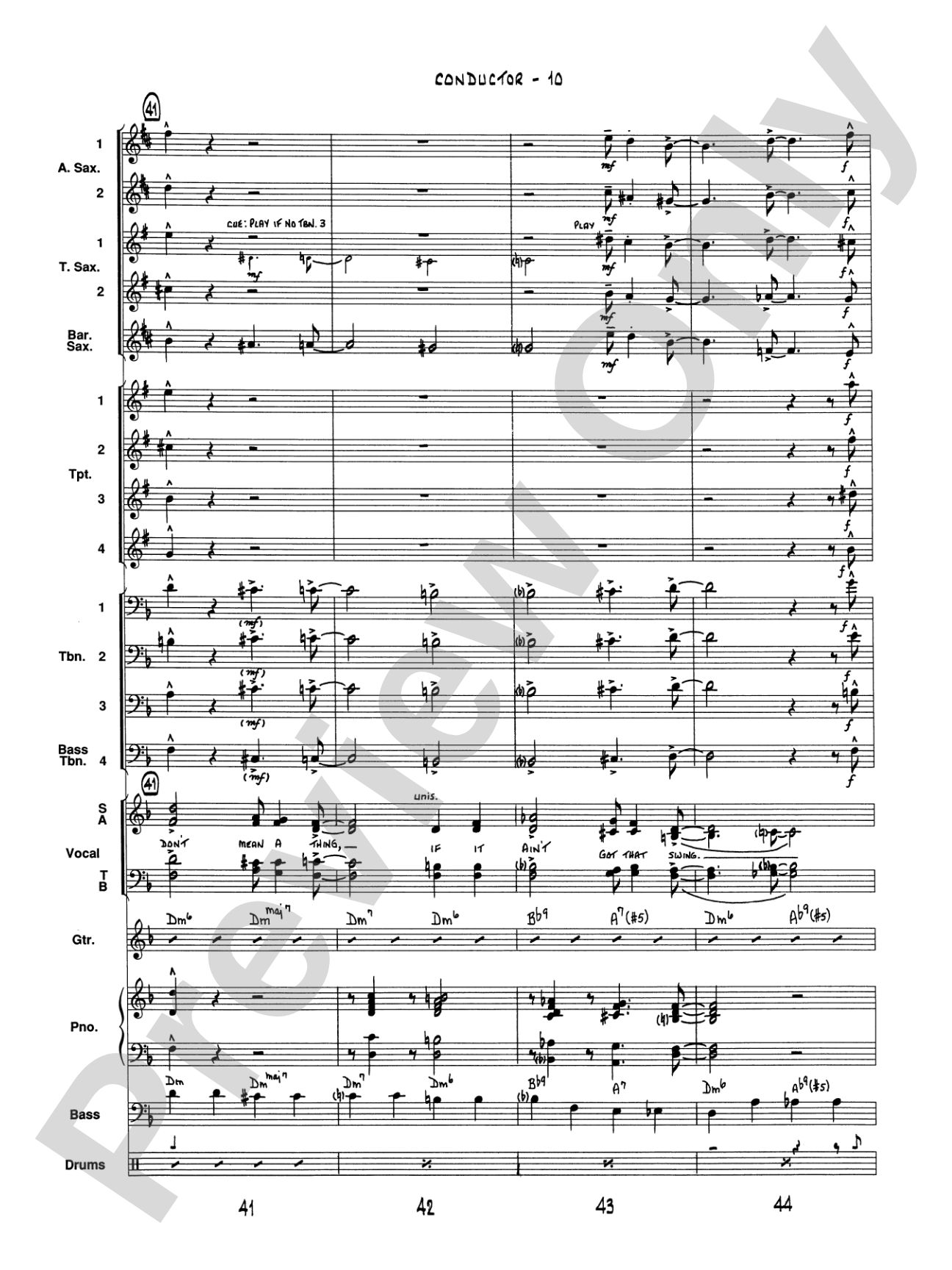
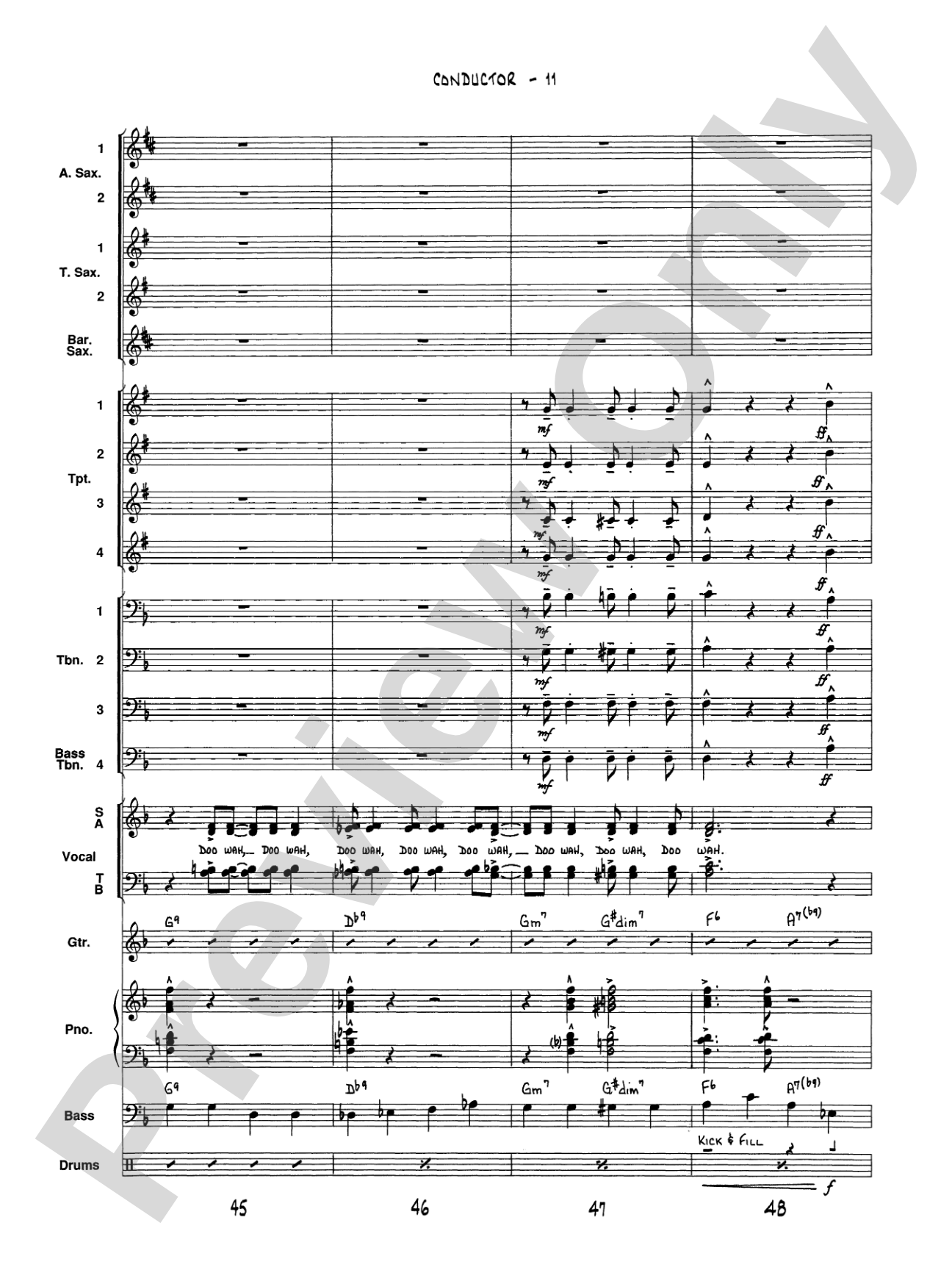
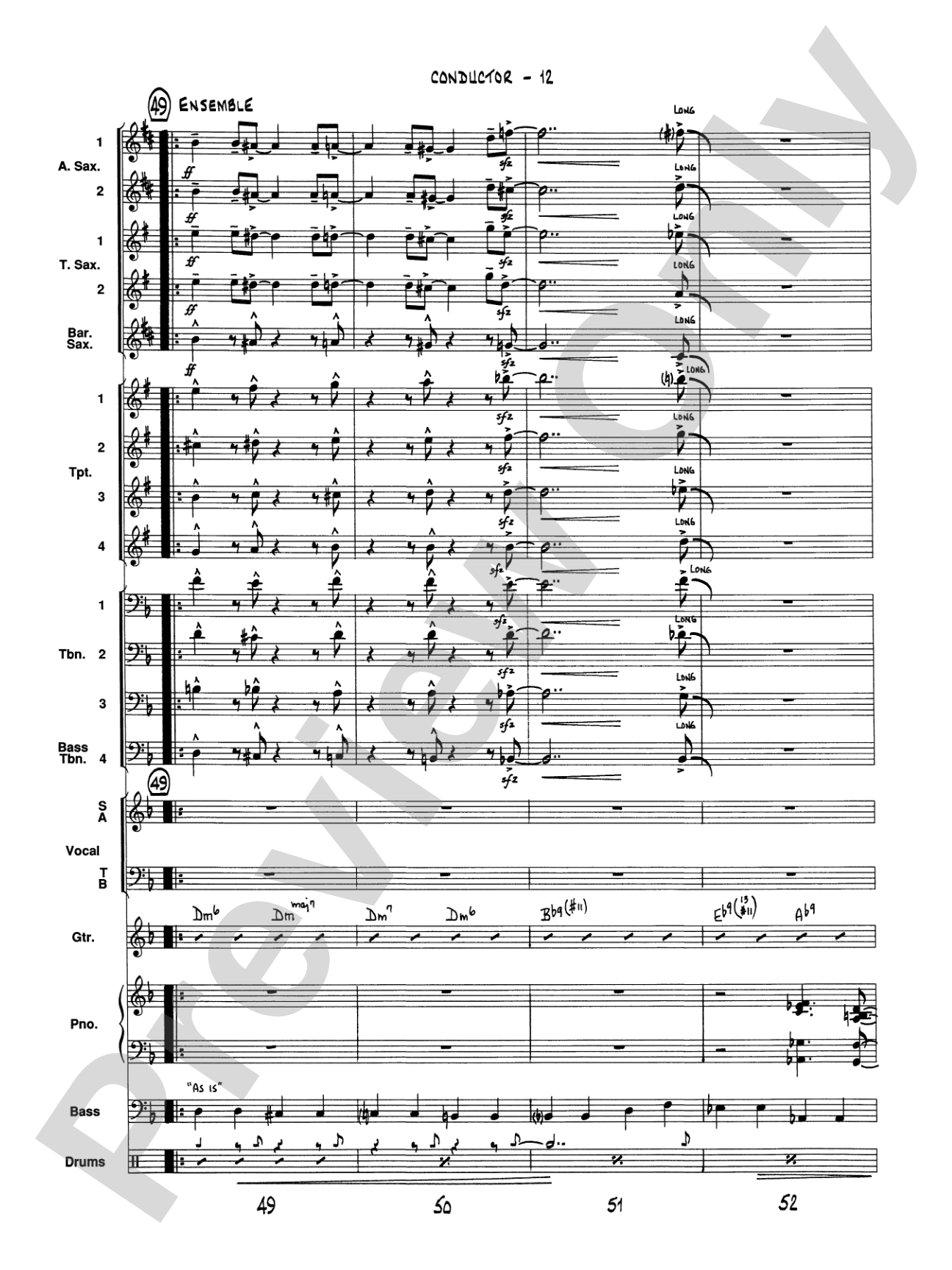
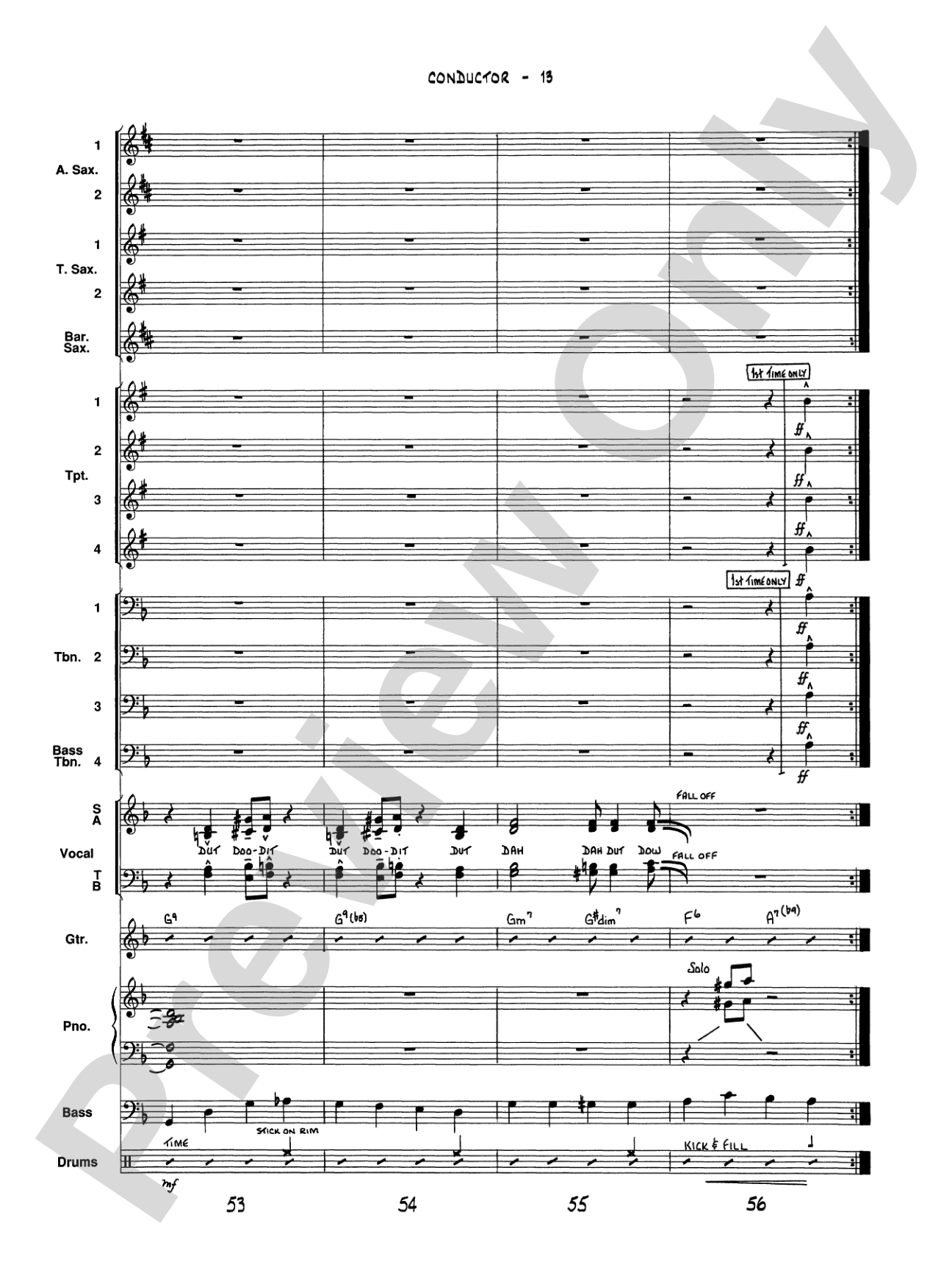
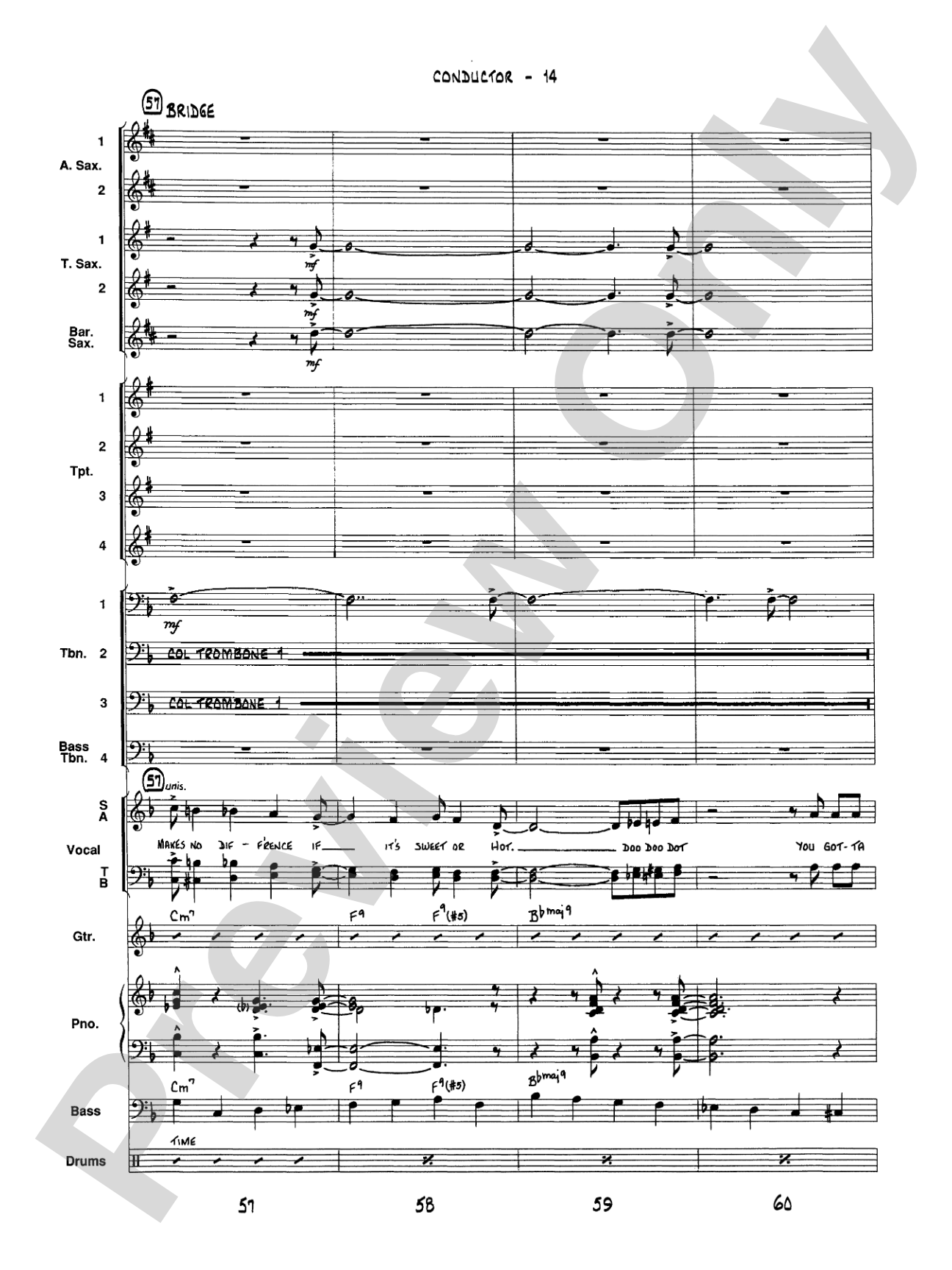
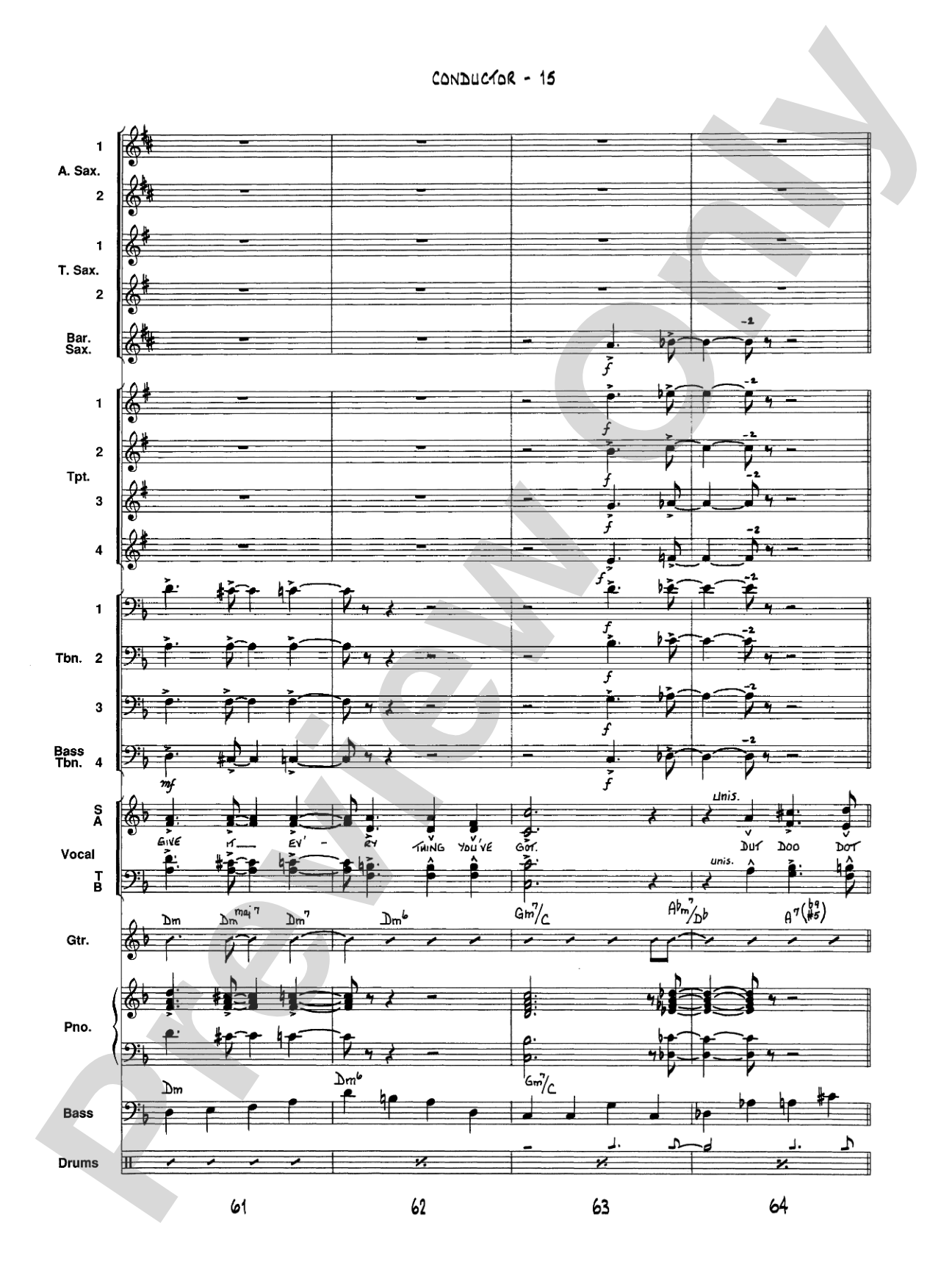
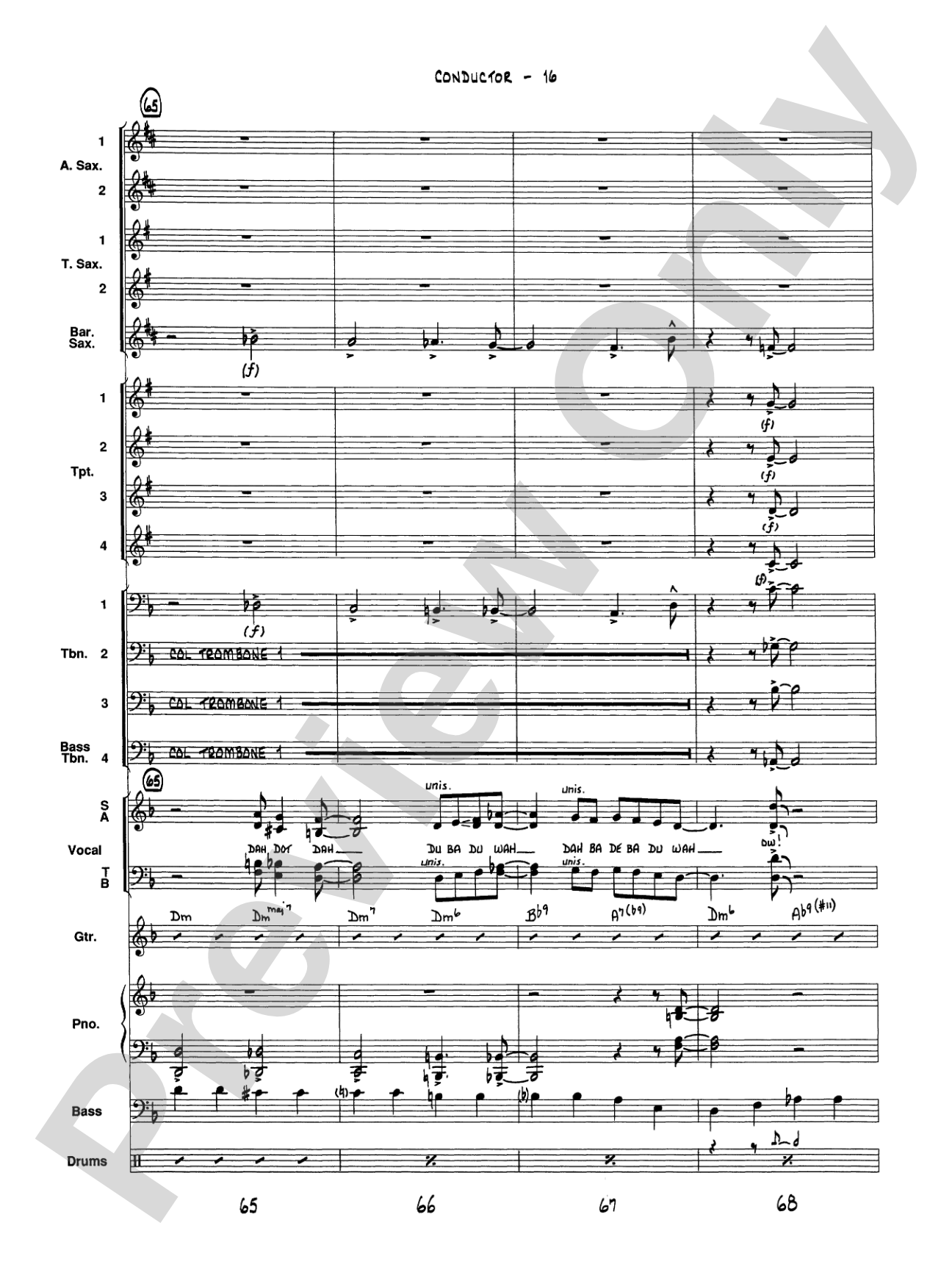
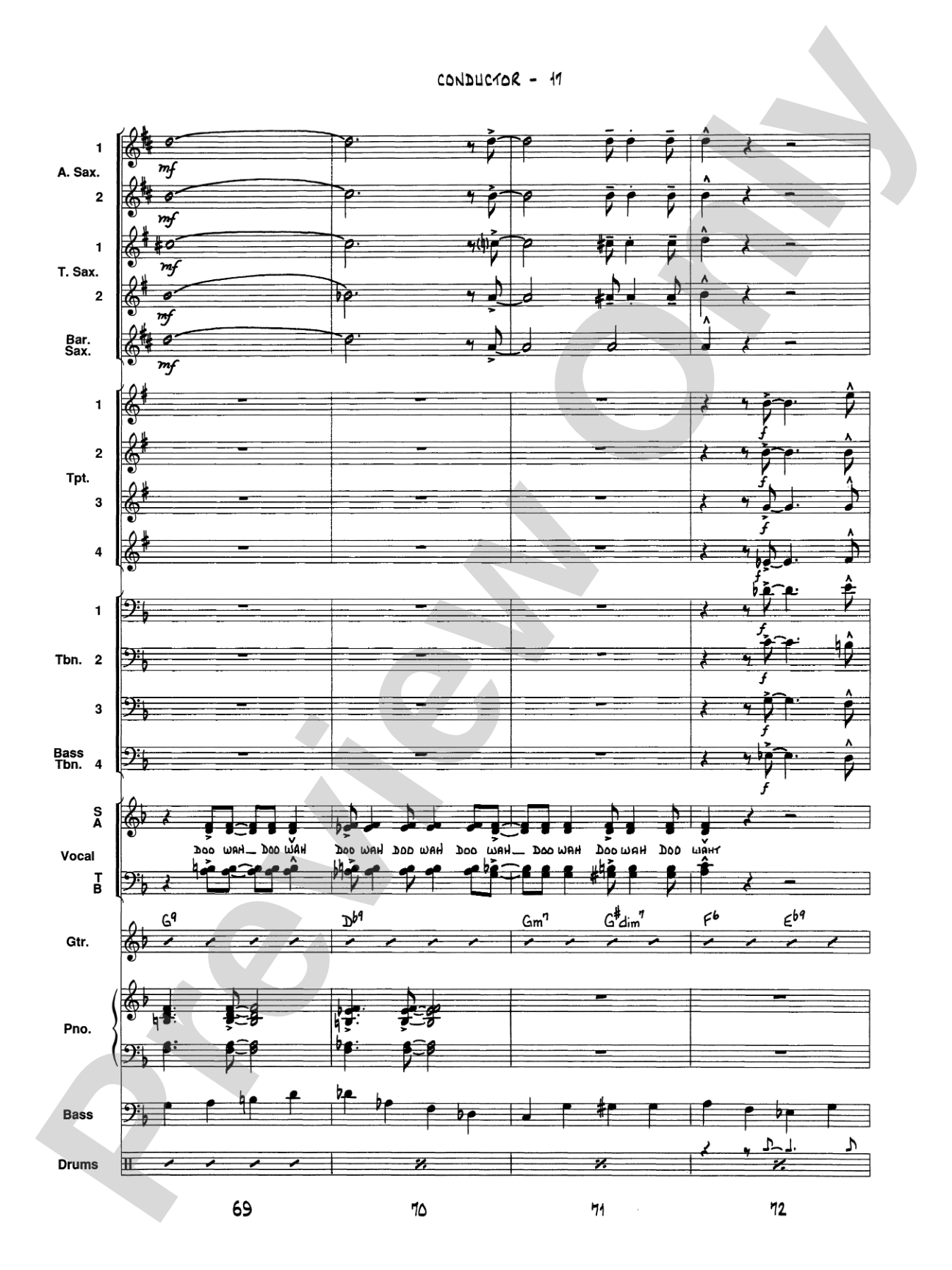
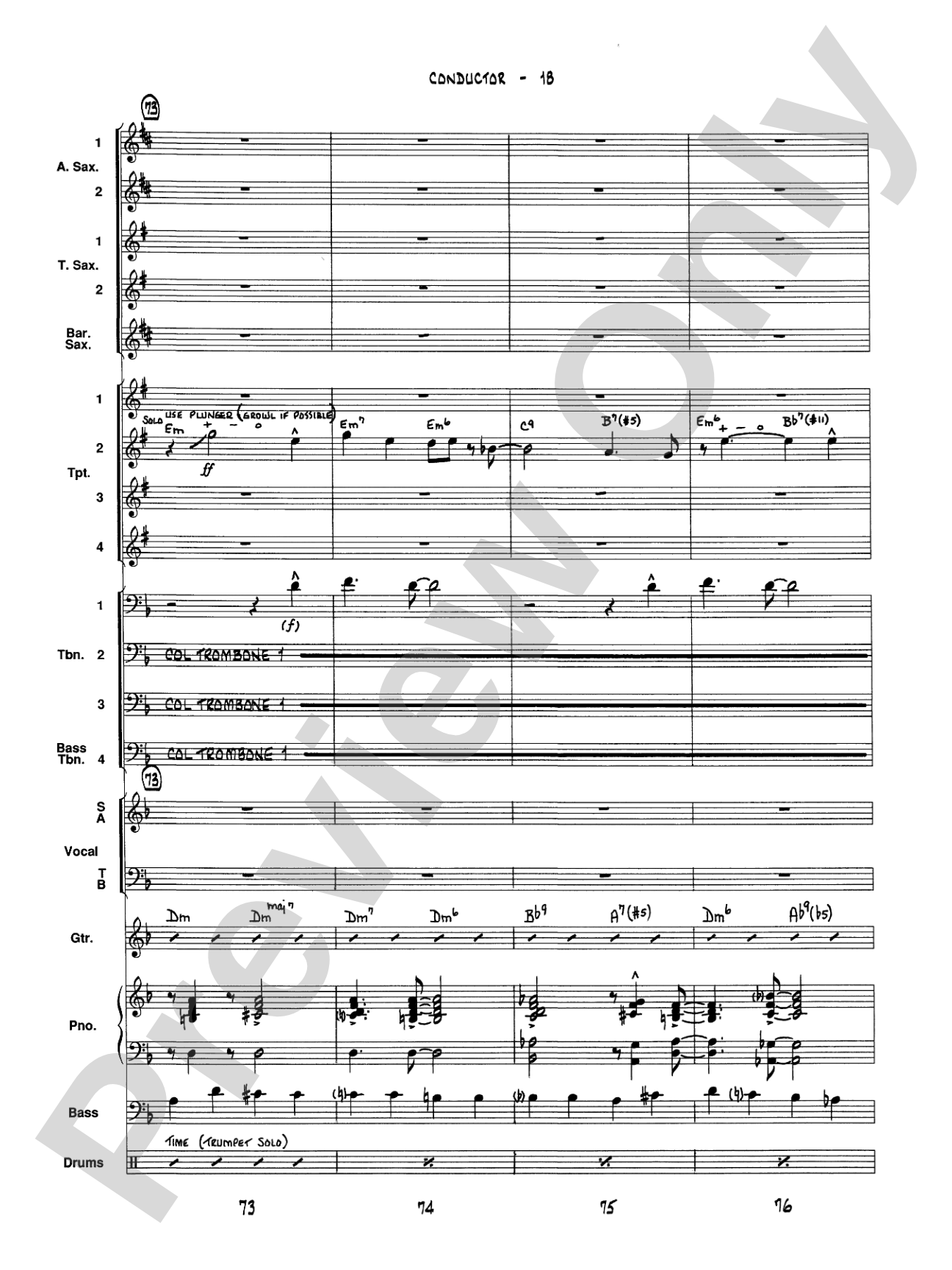
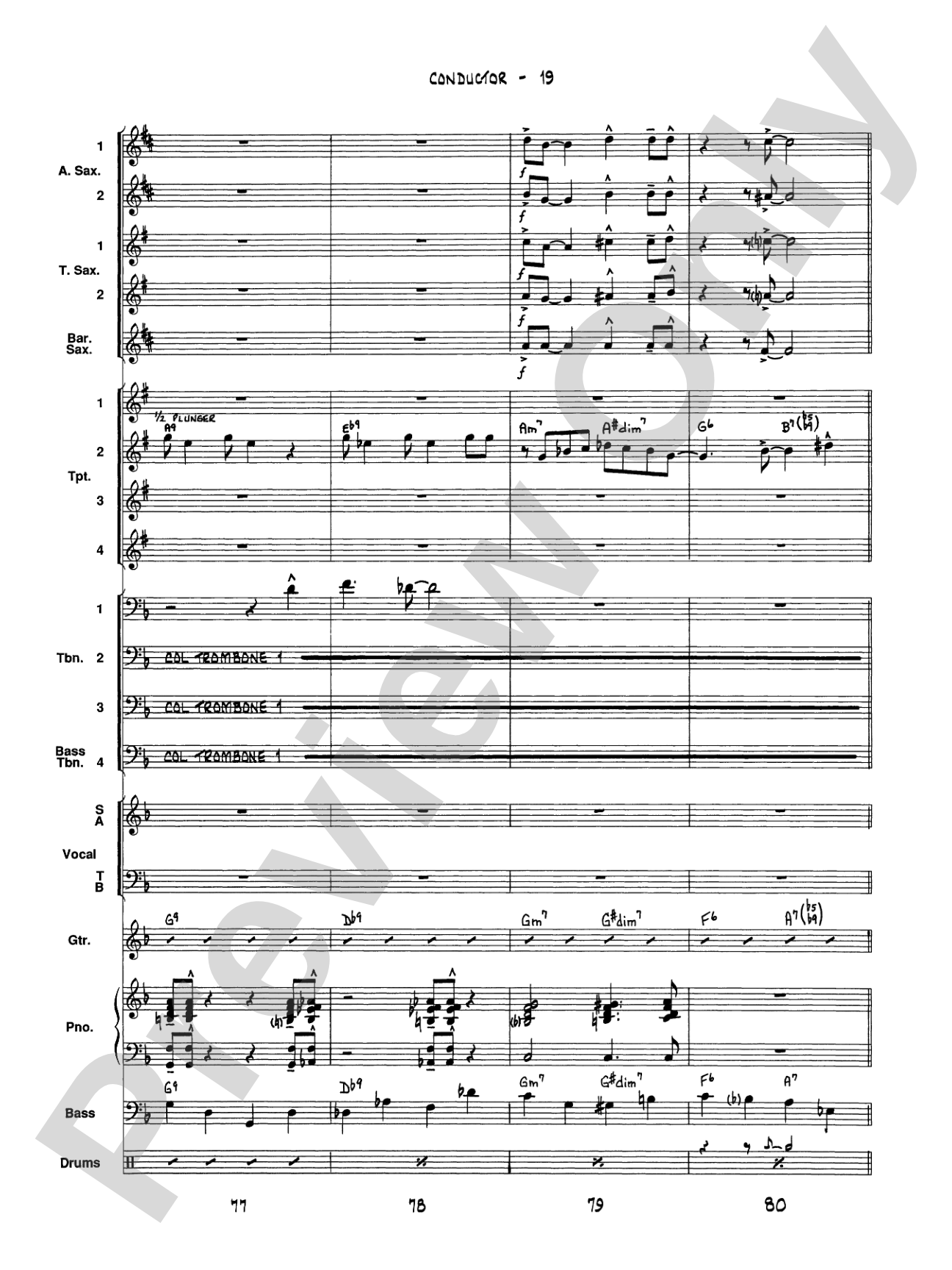
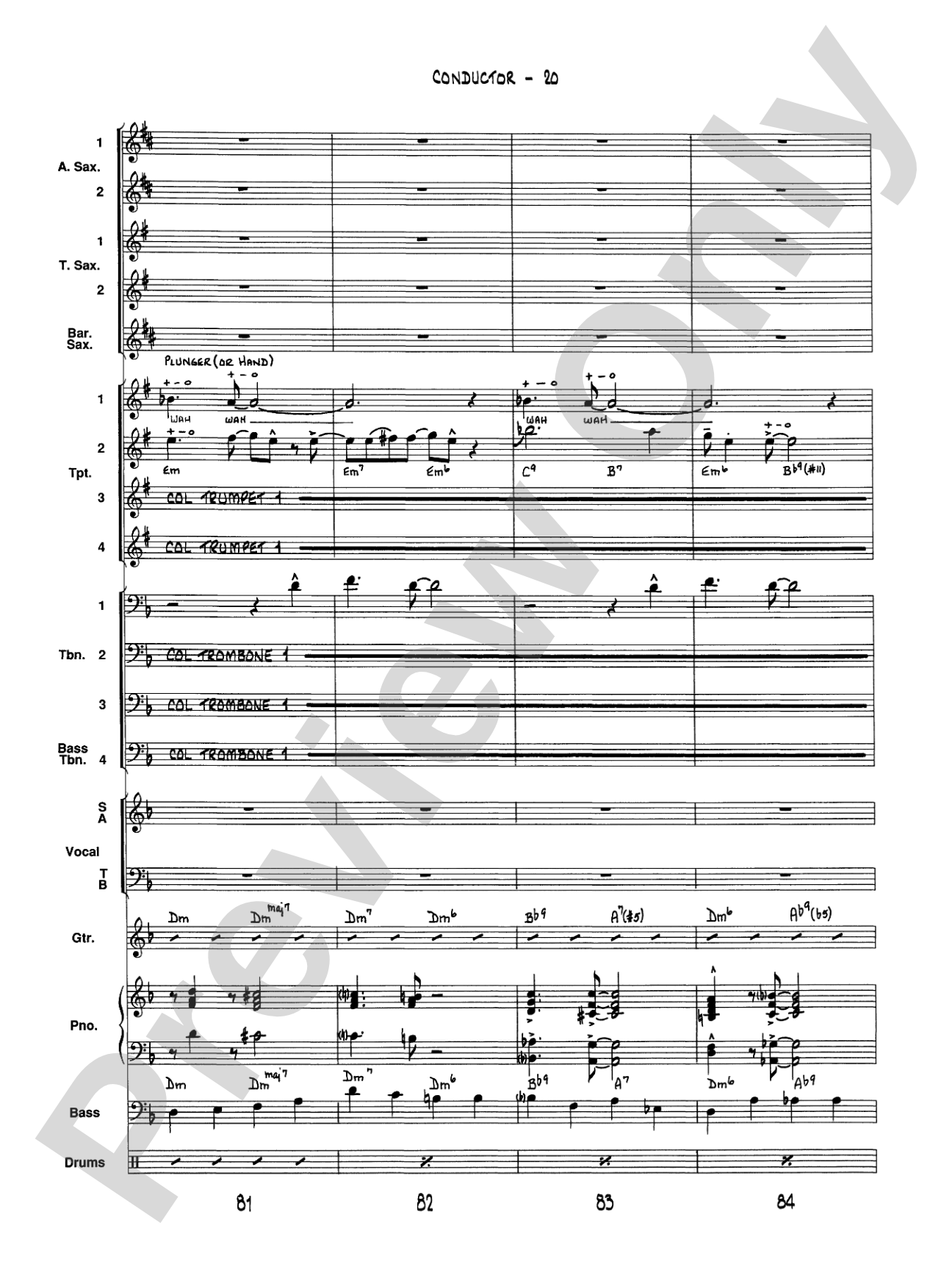
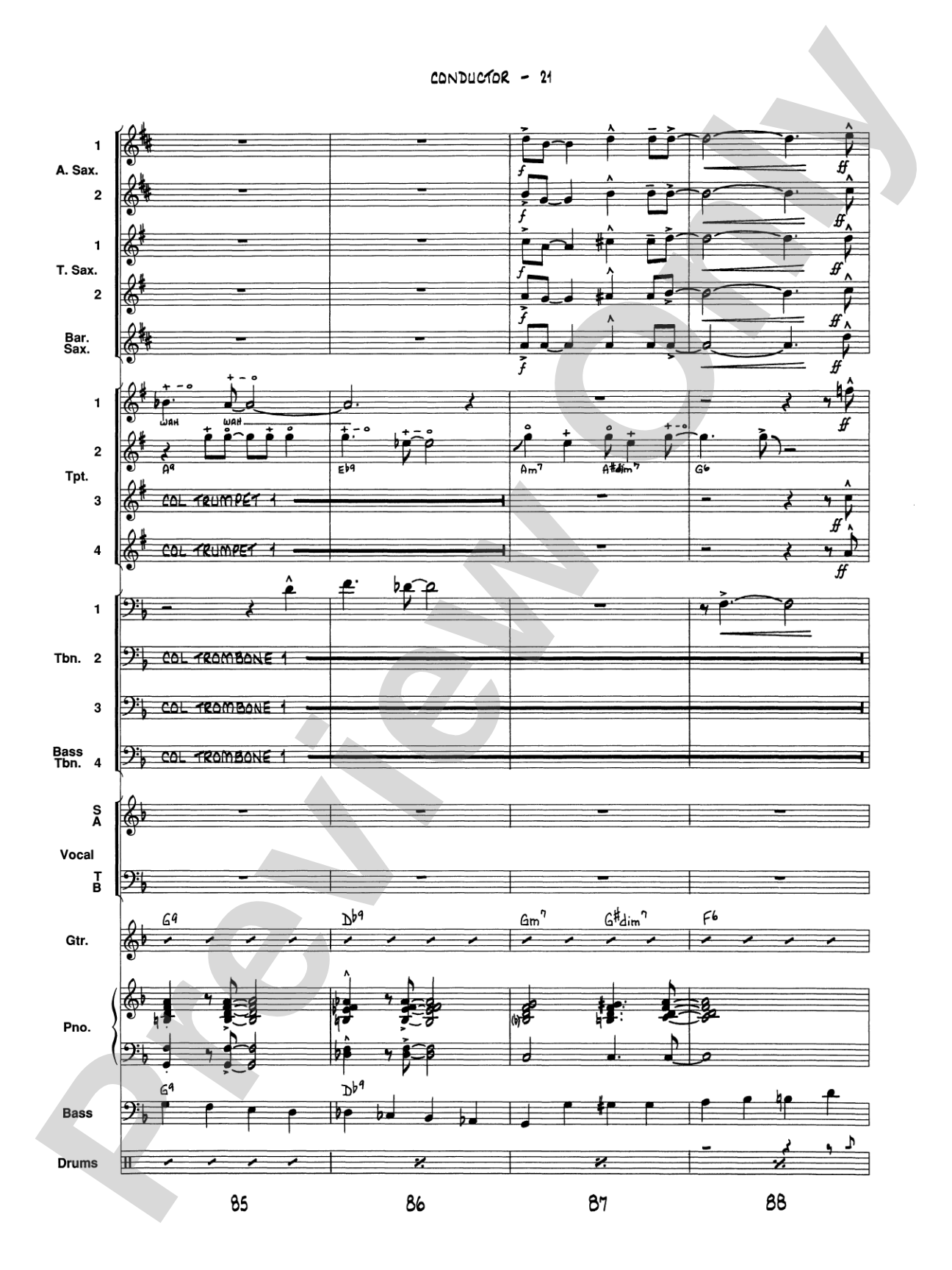
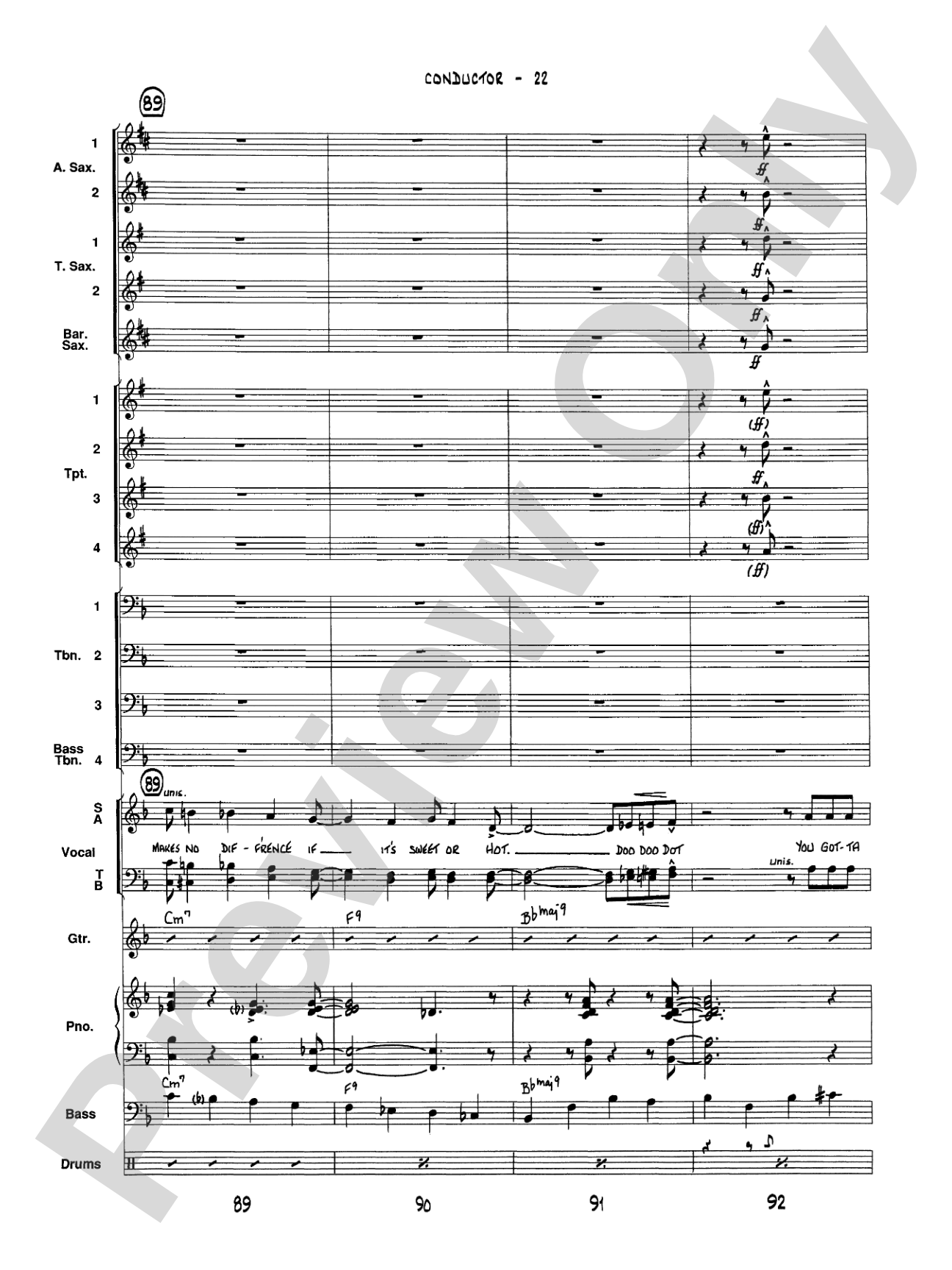
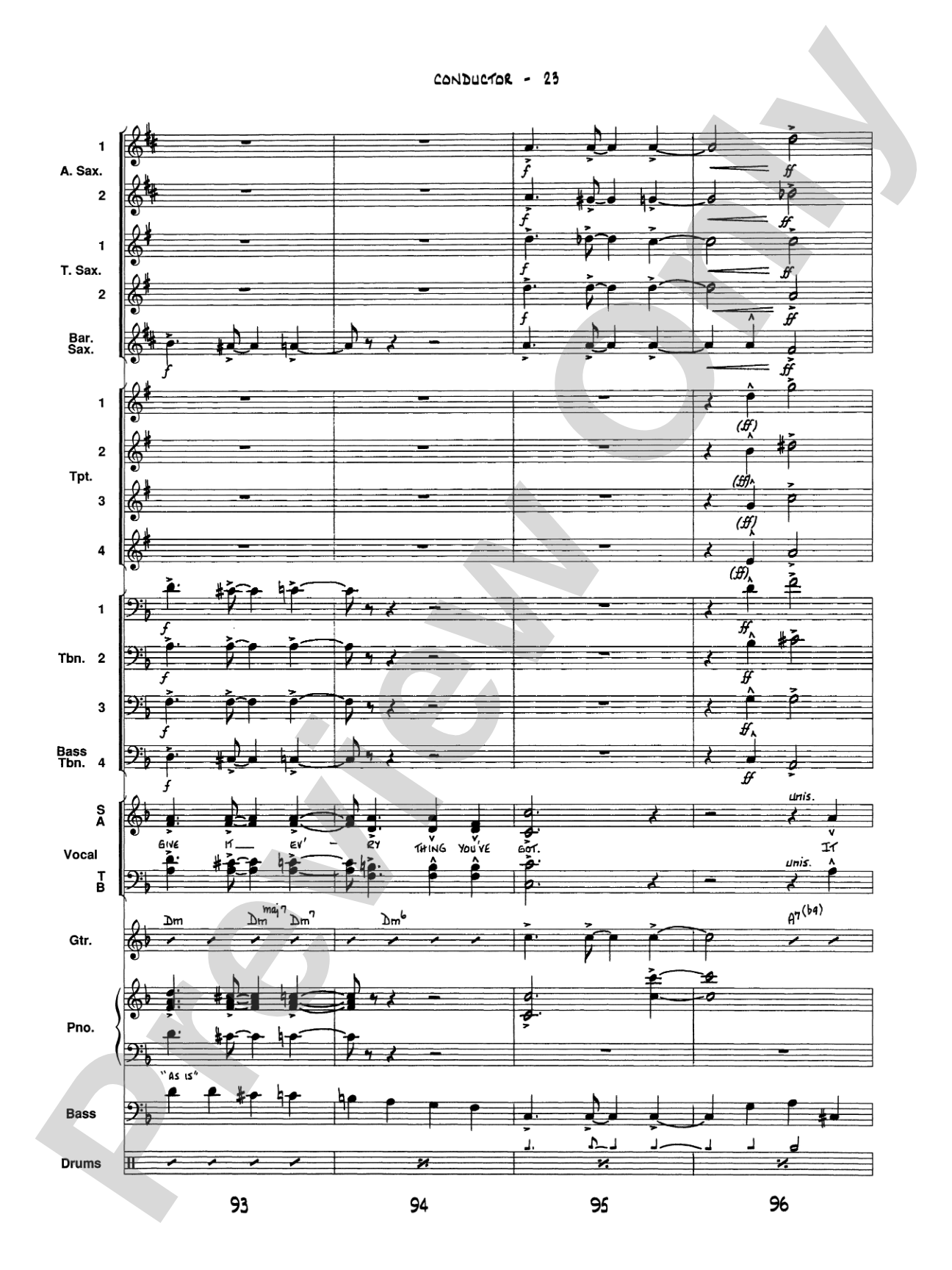
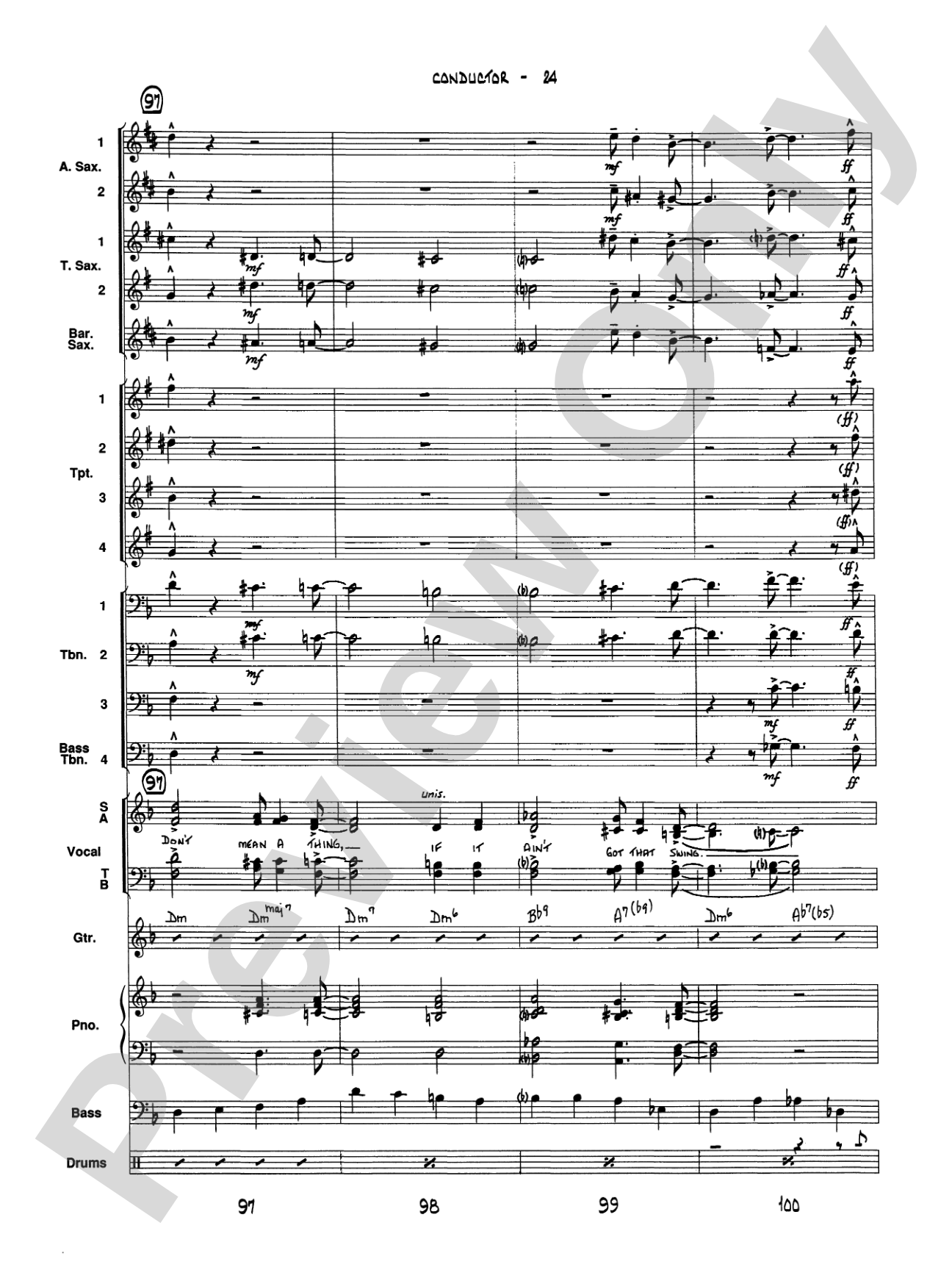
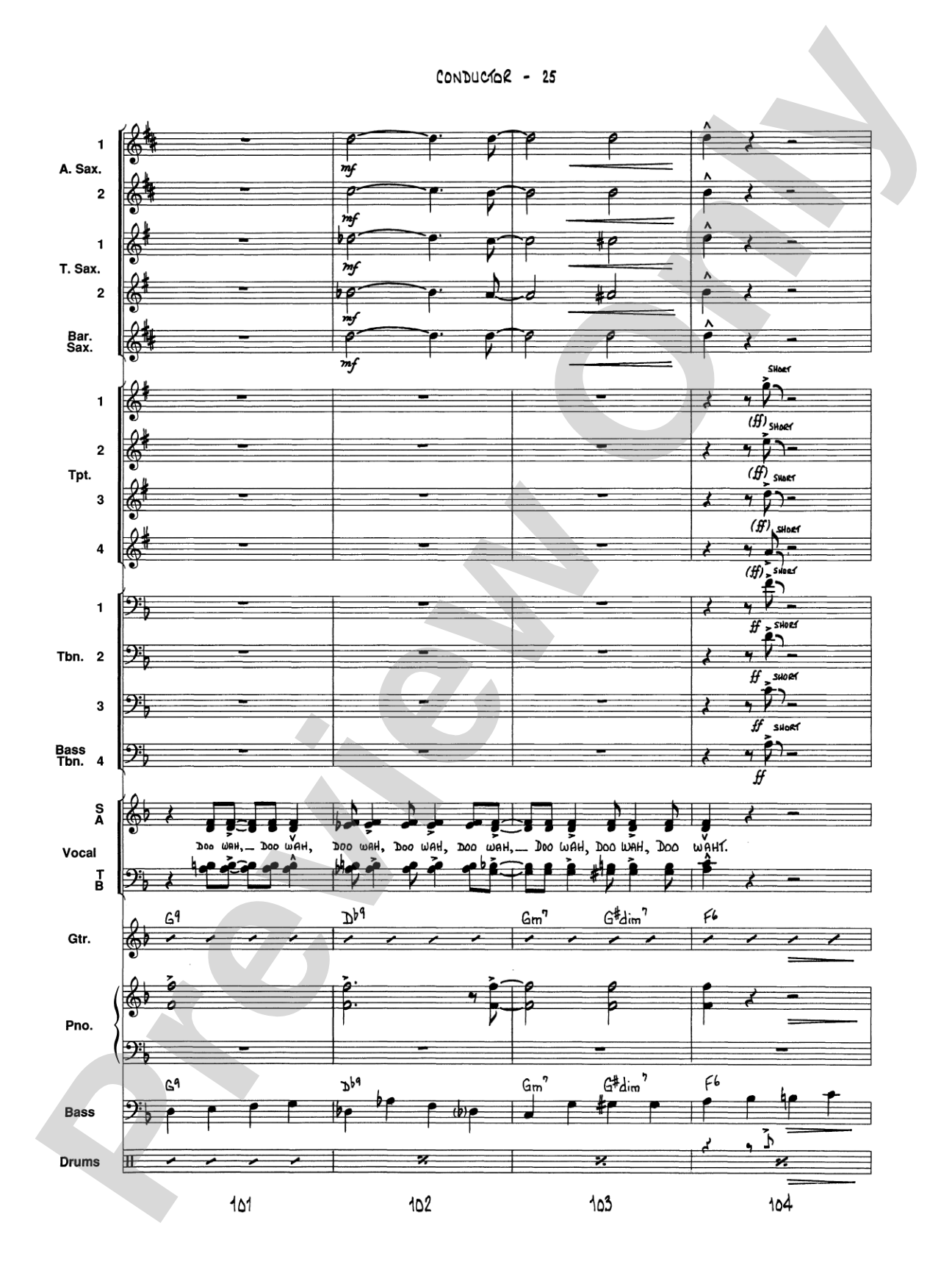
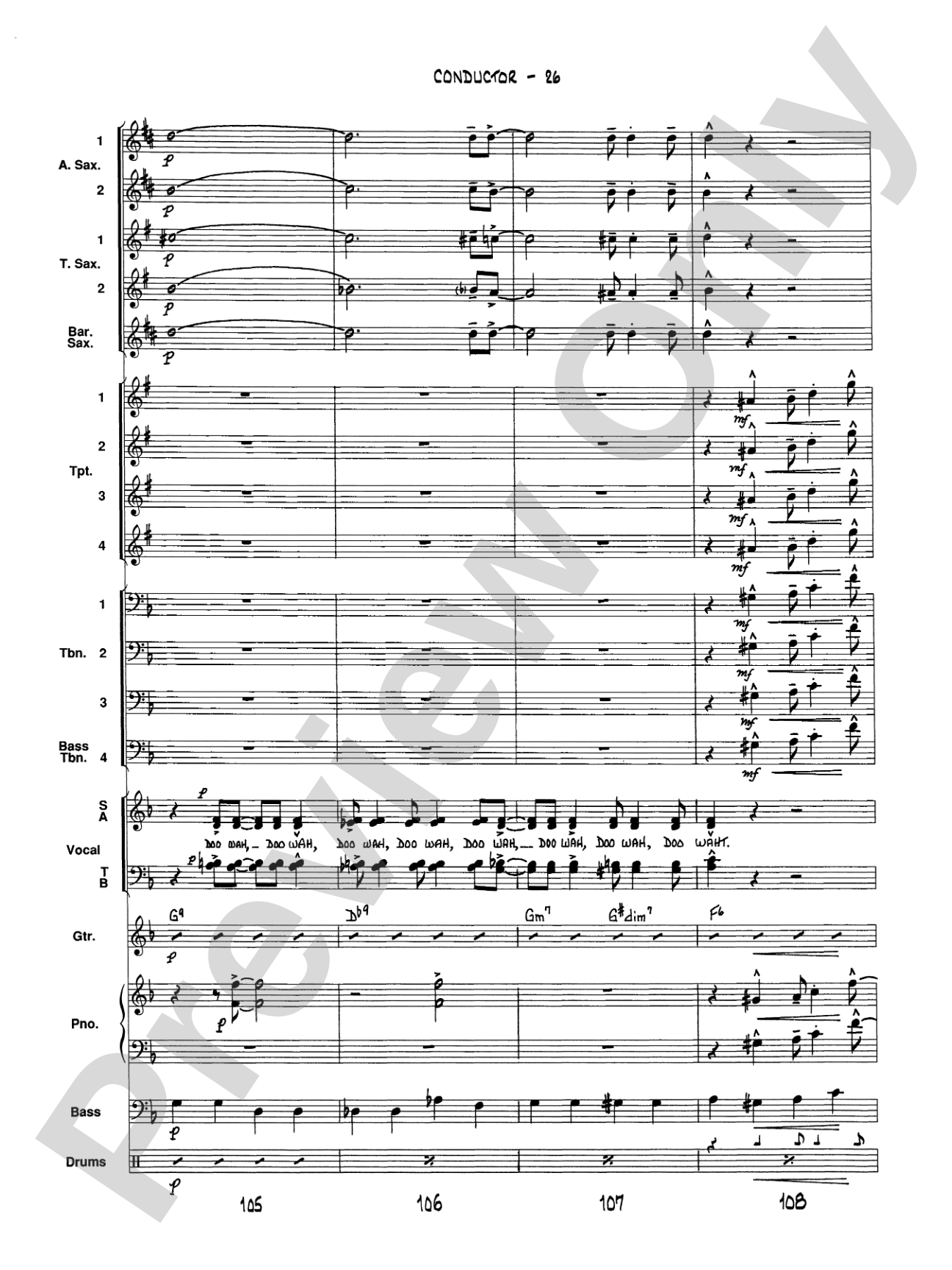
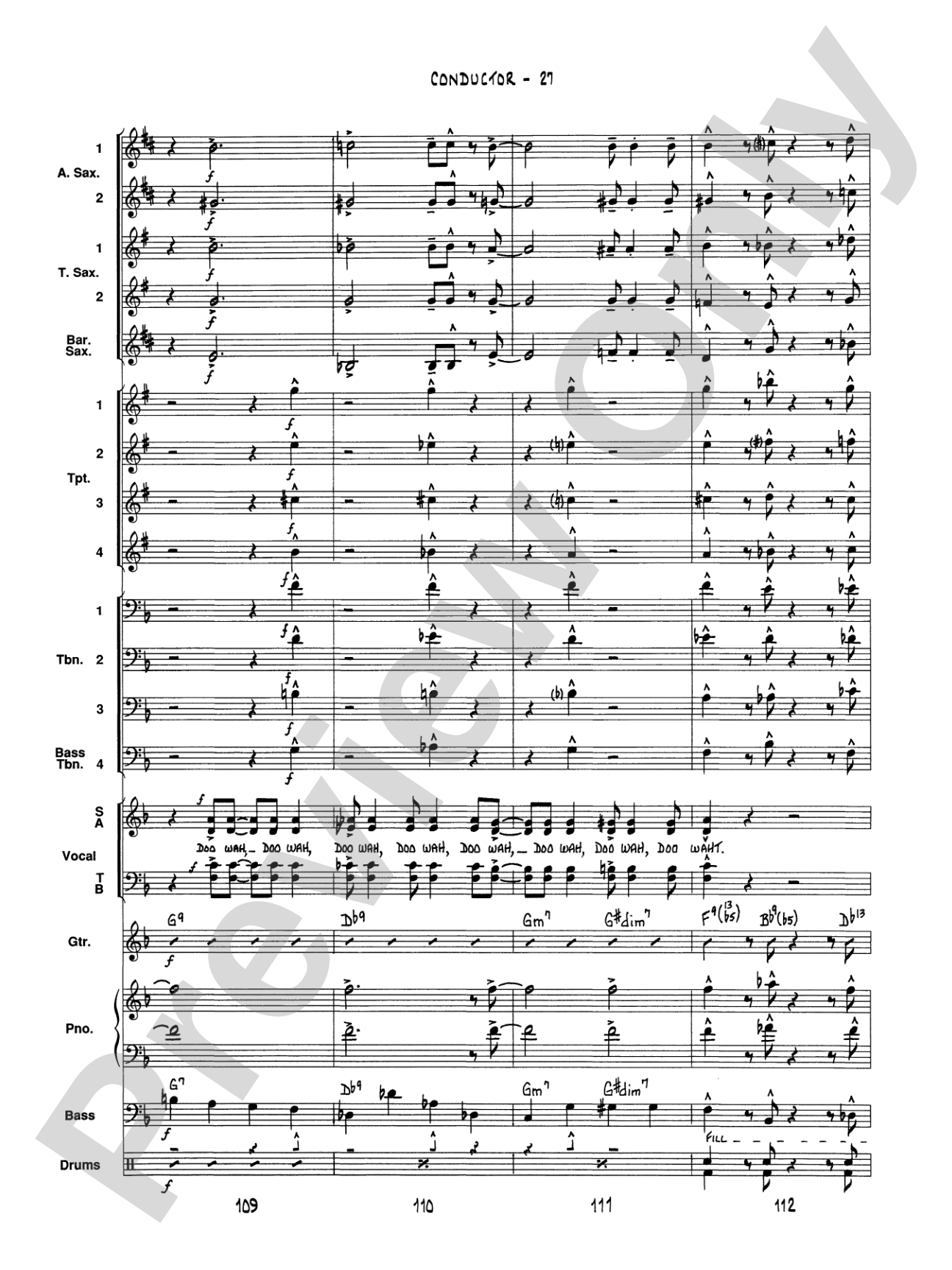
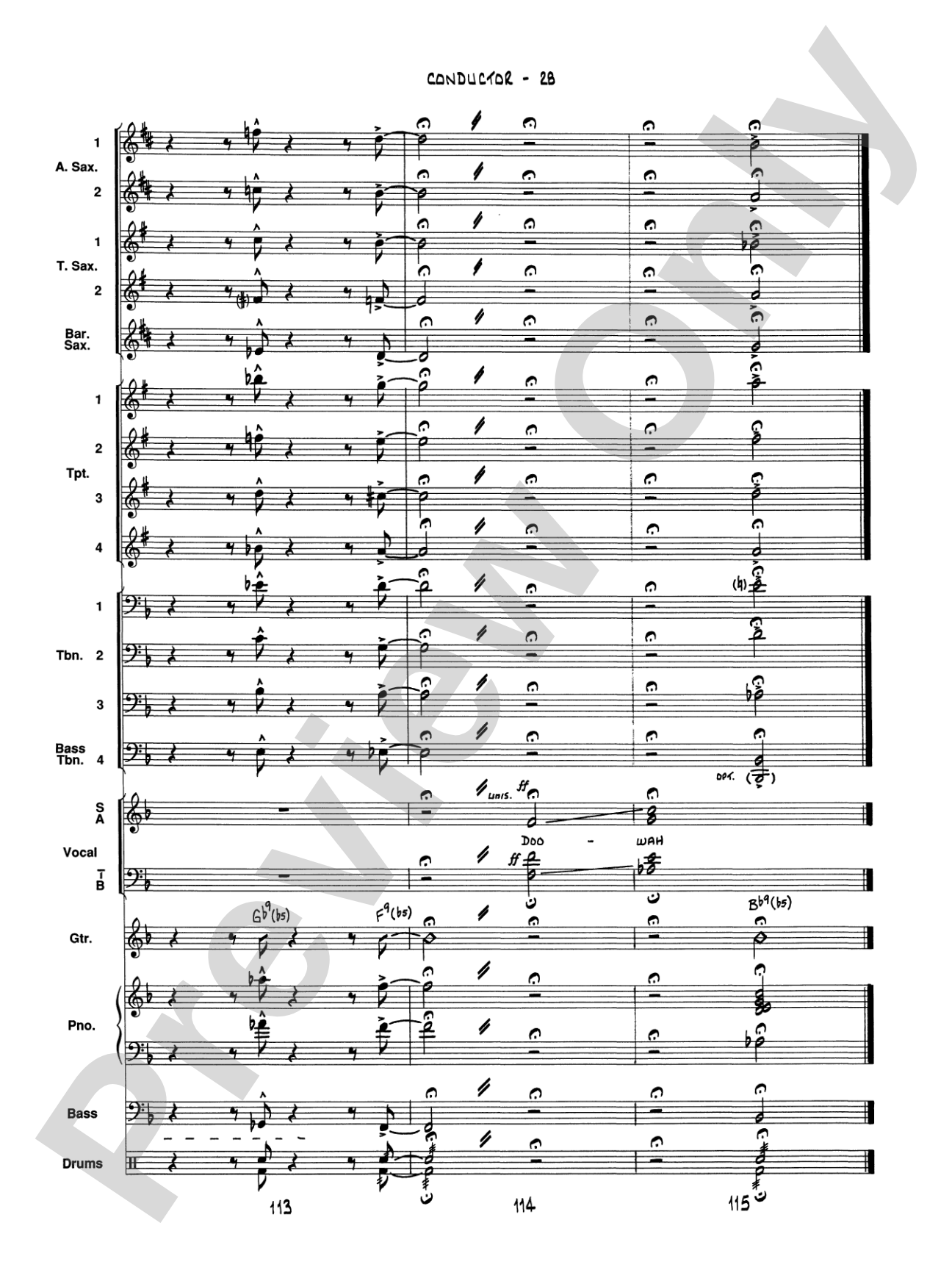



It Don't Mean a Thing (If It Ain't Got That Swing): Vocal Solo with Jazz Ensemble Conductor Score & Parts
Vocal Feature - Key of F
By Duke Ellington and Irving Mills / arr. Mike Carubia
Grade: 4 (Medium Advanced / Difficult)
Item: 00-PK-0002543

$54.00
One moment…
Description
More Duke Ellington magic! This chart sells itself . . . the vocal group is just the frosting on the cake. The voice leadings are good and the band cooks along well. Look at this one! (2:36)


Don't just read it, hear it, play along with it, and watch your students grow with it. In MakeMusic Cloud, It Don't Mean a Thing (If It Ain't Got That Swing): Vocal Solo with Jazz Ensemble Conductor Score & Parts comes alive with professional accompaniment, adjustable tempo, and built-in practice tools that turn solo practice into real progress.
Open in the Player
Jump straight in and assign it today.
Start Your Free Trial
Open this title and explore the full library in minutes.
Sample Audio
No sample audio found.
Sample Video
No sample videos found.
Additional Details
Series:
Jazz Vocal Series
Publisher:
Alfred Music
Page Count:
226
SKU:
00-PK-0002543
More about this title
About the Composer: Duke Ellington
Duke Ellington (1899–1974) composed over one thousand works across his lifetime, establishing himself as one of jazz's most prolific and influential voices. His compositional approach merged sophisticated harmonic language with the expressive possibilities of the jazz ensemble, creating music that worked equally well in concert halls and dance venues. Ellington's legacy rests not just on individual standards but on his entire body of work, which demonstrated that jazz could achieve the structural complexity and artistic depth of classical composition.
Why we love this
Carubia's arrangement captures everything that makes this Ellington classic sing: the voice line sits perfectly for a soloist, the ensemble writing crackles with smart voice leading, and the overall sound feels both sophisticated and accessible. Programming a jazz vocal with this kind of polish and energy gives your ensemble a genuine showstopper that audiences recognize immediately.
What to expect
Sophisticated and swinging. The arrangement has real harmonic color and voice leading that feels almost conversational, while the rhythm section propels everything forward with genuine groove. It's the kind of piece that makes audiences lean in and listen, then leaves them wanting an encore.
Who it's for
Jazz ensembles with a confident vocalist and musicians who are comfortable with swing feel and section independence. This is repertoire for groups that have developed beyond playing everything straight and are ready to interpret jazz with genuine musicality.
How to get the most out of it
- Balance the solo vocalist with the ensemble so the voice cuts through without overwhelming the section textures. The rhythm section and horn arrangement are doing important work beneath the melody.
- Lock the rhythm section into a comfortable swing feel early in rehearsals. Once the groove is steady, the soloist will have the security needed to explore phrasing and interpret the lyric naturally.
- Work the vocal line for conversational phrasing rather than metronomic precision. Jazz singing lives in the space between the beat, and this arrangement gives the soloist room to play with that relationship.
- Shape the ensemble articulation consistently. Clear, unified tonguing in the horns and crisp note attacks from the rhythm section will make the arrangement shine without sounding mechanical.
How to use it
This works beautifully as a concert feature or as a centerpiece in a jazz vocal showcase. The length and energy level make it ideal for closing a first set or opening a finale, and it pairs naturally with other Ellington standards or with mid-century American songbook material.
Skills your students will build
- Interpreting jazz swing articulation and phrasing in both solo and ensemble contexts
- Reading and performing voice leading in jazz harmony
- Coordinating a vocal soloist with an ensemble accompaniment
- Executing consistent section blend and balance in a jazz texture
- Communicating rhythmic feel and relaxed time through listening and ensemble awareness