
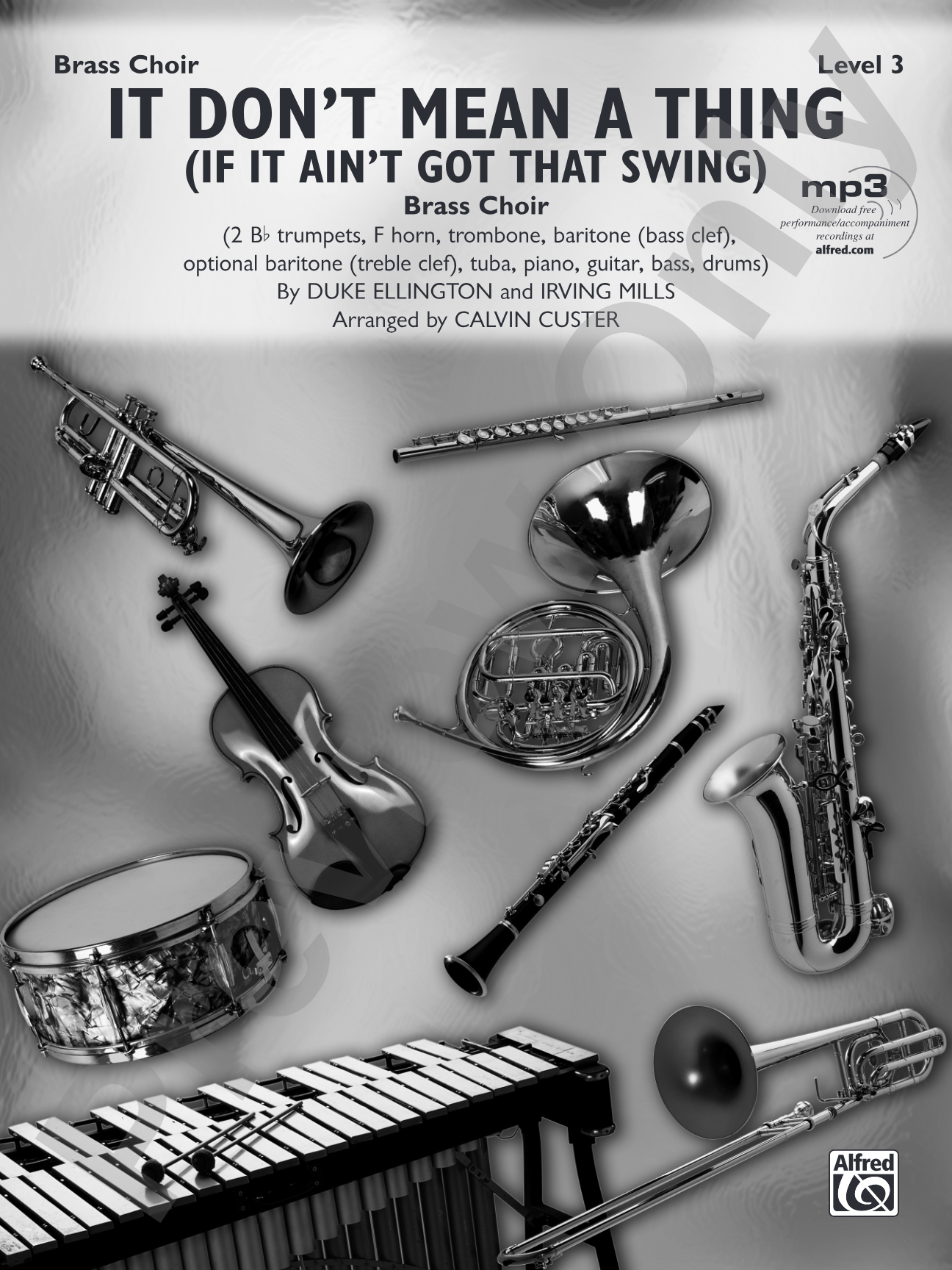

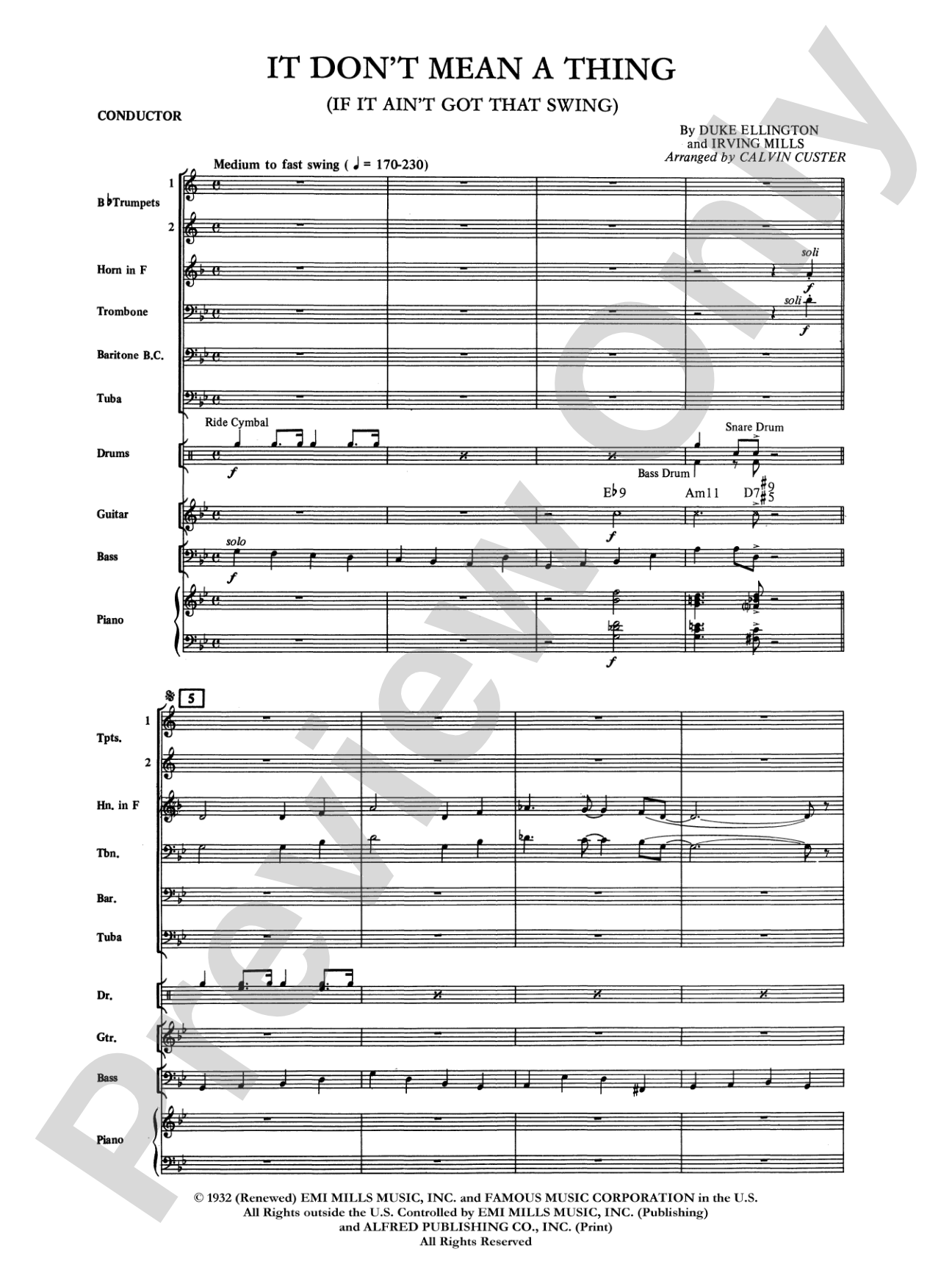
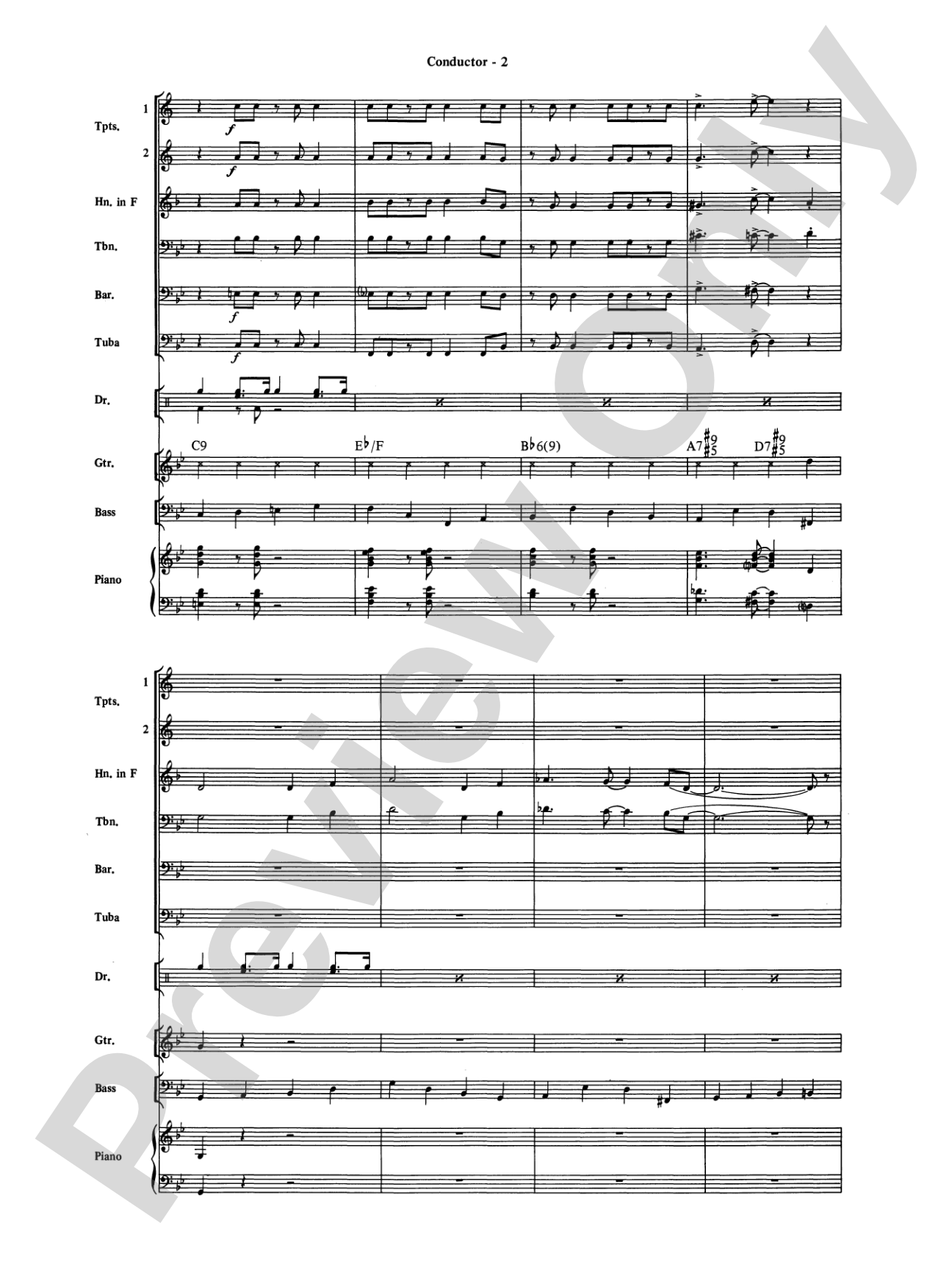
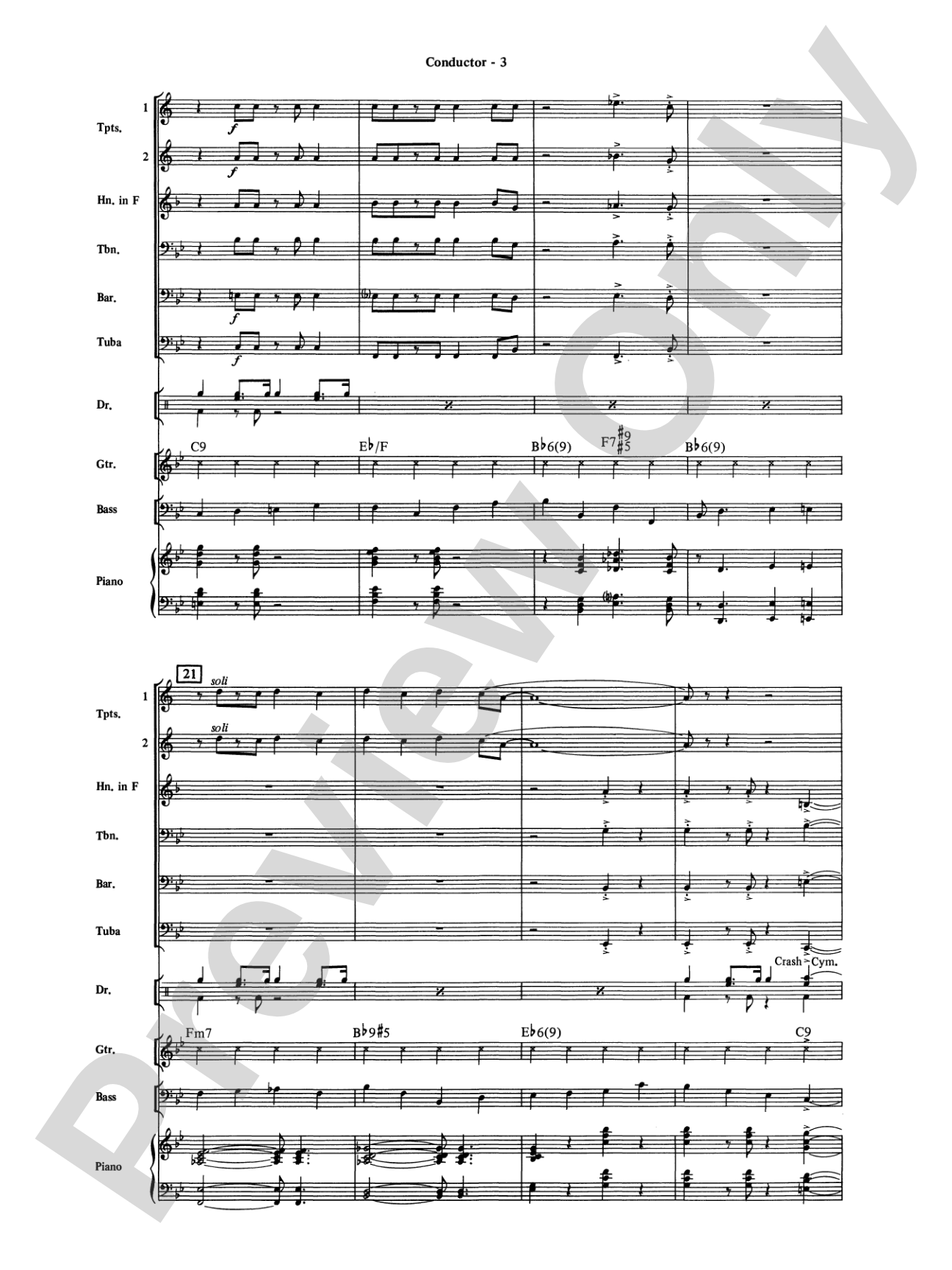
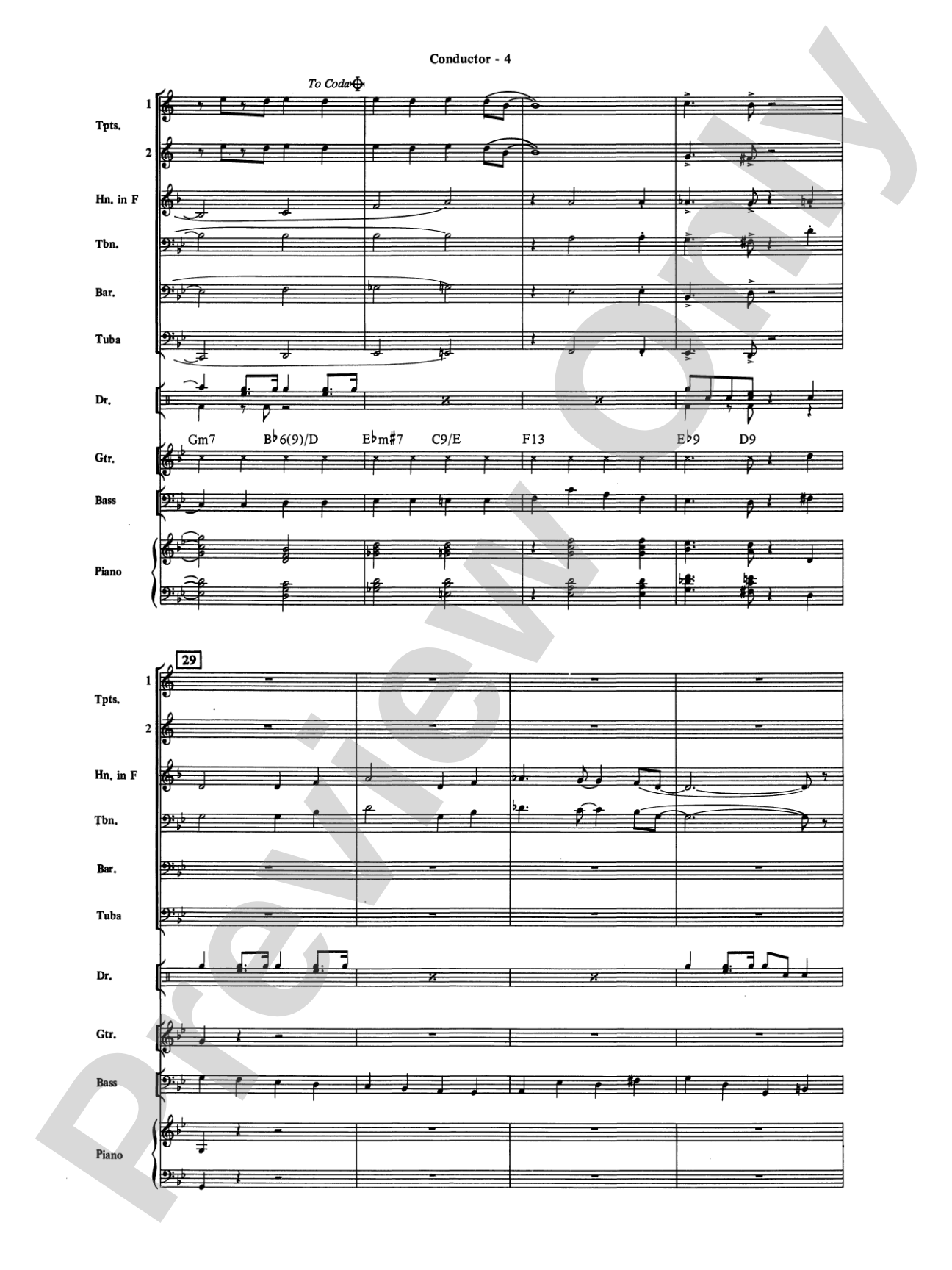
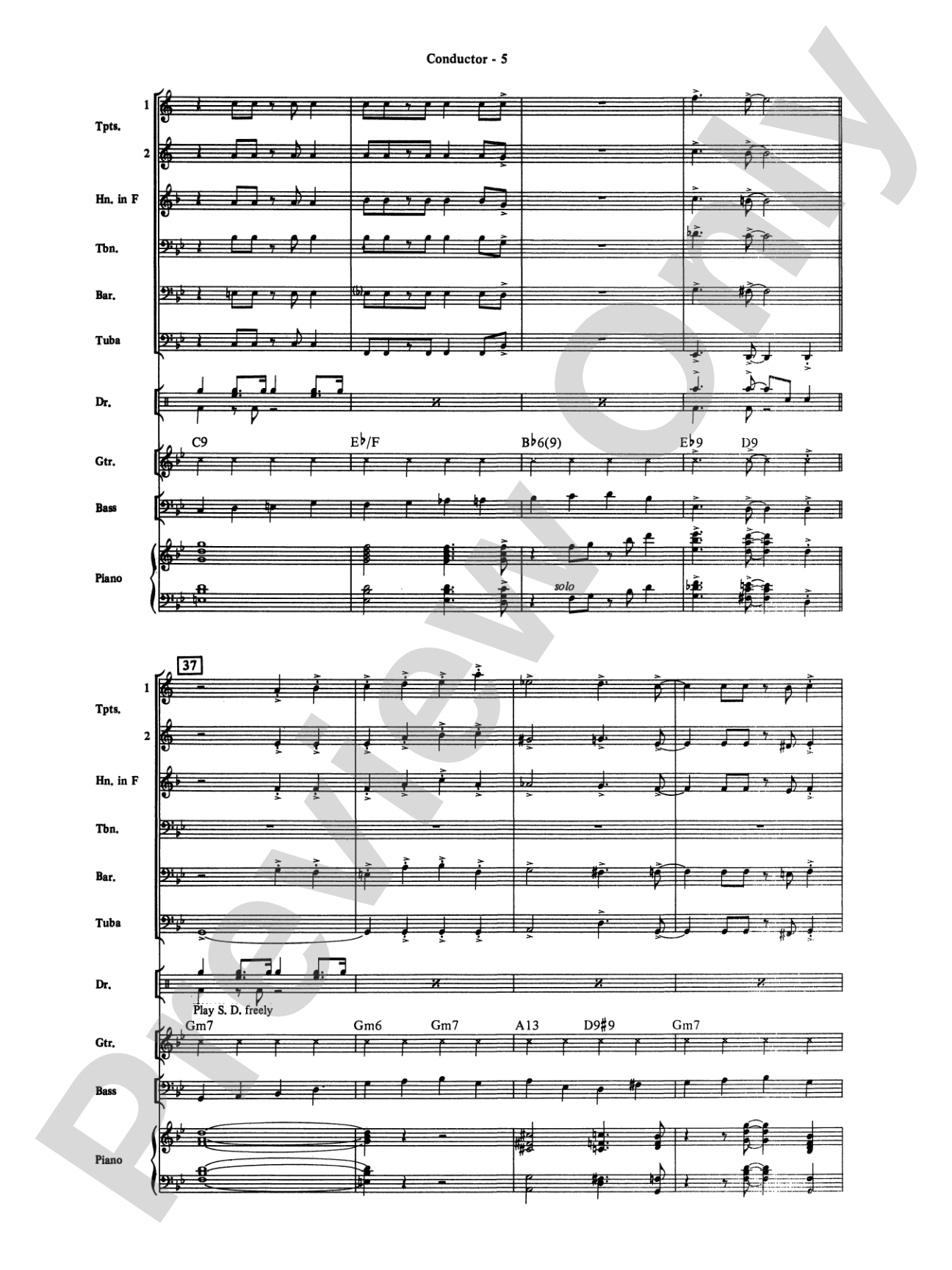
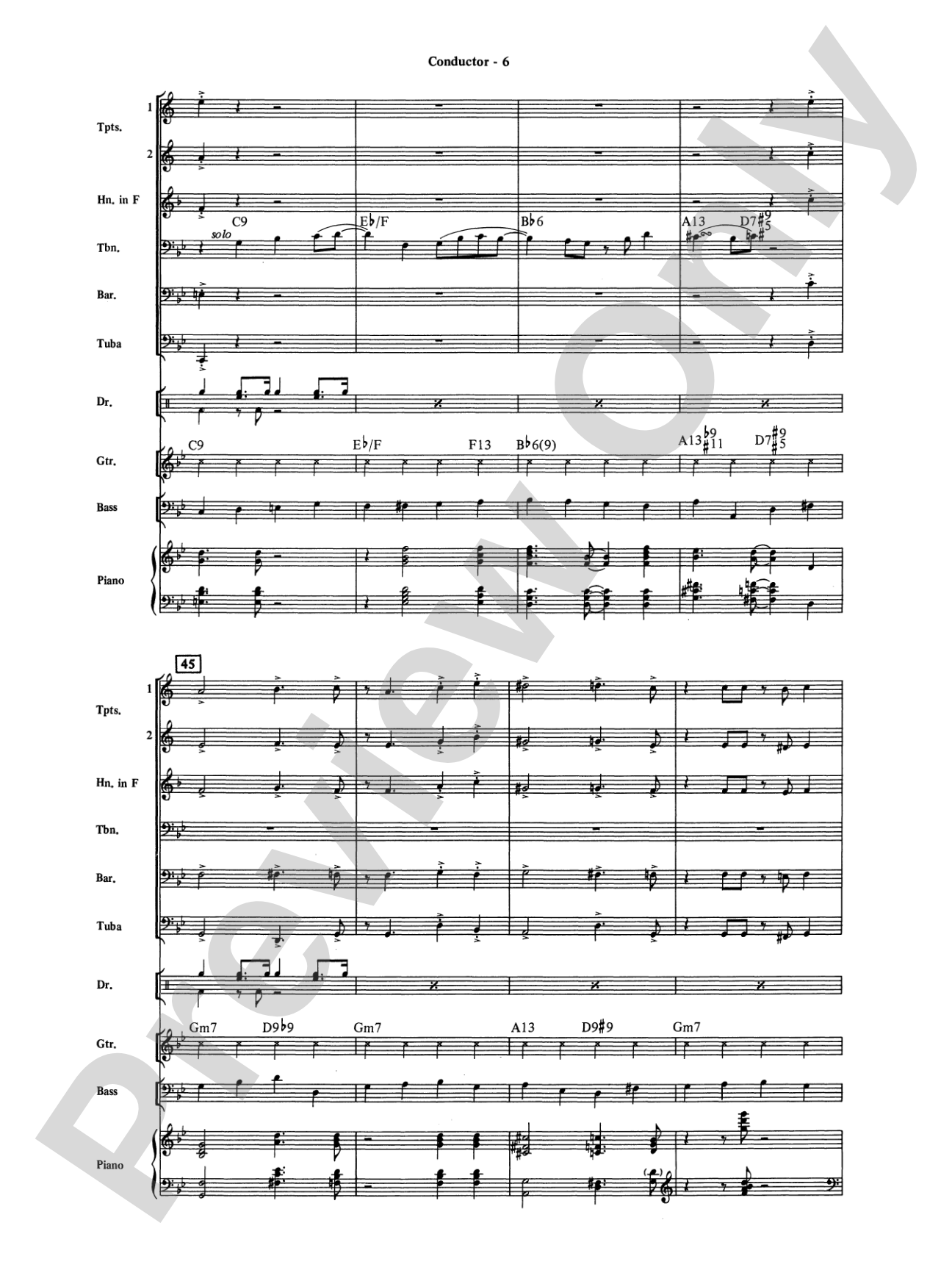
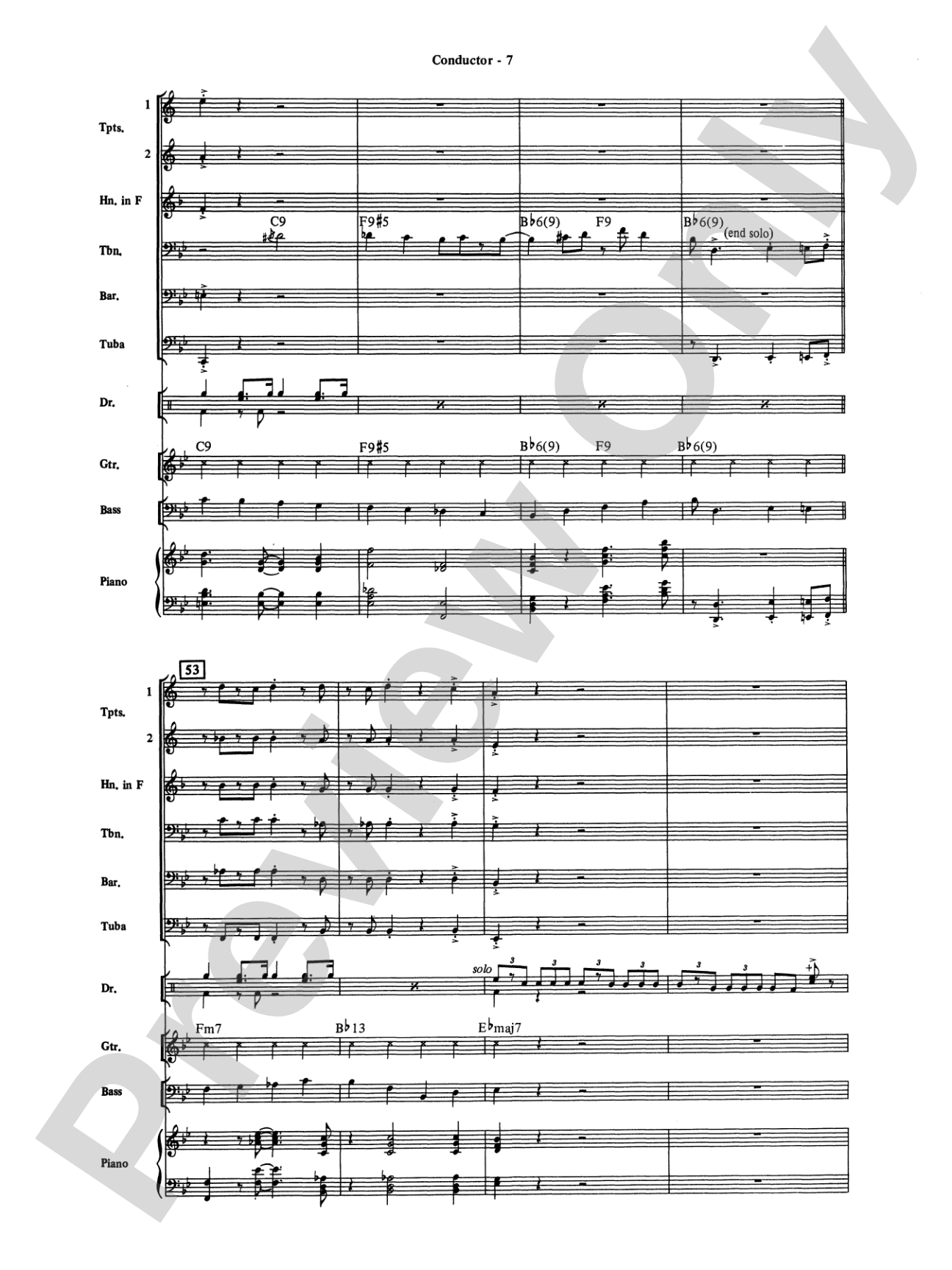
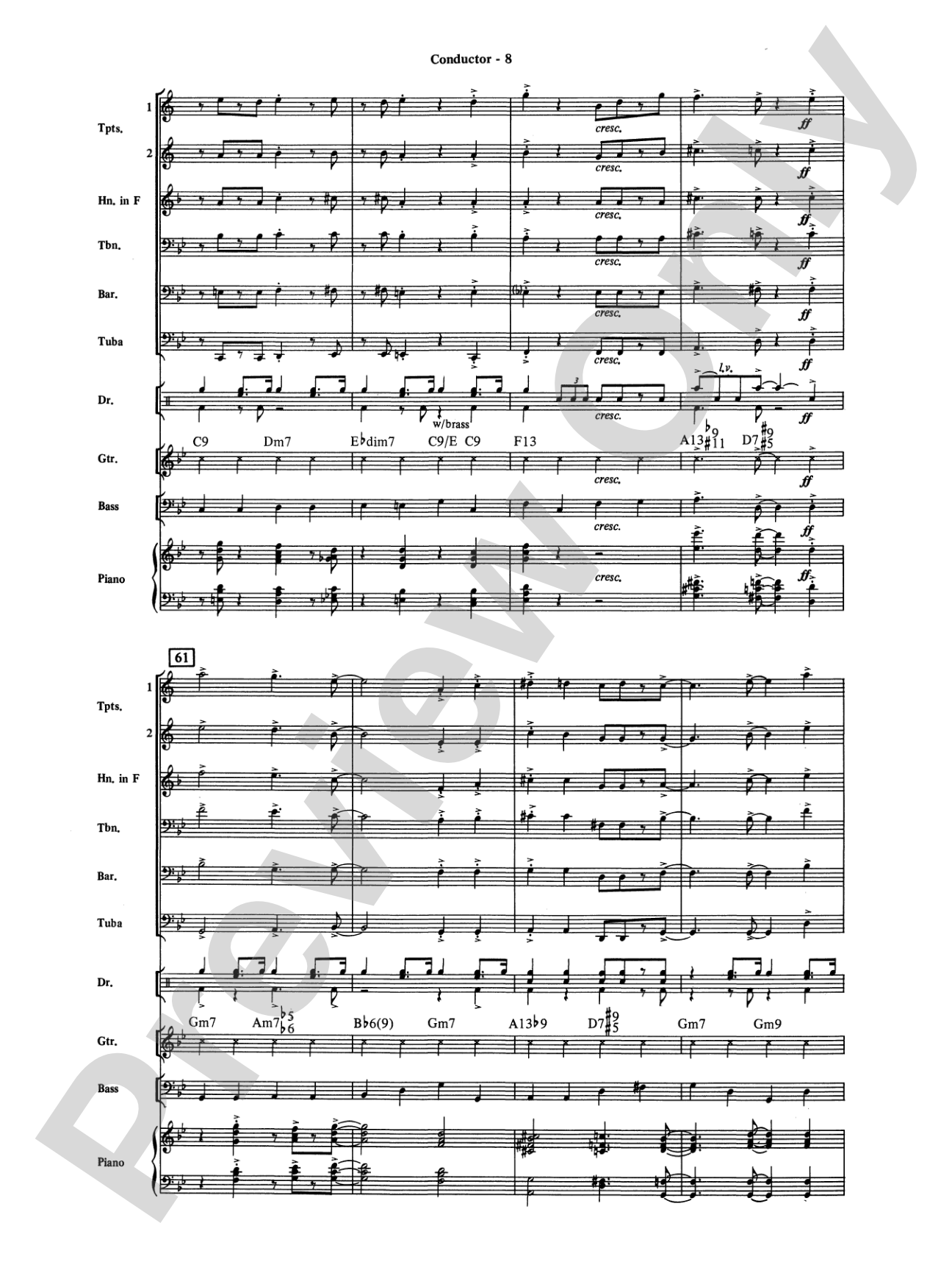
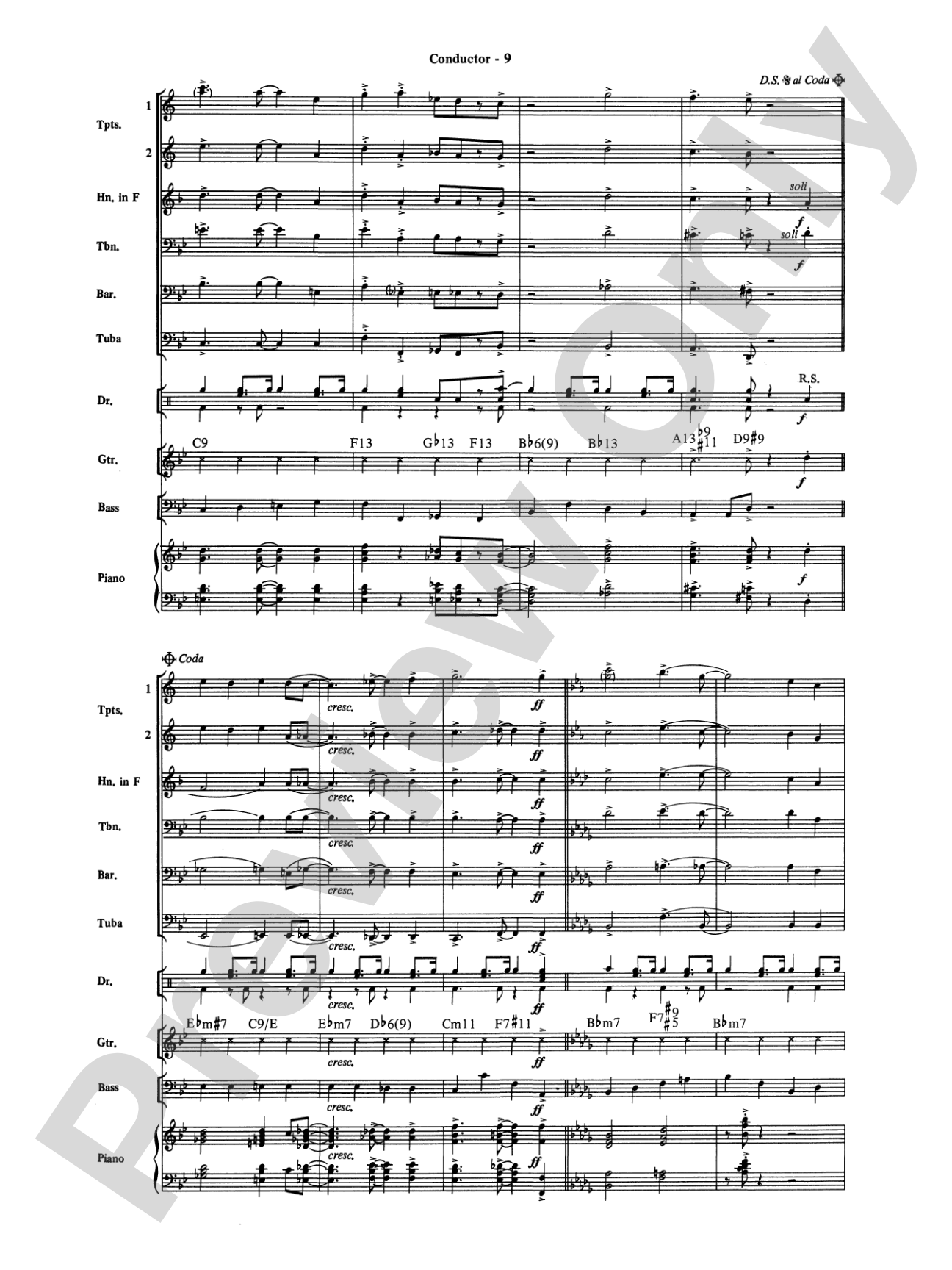
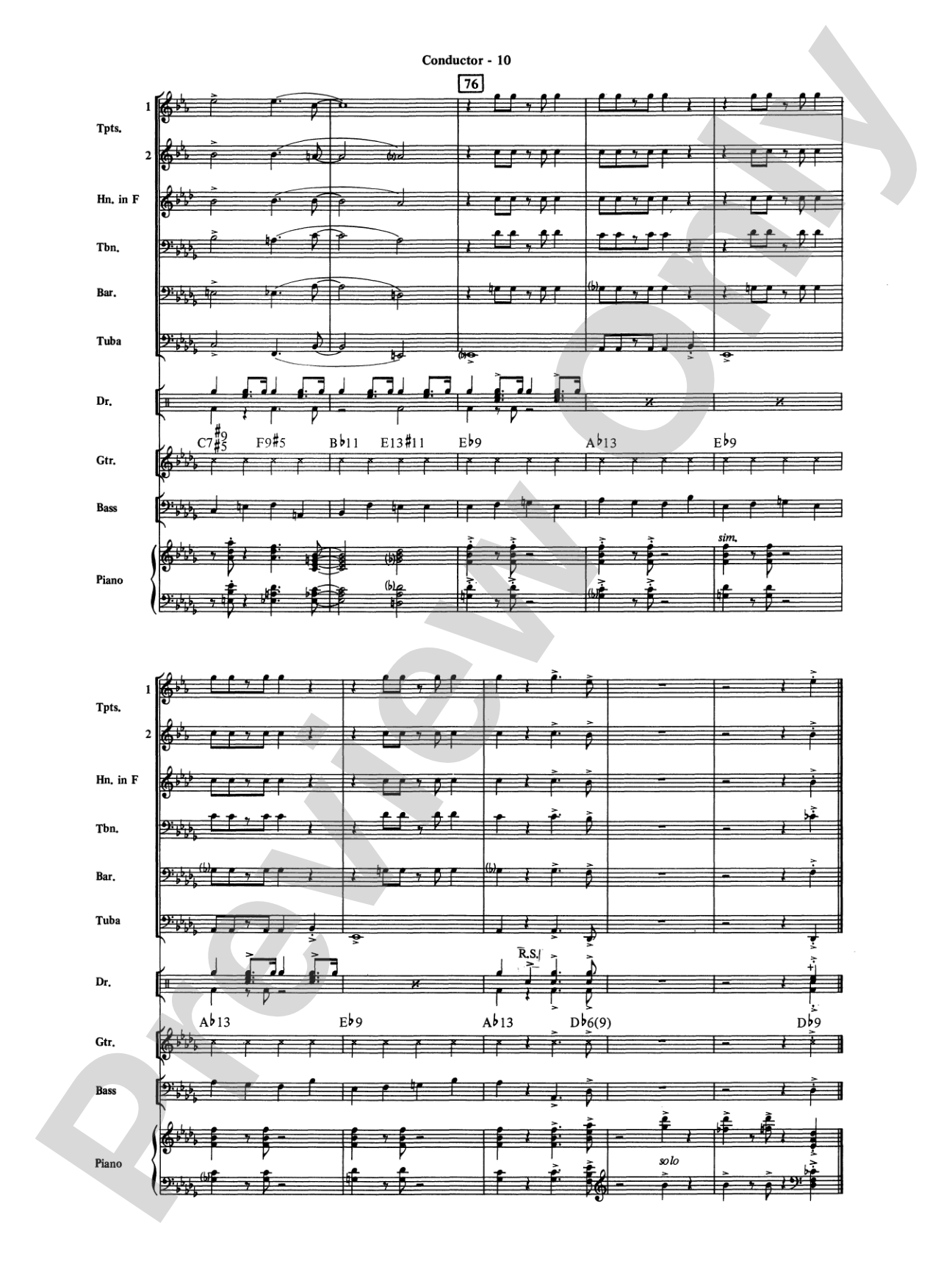

It Don't Mean a Thing (If It Ain't Got That Swing): Brass Choir
By Duke Ellington and Irving Mills / arr. Calvin Custer
Item: 00-PK-0001377

$15.99
One moment…
Related Items
It Don't Mean a Thing (If It Ain't Got That Swing): Brass Choir |
$15.00
|
View |
Description
Download free full-performance and accompaniment recordings. Play along with the music and learn the correct style with the full-performance track. The accompaniment track includes only piano, guitar, bass, and drums, so if you don't have a rhythm section, you can play along with this track in rehearsal and performance.
Free Recording Downloads:
Full Performance Track
Accompaniment Track


Free Recording Downloads:
Full Performance Track
Accompaniment Track
Don't just read it, hear it, play along with it, and watch your students grow with it. In MakeMusic Cloud, It Don't Mean a Thing (If It Ain't Got That Swing): Brass Choir comes alive with professional accompaniment, adjustable tempo, and built-in practice tools that turn solo practice into real progress.
Open in the Player
Jump straight in and assign it today.
Start Your Free Trial
Open this title and explore the full library in minutes.
Sample Audio
1
Accompaniment
--:--
2
Performance
--:--
Accompaniment
0:00
0:00
Sample Video
No sample videos found.
Additional Details
Series:
Ensembles That Swing
Publisher:
Alfred Music
Page Count:
38
SKU:
00-PK-0001377
More about this title
About the Composer: Duke Ellington
Duke Ellington (1899-1974) was a composer, bandleader, and pianist who fundamentally shaped American jazz and popular music. His output spanned seven decades and included thousands of compositions ranging from three-minute standards to extended concert works; his harmonic sophistication and orchestral imagination influenced musicians across every genre. Ellington's legacy rests on his ability to write idiomatically for jazz ensembles while maintaining compositional depth that rewards repeated listening.
Irving Mills (1894-1985) was a music publisher, lyricist, and promoter who collaborated closely with Ellington during the 1930s and 1940s. Mills contributed lyrics to many of Ellington's most enduring compositions and played a crucial business role in bringing Ellington's music to wider audiences. The partnership between these two figures produced some of the most recognizable works in the jazz canon.
Why we love this
Ellington's harmonic language and melodic design translate beautifully to brass choir writing, and this arrangement captures the swagger and accessibility that made the original a standard. The piece demands solid intonation and rhythmic precision while remaining genuinely fun to perform, which keeps student musicians engaged across multiple rehearsals. Programming it signals to your audience that brass doesn't have to mean classical; it can swing.
What to expect
Swaggering and elegant in equal measure, with a melody that bounces forward over sophisticated harmonies that hint at blues tonality. The rhythm section locks in tight underneath, creating space for the brass to breathe while maintaining the propulsive energy that made this tune a jazz standard.
Who it's for
This arrangement works for brass choirs with secure section playing and a willingness to embrace jazz style. It suits intermediate to advanced high school ensembles, college brass choirs, and professional community brass groups looking to program outside the classical core.
How to get the most out of it
- Balance the melody line so it cuts through the harmony; in a brass choir, the lead voice can disappear if the inner voices aren't controlled dynamically.
- Lock into the groove by listening intently to the rhythm section on the accompaniment track during rehearsal; jazz swing requires a different air than classical legato.
- Articulate the rhythmic figures with light tonguing that lifts at the note boundary rather than separating widely; the style lies in the precision of placement, not in obvious separation.
- Use the full-performance recording as a reference for rubato and phrasing; Ellington's music often sits just ahead of or slightly behind the beat in ways that feel natural only when you've heard them modeled.
How to use it
Place this in a concert exploring American musical vernacular, pairing it with classical brass works to show range and versatility. It works equally well as a festival or pops concert centerpiece or as a feature for a jazz showcase where the brass section steps into the spotlight.
Skills your students will build
- Swing rhythm articulation and phrasing
- Intonation adjustment for jazz voicings and blue notes
- Balance and blend in a homogeneous ensemble
- Listening to a rhythm section and locking into a groove
- Reading and executing syncopated rhythmic figures