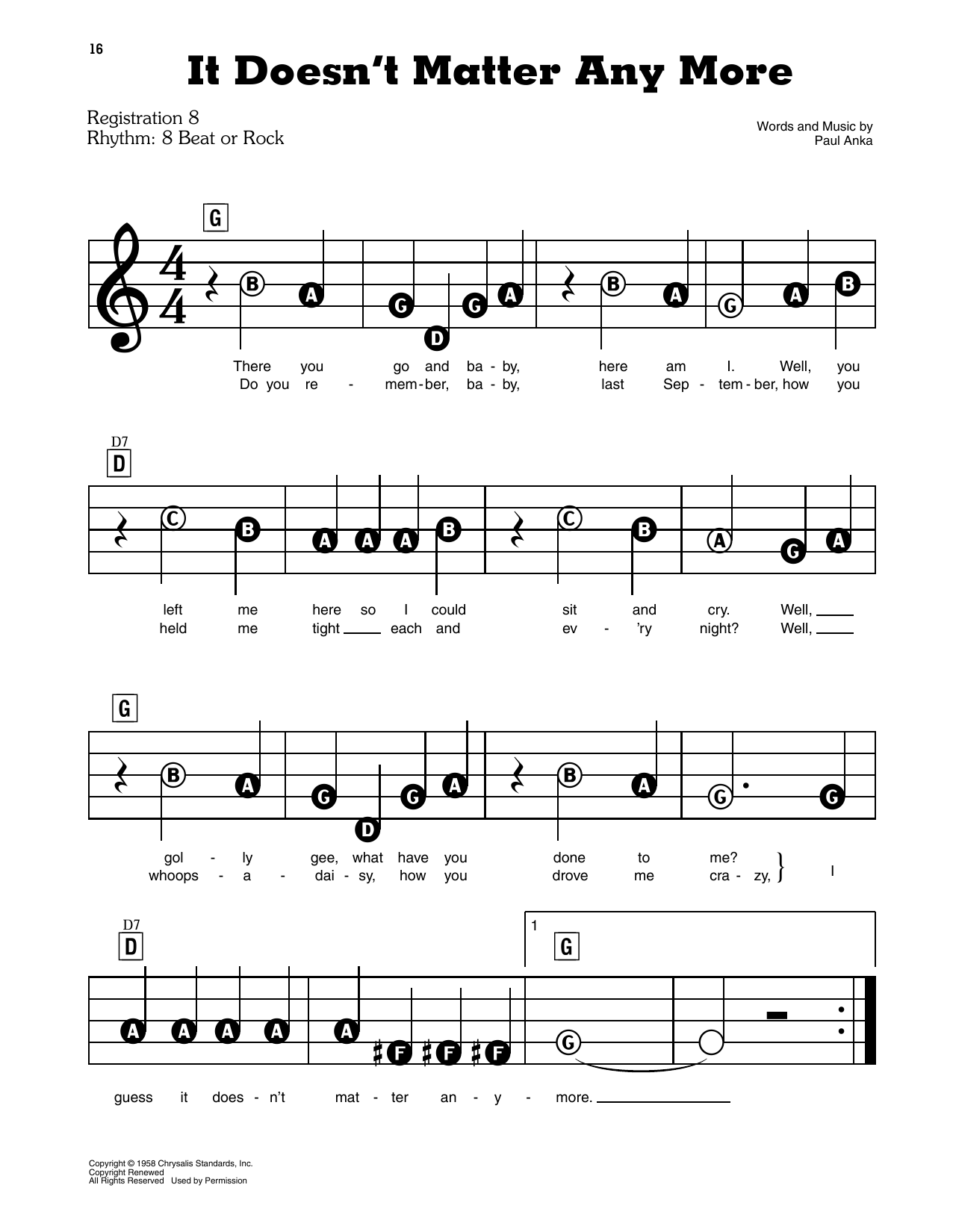
It Doesn't Matter Anymore Sheet Music Preview

It Doesn't Matter Anymore: E-Z Play Today

As performed by Paul Anka

Item: 35-DS00854253

Digital Download
$4.99
Description

It Doesn't Matter Anymore: E-Z Play Today isn't in MakeMusic Cloud just yet...but it could be. Let us know you'd like to see it, and you'll help shape what comes next. In the meantime, start a free trial and dive into thousands of interactive titles your students can play along with today.

Sample Audio
No sample audio found.
Sample Video
Additional Details
Publisher: Hal Leonard
Page Count: 3
SKU: 35-DS00854253

More about this title

About the Artist: Paul Anka

Paul Anka wrote and performed some of the most enduring pop standards of the 1950s and beyond, starting his recording career as a teenager and quickly establishing himself as a skilled melodist and performer. His ability to craft singable, memorable hooks while maintaining sophisticated harmonic sensibility made him a model for popular songwriting across multiple decades.

Why we love this

This E-Z Play arrangement distills one of Anka's signature compositions into an accessible piano vehicle that doesn't sacrifice musicality for simplicity. Students get to experience the melodic confidence and harmonic clarity that made this song a standard, while the reduced complexity keeps focus on phrasing and touch.

What to expect

Conversational and direct, with an almost resigned elegance that comes from acceptance rather than sadness. The melody has a natural speaking quality, letting the words and emotional subtext carry weight while the harmony provides warm support.

Who it's for

Pianists transitioning from beginner to intermediate repertoire who want to tackle recognizable standards without getting bogged down by technical complexity. This works well for students developing musicality and stylistic awareness in popular song idioms.

How to get the most out of it

  • Shape the melody with subtle dynamic variation rather than driving the tempo; this song lives in the space between the notes as much as in the notes themselves.
  • Keep the left hand light and rhythmically neutral so the right hand melody can breathe without rhythmic interference.
  • Pay attention to any legato or staccato markings in the arrangement; they define the song's conversational quality.

How to use it

Pair this with other classic pop standards in a "Great American Songbook" concert context, or use it as a confidence builder in a mixed repertoire recital where students perform both classical and popular selections. It also serves as a bridge between traditional classical study and contemporary songwriting appreciation.

Skills your students will build

  • Phrasing vocal-style melodies on piano
  • Balancing melody and accompaniment texture
  • Reading and interpreting dynamics in popular arrangements
  • Playing with rhythmic flexibility and conversational flow

You May Also Like