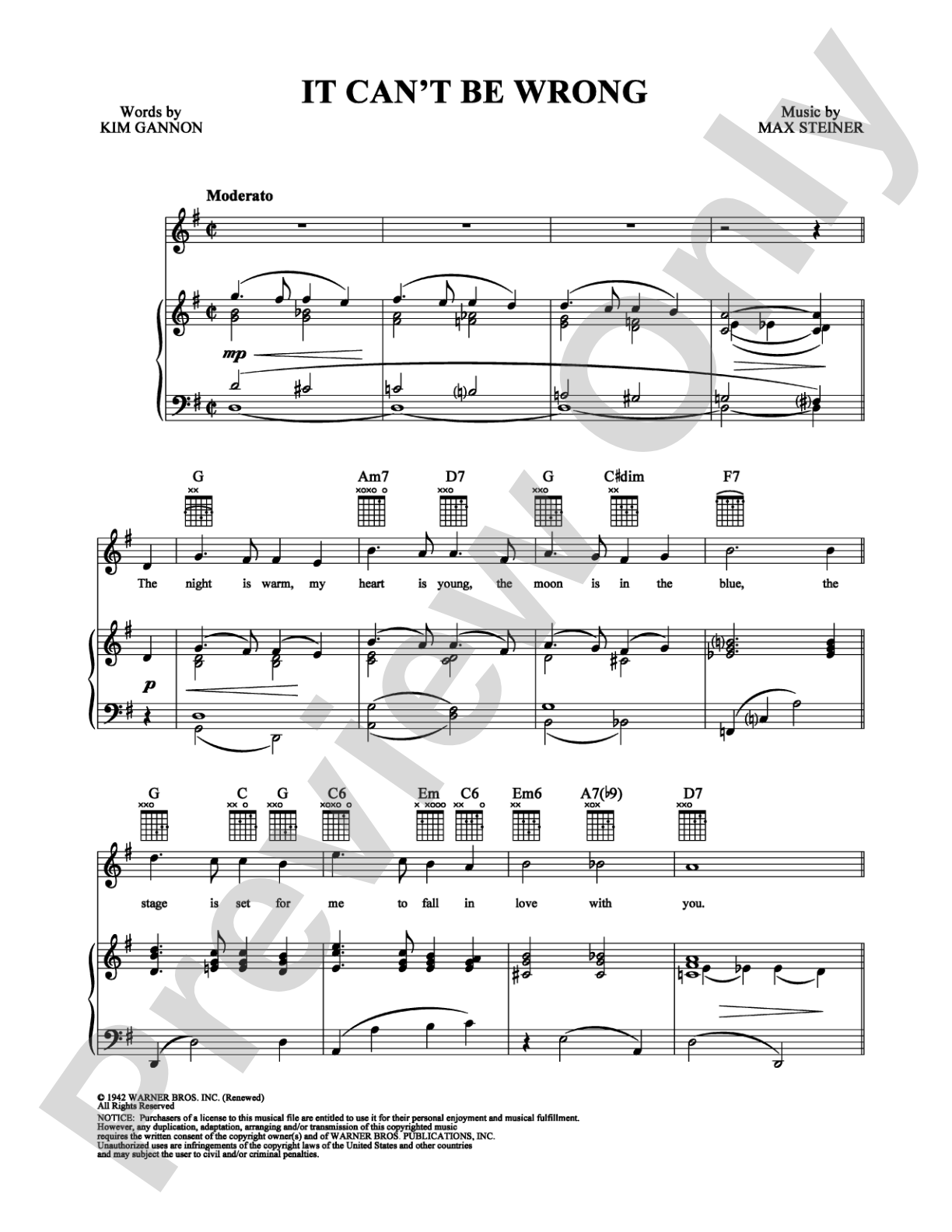
It Can't Be Wrong: Piano/Vocal/Chords Digital Sheet Music

It Can't Be Wrong: Piano/Vocal/Chords Digital Sheet Music

Max Steiner

Item: 00-PS-0008464

Digital Download
$3.99
Description

It Can't Be Wrong: Piano/Vocal/Chords Digital Sheet Music isn't in MakeMusic Cloud just yet...but it could be. Let us know you'd like to see it, and you'll help shape what comes next. In the meantime, start a free trial and dive into thousands of interactive titles your students can play along with today.

Sample Audio
No sample audio found.
Sample Video
Additional Details
SKU: 00-PS-0008464

More about this title

Why we love this

The piano/vocal/chord arrangement makes this accessible to singers working with pianists or performing with chord charts, whether in a jazz context, a contemporary worship setting, or a solo recital. The inclusion of chord symbols means accompanists can comp flexibly or transpose on the fly, giving performers real interpretive freedom.

What to expect

A tender, introspective moment that invites vulnerability from the singer. The simplicity of the piano part and vocal melody creates an intimate sound, one that feels personal rather than grand.

Who it's for

Singers preparing a solo recital, a jazz vocalist working with a pianist, or a musician looking to learn or perform this piece with flexible accompaniment. Pianists wanting a cleaner reading of the harmonic structure will also find the chord symbols invaluable.

How to get the most out of it

  • Let the chord symbols guide your harmonic choices as an accompanist; you're not locked into a single voicing, so tailor your comping to the singer's tempo and phrasing.
  • Communicate the song's emotional arc with your singer before rehearsal; this tune rewards nuanced dynamic choices and rubato in the vocal line.
  • If transposing, test the new key with your vocalist early so you both have time to find the right feel in that range.

How to use it

Nest this in the second half of a recital where the audience is settled and listening closely, or use it as a palette cleanser between contrasting pieces. It works equally well as a standalone audition piece or as part of a set exploring ballads across different eras.

Skills your students will build

  • Reading chord symbols and understanding harmonic function
  • Sustaining long phrases with consistent breath support
  • Collaborating with an accompanist through dynamic and tempo communication
  • Shaping a simple melodic line with expressive intent

You May Also Like