It Came Upon A Midnight Clear: Easy Piano Digital Sheet Music

It Came Upon A Midnight Clear: Easy Piano Digital Sheet Music

Richard Storrs Willis

Item: 00-PS-0006746

Digital Download
$3.99
Description

It Came Upon A Midnight Clear: Easy Piano Digital Sheet Music isn't in MakeMusic Cloud just yet...but it could be. Let us know you'd like to see it, and you'll help shape what comes next. In the meantime, start a free trial and dive into thousands of interactive titles your students can play along with today.

Sample Audio
No sample audio found.
Sample Video
Additional Details
SKU: 00-PS-0006746

More about this title

Why we love this

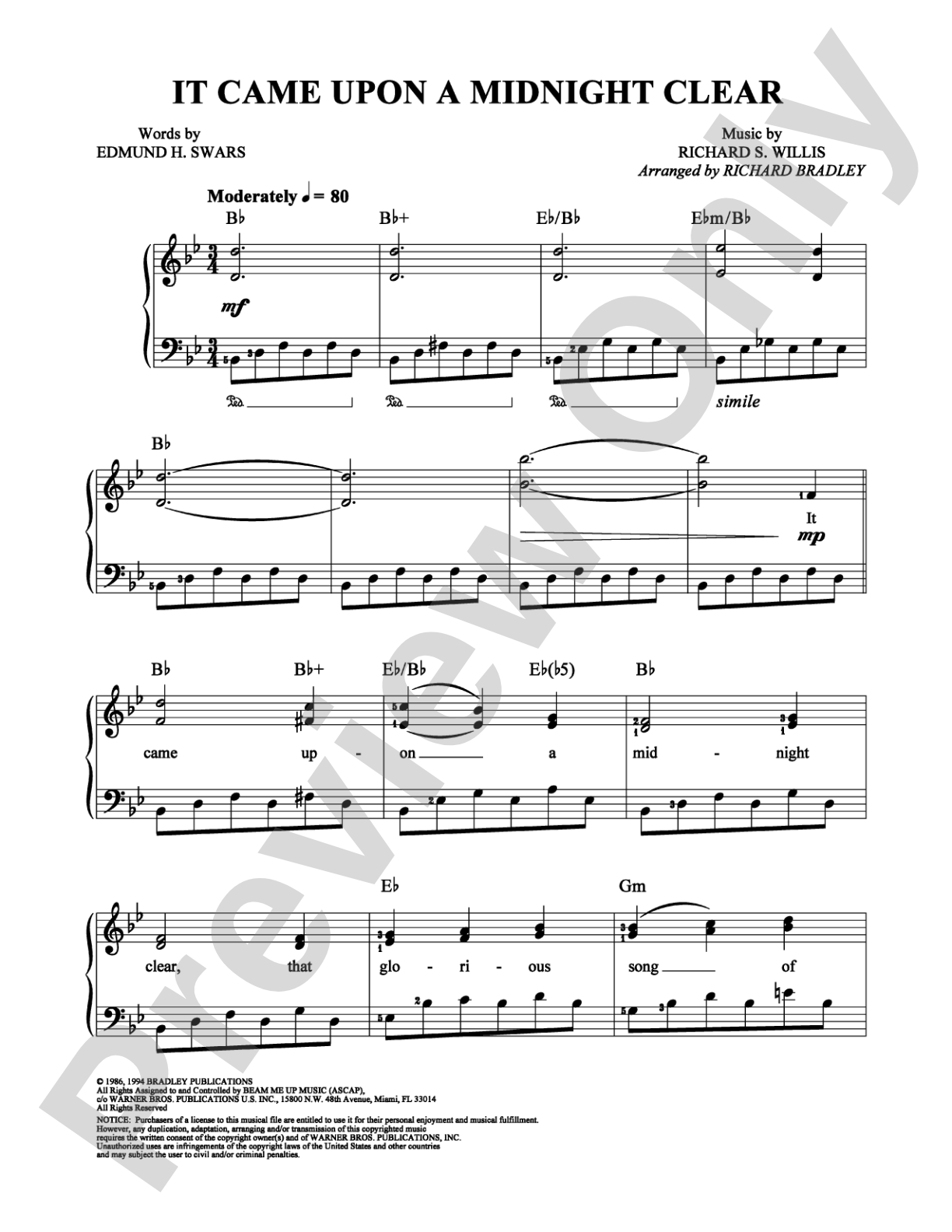
This arrangement strips away the ornamental flourishes that can intimidate early-level pianists, letting the melody's inherent warmth carry the piece. The easy voicing keeps students engaged with the carol's gentle narrative arc rather than wrestling with technical demands.

What to expect

Quiet wonder and stillness. The arrangement captures the carol's reverent, peaceful character without density, creating space for reflection. Each phrase feels like a gentle question answered by the next.

Who it's for

Early-level pianists (typically grades 2-3) who are ready to perform a recognizable seasonal piece with confidence. Students benefit from the carol's singable melody and straightforward harmonic support.

How to get the most out of it

  • Maintain an unhurried tempo; the piece gains its meditative quality from space between phrases rather than speed.
  • Let the left hand remain transparent and supportive so the right-hand melody can sing clearly.
  • Shape the phrase contours with subtle dynamic shifts to avoid a monotone reading of the repeated melodic sections.

How to use it

Use this as a recital or holiday concert opener to set a contemplative tone. It works equally well as a solo piece or accompanying another performer, and its modest technical requirements make it ideal for early December when rehearsal time is already stretched thin.

Skills your students will build

  • Reading in treble clef with leger lines
  • Playing sustained harmonic progressions in the left hand
  • Balancing melody and accompaniment across both hands
  • Shaping phrases through dynamic control rather than tempo changes
  • Performing a multi-phrase form with repetition and variation

You May Also Like