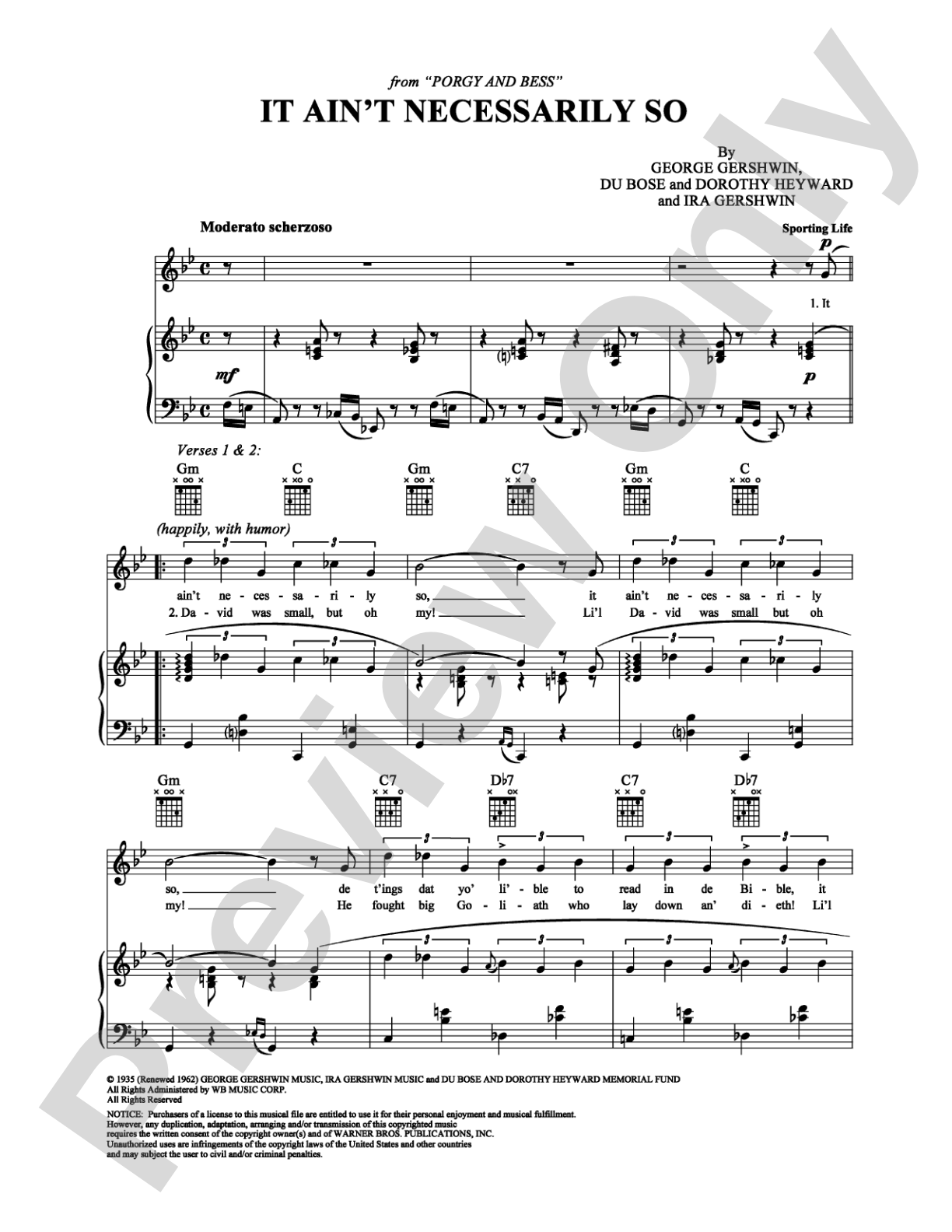
It Ain't Necessarily So: Piano/Vocal/Chords Digital Sheet Music

It Ain't Necessarily So: Piano/Vocal/Chords Digital Sheet Music

George Gershwin

Item: 00-PS-0001117

Digital Download
$3.99
Description

It Ain't Necessarily So: Piano/Vocal/Chords Digital Sheet Music isn't in MakeMusic Cloud just yet...but it could be. Let us know you'd like to see it, and you'll help shape what comes next. In the meantime, start a free trial and dive into thousands of interactive titles your students can play along with today.

Sample Audio
No sample audio found.
Sample Video
Additional Details
SKU: 00-PS-0001117

More about this title

About the Creator

George Gershwin composed "It Ain't Necessarily So" for the 1935 opera "Porgy and Bess," creating one of the most enduring songs in the American songbook. Written with lyricist Ira Gershwin, the piece emerged from Gershwin's deep engagement with jazz idioms and African American musical traditions, blending vernacular speech with sophisticated harmonic language.

The song's satirical text and swinging melody have made it a staple across jazz, pop, and theater contexts for nearly ninety years. Its accessibility combined with genuine compositional craft explains why singers and pianists continue to return to it, whether in intimate cabaret settings or concert halls.

Why we love this

This standard sits perfectly in the sweet spot between accessible and sophisticated, giving singers a chance to explore swing phrasing and rhythmic flexibility without getting lost in harmonic complexity. The piano/vocal/chords format lets accompanists comp freely while maintaining the tune's essential character.

What to expect

A knowing, sophisticated number that walks the line between skepticism and charm. The melody unfolds with conversational ease, inviting performers to find humor and warmth in the text while the harmonies supply just enough complexity to keep things interesting.

Who it's for

Singers performing jazz standards in recital, cabaret, or vocal ensemble settings will find this an essential part of the repertoire. Pianists accompanying vocalists also benefit from the chord changes provided for interpretive freedom.

How to get the most out of it

  • Let the lyrics drive the phrasing rather than forcing strict time; the conversational quality of the opening lines benefits from subtle rubato.
  • Balance the piano's harmonic movement against the vocal line so the chords support without overwhelming the melody.
  • Find the groove in the accompaniment once you hit the swing sections; steady, relaxed comping will serve the singer better than rushed fills.

How to use it

Pair this with other standards from the same era to build a jazz vocal recital, or use it as a standalone encore that showcases a singer's ability to navigate both lyrical nuance and rhythmic style. It works equally well in a cabaret context or as part of a musical theater revue.

Skills your students will build

  • Swing phrasing and jazz articulation
  • Chord-based accompaniment and comping
  • Lyrical interpretation and text delivery in a narrative style
  • Rhythmic flexibility within a steady harmonic framework

You May Also Like