Isn't This A Lovely Day (To Be Caught In The Rain?) Sheet Music Preview

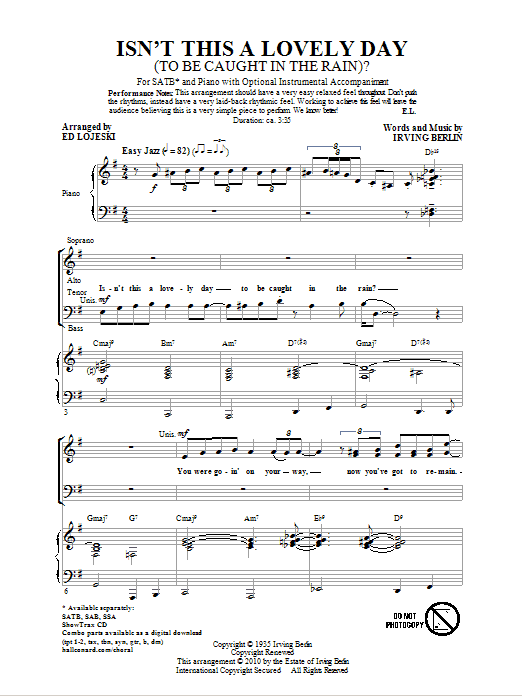
Isn't This A Lovely Day (To Be Caught In The Rain?): SATB Choral Octavo

Arranged by Ed Lojeski

Item: 35-DS00175373

Digital Download
$2.99
Description

Isn't This A Lovely Day (To Be Caught In The Rain?): SATB Choral Octavo isn't in MakeMusic Cloud just yet...but it could be. Let us know you'd like to see it, and you'll help shape what comes next. In the meantime, start a free trial and dive into thousands of interactive titles your students can play along with today.

Sample Audio
No sample audio found.
Sample Video
Additional Details
Publisher: Hal Leonard
Page Count: 7
SKU: 35-DS00175373

More about this title

About the Arranger: Ed Lojeski

Ed Lojeski has spent decades translating the Great American Songbook into accessible choral arrangements that preserve the sophistication of the originals while opening doors for singers at all levels. His work across jazz standards, Broadway selections, and pop repertoire has made him a fixture in choral libraries, trusted by directors who want arrangements that sound polished without demanding virtuosity.

Why we love this

Lojeski captures the wistful charm of this Irving Berlin standard in a way that lets your singers inhabit the lyrical warmth rather than chase technical difficulty. The arrangement breathes with the jazz sensibility of the era without requiring your section leaders to be jazz specialists, making it ideal for choirs looking to expand their repertoire beyond classical territory.

What to expect

The arrangement captures that bittersweet moment when bad weather becomes an excuse for romance. Lojeski's voicing floats with vintage elegance; you hear the optimism of the text reflected in the harmonic choices, and the overall effect is nostalgic without feeling dusty or academic.

Who it's for

Choirs with solid ensemble blend and basic jazz stylistic awareness will find this accessible and rewarding. It works equally well for concert choirs seeking popular standards, show choirs looking to expand beyond contemporary pop, and secular ensembles building programs around timeless American songs.

How to get the most out of it

  • Shape the phrase endings with intentional breath points; the text's conversational tone depends on natural phrasing that allows listeners to hear the lyric clearly.
  • Balance the soprano line against the harmonic foundation in the lower voices so the melody registers without pushing; this arrangement rewards restraint over volume.
  • Lean into the rhythmic flexibility that jazz standards invite; rubato in the opening phrases creates intimacy rather than rushing forward.

How to use it

This pairs beautifully in a set with other standards from the same era, or it can stand alone as a palate cleanser between heavier classical work. Consider programming it in a pops concert, a nostalgia-themed show, or a spring program where the lyrical content and weather references land with natural timing.

Skills your students will build

  • Jazz interpretation and phrasing within a traditional four-part structure
  • Lyrical singing that prioritizes text clarity over technical display
  • Listening for blend and balance across moving harmony parts
  • Sustaining musical line through rubato and rhythmic flexibility

You May Also Like