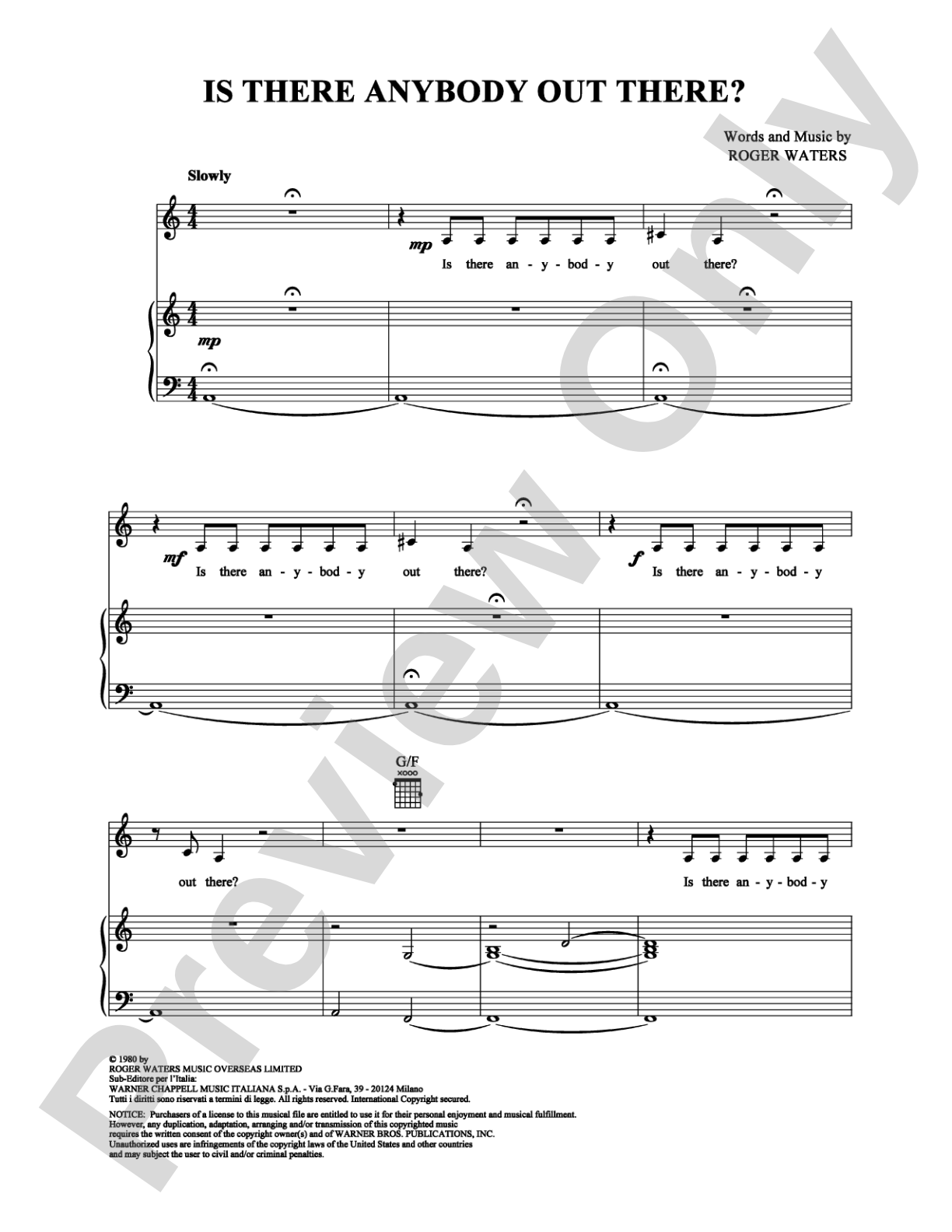
Is There Anybody Out There?: Piano/Vocal/Chords Digital Sheet Music

Is There Anybody Out There?: Piano/Vocal/Chords Digital Sheet Music

Pink Floyd, Roger Waters

Item: 00-PS-0010058

Digital Download
$3.99
Description

Is There Anybody Out There?: Piano/Vocal/Chords Digital Sheet Music isn't in MakeMusic Cloud just yet...but it could be. Let us know you'd like to see it, and you'll help shape what comes next. In the meantime, start a free trial and dive into thousands of interactive titles your students can play along with today.

Sample Audio
No sample audio found.
Sample Video
Additional Details
SKU: 00-PS-0010058

More about this title

About the Artist: Pink Floyd

Pink Floyd emerged in the late 1960s as one of rock music's most innovative and experimental bands. Their work spans psychedelic rock, progressive rock, and concept albums that pushed the boundaries of what popular music could express, combining intricate instrumental arrangements with profound emotional and philosophical themes. The band's influence on popular music, film soundtracks, and music production techniques remains substantial in contemporary music education and performance.

Why we love this

This song offers singers and pianists a chance to explore sophisticated harmonic progressions and emotional restraint within a rock context. The arrangement captures the band's signature atmospheric quality while remaining accessible for students working at the intermediate level, making it ideal for recitals or showcases that celebrate contemporary songwriting beyond traditional classical repertoire.

What to expect

Haunting and introspective, the song unfolds with the quiet intensity of someone reaching out into the unknown. The piano creates an intimate, almost fragile soundscape that mirrors the vulnerability of the lyrics, building emotional weight through subtlety rather than volume.

Who it's for

This arrangement suits singers and pianists working at the intermediate to advanced-intermediate level who are comfortable with rock and contemporary repertoire. It works particularly well for vocalists exploring how to apply classical training to popular music, and for pianists seeking rewarding accompaniment parts that are more than simple block chords.

How to get the most out of it

  • Let the piano introduction breathe; resist the urge to rush into the vocal entry. Space and silence are integral to the song's emotional impact.
  • Balance the vocal melody against the piano's supporting lines rather than dominating them. This piece rewards collaborative listening between singer and accompanist.
  • Experiment with dynamic shaping across longer phrases to avoid flatness. The song's power comes from subtle growth and release, not sudden changes.
  • Pay attention to the harmonic rhythm and chord changes in the accompaniment; they frame the lyrical content and should feel intentional, not accidental.

How to use it

Include this in a recital or concert program alongside other contemporary songs or art songs to represent the breadth of musical literature your students study. It pairs well with acoustic or stripped-down arrangements of popular music, offering audiences a fresh perspective on a well-known piece.

Skills your students will build

  • Reading chord symbols and realizing accompaniment from lead sheet notation
  • Balancing vocal melody with piano accompaniment in a contemporary rock context
  • Sustaining emotional intensity through dynamic restraint and phrasing
  • Interpreting harmonic progression to inform expressive singing
  • Collaborating between vocalist and accompanist in popular music styles

You May Also Like