Irish Tune from County Derry: Cello Sheet Music Preview

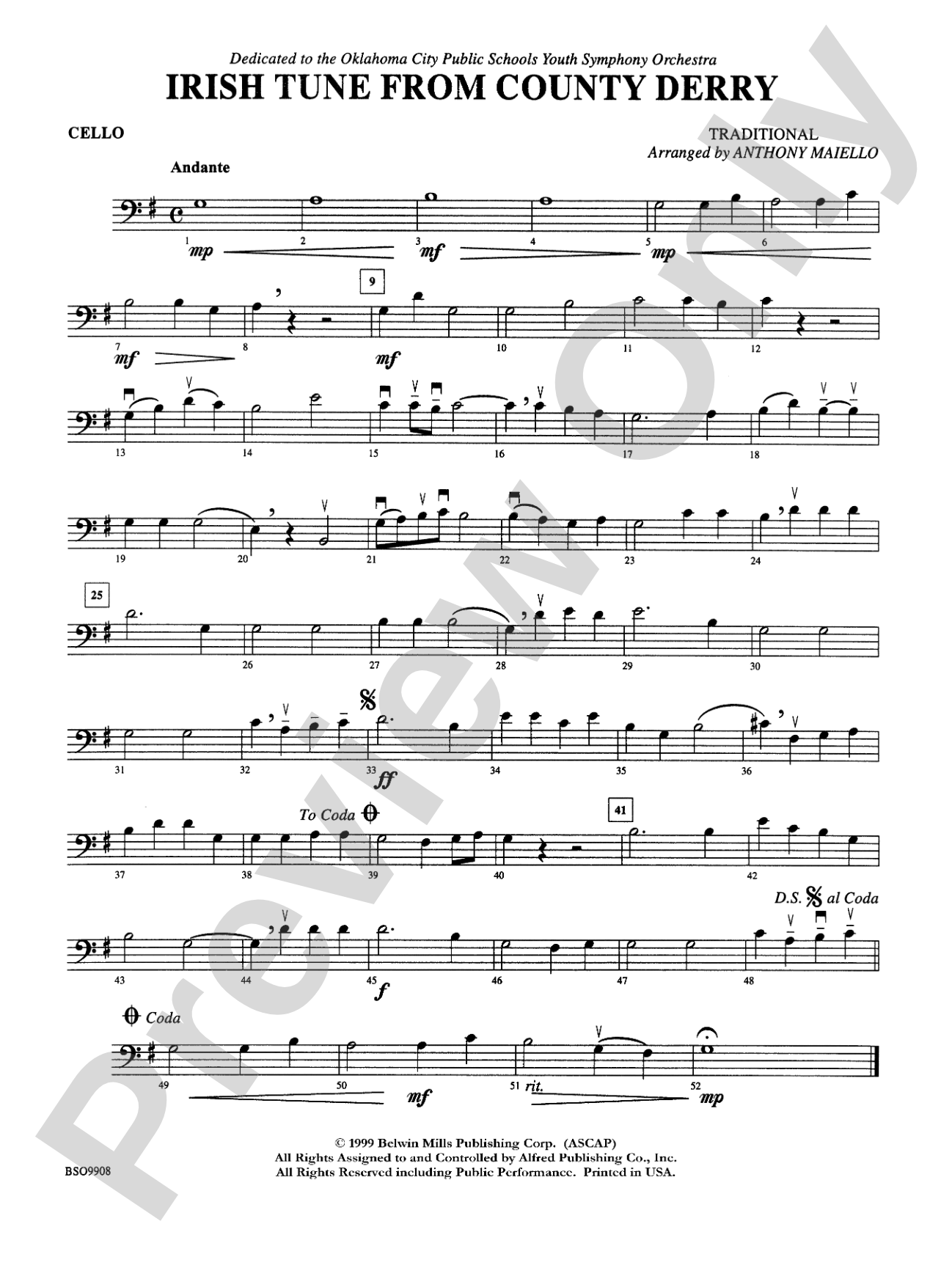
Irish Tune from County Derry: Cello

Arr. Anthony Maiello

Grade: 1

Item: 00-PC-0002263_VC1

Digital Download
$5.99
Description
It has been called the "Irish National Anthem," and has been adopted as a favorite tune by millions beyond the shores of that country. It also has served as the theme song for entertainers, and appeared in soundtracks for television and motion pictures. This beautifully sensitive scoring brings the song into the string orchestra arena, playable by an ensemble of almost any skill level. Gracious and elegant! (3:19)

Don't just read it, hear it, play along with it, and watch your students grow with it. In MakeMusic Cloud, Irish Tune from County Derry: Cello comes alive with professional accompaniment, adjustable tempo, and built-in practice tools that turn solo practice into real progress.

Sample Audio
0:00
0:00
Sample Video
Additional Details
Series: Belwin Beginning String Orchestra
Publisher: Alfred Music
Page Count: 84
SKU: 00-PC-0002263_VC1

More about this title

About the Arranger: Anthony Maiello

Anthony Maiello

Anthony Maiello holds the rank of Professor of Music and University Professor at George Mason University, where he teaches conducting, aural skills, and instrumental conducting courses. His conducting experience spans decades, including leadership of the GMU Symphony and Chamber Orchestras, festival appearances across North America and Europe, and notable roles such as conducting the Gold Medal Ceremonies at the 1980 Winter Olympics and serving as an Honorary Conductor of the United States Navy Band.

Maiello's credentials extend across multiple musical spheres. He was inducted into the Bands of America Hall of Fame in 2010, served as President of the International Association of Jazz Educators, New York State Chapter, and maintains an active schedule as a guest clinician and adjudicator. His recording work includes conducting sessions for Alfred/Belwin Publications, and he holds degrees in Music Education from Ithaca College at both the bachelor's and master's levels.

Why we love this

Maiello's arrangement strips away unnecessary complexity while preserving every ounce of the tune's emotional warmth. The scoring sits comfortably under young players' hands, yet the orchestration never condescends; every section carries musical weight. This is how Grade 1 writing should work, accessible without sounding skeletal.

What to expect

The melody unfolds with quiet dignity, never rushed. There's an underlying melancholy tempered by grace, evoking both the tune's historical roots and its universal appeal. Young players will feel how restraint can be more powerful than display.

Who it's for

Beginning string orchestras seeking repertoire that honors both the musicians and the audience. Directors wanting a piece that works equally well at festival competitions, community concerts, or year-end programs.

How to get the most out of it

  • Shape the melody with long, unhurried phrases rather than measuring out individual measures. This tune breathes best when players feel the arc across multiple bars.
  • Balance the divisi sections carefully so that inner voices emerge without overwhelming the primary line. Listen for horizontal independence rather than blended homogeneity.
  • Bring out the cello and bass lines during passages where they carry counter-motion; these voices anchor the harmonic progression and deserve to be heard.
  • Record a rehearsal run-through and listen back to the overall flow. At this tempo and length, even small adjustments in character between phrases reshape the whole impression.

How to use it

Pair this with a brighter opening work to let it serve as a reflective moment midway through a concert. The piece's modest instrumental requirements and modest duration (3:19) make it ideal for mixed programs where you're combining Grade 1 and Grade 2 selections.

Skills your students will build

  • Long-line phrasing over multiple measures
  • Ensemble balance between melody and accompaniment
  • Expressive playing at moderate dynamic levels
  • String crossings executed smoothly in lyrical contexts
  • Reading varied textures (divisi, unison, harmonic backgrounds)

You May Also Like