
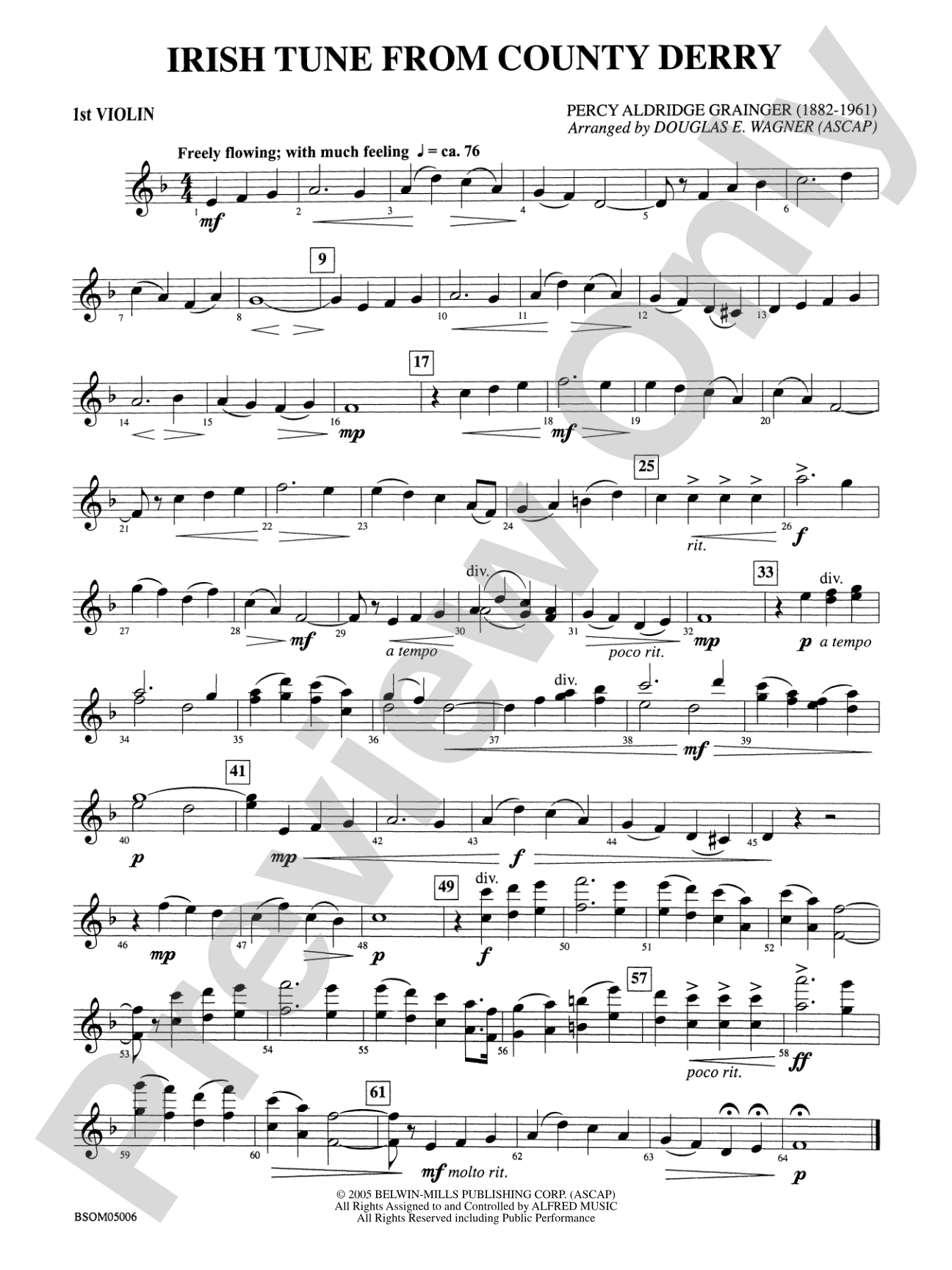

Irish Tune from County Derry: 1st Violin
By Percy Aldridge Grainger / arr. Douglas E. Wagner
Grade: 3.5
Item: 00-PC-0017082_VN1
$5.99
Pickup currently not available
Description
Irish Tune from County Derry is a Grainger classic that has long been a staple in the wind literature. Rich with lush textures and closely knit harmonies, this tune, sometimes know as "Danny Boy" or "Londonderry Aire," is certain to touch the hearts of all. (3:31)


Don't just read it, hear it, play along with it, and watch your students grow with it. In MakeMusic Cloud, Irish Tune from County Derry: 1st Violin comes alive with professional accompaniment, adjustable tempo, and built-in practice tools that turn solo practice into real progress.
Open in the Player
Jump straight in and assign it today.
Start Your Free Trial
Open this title and explore the full library in minutes.
Sample Audio
1
Audio File
--:--
0:00
0:00
Sample Video
No sample videos found.
Additional Details
Series:
Belwin Concert String Orchestra
Publisher:
Alfred Music
Page Count:
62
SKU:
00-PC-0017082_VN1
More about this title
About the Composer: Percy Aldridge Grainger
Percy Aldridge Grainger (1882-1961) was an Australian-born composer and pianist who became a central figure in 20th-century music through his innovative arrangements of folk melodies and his fearless approach to orchestration. He studied in Frankfurt and Melbourne before establishing himself in London and later the United States, where he taught at New York University. Grainger's genius lay in his ability to honor traditional tunes while reimagining them through modern harmonic language and orchestral color, treating folk material as a living art form rather than a museum piece.
His work with folk music—collected during field research and refined through countless arrangements—shaped his compositional voice and influenced generations of musicians and educators. Grainger's string writing is particularly celebrated for its transparency and emotional directness; he understood how to balance richness of harmony with clarity of line, making his arrangements accessible to young ensembles without compromising musical substance.
Why we love this
Douglas E. Wagner's arrangement brings Grainger's beloved tune to the string orchestra with warmth and textural sophistication that feels both intimate and concert-ready. The piece respects the lilting melodic character of the original while offering conductors the chance to shape something genuinely moving without excessive technical demands. Contest judges and concert audiences respond to the emotional authenticity here; this is repertoire that reminds students why they play.
What to expect
The piece opens with unhurried grace, a melody that carries the weight of cultural memory without sentimentality. Rich harmonic layering creates an almost chamber-music intimacy, even as the full string section plays; there's a sense of timelessness that makes listeners lean in, caught between nostalgia and present-moment beauty.
Who it's for
This arrangement speaks directly to conductors seeking meaningful repertoire at the Grade 3.5 level that performs with genuine musicality at contests and concerts alike. String orchestras with developing technical skills will find the writing supportive; players grasp the tune immediately and can focus on tone quality and ensemble blend rather than navigating complex rhythmic or harmonic puzzles.
How to get the most out of it
- Resist the urge to rush the lyrical passages. This melody thrives on space and breath between phrases; let the singers in your ensemble have room to shape the line without rigidity.
- Balance the inner voices carefully during the homophonic sections. Wagner's harmonies are close and rich, so even secondary lines need clarity and gentle presence to avoid muddiness.
- Shape dynamics with intent rather than mechanical change. The piece builds naturally through orchestration and key relationships; use dynamic marking as one tool among many rather than the primary shaping device.
- Pay attention to bowings printed in the parts. They reflect thoughtful choices about legato and articulation that support the folk-tune character; they're not obstacles to override.
How to use it
Position this as a centerpiece rather than filler. Its emotional resonance and recognizable tune make it ideal for the second half of a concert, where it can receive full attention and create the kind of moment that stays with an audience. It pairs well in a program with contrasting contemporary work or brighter fare, allowing you to shape the overall arc of the concert around its contemplative character.
Skills your students will build
- Sustaining lyrical line across multiple phrases without mechanical phrasing
- Balancing inner harmonic voices while maintaining melodic clarity
- Responding to dynamic shape cues from the conductor beyond printed markings
- Adjusting bow speed and pressure for consistent tone across range changes
- Coordinating ensemble sound through active listening rather than strict metronomic adherence