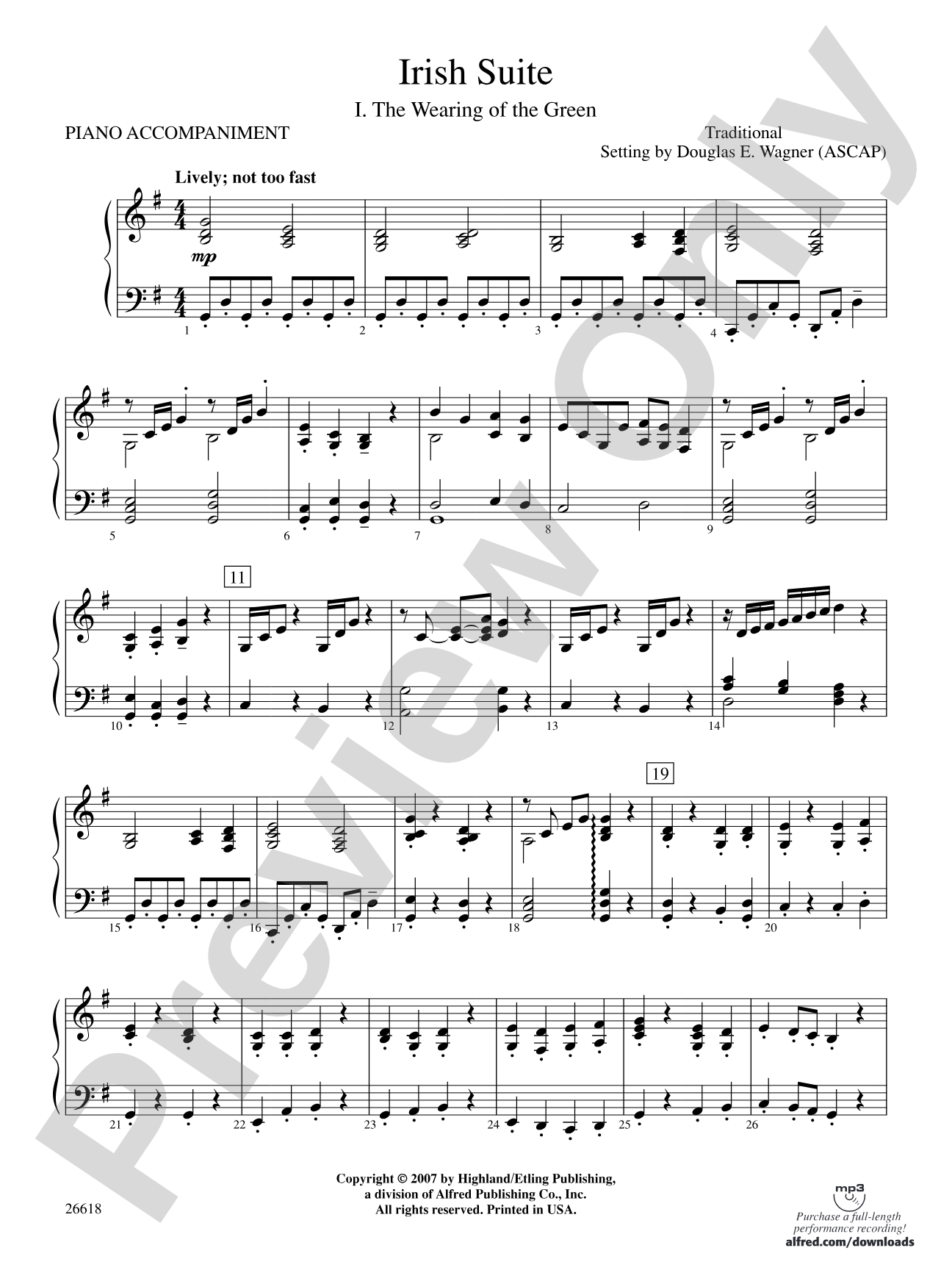
Irish Suite: Piano Accompaniment Sheet Music Preview

Irish Suite: Piano Accompaniment

Traditional / setting by Douglas E. Wagner

Grade: 1.5

Item: 00-PC-0001122_K

Digital Download
$5.99
Description
The Irish spirit is a direct reflection of the unique place on earth that is their native land. The rugged landscape speaks of staunch individualism, while the more idyllic settings suggest a deep love of nature and the beauty found in all. This suite brings together three tunes that embody these characteristics. This title is available in MakeMusic Cloud.

"The ranges, keys, rhythms and other technical demands are well within the grade level and provide an inviting way to introduce these well-known Irish melodies and a significant American composer."
---The Instrumentalist magazine

Don't just read it, hear it, play along with it, and watch your students grow with it. In MakeMusic Cloud, Irish Suite: Piano Accompaniment comes alive with professional accompaniment, adjustable tempo, and built-in practice tools that turn solo practice into real progress.

Sample Audio
0:00
0:00
Sample Video
Additional Details
Series: Belwin Beginning String Orchestra
Publisher: Alfred Music
Page Count: 76
SKU: 00-PC-0001122_K

More about this title

About the Arranger: Douglas E. Wagner

Douglas E. Wagner

Douglas E. Wagner studied music at Butler University, earning both undergraduate and graduate degrees before spending three decades as a high school music director and administrator in the classroom. Since 1973, he has become one of the most prolific composers and arrangers in American music education, with over 3,500 published works spanning choral literature, concert band, orchestra, handbells, organ, piano, and voice.

Why we love this

Wagner's ear for what beginning string orchestras can accomplish shines here. He respects the melodies enough to let them breathe while keeping technical demands genuinely accessible, which means your students play music that sounds finished and confident from day one rather than feeling like exercises.

What to expect

The three tunes capture that particular Irish blend of resilience and lyricism, moving between passages that feel spirited and dance-like to moments of quiet, pastoral reflection. Your students will recognize these melodies as part of a living tradition rather than abstract exercises, which tends to deepen their engagement with the music.

Who it's for

Beginning string orchestra programs, typically grades 4-6, and young ensembles still building foundational skills in intonation and rhythmic precision. This arrangement works equally well for middle school programs introducing Irish folk repertoire or for community youth orchestras seeking grade 1.5 material with genuine musical substance.

How to get the most out of it

  • Balance the melody across your string section by having one stand play the primary line while others support. This clarity helps audiences hear the Irish character without sacrificing the ensemble sound.
  • Pay attention to the rhythmic lift in each tune. Even at this accessible level, a slight emphasis on the upbeat will bring out the dance-like quality these melodies demand.
  • Let your lower strings anchor the harmonic foundation without rushing. Young cellists and basses often drag when they're concentrating on pitch, so maintain steady pulse checks during sectionals.
  • Use the conductor score to mark phrase breathing points. Your strings will respond to clear gesture at cadences, which helps shape the emotional arc of each movement.

How to use it

This suite fits naturally on a concert celebrating world music or folk traditions, or pair it with other American composers' treatments of folk material to explore how different arrangers approach the same cultural sources. It also serves as an excellent late-fall or winter selection when you want to build student confidence before a spring festival appearance.

Skills your students will build

  • Sustaining longer melodic lines with consistent tone quality
  • Playing rhythmic unison figures with ensemble precision
  • Reading and maintaining different rhythmic patterns across voice parts
  • Responding to conductor cues for phrase shaping and dynamic control
  • Building intonation awareness through harmonic balance in sustained chords

You May Also Like