Iphigenia in Aulis: Viola Sheet Music Preview

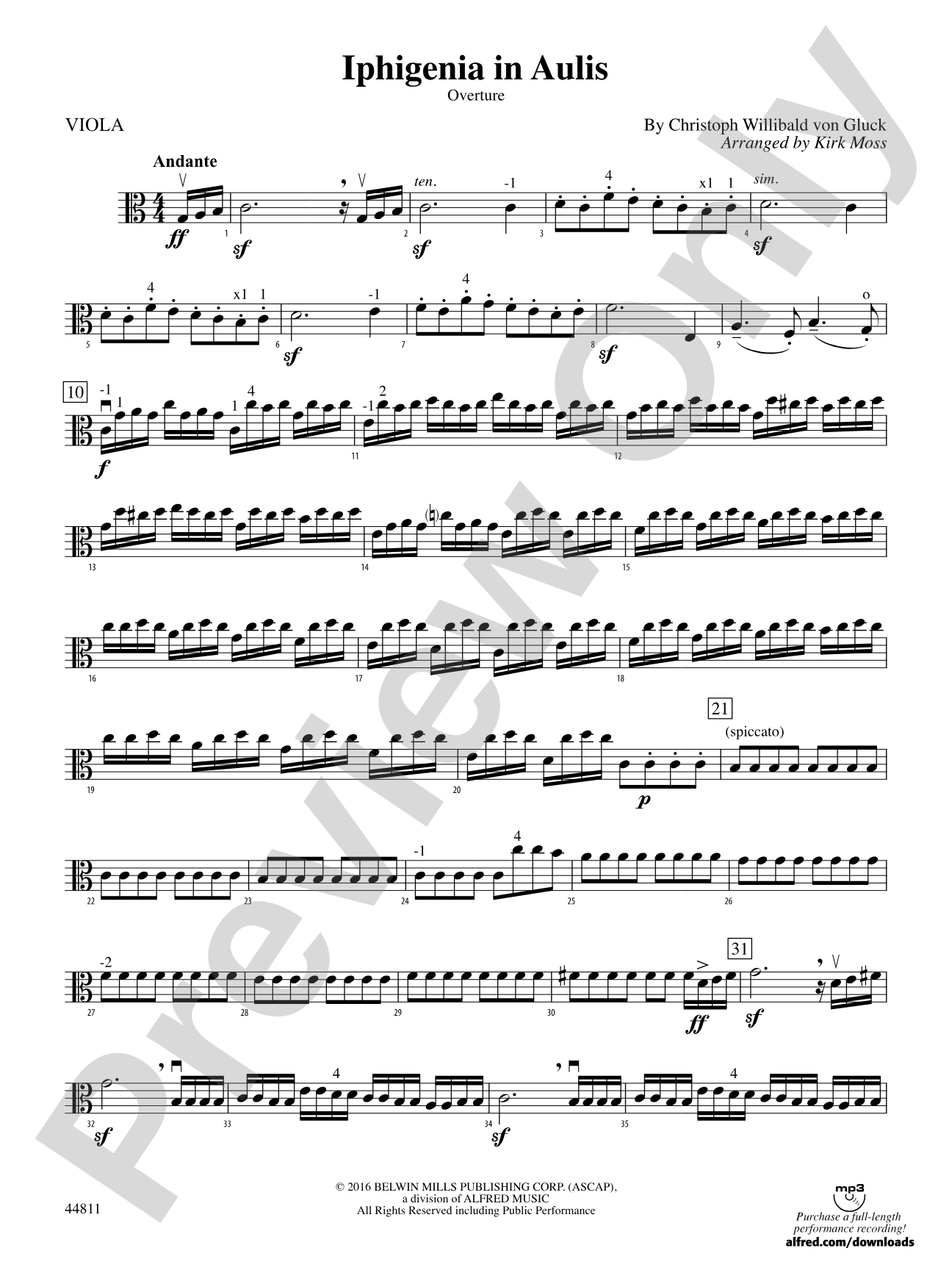
Iphigenia in Aulis: Viola

Overture

By Christoph Willibald von Gluck / arr. Kirk Moss

Grade: 3

Item: 00-PC-0017328_VA1

Digital Download
$5.99
Description
Hear the drama in the overture to Gluck's most popular opera, Iphigenia in Aulis, now abridged for string orchestra by Kirk Moss. The clearly marked bowings and fingerings will save precious rehearsal time and lead to a more sophisticated sound. (4:05)

Don't just read it, hear it, play along with it, and watch your students grow with it. In MakeMusic Cloud, Iphigenia in Aulis: Viola comes alive with professional accompaniment, adjustable tempo, and built-in practice tools that turn solo practice into real progress.

Sample Audio
0:00
0:00
Sample Video
Additional Details
Series: Belwin Concert String Orchestra
Publisher: Alfred Music
Page Count: 114
SKU: 00-PC-0017328_VA1

More about this title

About the Composer: Christoph Willibald von Gluck

Christoph Willibald von Gluck (1714-1787) reformed opera by prioritizing dramatic clarity and emotional truth over vocal virtuosity. His innovations in orchestration and structural pacing influenced composers for generations and established him as a pivotal figure in the transition from Baroque to Classical style.

Gluck's operas remain staples of the repertoire because he understood how to make orchestral writing serve the story. His overtures, especially that of Iphigenia in Aulis, demonstrate masterful command of suspense, pacing, and instrumental color—qualities that translate powerfully even in chamber string arrangements for student ensembles.

Why we love this

This arrangement captures the theatrical tension and forward momentum of Gluck's original without overwhelming young orchestras. Kirk Moss's careful attention to bowings and fingerings means your students can focus on ensemble balance and phrase shaping rather than deciphering the notation, resulting in a polished, professional-sounding performance that audiences recognize and respect.

What to expect

The overture unfolds like a theatrical curtain rising on conflict and resolution. Tense, energetic themes emerge from the strings with classical restraint, building momentum through careful orchestration and harmonic tension. The piece conveys urgency and human drama despite its elegant, formal construction.

Who it's for

String orchestra directors working with Grade 3 ensembles who want to program a genuine operatic masterwork without scaling down the dramatic impact. This arrangement is ideal for orchestras with solid intonation and basic vibrato control but not yet the advanced technique for full-length classical concertos.

How to get the most out of it

  • Shape the opening theme with a slight swell on the first beat of each measure to establish the urgent character; avoid rigid metronomic playing that flattens the drama.
  • Balance the dialogue between first and second violins during transitional passages; these exchanges drive the narrative forward and need clear articulation from both sections.
  • Use the marked fingerings and positions to ensure smooth string crossings and sustained legato through chromatic passages; this clarity is essential to the overture's forward momentum.
  • Build intensity gradually toward climactic moments rather than jumping into full volume; Gluck's drama unfolds through orchestration, not brute force.

How to use it

This works beautifully as an opener on concert programs, signaling sophistication and musical maturity to your audience. It pairs naturally with other Belwin Concert String Orchestra selections, or as a contrasting classical anchor alongside Baroque or Romantic repertoire in a diverse concert program.

Skills your students will build

  • Baroque/Classical phrasing conventions and balance between sustained elegance and forward momentum
  • Executing string techniques marked in the score (spiccato, legato, accented passages) with ensemble precision
  • Reading and responding to sectional cues and thematic dialogue between violins, violas, and cellos
  • Managing intonation during chromatic passages and key modulations characteristic of Classical opera
  • Shaping longer phrases without losing rhythmic cohesion across ensemble sections

You May Also Like