
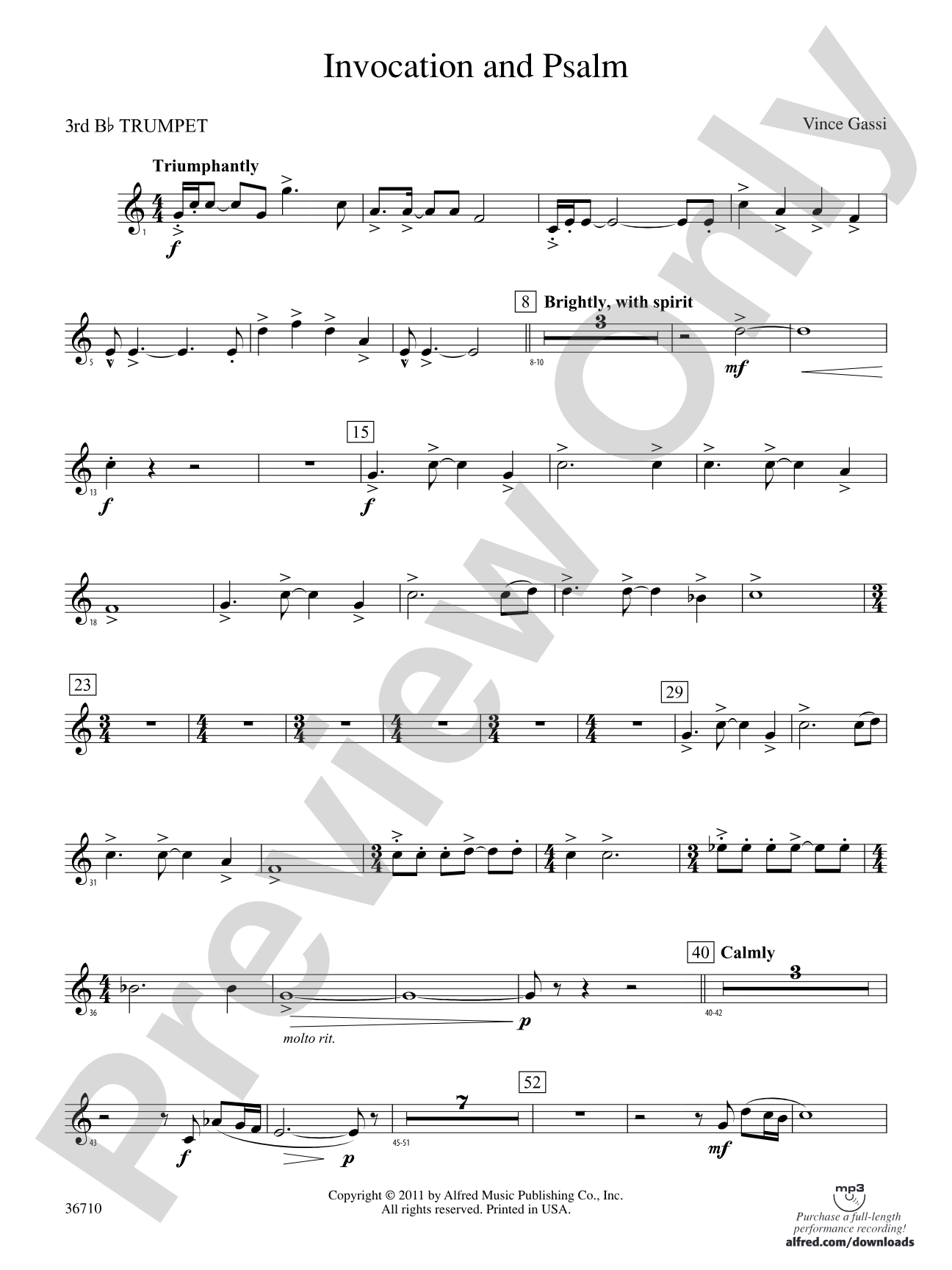

Invocation and Psalm: 3rd B-flat Trumpet
By Vince Gassi
Grade: 4 (Medium Difficult)
Item: 00-PC-0015138_T3
$3.00
Pickup currently not available
Description
"Invocation" is defined as the act of invoking or calling upon a deity or spirit for aid, protection, or inspiration, while a "Psalm" is a sacred song or poem. Magnificent, celebratory, and triumphant are words that aptly describe the opening of this exciting new work. After a powerful opening fanfare, the main theme (Invocation) is presented and interlaced with florid woodwind passages and driving rhythms. A simple but evocative melody, garnished with lush harmony, captures the essence of the Psalm. A return to the original theme brings us to an uplifting conclusion. This piece was commissioned by the St. Michael's College School Senior Band (Toronto, Canada) for the opening of their new theatre. Invocation and Psalm is an exhilarating concert opener for any occasion.


Don't just read it, hear it, play along with it, and watch your students grow with it. In MakeMusic Cloud, Invocation and Psalm: 3rd B-flat Trumpet comes alive with professional accompaniment, adjustable tempo, and built-in practice tools that turn solo practice into real progress.
Open in the Player
Jump straight in and assign it today.
Start Your Free Trial
Open this title and explore the full library in minutes.
Sample Audio
1
Audio File
--:--
0:00
0:00
Sample Video
No sample videos found.
Additional Details
Series:
Alfred Concert Band
Publisher:
Alfred Music
Page Count:
274
SKU:
00-PC-0015138_T3
More about this title
About the Composer: Vince Gassi
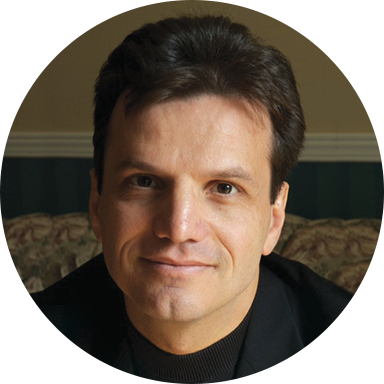
Vince Gassi has been publishing concert band works with Alfred Music since 2006 and has amassed over 100 titles across all levels. His music is known for balancing accessibility with genuine compositional substance, earning frequent performances at major festivals and contest venues across North America, Europe, and Japan. He studied composition and arranging at the Dick Grove School of Music in Los Angeles and holds a Bachelor of Music from the University of Western Ontario and a Ph.D. from York University.
For more than two decades, Gassi worked as an instrumental music educator at both elementary and secondary levels while building a parallel career as a guest conductor, adjudicator, and clinician. He is particularly recognized for his seminars on creative engagement and digital workflows, helping directors translate contemporary teaching ideas into rehearsal practice. His commissions have become staples at the Midwest Clinic and appear regularly on regional and national contest programs.
Why we love this
This piece delivers exactly what Gassi does best: a concert work that opens strong and sustains momentum without overselling itself musically. The architecture is transparent enough for Grade 4 musicians to hear themselves in it, yet the combination of fanfare energy, soloistic woodwind work, and harmonic richness makes it genuinely rewarding to conduct and satisfying to program.
What to expect
Invocation and Psalm opens with ceremonial grandeur before settling into a reflective, eloquent middle section grounded in warm harmonies. The overall arc moves from fanfare to introspection and back toward affirmation, creating a satisfying emotional journey that feels both contemporary and timeless.
Who it's for
Concert bands at the Grade 4 level, whether in secondary school programs, community ensembles, or all-state contexts. The writing is accessible enough for capable young musicians but musically substantive enough to hold an audience's attention, making it equally valuable as a concert opener or festival selection.
How to get the most out of it
- The opening fanfare sets the tone for the entire piece; shape it with real confidence and forward motion, but resist the temptation to rush. Lock in the ensemble's sense of pulse before the Invocation theme enters.
- Balance the main theme carefully between the section carrying the melody and the florid woodwind countermelody. These lines need to coexist, not compete, so listen across the full band rather than isolating parts.
- The lush harmonic passages that frame the Psalm melody benefit from full, sustained tone from the lower voices. Encourage players to sing through these moments rather than simply mark time.
- Plan your tempo relationships between sections in advance and mark them clearly in your score. The return to the original theme should feel like a homecoming, not a false start.
How to use it
This is an ideal opening number for any concert where you want to establish energy and musicality in the first thirty seconds. It also works well in a festival or competition setting where you need a piece that showcases the band's full palette while remaining secure at the Grade 4 level.
Skills your students will build
- Sustained tone and blend in harmonic contexts
- Balancing multiple melodic lines in the same texture
- Executing fanfare figures with precision and unified articulation
- Reading and executing tempo relationships across distinct sections
- Ensemble listening and response to conductor direction in shorter, sectionally distinct pieces