
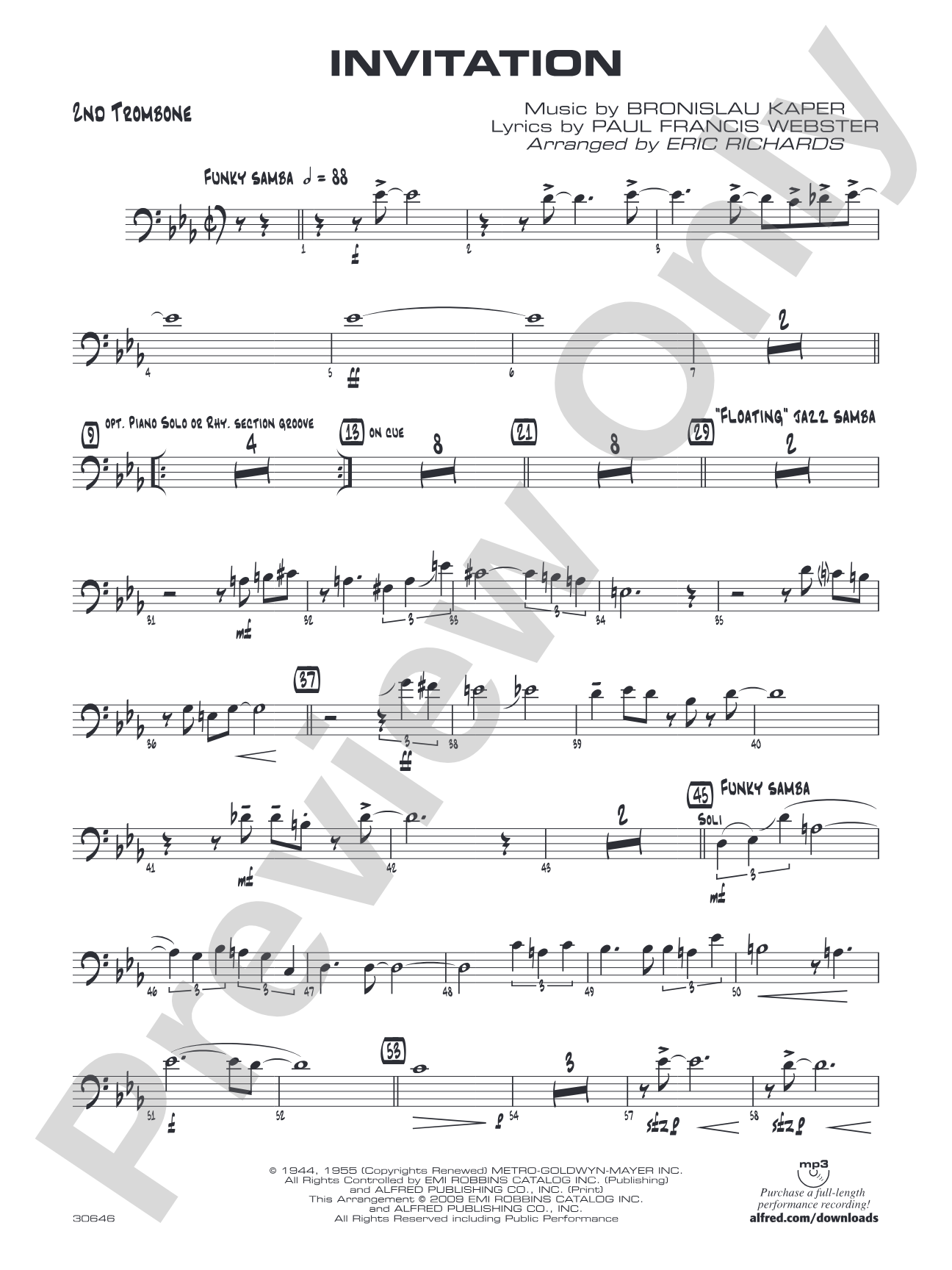

Invitation: 2nd Trombone
Music by Bronislau Kaper, lyrics by Paul Francis Webster / arr. Eric Richards
Grade: 4 (Medium Advanced / Difficult)
Item: 00-PC-0017158_TN2
$3.00
Pickup currently not available
Description
It's electric! A high-energy jazz chart set as a samba with a funky groove and a swing feel, arranged by Eric Richards. A few features include sax solis, powerful ensemble writing, a jazz solo for 2nd trumpet, and lead trumpet range to written D, above the staff. It's a challenging chart but worth the work and it will bring down the house. A fabulous jazz tune and an outstanding chart by a seasoned writer---in short, this is a very hot chart. (5:48)


Don't just read it, hear it, play along with it, and watch your students grow with it. In MakeMusic Cloud, Invitation: 2nd Trombone comes alive with professional accompaniment, adjustable tempo, and built-in practice tools that turn solo practice into real progress.
Open in the Player
Jump straight in and assign it today.
Start Your Free Trial
Open this title and explore the full library in minutes.
Sample Audio
1
Audio File
--:--
0:00
0:00
Sample Video
No sample videos found.
Additional Details
Series:
Premier Jazz Series
Publisher:
Alfred Music
Page Count:
116
SKU:
00-PC-0017158_TN2
More about this title
About the Composer: Bronislau Kaper
Bronislau Kaper (1902-1983) was a Polish-born composer and film score specialist who became one of Hollywood's most prolific and respected orchestrators. Working across six decades, he composed for over 100 films, earning an Academy Award nomination and establishing himself as a master of orchestration across multiple idioms, from drama to comedy to action sequences.
Kaper's theatrical instincts and gift for memorable melody made him equally comfortable writing for the concert hall and the screen. His music demonstrates sophisticated harmonic language paired with direct emotional appeal, qualities that have made his concert works enduring fixtures in educational and professional repertoires.
Why we love this
Eric Richards takes a Kaper composition and transforms it into a samba-tinged powerhouse that balances serious technical demands with pure ensemble fun. The combination of sax soli, a hot 2nd trumpet feature, and writing that sits comfortably in the middle of the ensemble gives every section meaningful material to play, and the 5:48 duration delivers impact without overstaying its welcome.
What to expect
High-octane and groove-centered, this arrangement sparkles with Latin heat and swing flavor. The samba foundation keeps things dancing and light despite the technical complexity, creating an infectious energy that feels both sophisticated and utterly playable.
Who it's for
Jazz ensemble directors programming at the Grade 4 level who want a chart with genuine star power and challenging solo passages that rewards serious student preparation. The lead trumpet range and sax writing demand players with solid chops, but the payoff in audience impact and student confidence makes the rehearsal investment worthwhile.
How to get the most out of it
- Establish the samba pulse early in rehearsals and lock the rhythm section to that pocket before adding horns and melodic voices; the groove is the foundation for everything else.
- Balance the lead trumpet's range (written D above the staff) with transparent voicing in the lower voices so the exposed passages land without the section sounding strained.
- Use the sax soli passages as rehearsal focus points, making sure each section knows when they're in a supportive role and when they're featured; clarity of roles shapes the arrangement's architecture.
- Let the funk groove breathe; resist the urge to rush, even though the energy level is high. The chart's impact comes from locked-in time and space, not tempo.
How to use it
Program this as a closing number or a strong mid-set piece where you want to shift the energy and showcase your ensemble's technical facility and rhythm section chops. It pairs well with straight-ahead swing charts in a jazz concert, offering stylistic contrast without sacrificing musicianship.
Skills your students will build
- Samba rhythm reading and feeling the syncopation across multiple voices
- Balancing swing feel with Latin groove in the same piece
- Playing exposed solos (2nd trumpet) and section soli (saxes) with confidence in a high-energy context
- Navigating lead trumpet range extensions (written D above staff) with control and intonation
- Reading and executing a complex, densely voiced ensemble arrangement