
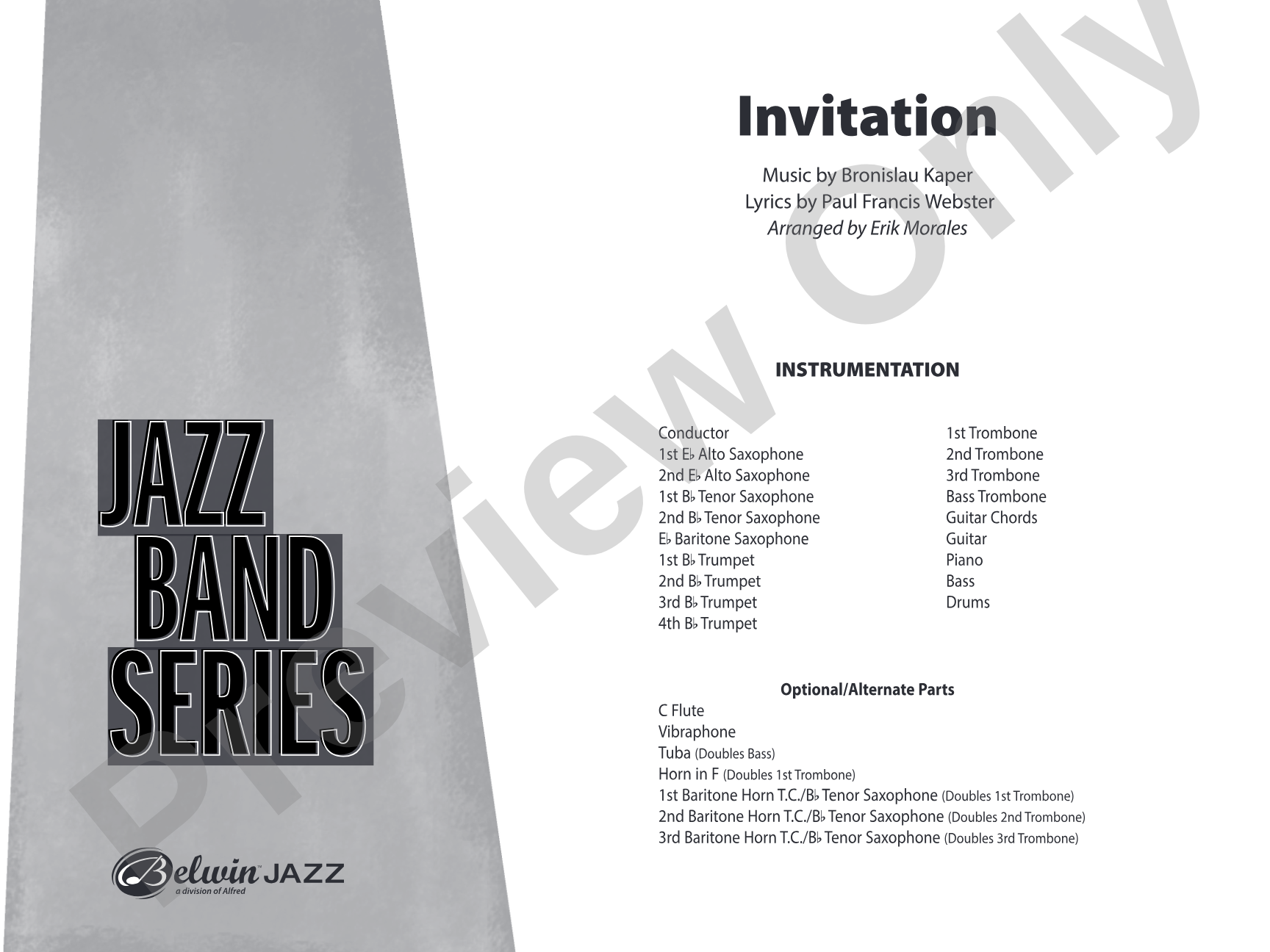
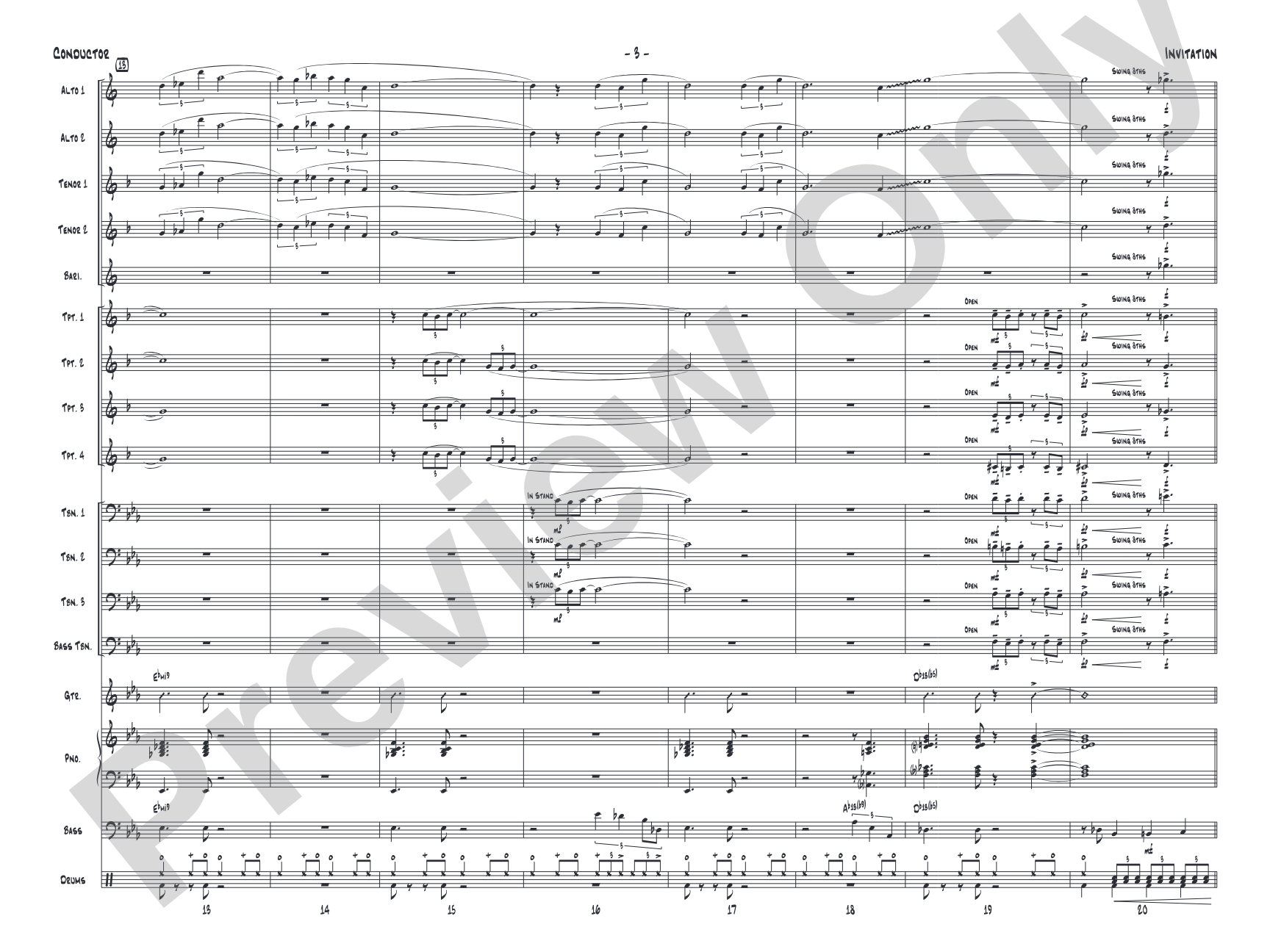
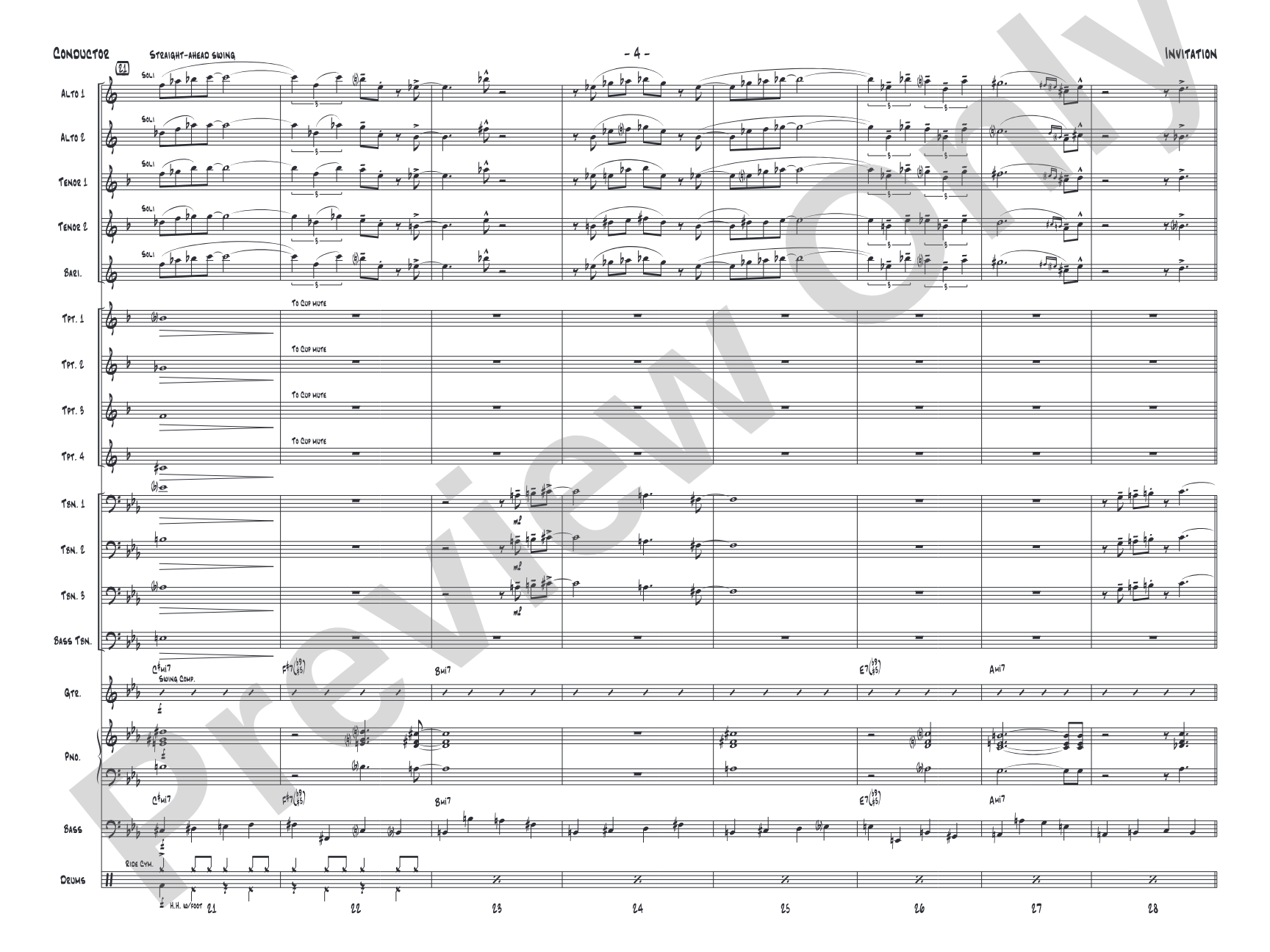
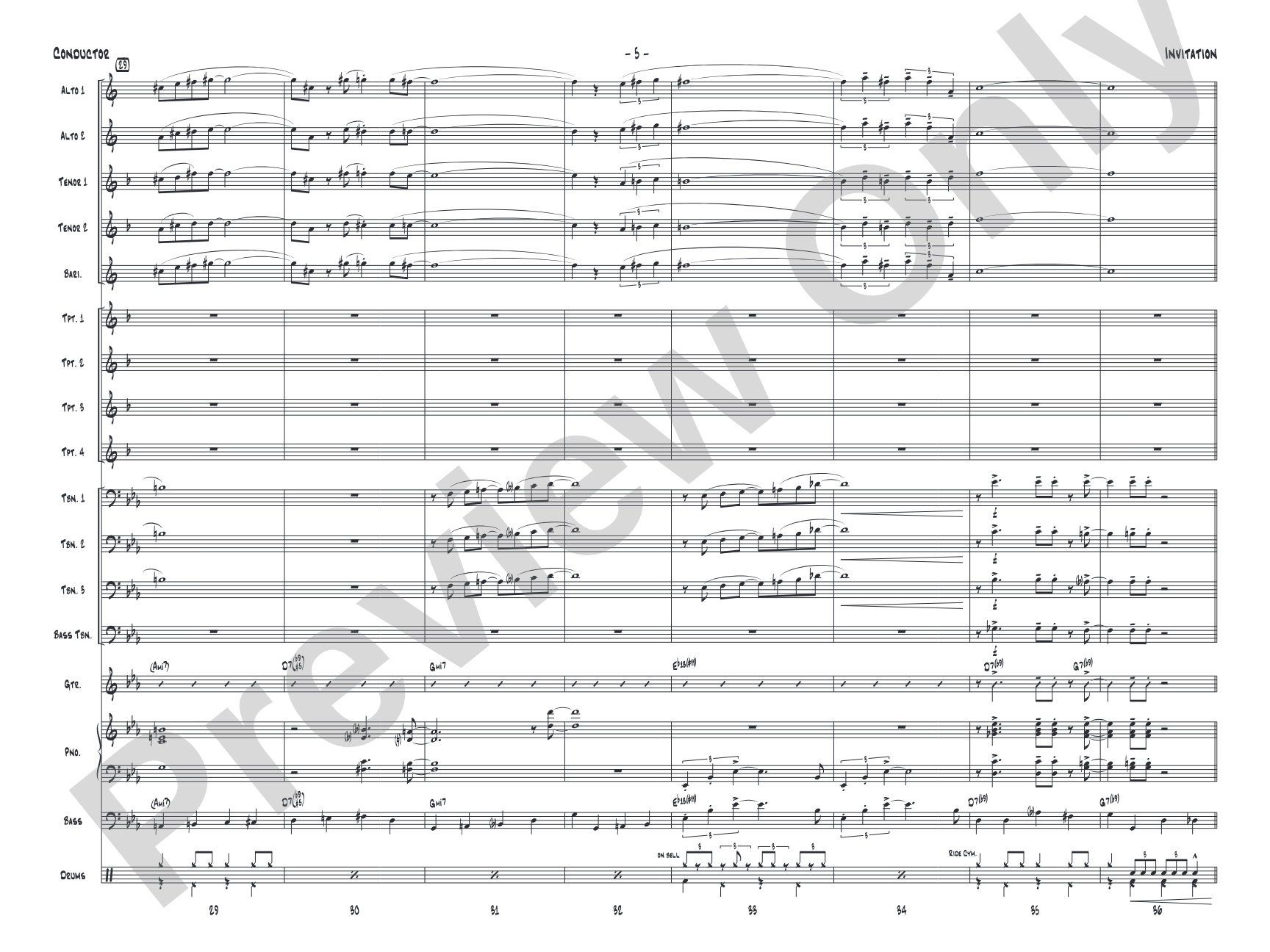
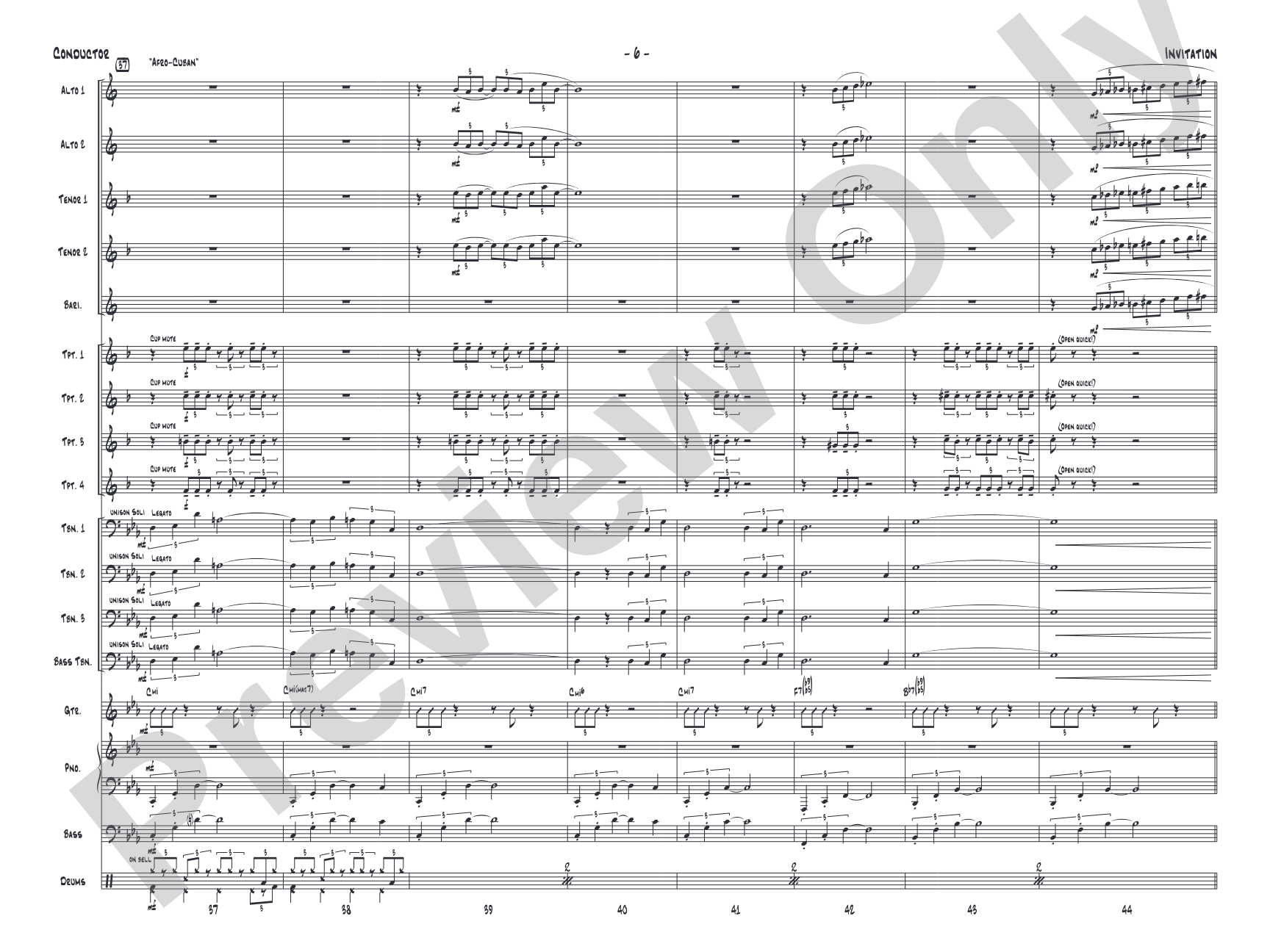
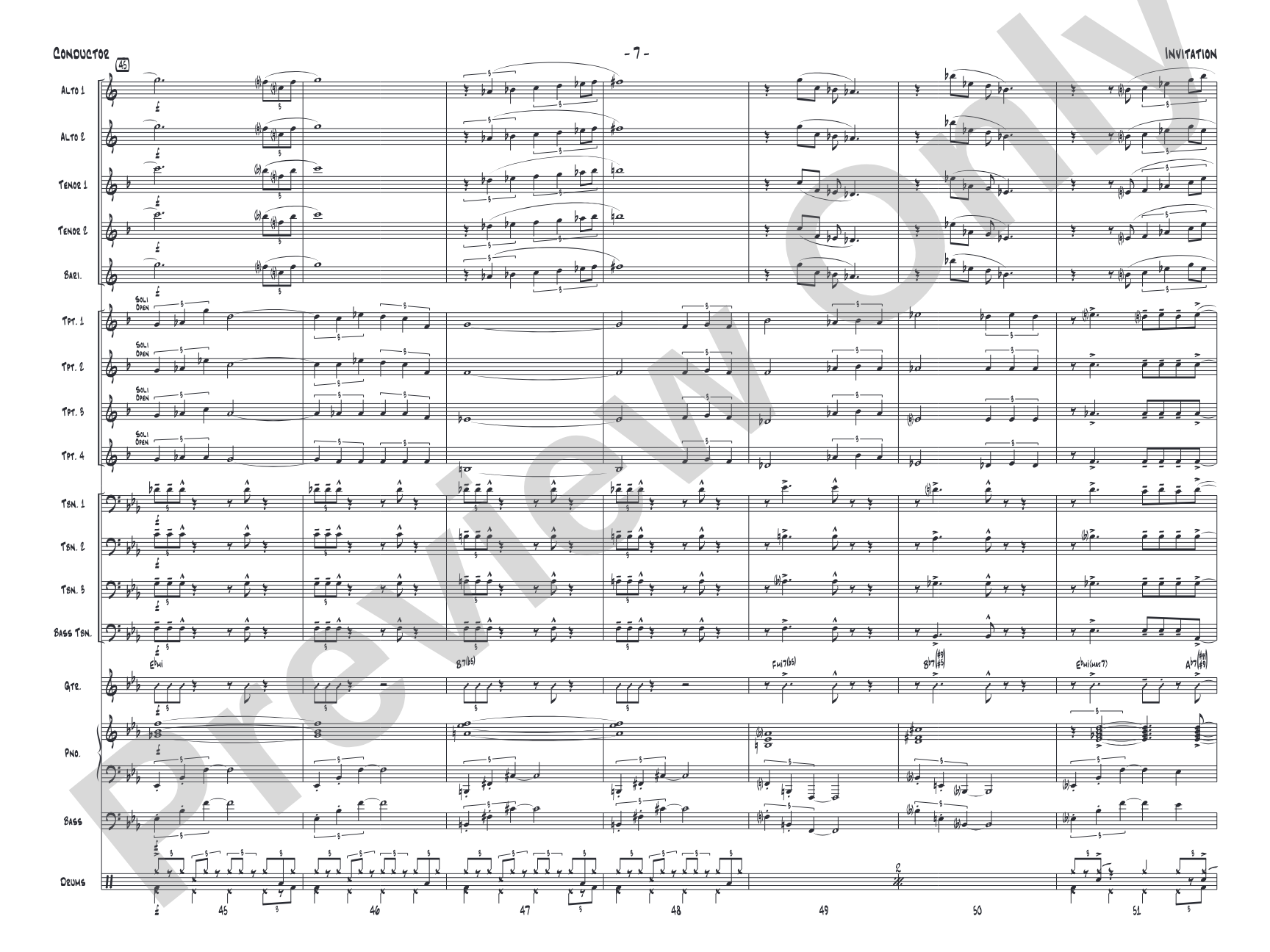
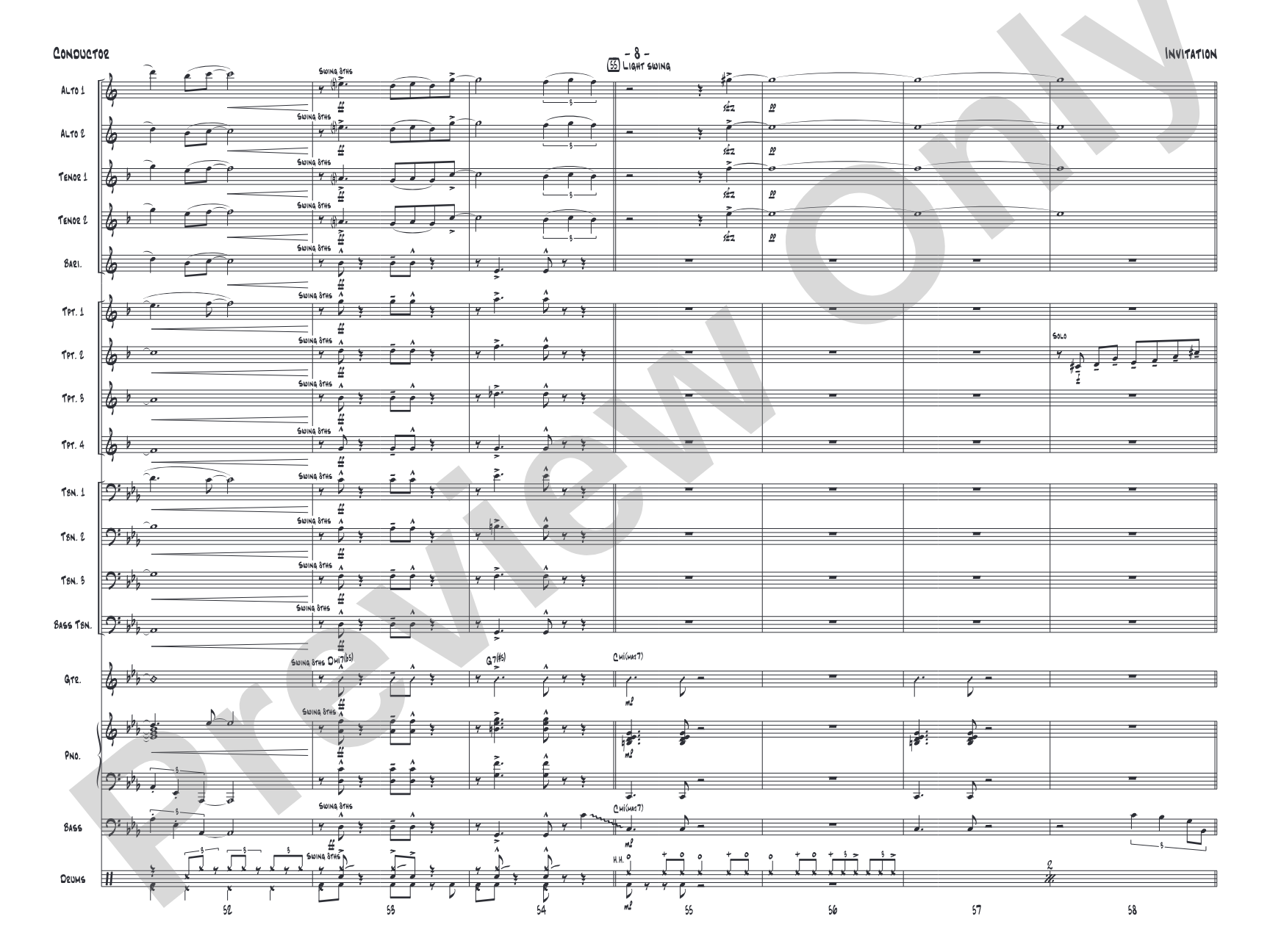
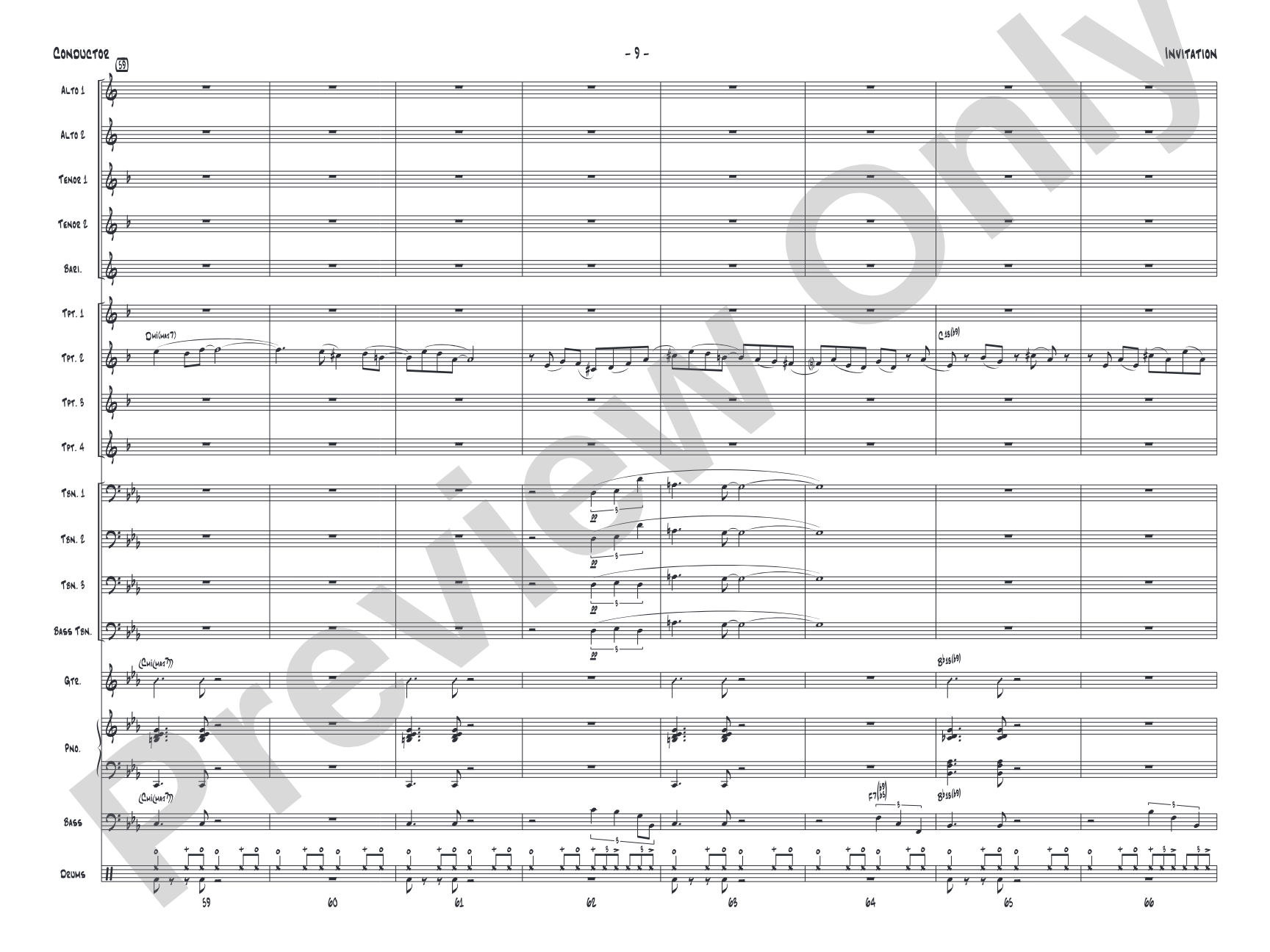
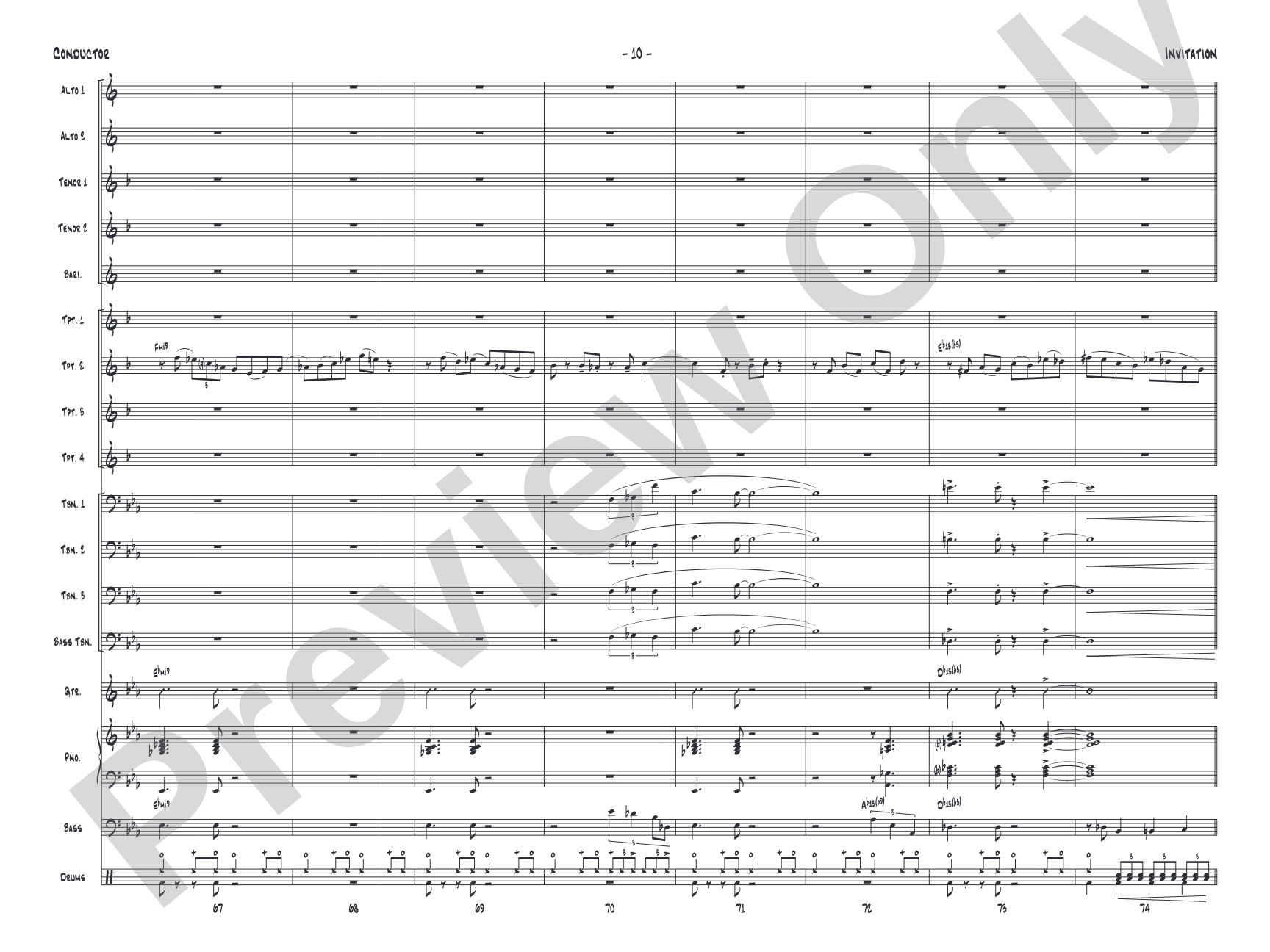
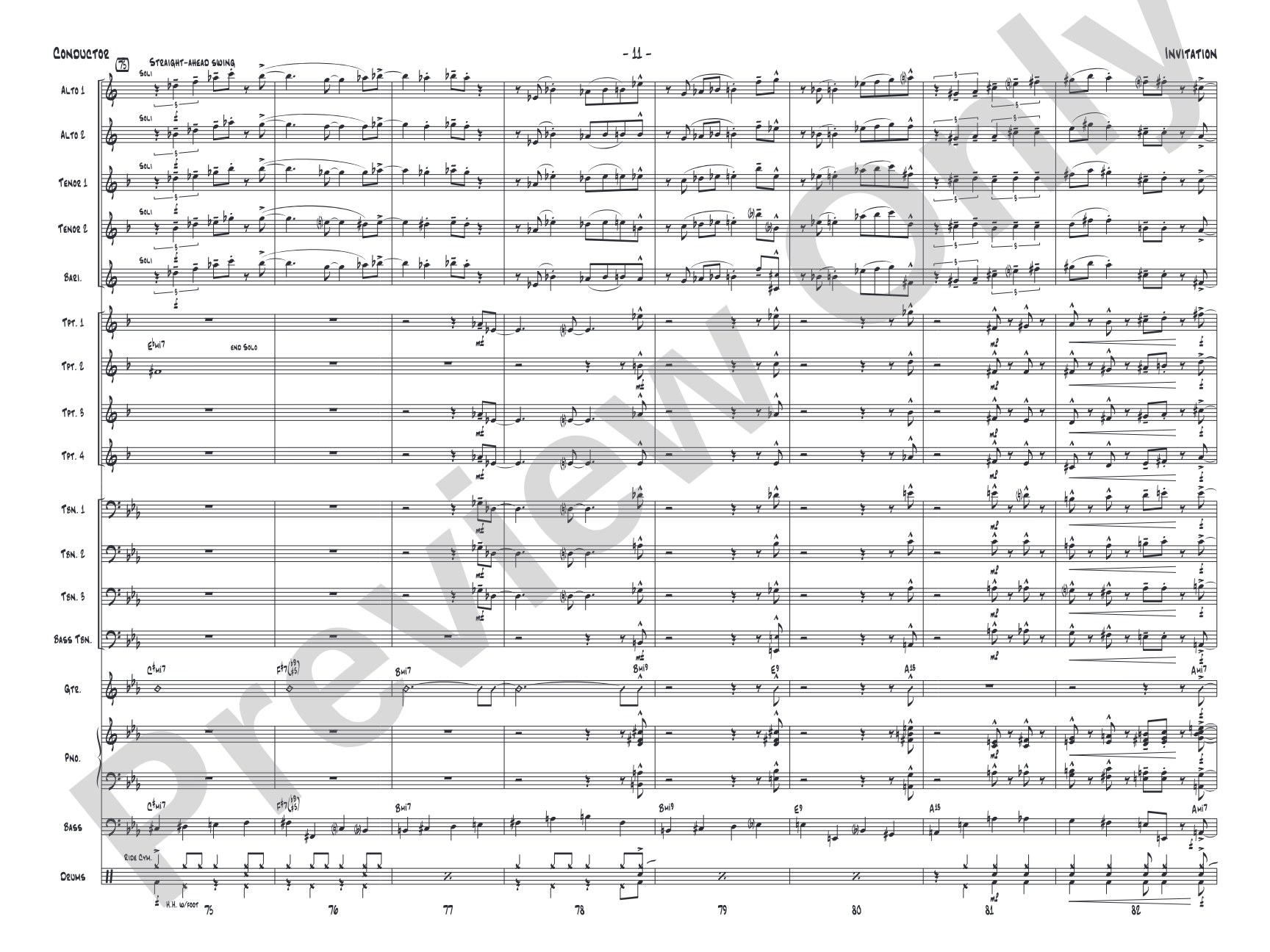
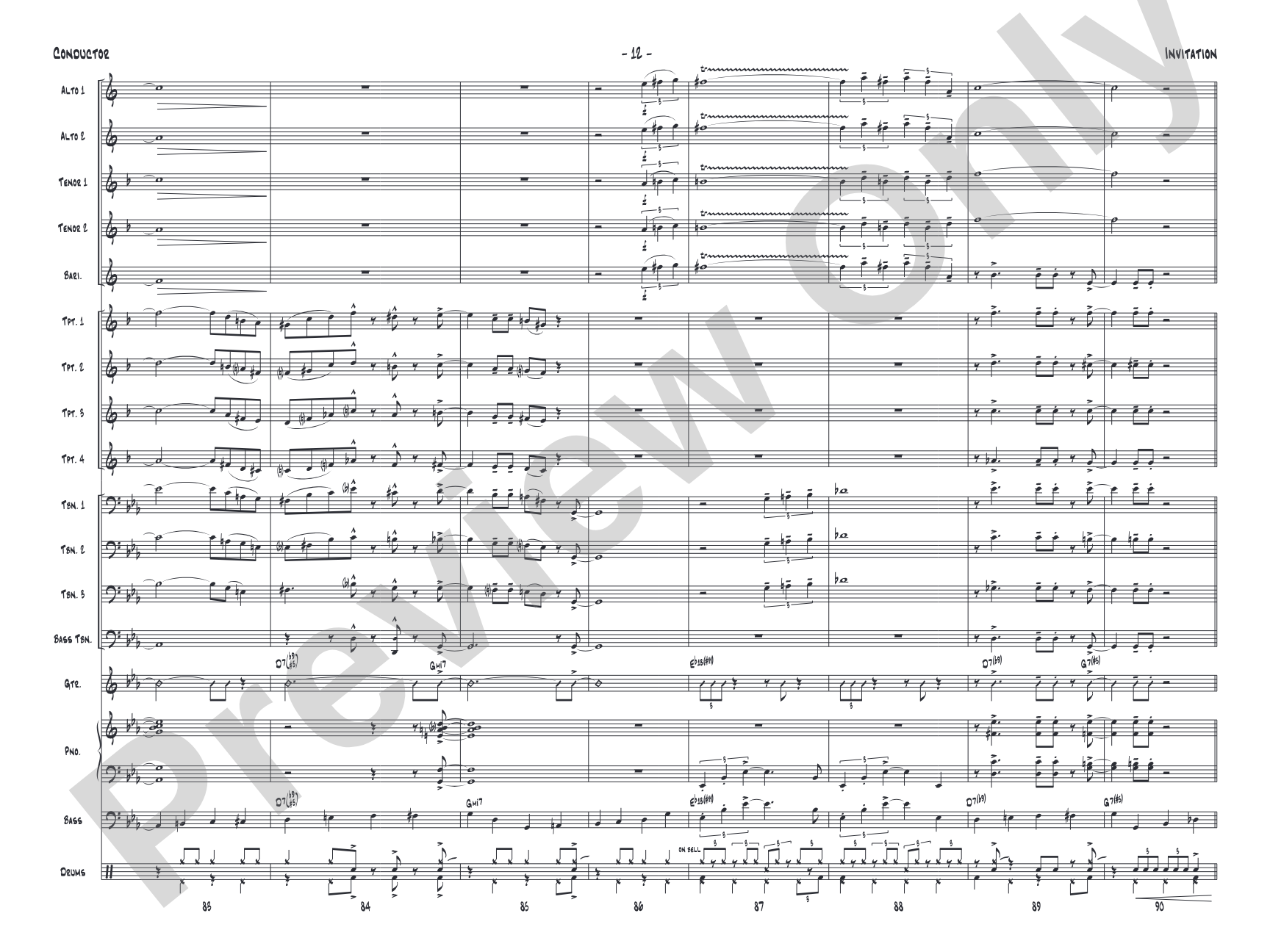
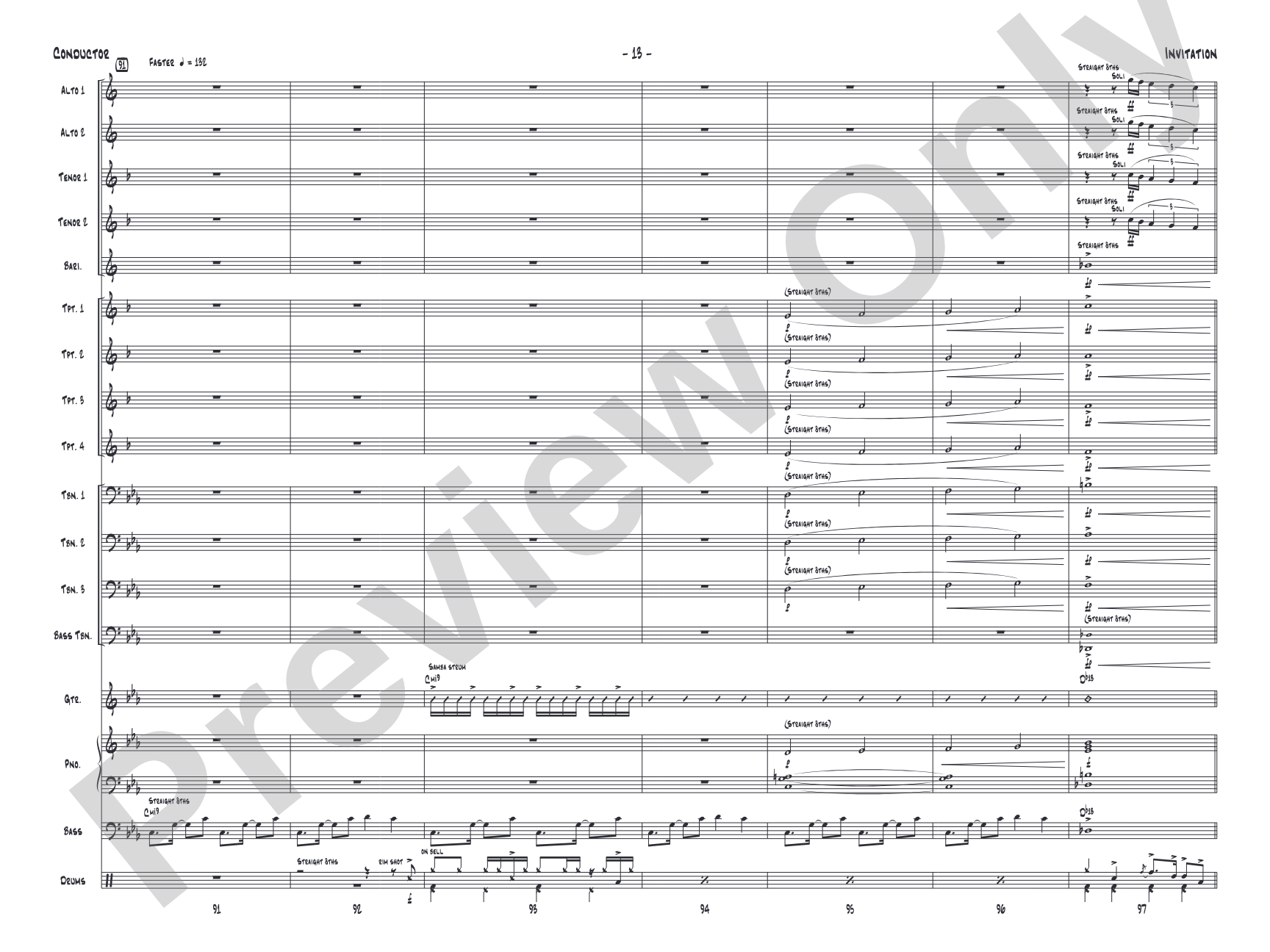
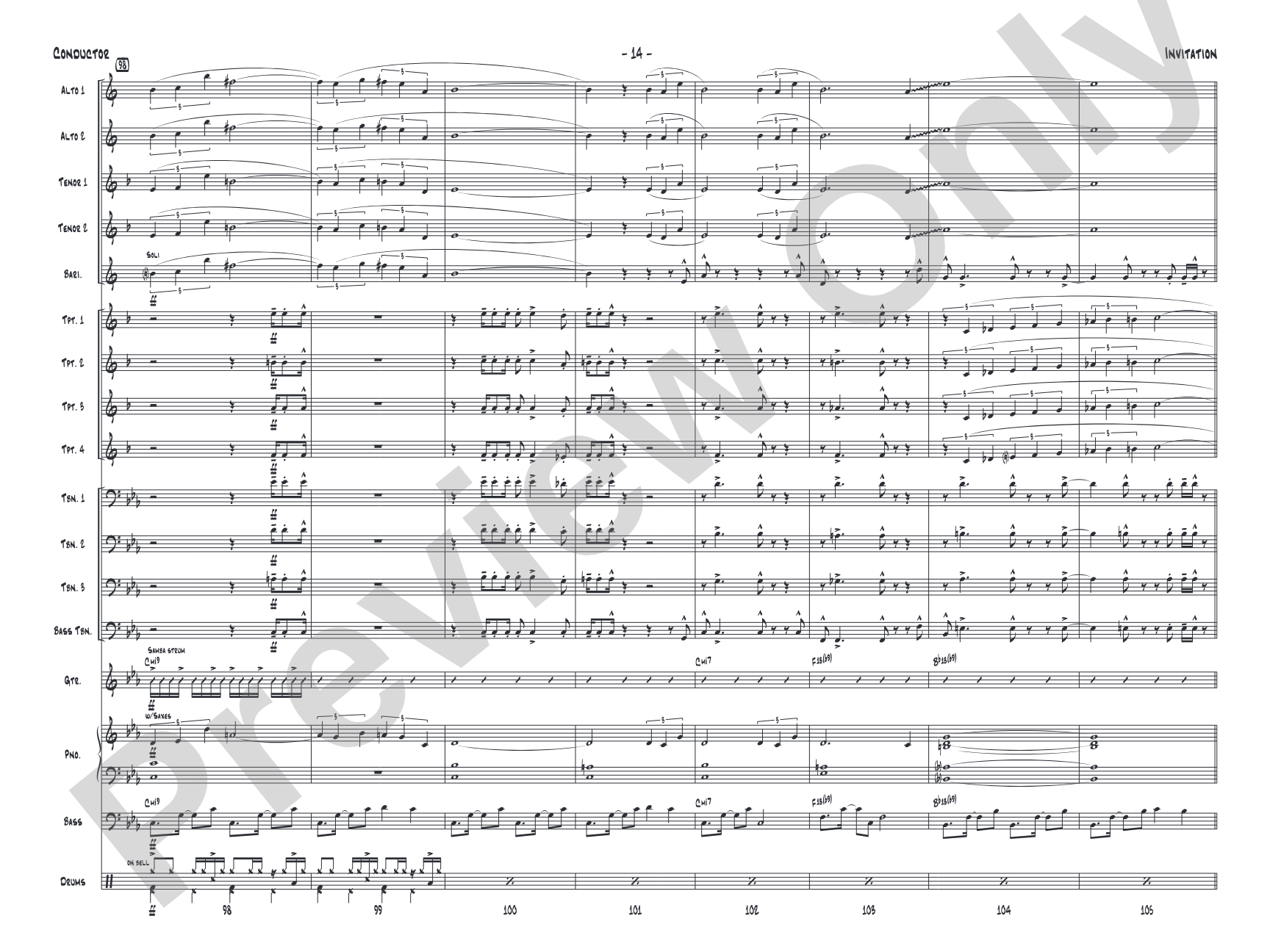
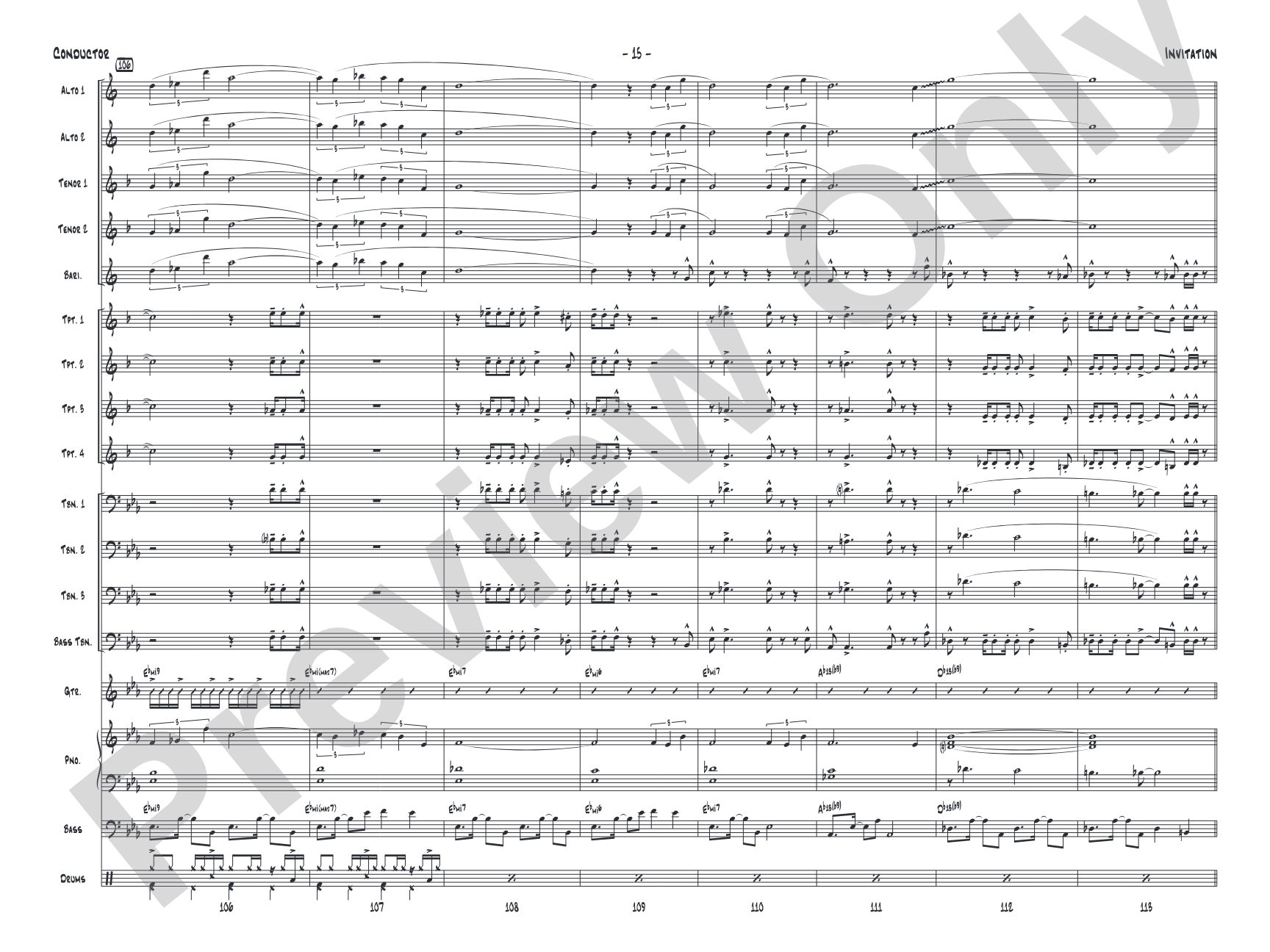
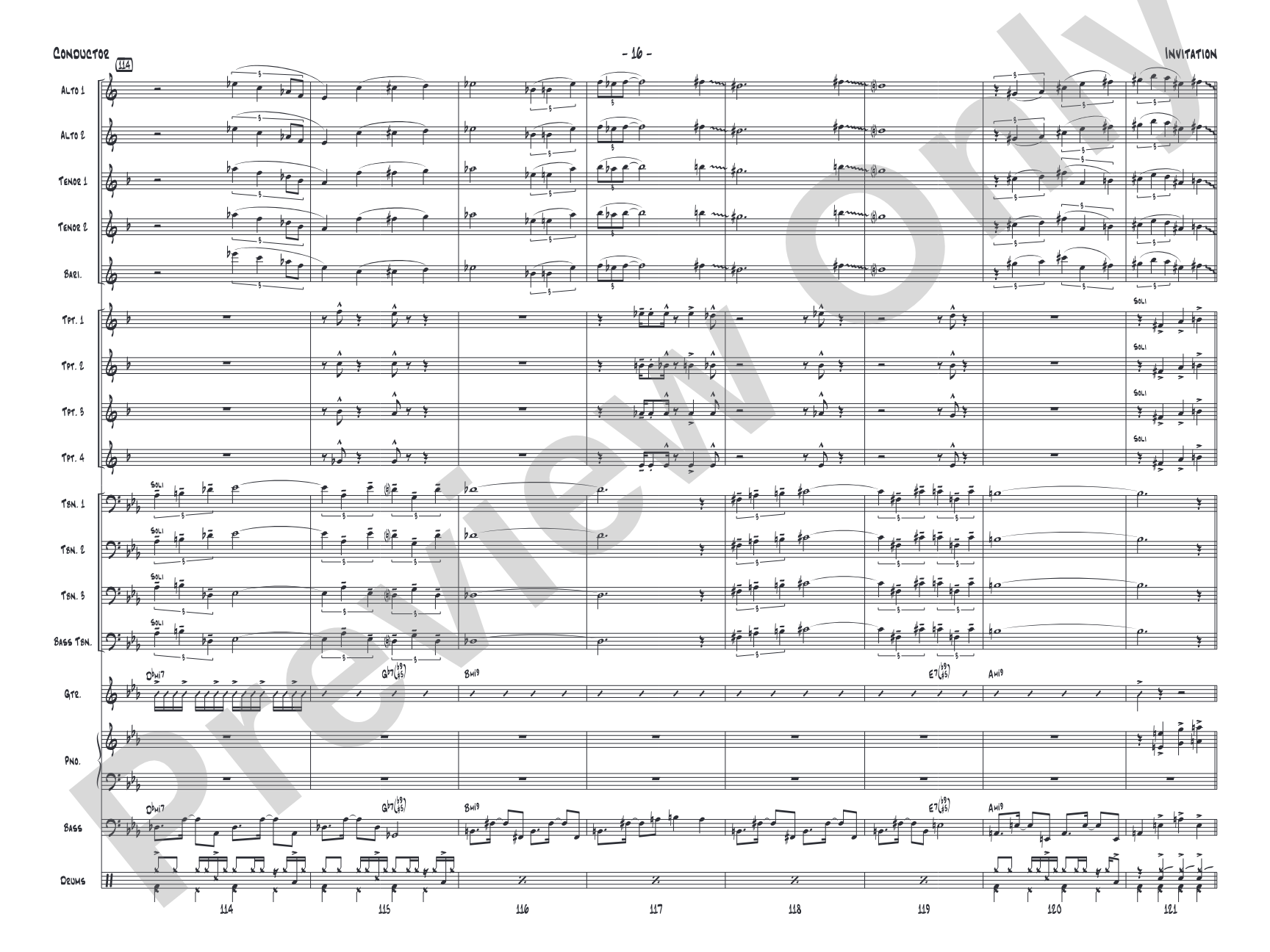
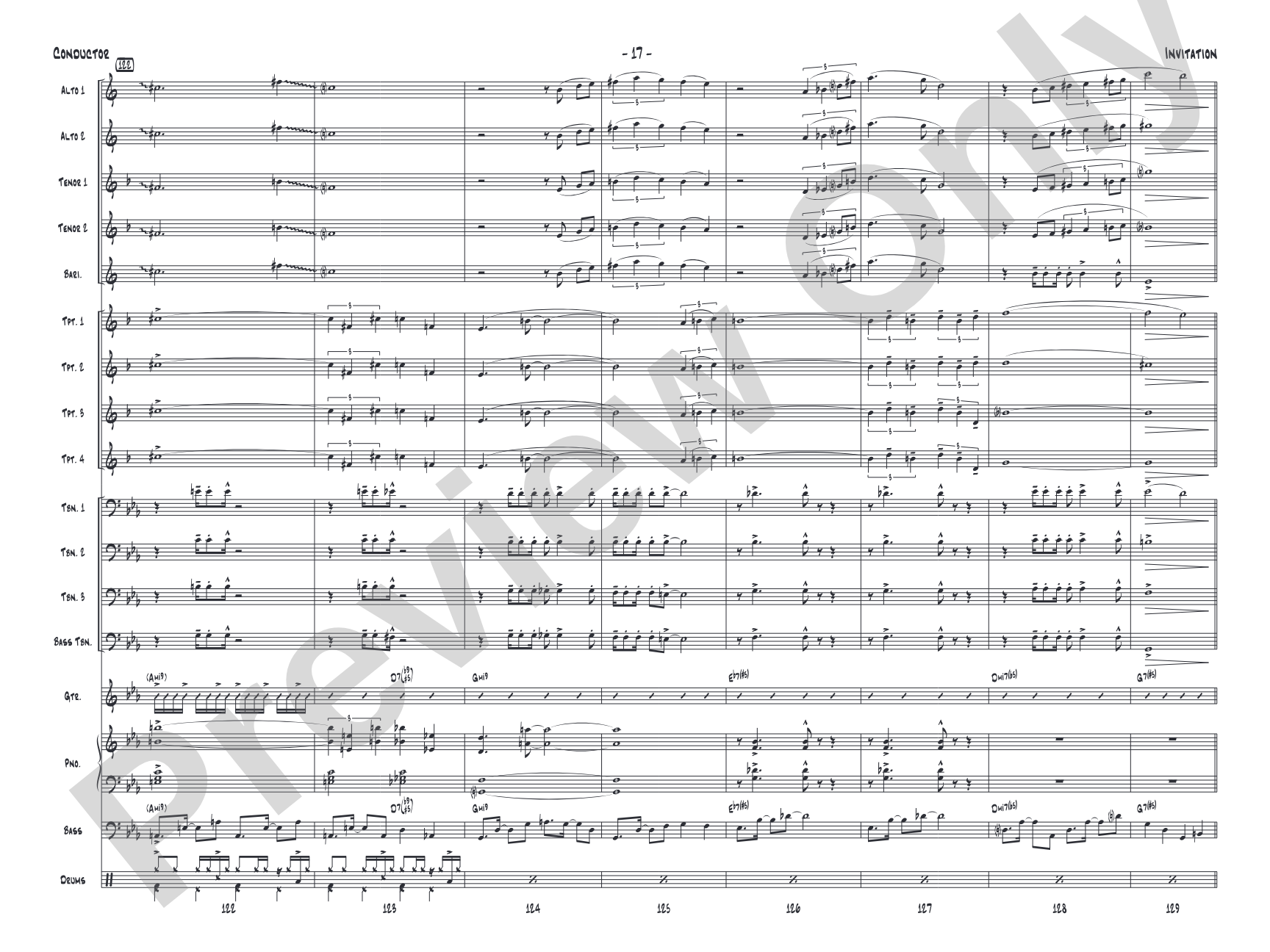
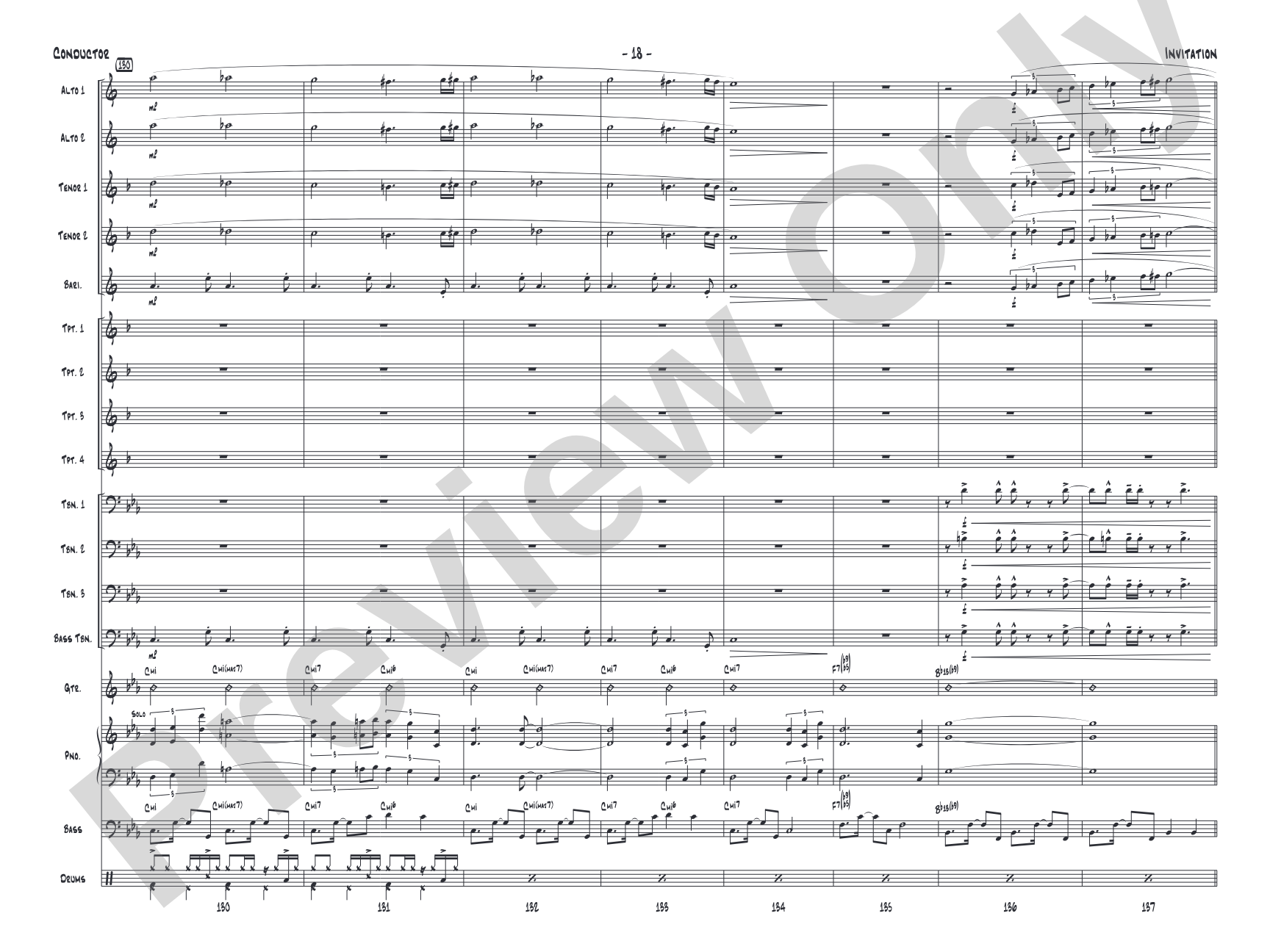
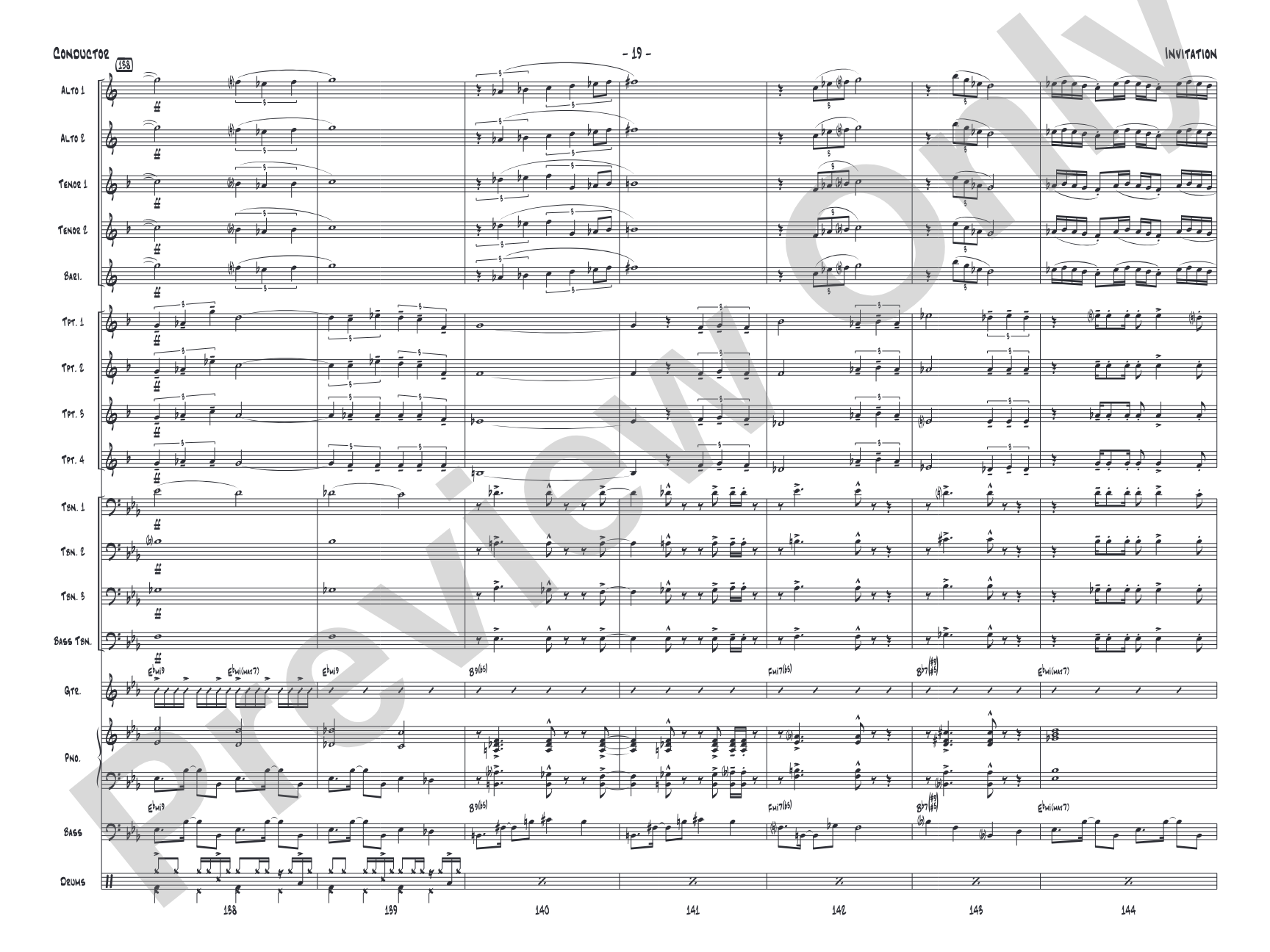
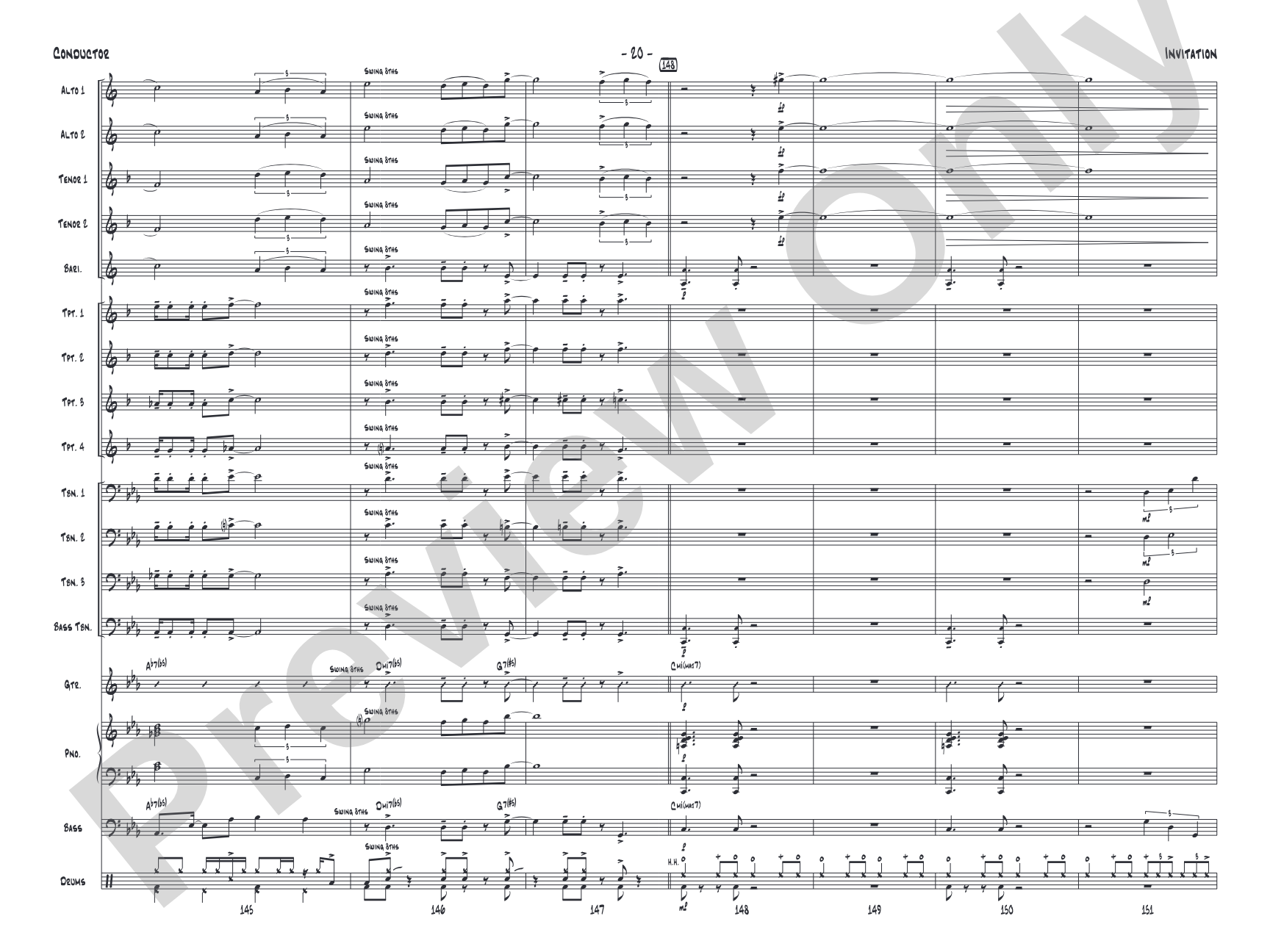
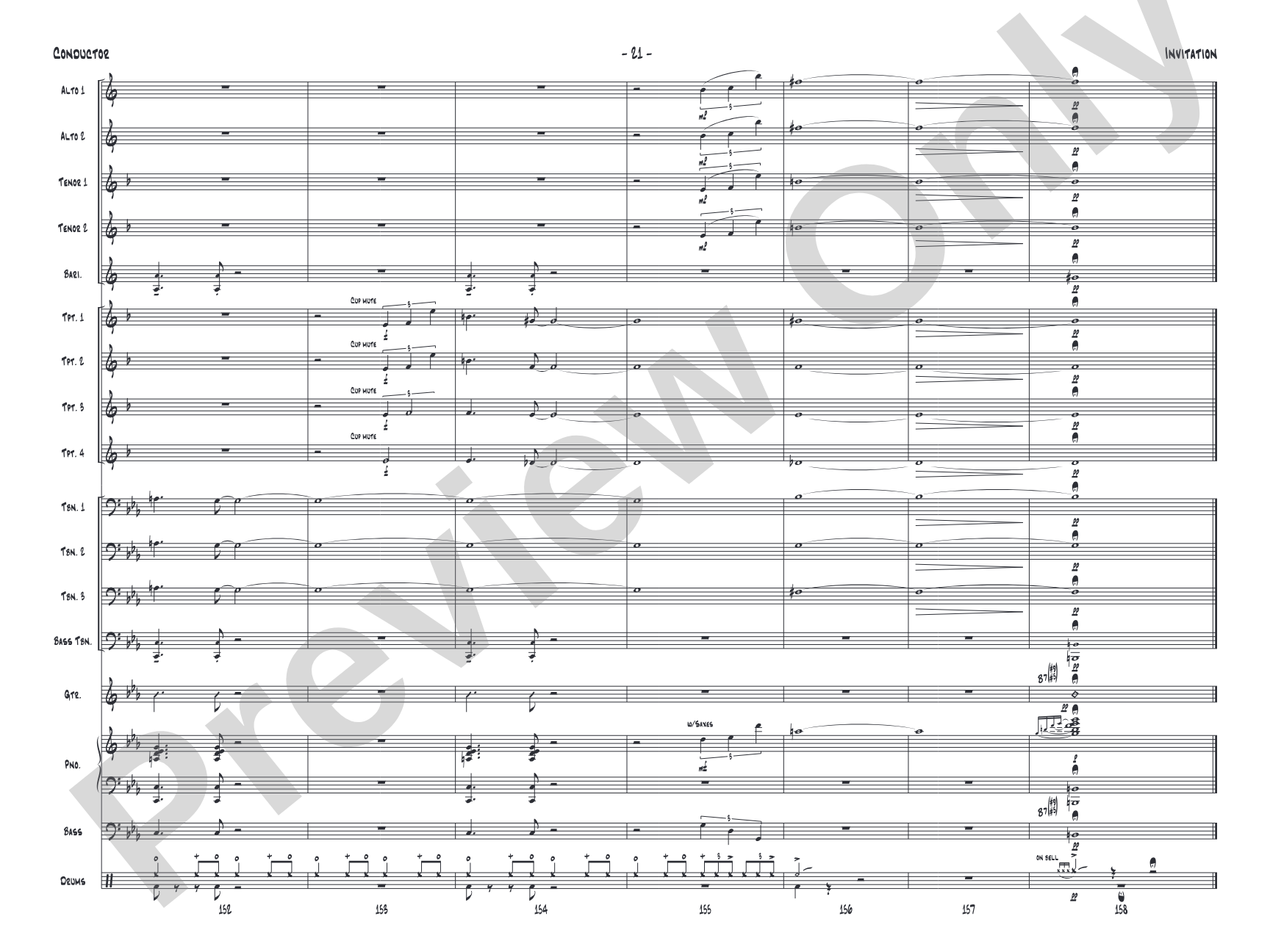

Invitation: Jazz Ensemble Conductor Score & Parts
Music by Bronislau Kaper, lyrics by Paul Francis Webster / arr. Erik Morales
Grade: 3.5 (Medium)
Item: 00-PK-0008432

$52.00
One moment…
Description
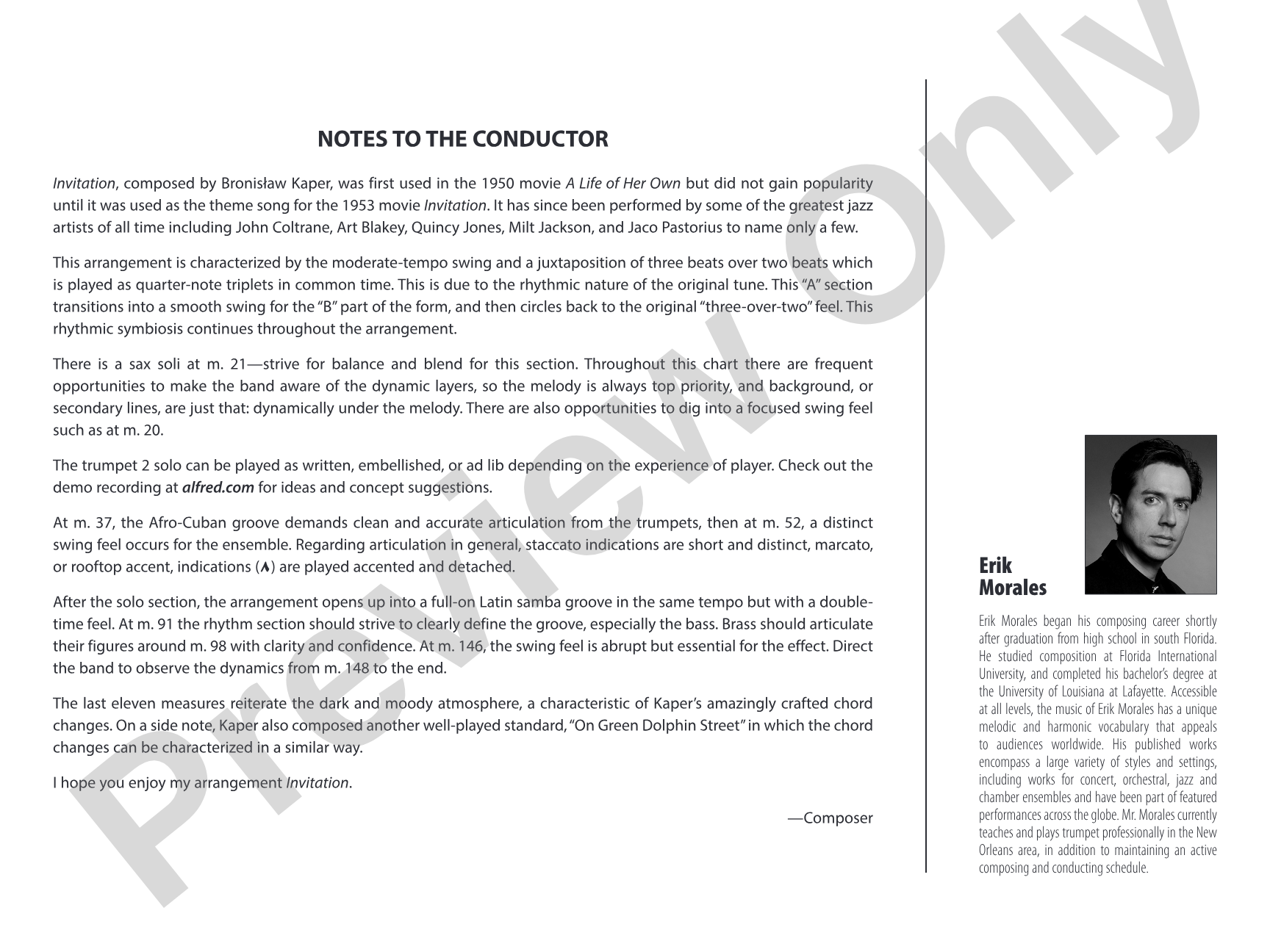
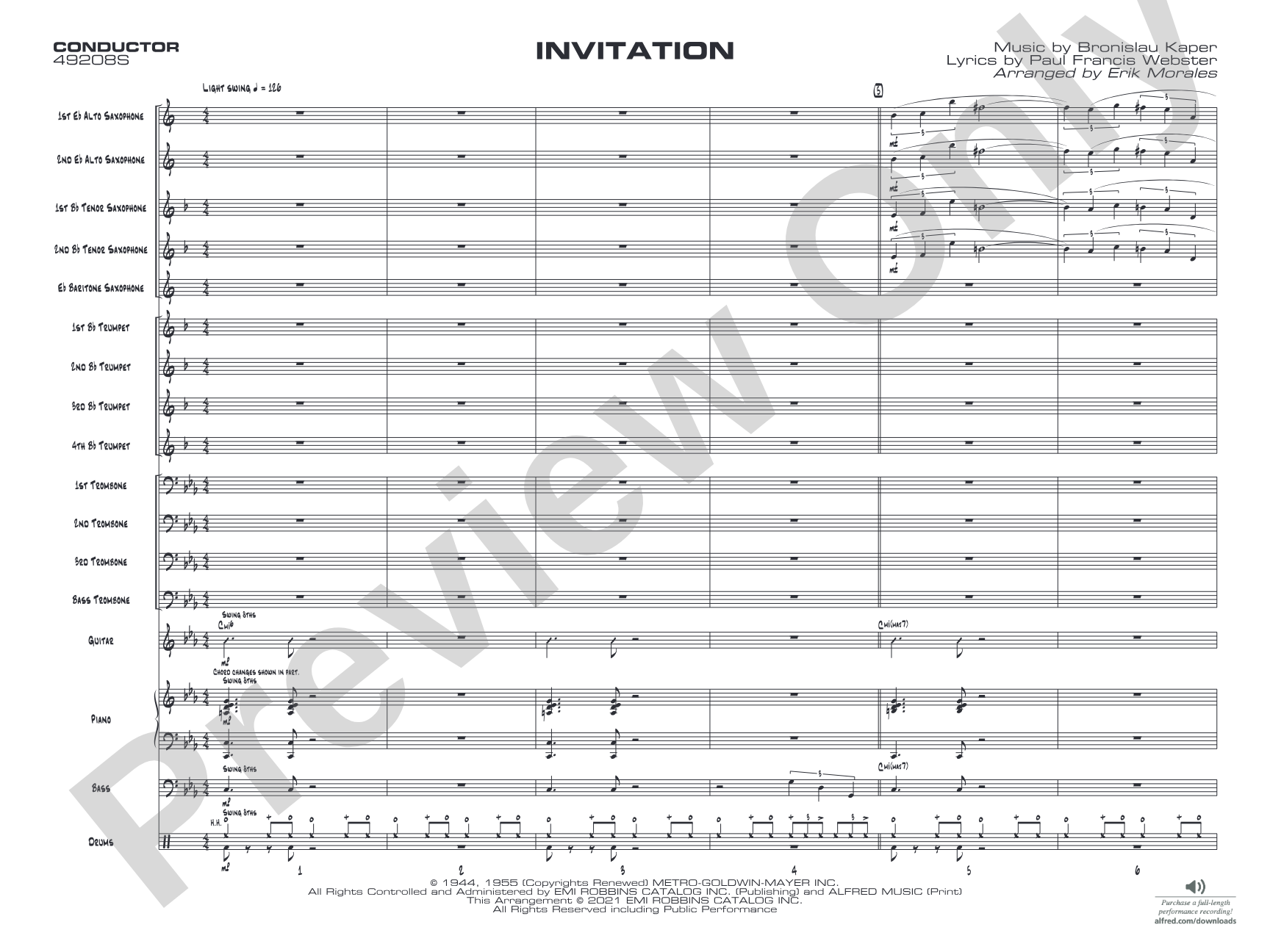
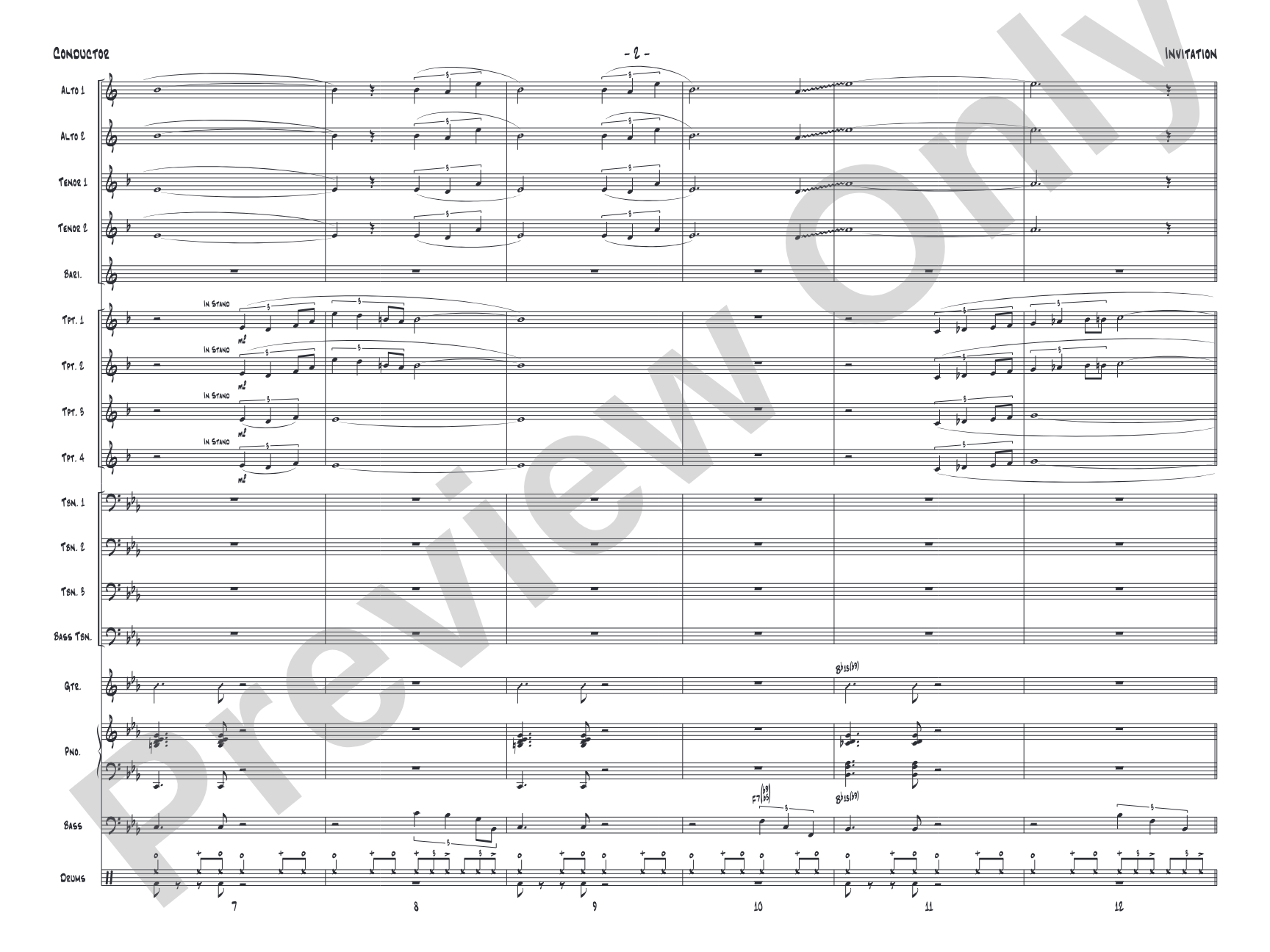
Invitation is a jazz standard performed by all the jazz greats. This swing chart arranged by Erik Morales has a mysterioso yet exciting character as it changes grooves from swing to Afro-Cuban then a faster swing all around 126 BPM. Check out the fine solis for saxes, trumpets, and trombones, and lead trumpet range is to written A above the staff. Optional vibes and flute parts and more. Power and excitement in a dynamic chart! (5:05) This title is available in MakeMusic Cloud.


Don't just read it, hear it, play along with it, and watch your students grow with it. In MakeMusic Cloud, Invitation: Jazz Ensemble Conductor Score & Parts comes alive with professional accompaniment, adjustable tempo, and built-in practice tools that turn solo practice into real progress.
Open in the Player
Jump straight in and assign it today.
Start Your Free Trial
Open this title and explore the full library in minutes.
Sample Audio
1
Audio File
--:--
0:00
0:00
Sample Video
Additional Details
Series:
Jazz Band Series
Publisher:
Alfred Music
Page Count:
102
SKU:
00-PK-0008432
More about this title
About the Composer: Bronislau Kaper
Bronislau Kaper (1902-1983) was a Polish-born composer who became one of Hollywood's most prolific film composers, scoring over 100 motion pictures throughout his career. His work ranged from dramatic underscore to jazz-inflected popular songs, and his ability to write memorable, sophisticated melodies made him a sought-after composer for both MGM and other studios during Hollywood's Golden Age.
Kaper's compositions have endured beyond their original film contexts, and "Invitation" stands as one of his most recorded jazz standards. The piece showcases his gift for writing elegant, singable themes that translate seamlessly to jazz interpretation, making it a favorite among ensemble arrangers and soloists alike.
Why we love this
Erik Morales has crafted an arrangement that respects the lyrical elegance of Kaper's standard while injecting real rhythmic vitality. The groove shifts from straight swing to Afro-Cuban and back again create natural momentum without feeling gimmicky, and the solo writing for saxes, trumpets, and trombones gives your section players genuine musical moments to shine rather than token breaks.
What to expect
The piece opens with an intimate, slightly enigmatic quality as if inviting listeners into a late-night conversation. Once the ensemble locks into the swing and Afro-Cuban sections, energy builds palpably, with the arrangement shifting between introspection and outright exuberance while maintaining the composed elegance that made "Invitation" a jazz standard in the first place.
Who it's for
Jazz ensemble directors working with intermediate to advanced groups who want a standard that showcases both sophisticated arranging and strong solo opportunities. Players at this level can handle the rhythmic complexity of the groove changes and the exposed soli passages without oversimplifying either.
How to get the most out of it
- Establish the swing feel clearly in sectional rehearsals before attempting the Afro-Cuban groove shift; make sure both feels are grounded rhythmically so the transition reads as compositional intent rather than a stumble.
- Balance the lead trumpet solo carefully with the ensemble underneath. The written range extends to A above the staff, so ensure your lead player can access that register with control and sits well over the saxes' supporting lines.
- Lock the Afro-Cuban section rhythmically with your rhythm section first. Once the piano, bass, and drums establish the clave and cross-rhythms, the horns will settle in naturally.
- Shape the opening mysterioso character with dynamic restraint. This is a standard with introspective roots; let the mystery breathe before the excitement builds.
How to use it
Program this as a feature on a jazz concert where you want to balance standards repertoire with intermediate-level arranging that sounds professional and finished. The five-minute duration and stylistic variety make it an effective centerpiece number, either solo or paired with a more uptempo chart that follows.
Skills your students will build
- Swing and Afro-Cuban rhythmic feels and the transition between them
- Solo construction and improvisation over specified changes
- Lead playing in the upper register with musicality and control
- Section blending and balance in ensemble contexts
- Reading and executing scored ensemble hits that frame individual solos