
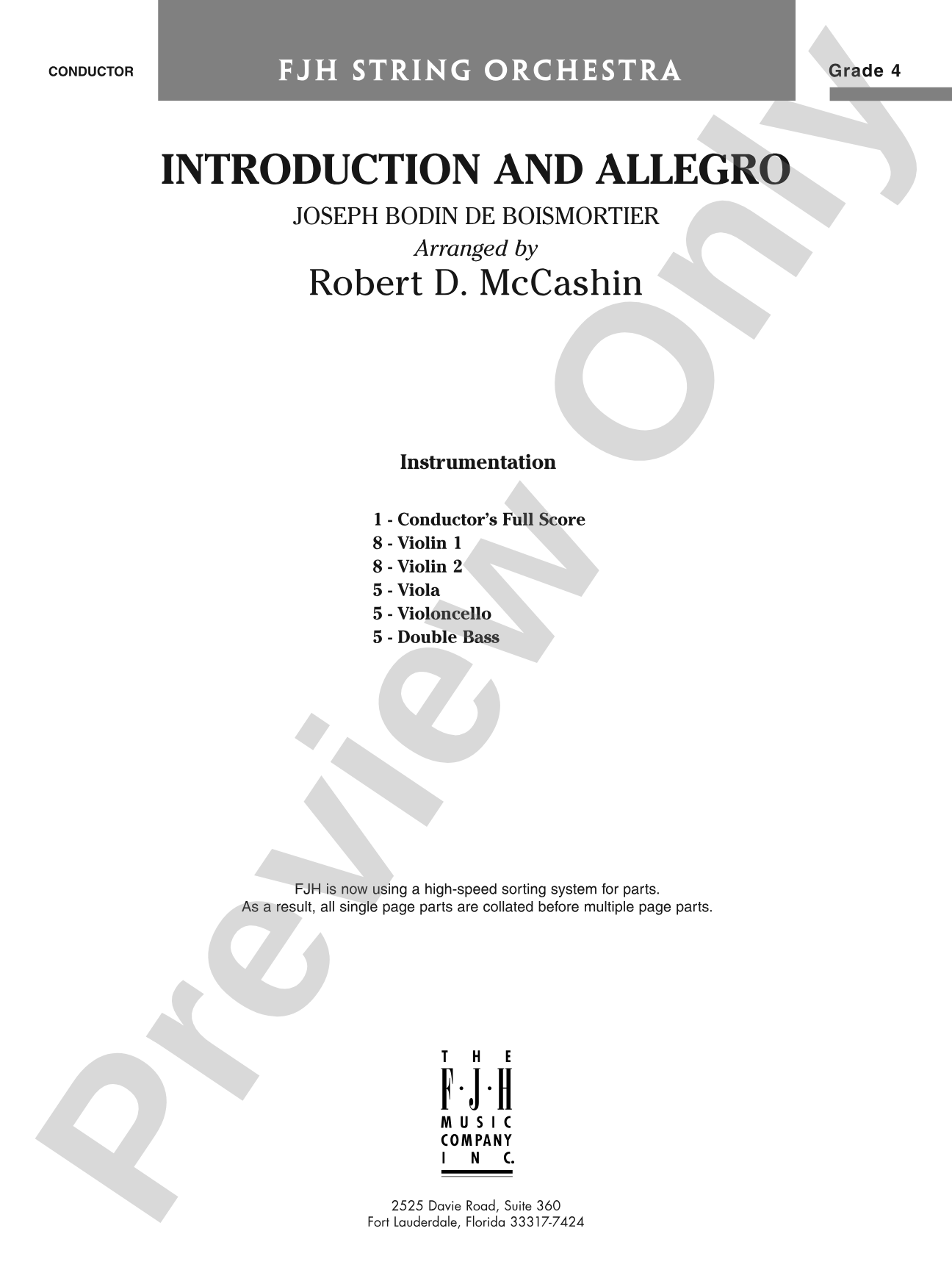
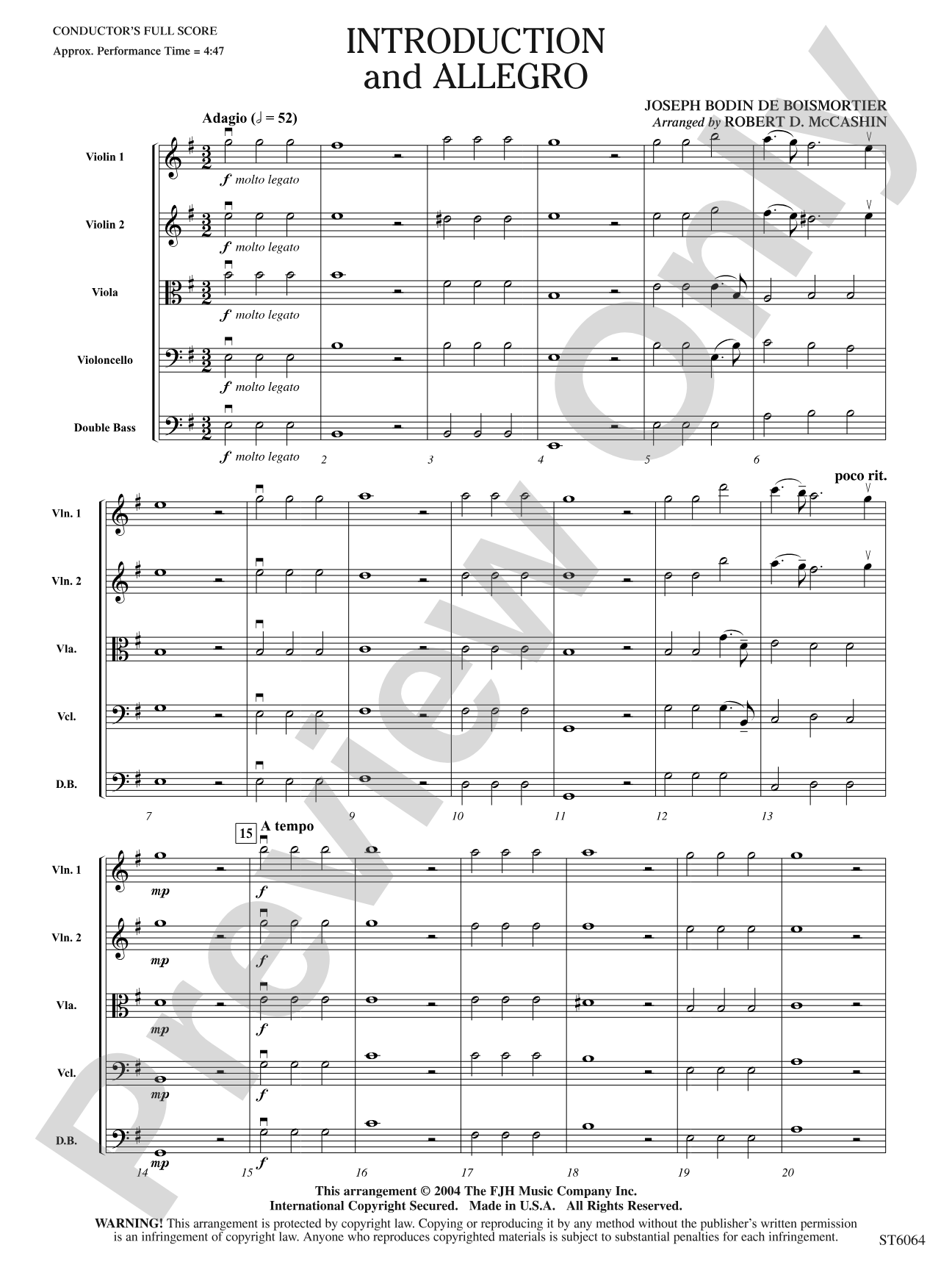
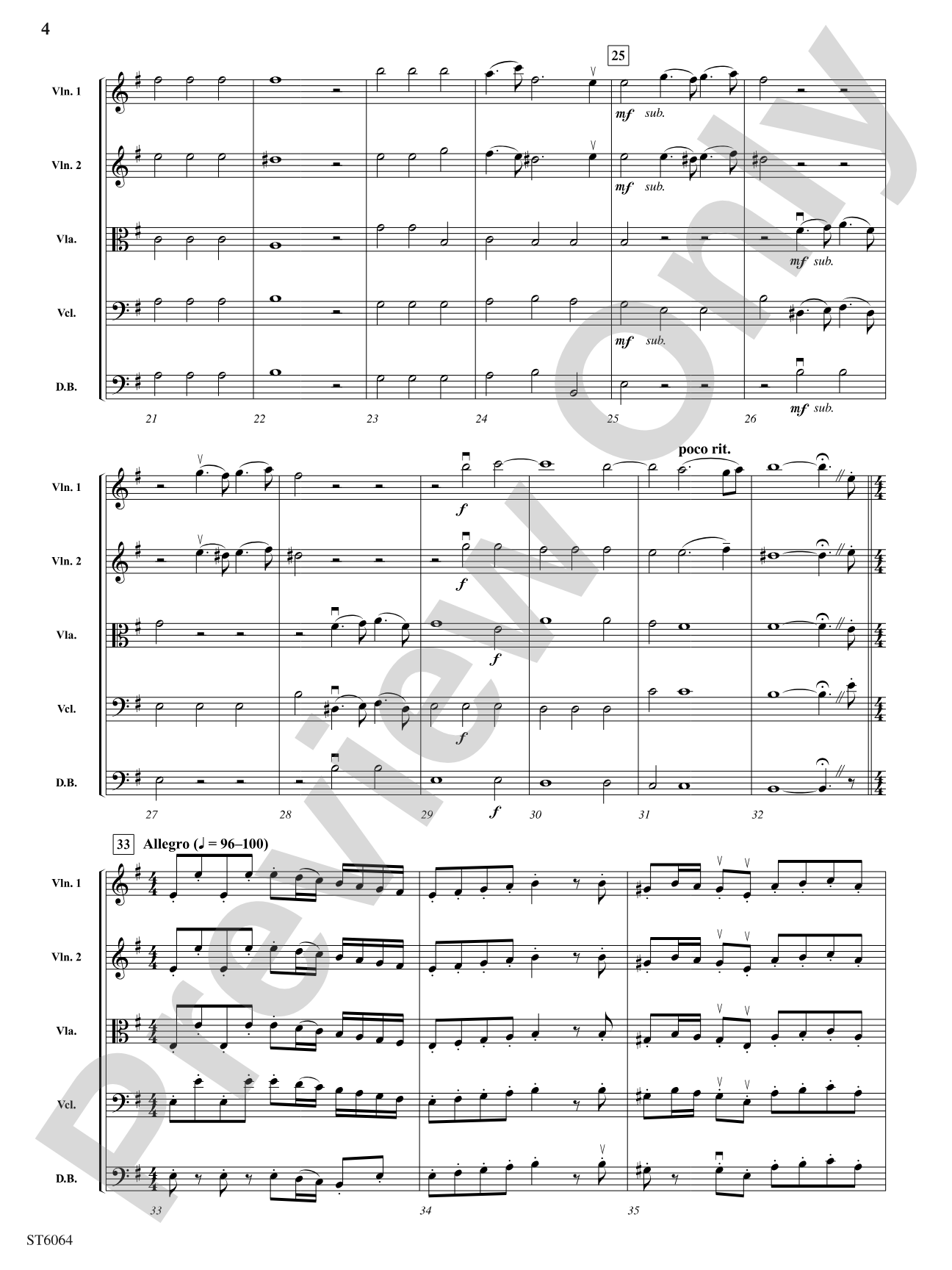
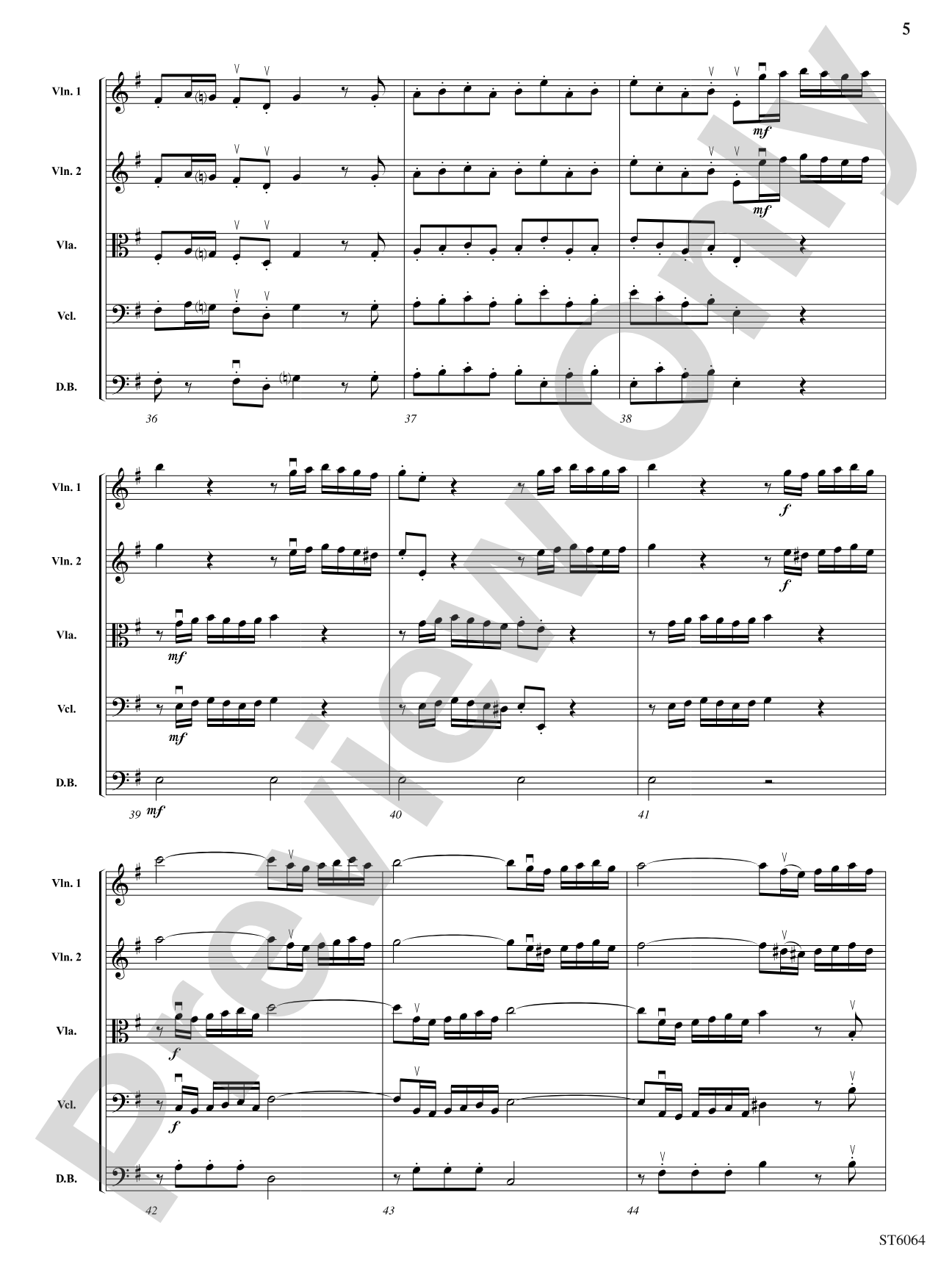
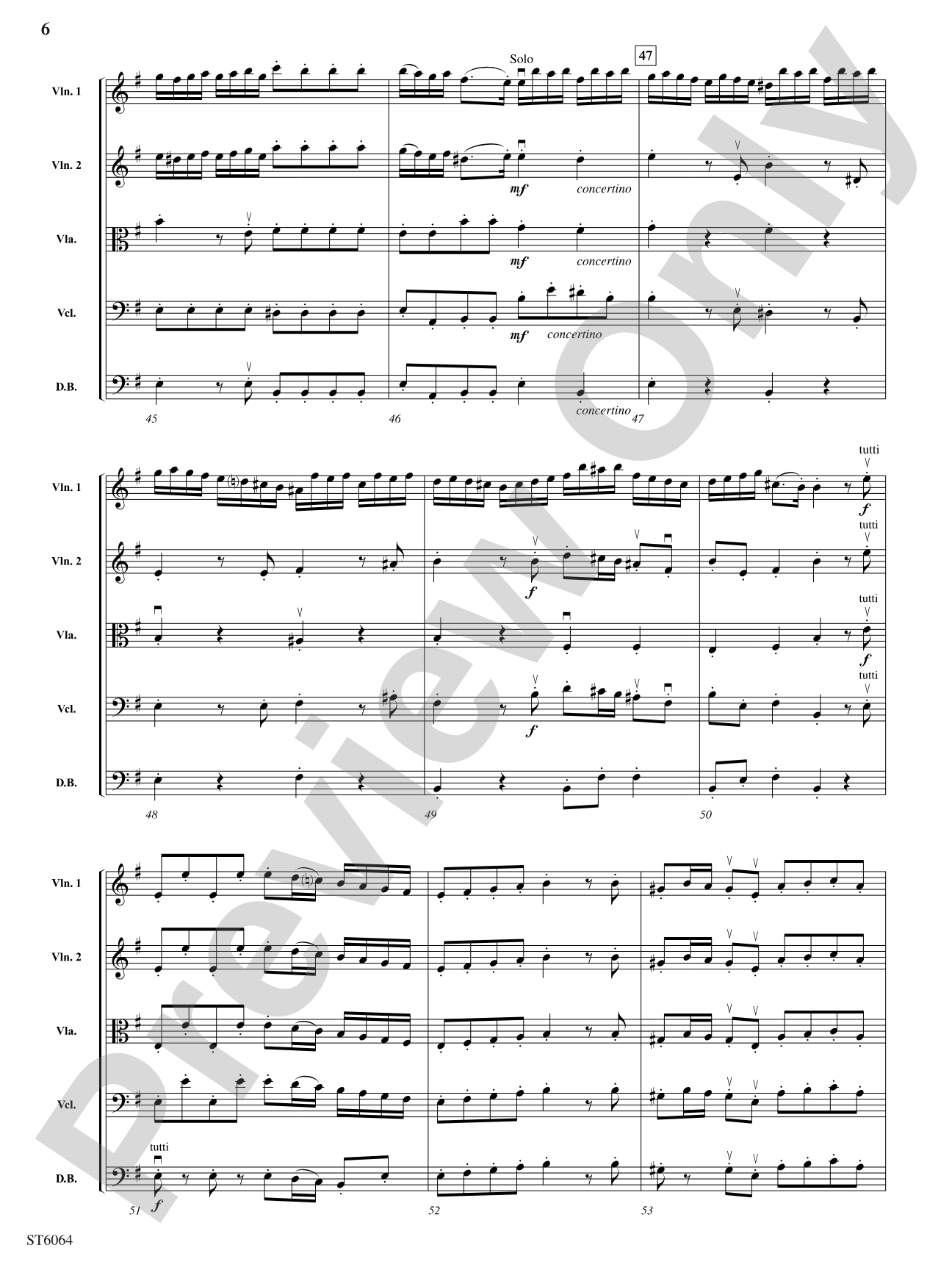
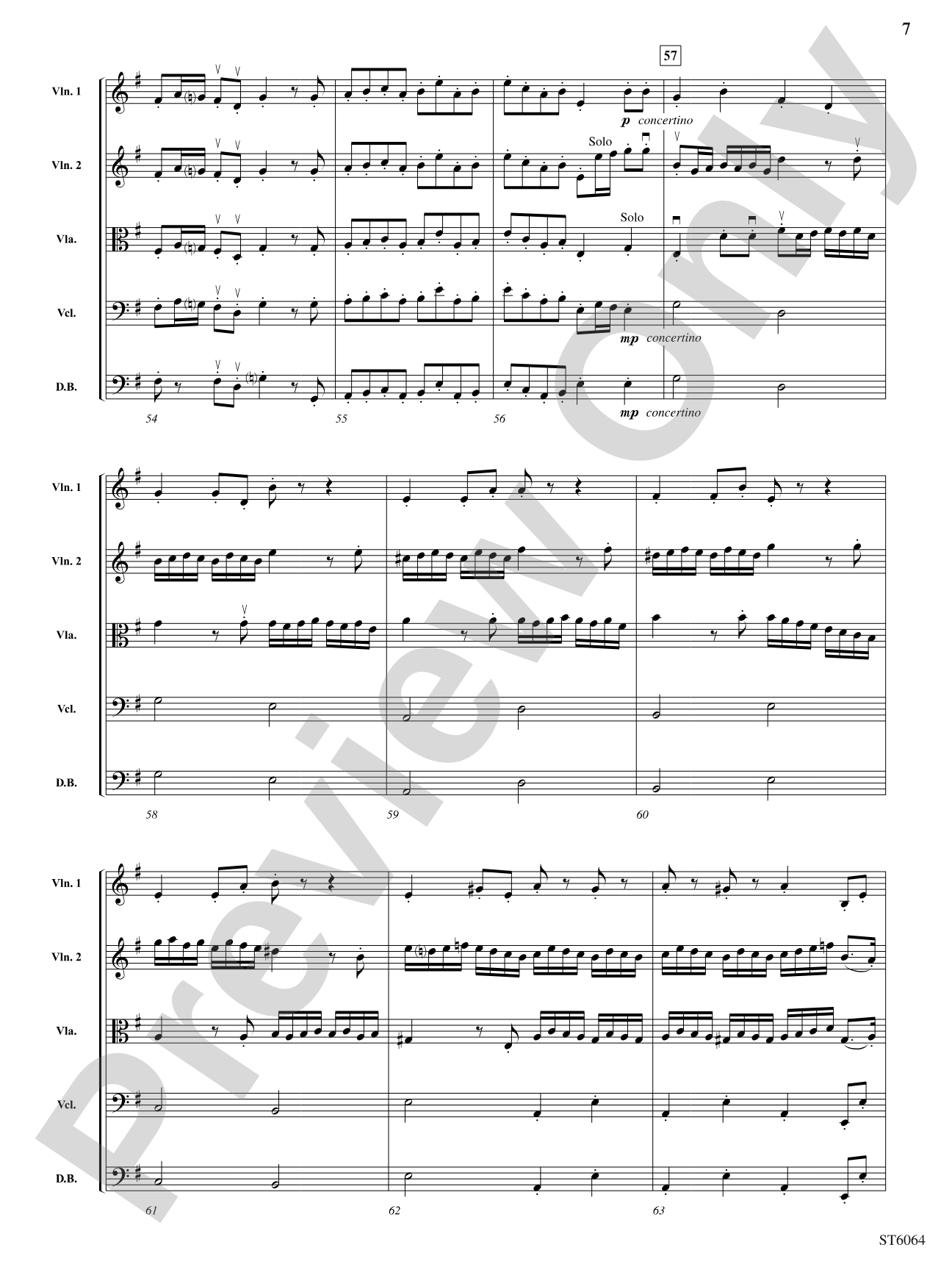
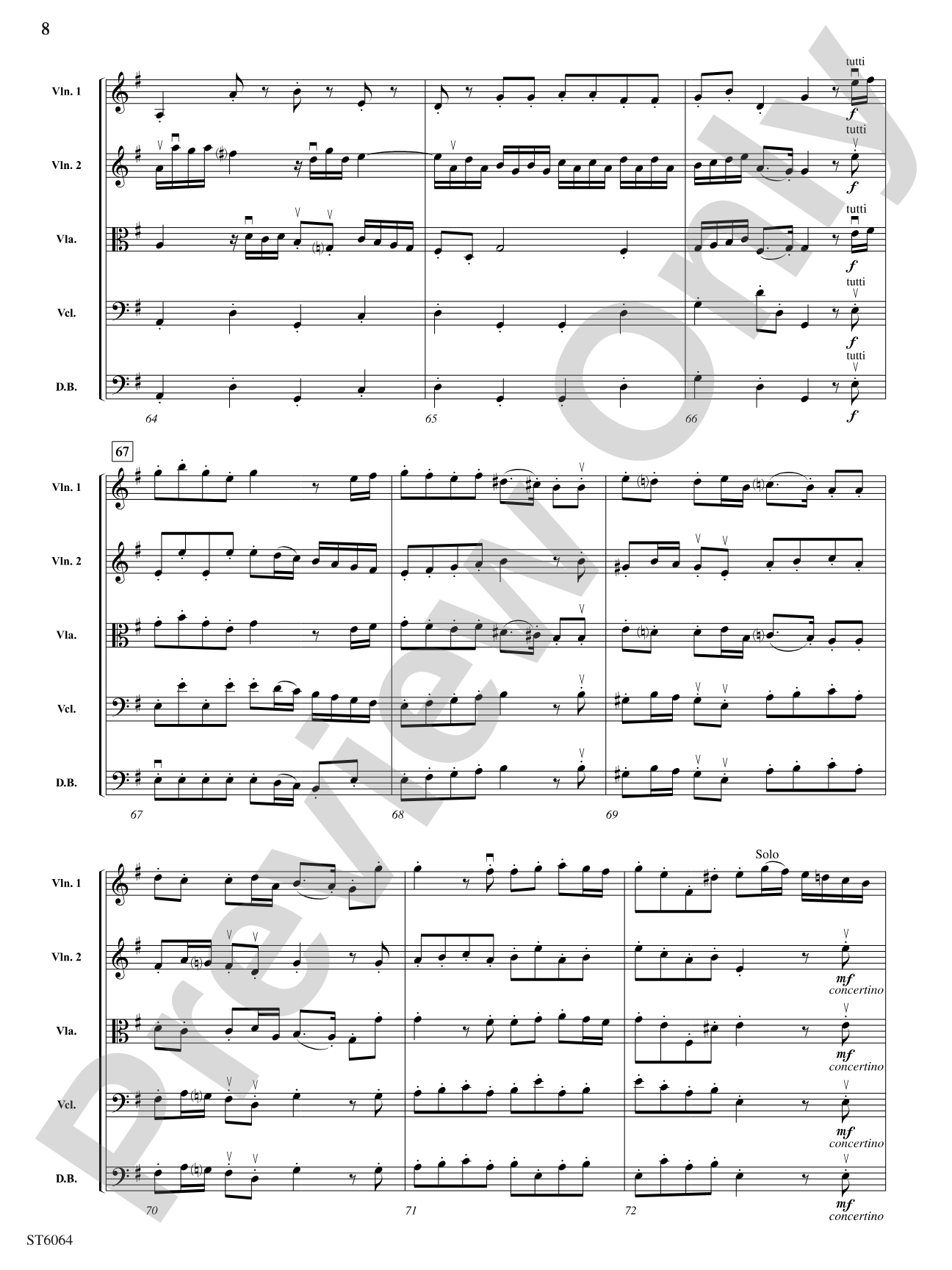
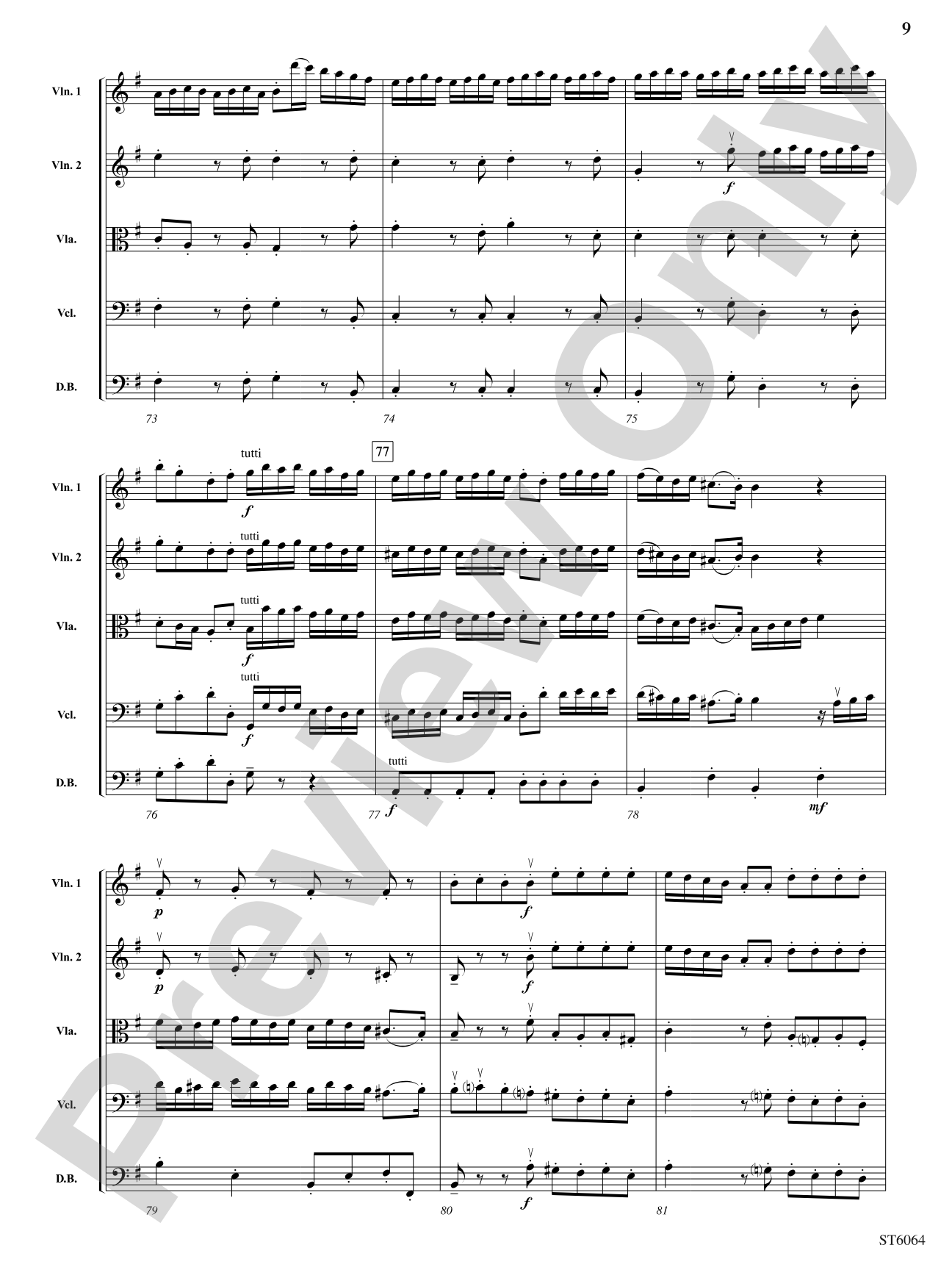
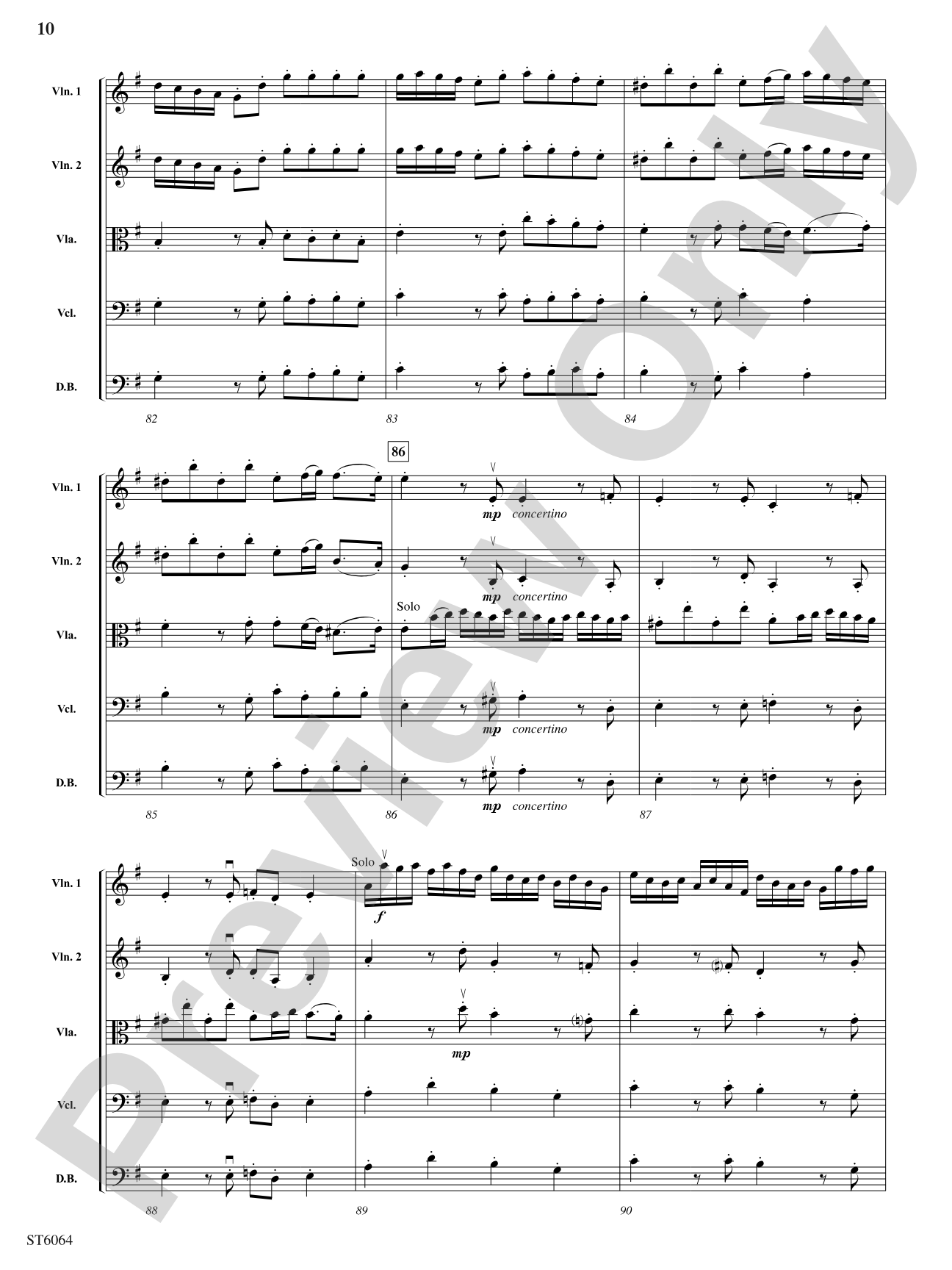
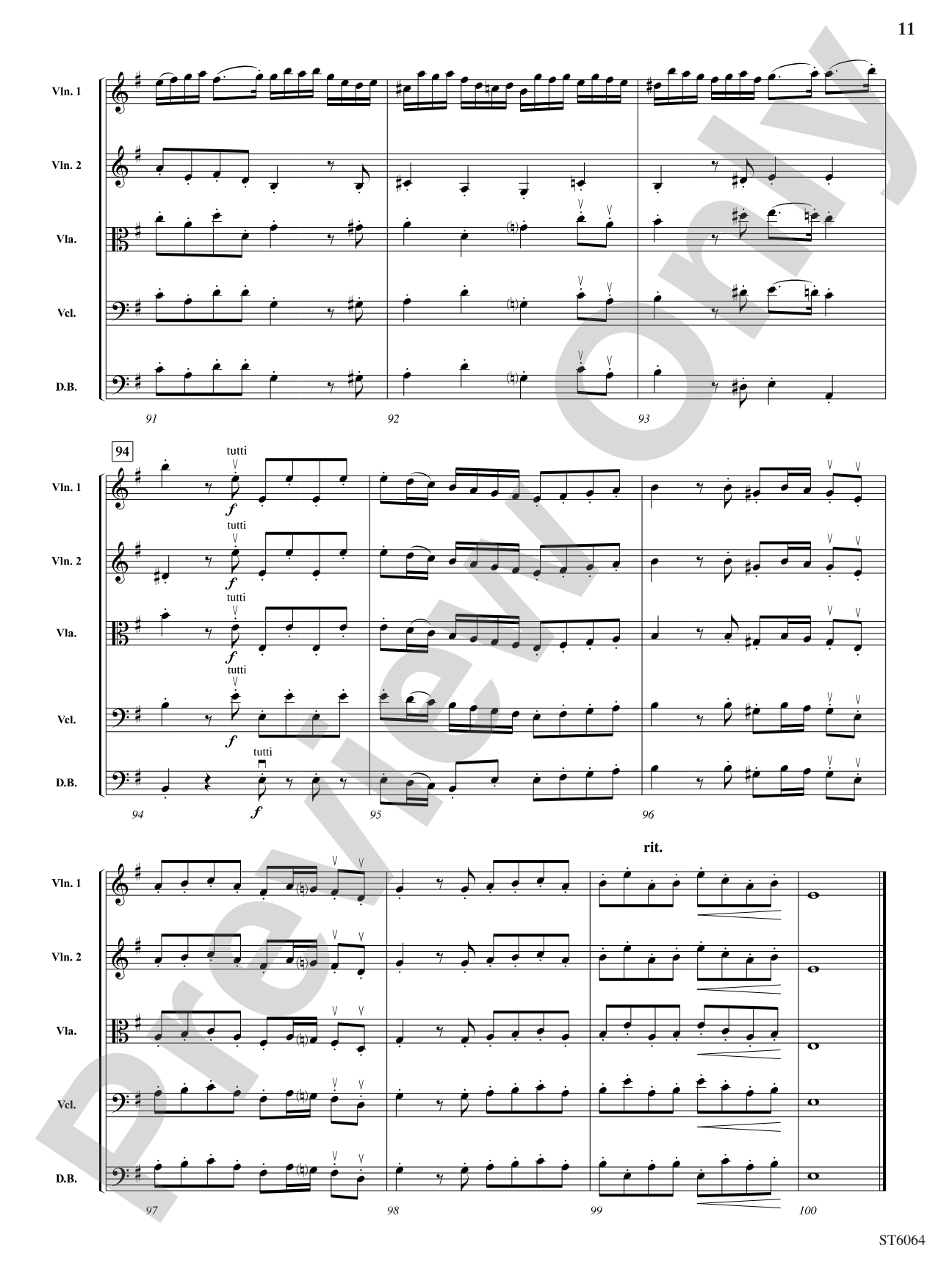

Introduction and Allegro: String Orchestra Conductor Score & Parts
By Joseph de Boismortier / arr. Robert D. McCashin
Grade: 4
Item: 98-DST6064
$50.00
Pickup currently not available
Buy Extra Parts (Digital PDF Download)
| Product | Price | Quantity |
|---|---|---|
| Introduction and Allegro: Score | $5.00 | |
| Introduction and Allegro: Violin 1 | $7.00 | |
| Introduction and Allegro: Violin 2 | $7.00 | |
| Introduction and Allegro: Viola | $7.00 | |
| Introduction and Allegro: Violoncello | $7.00 | |
| Introduction and Allegro: Double Bass | $7.00 |
Parts Added to Cart!
Description
From a set of pieces originally written by Boismortier for five treble instruments, this arrangement by Robert D. McCashin offers a number of performance opportunities for your orchestra.


Introduction and Allegro: String Orchestra Conductor Score & Parts isn't in MakeMusic Cloud just yet...but it could be. Let us know you'd like to see it, and you'll help shape what comes next. In the meantime, start a free trial and dive into thousands of interactive titles your students can play along with today.
Request This Title
Tell us you want it.
Start Your Free Trial
Explore everything that's ready to play right now.
Sample Audio
1
Audio File
--:--
0:00
0:00
Sample Video
No sample videos found.
Additional Details
Series:
FJH String Orchestra
Publisher:
The FJH Music Company, Inc.
SKU:
98-DST6064
More about this title
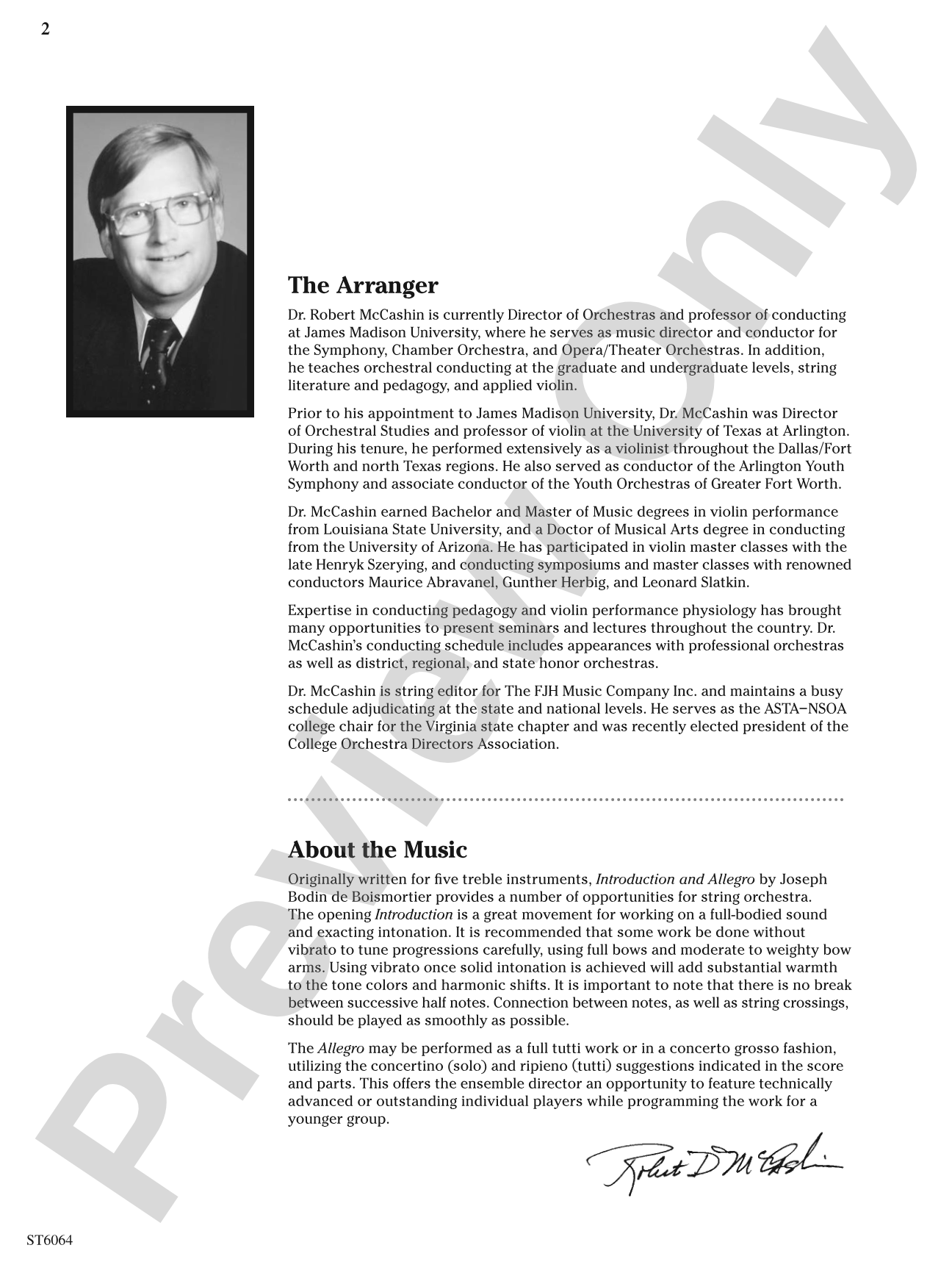
About the Composer: Joseph de Boismortier
Joseph de Boismortier (1682–1765) was a prolific French composer whose works spanned multiple genres and instrumental combinations. A master of the suite and the French Baroque style, he composed over 100 works including sonatas, concertos, and chamber music that prioritized clarity, elegant melody, and accessible performance.
Boismortier's music remains relevant in music education because it balances technical engagement with forward momentum. His pieces reward careful attention to phrasing and ensemble balance without requiring virtuosic display, making them ideal for developing musicians who are building toward more complex repertoire.
Why we love this
McCashin's arrangement transforms Boismortier's charming original instrumentation into a natural fit for developing string orchestras, preserving the character of the work while giving your ensemble a piece that sounds polished and complete at Grade 4 level. The title's dual structure (Introduction and Allegro) provides built-in contrast and keeps players engaged through distinct sections, making it both musically satisfying and pedagogically sound for a full rehearsal.
What to expect
The Introduction unfolds with quiet dignity, inviting the ear into an elegant Baroque conversation. The shift to Allegro brings infectious motion and rhythmic clarity, with melodies that dance across the ensemble while each section remains engaged in the texture.
Who it's for
String orchestras at Grade 4 level that want to perform a recognizable Baroque work without retreating to oversimplified arrangements. Directors building a balanced concert program will appreciate that this piece sits comfortably in the upper-intermediate range, offering genuine musicianship development for both first and second violin lines.
How to get the most out of it
- Shape the Introduction with clear phrasing in the opening theme; this sets the character for the entire piece and gives the Allegro room to breathe when it arrives.
- Balance the string parts so the primary melody stands out without drowning supporting lines; younger players often need explicit reminders about dynamic hierarchy across four or five parts.
- Establish a steady tempo for the Allegro section before rehearsal so players can lock into the character early; this prevents the common tendency to rush as technical passages appear.
- Use natural bowstrokes to articulate rhythmic clarity in the faster material; sloppy bow changes undermine the Baroque elegance of the writing.
How to use it
Pair this with other Baroque arrangements to create a stylistic unit, or use it as a concert opener where its clean, focused energy can establish ensemble precision early. The relatively modest duration makes it an ideal complement to longer Romantic or modern works on the same program.
Skills your students will build
- Baroque style and phrasing conventions
- Maintaining dynamic balance across four-part string texture
- Reading and executing rhythmic clarity in articulated passages
- Responding to conductor gestures that delineate contrasting sections (Introduction versus Allegro)
- Listening within the ensemble for intonation across sustained harmonic movement