
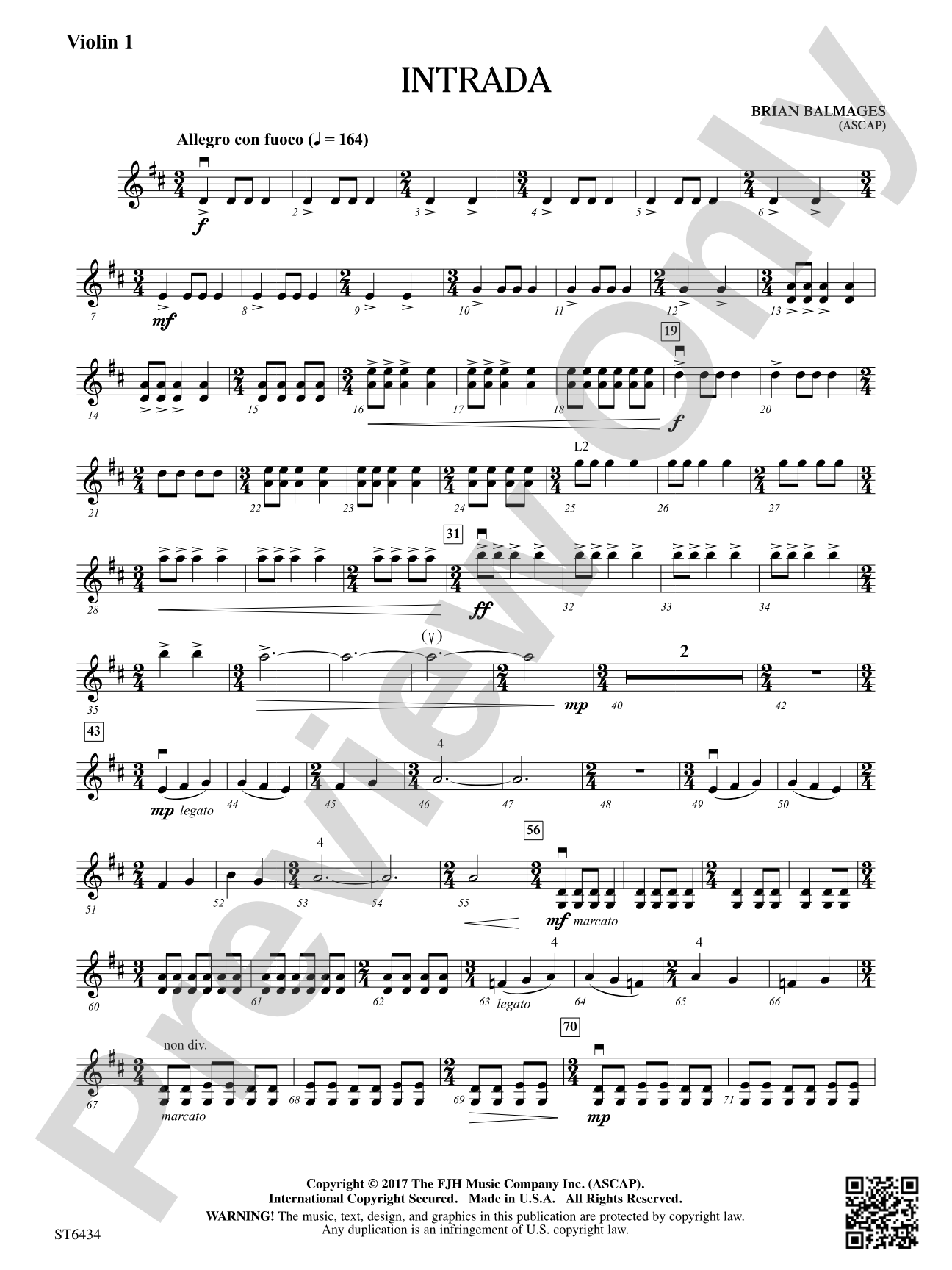

Intrada: Violin 1
By Brian Balmages
Grade: 2
Item: 98-PC-DST6434_VN1
$7.00
Pickup currently not available
Description
This aggressive mixed-meter work relies heavily on pulse and the mixed placement of accents to create exceptional momentum. The composer makes extensive use of simple double stops to create big layers of sound that contrast with lighter, more delicate moments. A powerhouse work for your next concert!


Don't just read it, hear it, play along with it, and watch your students grow with it. In MakeMusic Cloud, Intrada: Violin 1 comes alive with professional accompaniment, adjustable tempo, and built-in practice tools that turn solo practice into real progress.
Open in the Player
Jump straight in and assign it today.
Start Your Free Trial
Open this title and explore the full library in minutes.
Sample Audio
1
Audio File
--:--
0:00
0:00
Sample Video
Additional Details
Series:
FJH String Orchestra
Publisher:
The FJH Music Company, Inc.
SKU:
98-PC-DST6434_VN1
More about this title
About the Composer: Brian Balmages

Brian Balmages has built an international reputation as a composer and conductor whose voice reaches equally across orchestral, band, and chamber music idioms. His works have been premiered and performed by ensembles ranging from professional orchestras to school groups in venues including Carnegie Hall, the Kennedy Center, and the Sydney Opera House. He is a recipient of the A. Austin Harding Award from the American School Band Directors Association and won the 2020 NBA William D. Revelli Composition Contest for Love and Light.
Balmages holds membership in the American Bandmasters Association and has received the James Madison University Distinguished Alumni Award from the School of Visual and Performing Arts. He was commissioned by the University of Miami to compose music for the presidential inauguration of Dr. Julio Frenk, and his music was performed at the 2013 Presidential Inaugural Prayer Service. As a conductor, he maintains regular guest engagements with all-state ensembles, university orchestras, and professional groups worldwide. He currently serves as Director of MakeMusic Publications and Digital Education for Alfred and MakeMusic.
Why we love this
Balmages understands how to build kinetic energy in a string orchestra without overcomplicating the technical demands. The aggressive mixed-meter approach and strategic accent placement create genuine forward momentum that feels driven, not frantic, making this a refreshing choice for conductors seeking Grade 2 repertoire with real character and contest appeal.
What to expect
Intrada radiates controlled intensity, its mixed meters and offset accents creating a muscular momentum that pushes forward relentlessly. The double stops bloom into rich, layered sonorities that suddenly soften into moments of restraint, keeping the ensemble and audience alert to what comes next.
Who it's for
String orchestras working at Grade 2 level and preparing for contests or festivals will find this piece engages both technical growth and musical expression. Directors seeking repertoire that builds confidence through driven, contemporary writing will appreciate how Balmages avoids simplicity without sacrificing accessibility.
How to get the most out of it
- Isolate and lock the rhythmic foundation in each meter shift during separate sectional rehearsals. String players need to feel confident in the pulse before the accents will land with impact.
- Shape the double stops as intentional blocks of sound rather than individual voices stacked on top of each other. Emphasize the collective resonance and weight of these layers.
- Contrast the aggressive sections by allowing the lighter, delicate passages to breathe. The score's power comes from this dynamic range, so resist the urge to maintain intensity throughout.
- Conduct the mixed meters clearly and consistently. Your preparatory gesture becomes the anchor that holds the ensemble through rhythmic complexity.
How to use it
Program this as an opening work on a concert program to establish energy and focus from the first downbeat. Its contest-ready profile and straightforward instrumentation make it ideal for festival submissions or as a centerpiece in a String Orchestra ensemble concert featuring diverse contemporary works.
Skills your students will build
- Reading and performing in mixed meters (with secure pulse transitions between time signatures)
- Ensemble precision with off-beat and syncopated accent placement
- Double stop intonation and tone matching across multiple voices
- Dynamic contrast and musical shaping within driving rhythmic contexts