
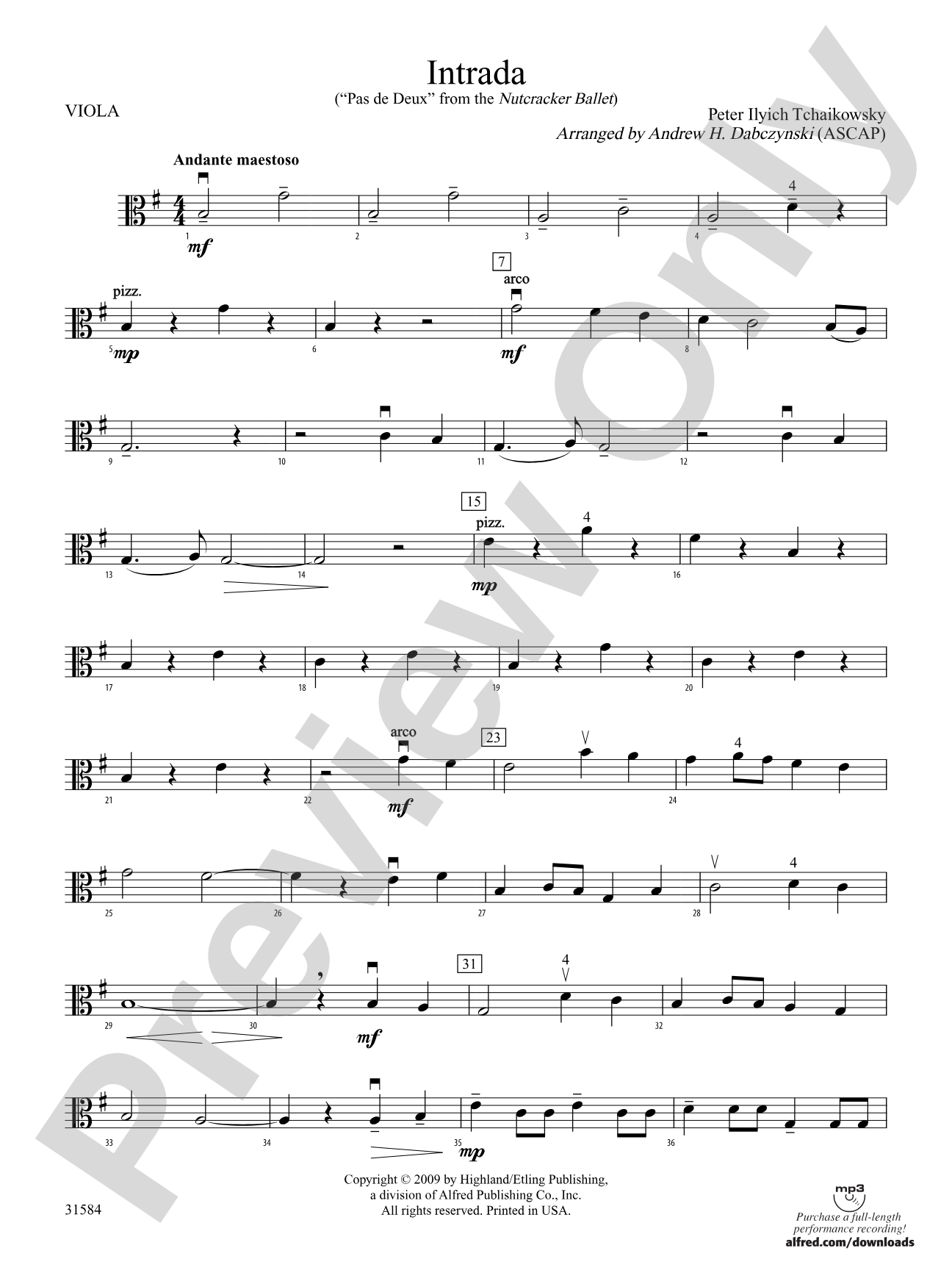

Intrada (Pas de Deux from the Nutcracker Ballet): Viola
By Peter Ilyich Tchaikovsky / arr. Andrew H. Dabczynski
Grade: 1.5
Item: 00-PC-0001751_VA1
$5.99
Pickup currently not available
Description
Discover the essence of Tchaikovsky's musical genius while performing a gorgeous Romantic-era classic based upon a G-major scale! The memorable themes of the Nutcracker Ballet are beloved world-wide, and the melodic figures are maintained for all instruments while rhythms, bowings and fingerings are immediately achievable. Creatively arranged to be accessible for beginners, yet the rich harmonies and dramatic dynamics also provide motivation for more advanced students. A selection that will enhance any concert, at any time of the year. Correlates with String Explorer Book One, unit 12. This title is available in MakeMusic Cloud.


Don't just read it, hear it, play along with it, and watch your students grow with it. In MakeMusic Cloud, Intrada (Pas de Deux from the Nutcracker Ballet): Viola comes alive with professional accompaniment, adjustable tempo, and built-in practice tools that turn solo practice into real progress.
Open in the Player
Jump straight in and assign it today.
Start Your Free Trial
Open this title and explore the full library in minutes.
Sample Audio
1
Audio File
--:--
0:00
0:00
Sample Video
No sample videos found.
Additional Details
Series:
Highland/Etling String Explorer
Publisher:
Alfred Music
Page Count:
140
SKU:
00-PC-0001751_VA1
More about this title
About the Composer: Peter Ilyich Tchaikovsky
Peter Ilyich Tchaikovsky (1840-1893) was a Russian Romantic composer whose gift for memorable melody and orchestral color shaped the concert repertoire for generations. His ballets, particularly The Nutcracker and Swan Lake, remain cornerstones of classical music worldwide, beloved for their accessibility and emotional directness.
For music educators, Tchaikovsky's strength lies in his ability to write singable, playable lines that capture the ear immediately. The Nutcracker in particular offers rich teaching moments: clear harmonic progressions, transparent orchestration, and thematic material that students recognize and connect with emotionally from their first rehearsal.
Why we love this
Dabczynski's arrangement preserves the authentic sweep of Tchaikovsky's writing while keeping the technical demands genuinely achievable for beginning string orchestras. The melodic figures stay intact across all parts so every musician feels ownership of the tune, and the G-major tonality with simple rhythms means your section leaders can focus on sound and ensemble rather than decoding notation.
What to expect
Elegant and ceremonial, with the pageantry of a grand entrance. The familiar Nutcracker themes arrive wrapped in lush Romantic harmonies that feel more sophisticated than the Grade 1.5 difficulty suggests, creating that rewarding moment when young musicians discover they can perform something that sounds genuinely mature.
Who it's for
String orchestras at Grade 1.5 level, from beginners building confidence to slightly more advanced students ready for richer harmonic and dynamic demands in a single piece. This works equally well for festival/contest preparation or as a concert centerpiece that builds ensemble pride.
How to get the most out of it
- Shape the melodic line with natural rubato in the opening measures; beginning ensembles often rush beautiful material, so encourage the violins to breathe with the phrasing even if it means slightly flexible tempo.
- Balance the inner harmonies against the melody so the rich harmonic texture (described in the arrangement) comes through without drowning out the tune.
- Bring out the dramatic dynamic contrasts as written; the arrangement layers motivation for advanced students through dynamics, so treat each marking as an opportunity to build musical storytelling.
- Lock the rhythmic figures in the accompaniment parts against the melodic content so the whole section moves as one unit rather than separate voices.
How to use it
A natural fit for winter and holiday concerts, though the Romantic gravitas and G-major brightness work year-round. Place it alongside lighter contemporary works to anchor a program with classical substance, or use it as the centerpiece of a concert built around Nutcracker music for younger audiences.
Skills your students will build
- Playing in G major with confident intonation across open strings and first position
- Sustaining tone through longer phrases while maintaining dynamic shape
- Reading and executing varied rhythmic figures within a lyrical context
- Responding to detailed bowing and fingering markings that support musical intent
- Balancing melodic and harmonic roles within a full orchestral texture