Into the Blizzard: Oboe Sheet Music Preview

Into the Blizzard: Oboe

By Adrian B. Sims

Grade: 1.5-2

Item: 00-PC-0019806_O1

Digital Download
$3.00
Description
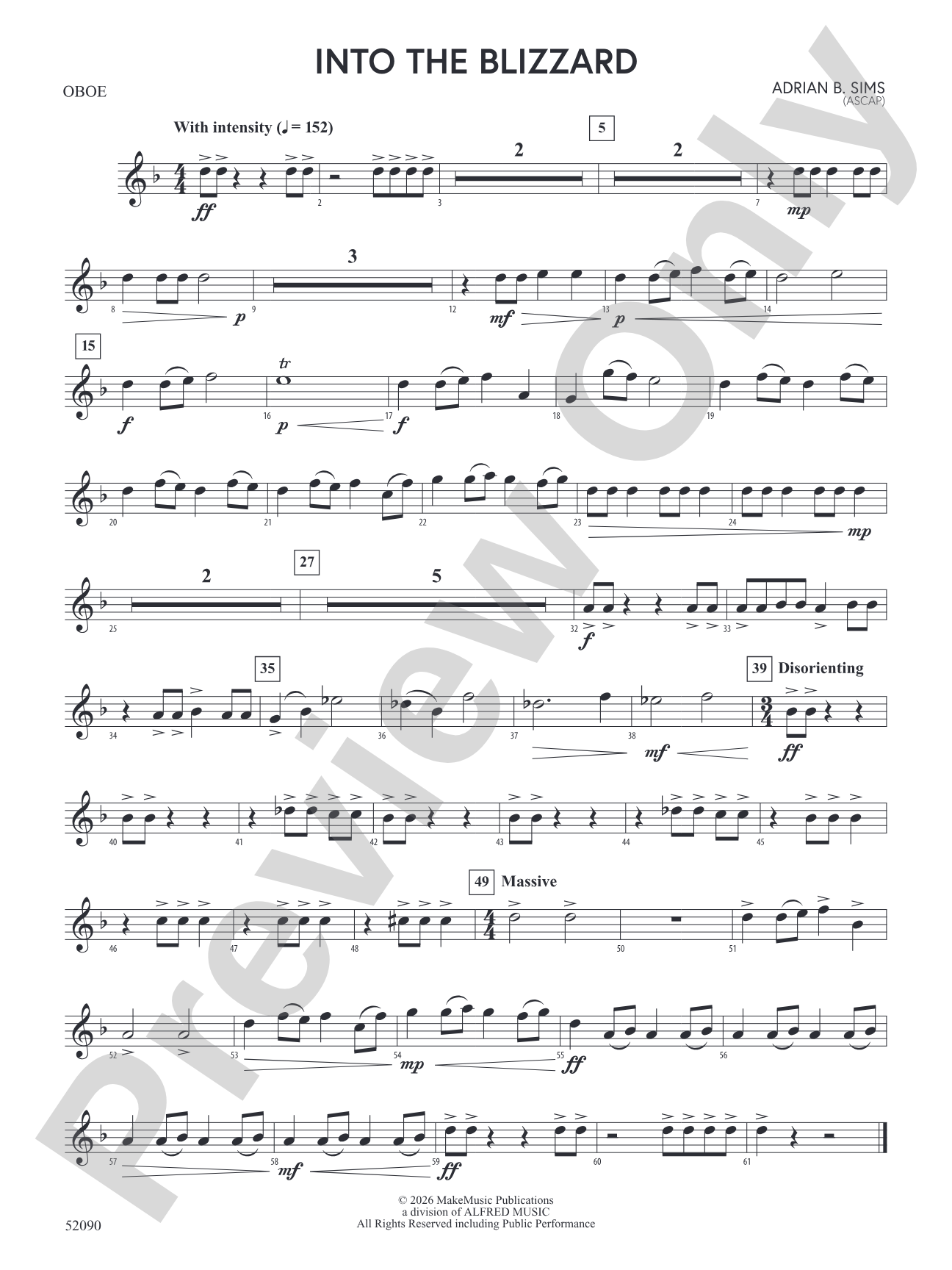
What better way to end your winter concert than with an icy blizzard adventure? Experience a chaotic storm with strong winds and avalanches that make it hard to tell up from down. A harmonically interesting work with engaging percussion throughout and very approachable meter changes, Into the Blizzard by Adrian B. Sims is one blizzard adventure that will have students excited about coming to school! (1:30)

Don't just read it, hear it, play along with it, and watch your students grow with it. In MakeMusic Cloud, Into the Blizzard: Oboe comes alive with professional accompaniment, adjustable tempo, and built-in practice tools that turn solo practice into real progress.

Sample Audio
0:00
0:00
Sample Video
Additional Details
Series: MakeMusic Developing Band
Publisher: MakeMusic Publications
SKU: 00-PC-0019806_O1

More about this title

About the Composer: Adrian B. Sims

Adrian B. Sims

Adrian B. Sims was born in Seattle in 2000 and developed his musical training in Catonsville, Maryland, where he graduated from Catonsville High School in 2018. His compositions have earned recognition at The Midwest Band and Orchestra Clinic and placement on the Bandworld Top 100 List, and he has won multiple composition competitions including the Maryland Music Educators Association Young Composers Project and the Make Music Young Composers Contest.

Currently pursuing a dual degree in Music Education and Composition at The University of Maryland, Sims studies composition with Dr. Robert Gibson and has been mentored by world-renowned composer Brian Balmages. As a trombonist, he performs in the university's top ensembles and has extensive experience in concert bands, jazz ensembles, pit orchestras, and symphony orchestras, including performances alongside the Baltimore Symphony Orchestra.

Why we love this

Sims captures the chaos and wonder of a winter storm with harmonically sophisticated writing that never feels overstuffed for a young band. The meter changes are genuinely musical rather than merely technical; students experience them as natural shifts in the storm's intensity rather than reading exercises. A 1:30 work this engaging at Grade 1.5-2 is rare.

What to expect

The piece tumbles forward with swirling energy, painting a vivid winter landscape where you feel wind pressure and lose your sense of balance. Percussion colors throughout suggest snow falling, wind howling, and the rumble of avalanches, while the harmonic language creates an impressionistic sense of being caught in the storm's chaos.

Who it's for

Grade 1.5-2 concert bands looking for a winter concert closer that generates genuine student enthusiasm. Directors seeking approachable yet musically substantive repertoire will find Sims's writing rewarding for both ensemble and audience.

How to get the most out of it

  • Lock in the percussion section early. The engagement Sims creates depends on rhythmic clarity across the battery; drill the parts independently before full ensemble rehearsal.
  • Shape the dynamic swells to suggest wind gusts building and subsiding. Avoid playing at full volume throughout; let the crescendos create the storm's drama.
  • Balance the harmonically interesting moments by letting each section hear what surrounds them. These passages reward careful blend work in sectionals.
  • Treat meter changes as breathing moments rather than stumbling blocks. A steady conductor beat and clear prep will help students feel the pulse shift naturally.

How to use it

Anchor the second half of a winter concert with this 1:30 adventure. Its festive winter theme and high-energy ending provide the perfect contrast to slower, reflective pieces while remaining accessible enough that rehearsal time stays efficient during the busy December season.

Skills your students will build

  • Reading meter changes (transition between time signatures) with confidence
  • Balancing harmonic interest across the ensemble
  • Responding to dynamic shape and expressive phrasing
  • Maintaining ensemble cohesion during rhythmically complex passages
  • Listening to percussion as structural and textural anchor

You May Also Like