
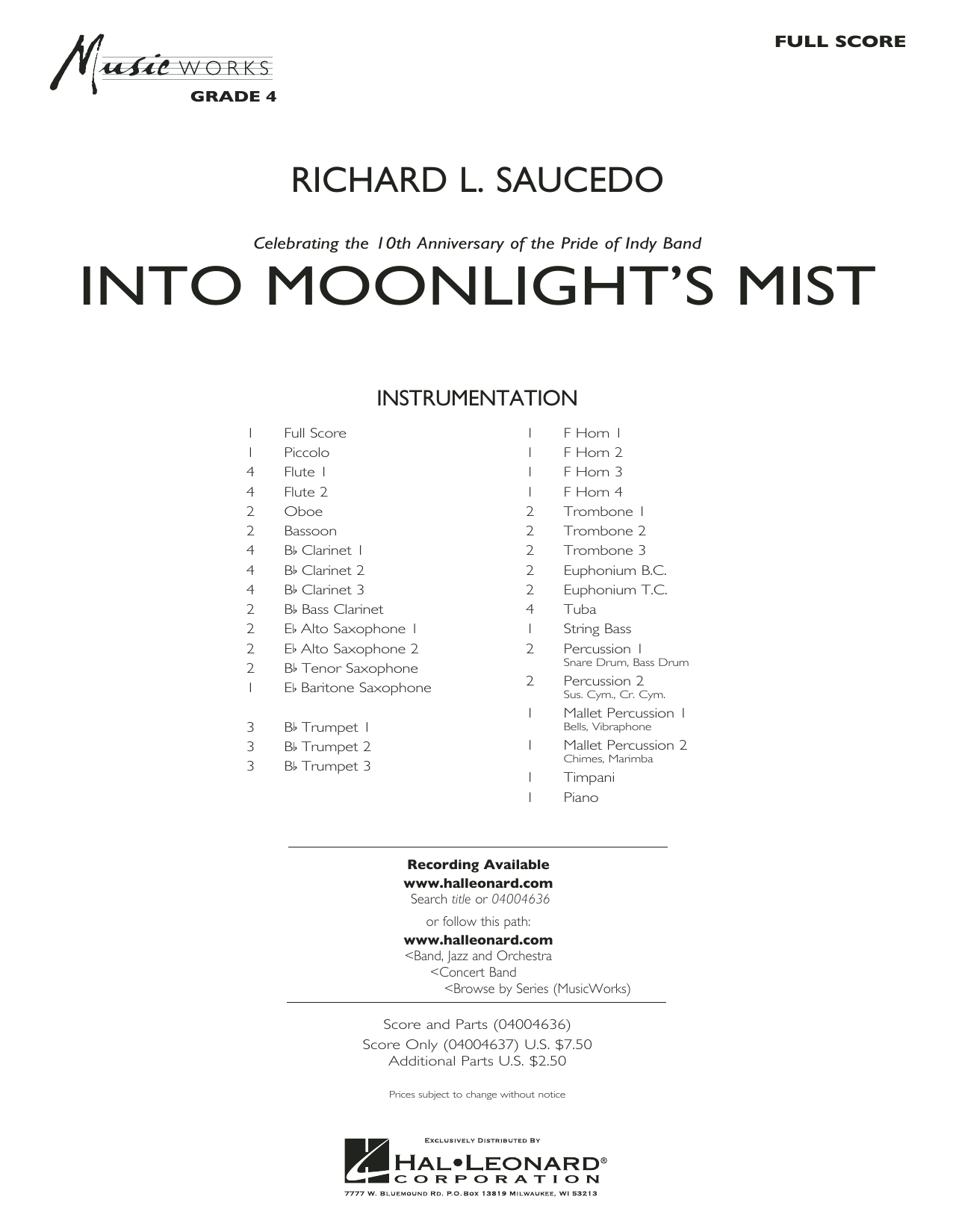

Into Moonlight's Mist: Concert Band Conductor Score & Parts
By Richard L. Saucedo
Grade: 4
Item: 35-PK00331815
$75.00
Pickup currently not available
Buy Extra Parts (Digital PDF Download)
Parts Added to Cart!
Description
Drawing inspiration from the haunting beauty of the ring of mist that sometimes surrounds the moon (known as "lunar halo") and also the legends and folklore associated with this phenomenon, Richard has created a masterful work for the concert stage. "Into Moonlight's Mist" opens quietly with transparent colors, then gradually builds and evolves throughout by adding layers of tonal richness and rhythmic intensity. Dur: 4:30


Into Moonlight's Mist: Concert Band Conductor Score & Parts isn't in MakeMusic Cloud just yet...but it could be. Let us know you'd like to see it, and you'll help shape what comes next. In the meantime, start a free trial and dive into thousands of interactive titles your students can play along with today.
Request This Title
Tell us you want it.
Start Your Free Trial
Explore everything that's ready to play right now.
Sample Audio
No sample audio found.
Sample Video
No sample videos found.
Additional Details
Publisher:
Hal Leonard
SKU:
35-PK00331815
More about this title
About the Composer: Richard L. Saucedo
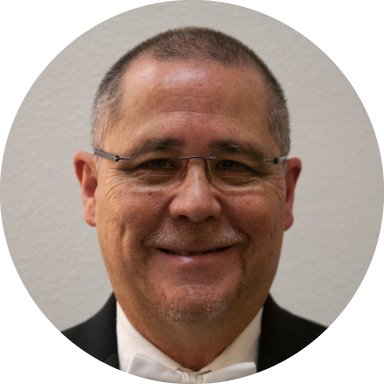
Richard L. Saucedo built one of the most successful band programs in American public education. During his 31 years as Director of Bands at Carmel High School in Indiana, his ensembles earned state, regional, and national recognition across concert, jazz, and marching categories. The Carmel Wind Symphony I performed at the Music for All National Concert Band Festival three times and claimed the Indiana State Championship in 2013, while the Marching Greyhounds achieved the distinctive honor of winning a BOA National Championship in 2005 while simultaneously performing at the Midwest Clinic that same year.
Saucedo's leadership extended far beyond his high school. He was named Indiana's Bandmaster of the Year in 1998-99 and Outstanding Music Educator in 2010, then inducted into the Music for All Hall of Fame in 2015 and the Drum Corps International Hall of Fame in 2022. As brass arranger and composer for the Cavaliers Drum and Bugle Corps, he contributed to five DCI world championships. Today he works as a freelance arranger and composer for multiple ensembles, serves as music ensemble coordinator for the Blue Devils, and functions as a Senior Educational Consultant for Music for All.
Why we love this
Saucedo understands exactly how to sustain audience attention over four and a half minutes without relying on technical fireworks. The piece builds organically from whisper-quiet opening through carefully layered orchestration, giving conductors a clear roadmap for shaping dynamic and timbral growth. At Grade 4, this sits in the sweet spot where ensemble maturity meets accessibility—students experience the satisfaction of performing a concert-quality work that rewards careful listening.
What to expect
Nocturnal and contemplative at first, as if you are standing in darkness and slowly becoming aware of light and texture around you. The gradual accumulation of voices and rhythmic activity creates mounting emotional intensity without ever abandoning the work's central mystery and quietude.
Who it's for
Bands ready to program serious concert music without requiring virtuosic technical demands. This works equally well for festival performance or concert programming, and it rewards the kind of patient, attentive rehearsal that develops musicianship across all level players.
How to get the most out of it
- Start with the thinnest possible sonority. Resist the urge to fill out harmonies in the opening section; the transparency is intentional and creates the spaciousness that makes later sections feel rich.
- Map the architecture before rehearsal begins. Identify the four or five key moments where new material enters or the texture shifts, then use those landmarks in sectionals so students understand how their parts contribute to the overall architecture.
- Let the rhythm section settle into the pulse before entering new thematic material. A centered, unhurried foundation makes the gradual addition of layers feel inevitable rather than tentative.
- Bring out the harmonic color changes that accompany the building intensity. As the piece expands, Saucedo shifts tonal centers deliberately; balance your blend so these shifts register as intentional compositional moves rather than accidents.
How to use it
Pair this with lighter or more energetic pieces to showcase your band's dynamic range and interpretive depth. The four-and-a-half minute duration fits neatly into festival schedules or concert slots where you want a showcase work that demonstrates ensemble maturity and musical sensitivity.
Skills your students will build
- Long-form phrasing and sustaining musical line through gradual dynamic and timbral changes
- Ensemble balance and blending as texture shifts from sparse to rich orchestration
- Listening for harmonic movement and tonal center shifts
- Patience and control in building intensity over extended passages rather than jumping to climax
- Sectional independence while maintaining overall ensemble cohesion