Interplay: 1st Percussion Sheet Music Preview

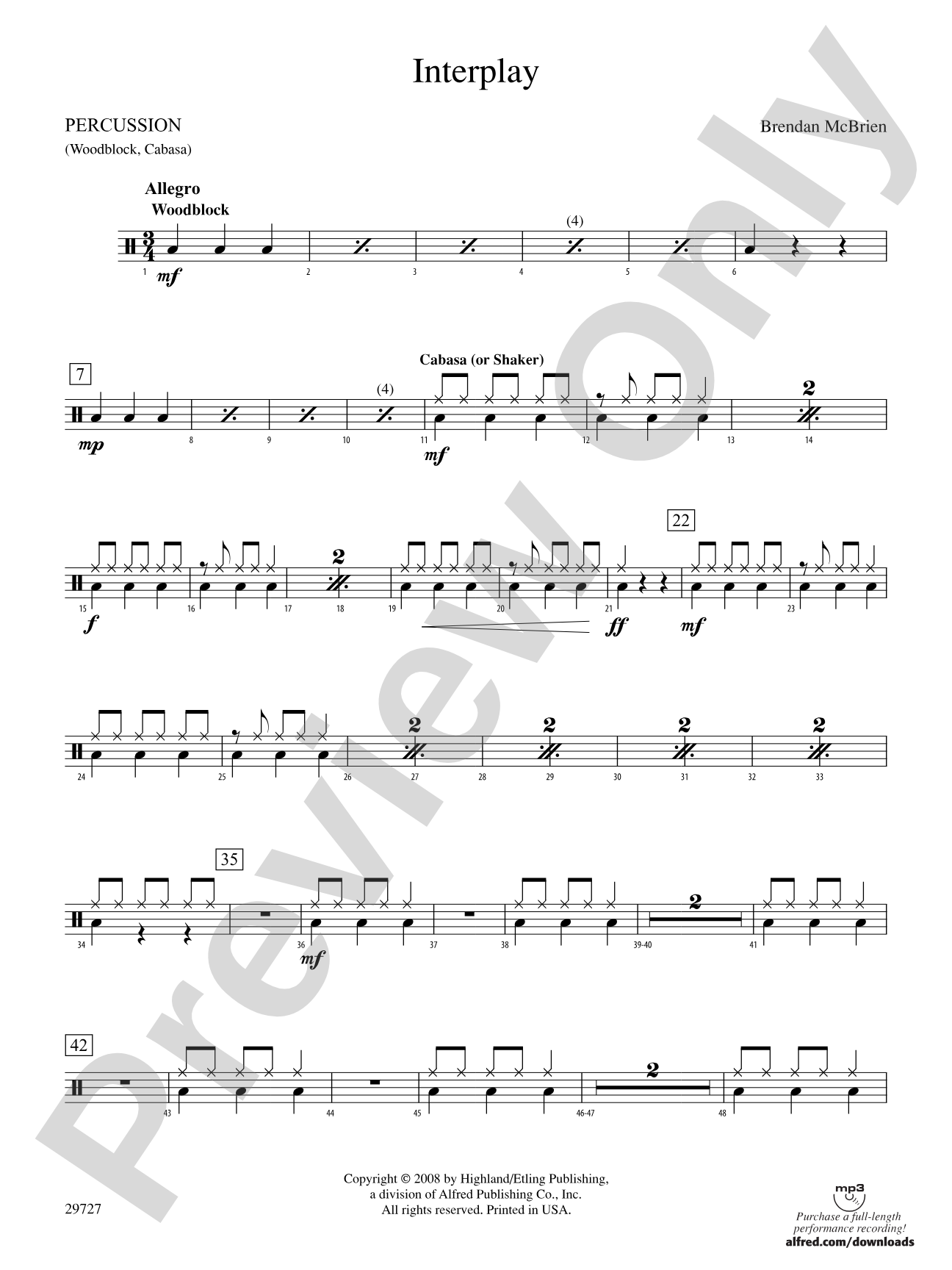
Interplay: 1st Percussion

By Brendan McBrien

Grade: 3

Item: 00-PC-0001580_PC1

Digital Download
$5.99
Description
Performers and audiences alike will enjoy the varied colors and counterpoint in this energetic work. Interplay, as the name implies, features the interaction of various melodic and rhythmic elements arranged above a cello and bass ostinato. Tonalities shift from major to minor adding to the challenge and excitement! (3:30)

Don't just read it, hear it, play along with it, and watch your students grow with it. In MakeMusic Cloud, Interplay: 1st Percussion comes alive with professional accompaniment, adjustable tempo, and built-in practice tools that turn solo practice into real progress.

Sample Audio
0:00
0:00
Sample Video
Additional Details
Series: Highland/Etling String Orchestra
Publisher: Alfred Music
Page Count: 132
SKU: 00-PC-0001580_PC1

More about this title

About the Composer: Brendan McBrien

Brendan McBrien

Brendan McBrien began his musical journey in 4th grade as a French horn player in Sunnyvale, California. He earned both his bachelor's and master's degrees in music composition and conducting from California State University, Long Beach, and spent more than three decades performing French horn professionally with orchestras in the Los Angeles and Orange County regions, including work for symphony, television, and film productions.

McBrien's compositions and arrangements for band and orchestra have been performed internationally and published by Alfred, Kendor, Kjos, and Wingert-Jones Music Companies. He has served four terms on the board of the Southern California School Band and Orchestra Association, works as an adjudicator and clinician, and has taught at Rancho San Joaquin Middle School in Irvine since 1988, where he directs both bands and orchestras. He also teaches music arranging at California State University, Long Beach.

Why we love this

McBrien writes with a clear understanding of what middle school string orchestras can accomplish. The ostinato foundation gives young musicians a solid anchor while the shifting tonalities and layered melodic material above keep players engaged without requiring advanced technical facility. The three-and-a-half-minute runtime and energetic character make this an ideal closer for a concert or festival performance.

What to expect

Interplay has the rhythmic forward momentum of an energetic scherzo, with constantly shifting colors as instruments trade melodic material above the steady pulse of the low strings. The move between major and minor tonalities adds harmonic intrigue, creating a piece that feels both accessible and musically rewarding.

Who it's for

String orchestra directors working with Grade 3 ensembles who want a piece with real compositional substance and energetic appeal. Students benefit from the clear structural framework of the ostinato while developing independence as the melodic lines demand focused attention.

How to get the most out of it

  • Balance the cello and bass ostinato clearly so it remains audible beneath the melodic interplay; this foundation drives the entire piece.
  • Mark the tonality shifts from major to minor in your parts or score so students understand the harmonic architecture and can adjust their tone quality appropriately.
  • Encourage consistent bow contact during the rhythmic figures to clarify the counterpoint without sacrificing legato where it matters.
  • Take the tempo at a pace that allows the various sections to articulate their material without rushing; clarity is more important than speed here.

How to use it

Program this as a closing number on a concert to showcase your orchestra's ensemble cohesion and rhythmic precision. The varied textures and reasonable length make it equally effective in festival competition settings where you want to leave adjudicators with a strong impression of musicality and control.

Skills your students will build

  • Balancing multiple melodic lines while maintaining a steady ostinato foundation
  • Reading and executing tonality shifts between major and minor without losing intonation
  • Coordinating rhythmic figures across different sections with clarity and precision
  • Listening for and responding to textural and color changes within a single piece

You May Also Like