Intermezzo, Op. 117, No. 3 Sheet Music Preview

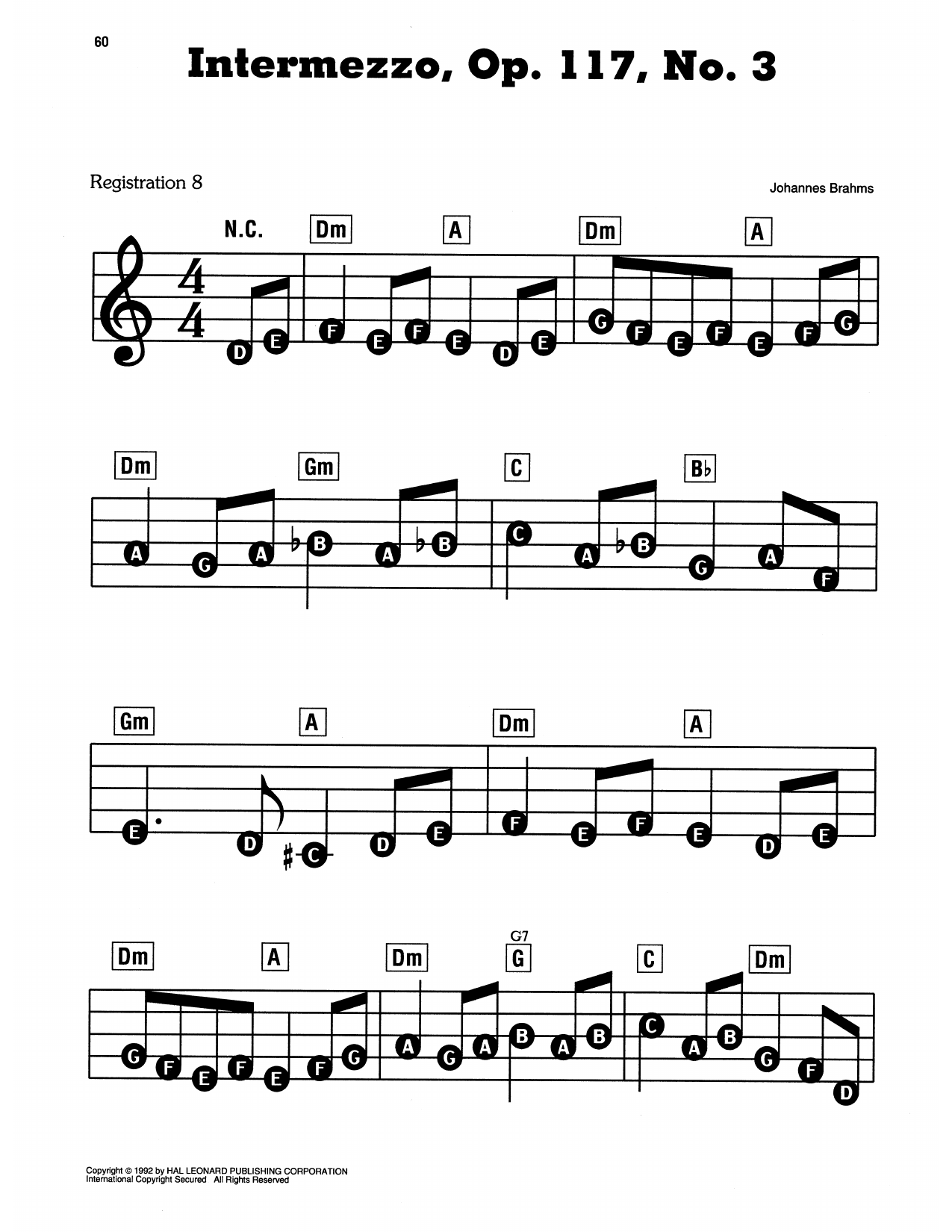
Intermezzo, Op. 117, No. 3: E-Z Play Today

By Johannes Brahms

Item: 35-DS01874725

Digital Download
$4.99
Description

Intermezzo, Op. 117, No. 3: E-Z Play Today isn't in MakeMusic Cloud just yet...but it could be. Let us know you'd like to see it, and you'll help shape what comes next. In the meantime, start a free trial and dive into thousands of interactive titles your students can play along with today.

Sample Audio
No sample audio found.
Sample Video
Additional Details
Publisher: Hal Leonard
Page Count: 2
SKU: 35-DS01874725

More about this title

About the Composer: Johannes Brahms

Johannes Brahms (1833–1897) shaped the future of piano literature through works that balanced Romantic expression with Classical rigor. His three Intermezzos, Op. 117, represent the reflective side of his compositional voice: intimate character pieces that reward thoughtful interpretation and patient practice.

Why we love this

The E-Z Play Today edition makes this gem accessible to students who might otherwise encounter only simplified versions or wait years to reach it at an advanced level. Brahms's lyrical voice here speaks clearly without compromise, so learners hear the real compositional architecture while building genuine musicianship.

What to expect

A quiet conversation between old friends. The piece unfolds with gentle melancholy and understated warmth, inviting the listener into an intimate space where every note carries weight and intention.

Who it's for

Intermediate pianists seeking substantial material beyond etude collections, and teachers looking for repertoire that develops musicianship alongside technical facility. This edition opens Brahms to students who grasp harmonic language and phrase structure but need accessible notation.

How to get the most out of it

  • Shape the melodic line through subtle dynamic gradations rather than sudden changes; Brahms expects the pianist to sing through the fingers.
  • Attend to the harmonic rhythm and let it breathe. The pacing of chord changes often guides phrasing more accurately than bar lines.
  • Balance the right hand melody against accompaniment figuration carefully; the supporting voices should recede without disappearing.

How to use it

Pair this with other solo piano repertoire in a student recital to showcase maturity and interpretive depth without overwhelming a developing performer. Its concise two-page format fits comfortably into a mixed program while commanding genuine attention.

Skills your students will build

  • Sustaining lyrical phrasing across longer phrases without losing connection
  • Balancing melody and accompaniment textures
  • Interpreting Romantic era rubato and expression marks thoughtfully
  • Voice leading awareness through harmonic progression
  • Dynamic control at softer dynamic levels (p and pp)

You May Also Like