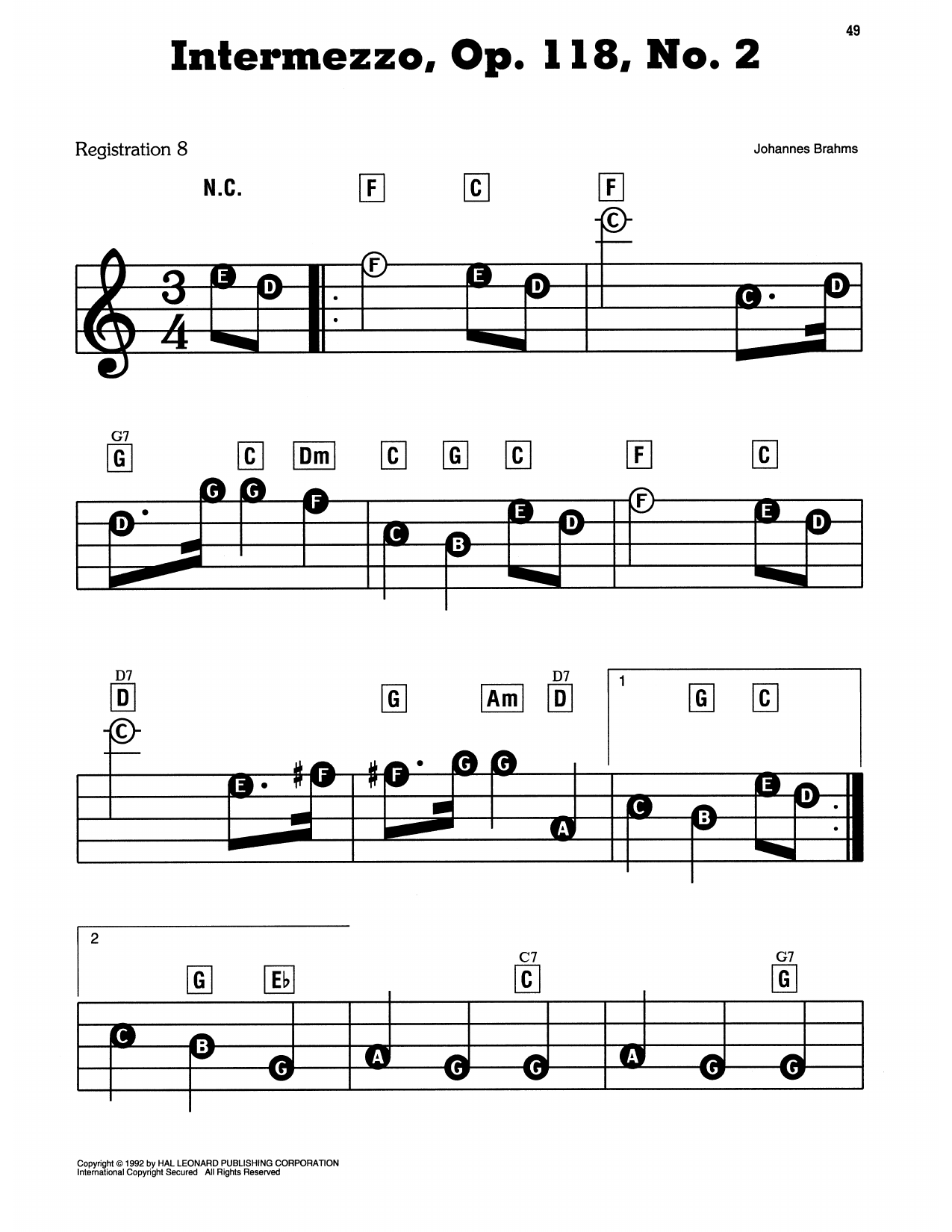
Intermezzo In A Major, Op. 118, No. 2 Sheet Music Preview

Intermezzo In A Major, Op. 118, No. 2: E-Z Play Today

By Johannes Brahms

Item: 35-DS01874728

Digital Download
$4.99
Description

Intermezzo In A Major, Op. 118, No. 2: E-Z Play Today isn't in MakeMusic Cloud just yet...but it could be. Let us know you'd like to see it, and you'll help shape what comes next. In the meantime, start a free trial and dive into thousands of interactive titles your students can play along with today.

Sample Audio
No sample audio found.
Sample Video
Additional Details
Publisher: Hal Leonard
Page Count: 3
SKU: 35-DS01874728

More about this title

About the Composer: Johannes Brahms

Johannes Brahms (1833–1897) composed across every major genre except opera, establishing himself as a bridge between the Romantic era and modern classical music. His chamber works and solo pieces for piano reveal a composer obsessed with counterpoint, thematic development, and emotional depth, qualities that made him one of the most influential figures in 19th-century music education and performance.

Why we love this

This E-Z Play edition of one of Brahms's most beloved late character pieces opens the door to his sophisticated harmonic language without requiring advanced technique. The three-page format feels manageable for intermediate pianists, yet the piece carries genuine emotional weight and the kind of refined lyricism that rewards careful listening in any recital or intimate gathering.

What to expect

Warm and introspective, with a gentle forward motion that feels unhurried. The piece speaks with quiet sophistication, balancing a singing melodic line against subtle harmonic movement that reveals new colors with each hearing.

Who it's for

Intermediate pianists ready to explore Brahms beyond simplified arrangements, and teachers seeking repertoire that sounds elegant in a recital or wedding context without excessive technical demands. This edition also works for adult amateur pianists returning to classical music.

How to get the most out of it

  • Honor the ternary form by making the opening A section feel distinct from the contrasting B section; the clarity of structure will help audiences hear what makes this piece memorable.
  • Let the melody breathe in the outer sections rather than pushing the tempo forward; Brahms's writing rewards a slightly spacious approach.
  • Shape the dynamic contours in small increments, building and releasing tension phrase by phrase rather than in broad gestures.
  • Pedal thoughtfully to enhance harmonic color without muddying the texture; the E major tonality benefits from resonance but not wash.

How to use it

Pair this with other Brahms intermezzos or character pieces to create a recital focused on his later solo piano works, or use it as an elegant interlude in a mixed program. It also serves beautifully as processional or recessional music for ceremonies that call for something refined but not overly formal.

Skills your students will build

  • Singing tone production in the right hand while maintaining independence from the accompaniment
  • Harmonic awareness through voice-leading across implied chord progressions
  • Pedal control and discretion in Romantic-era sonorities
  • Structural listening and understanding of ternary form
  • Phrasing and rubato appropriate to late 19th-century style

You May Also Like