Intermezzo (from Cavalleria Rusticana): 1st F Horn Sheet Music Preview

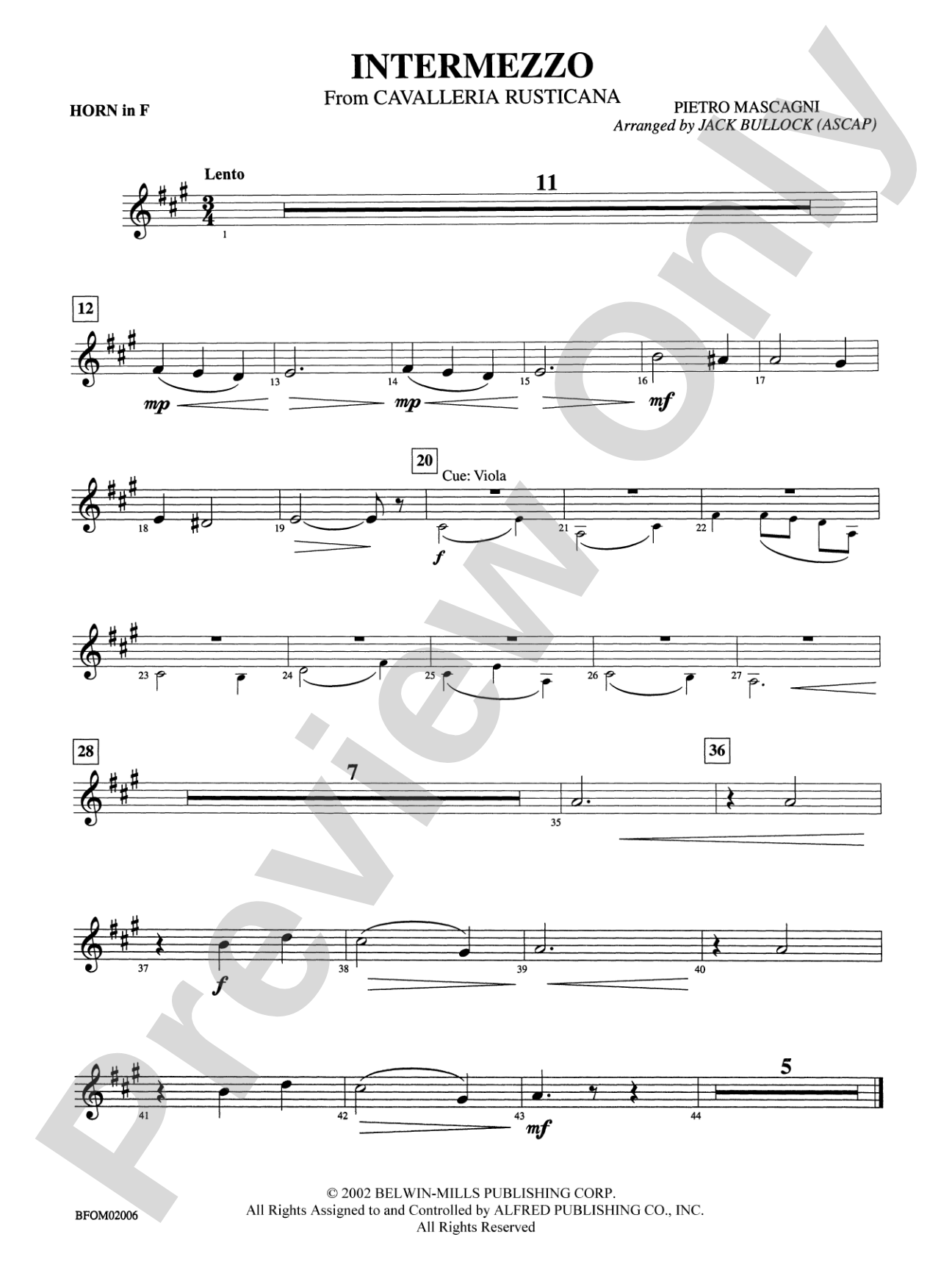
Intermezzo (from Cavalleria Rusticana): 1st F Horn

By Pietro Mascagni / arr. Jack Bullock

Grade: 2.5

Item: 00-PC-0002232_H1

Digital Download
$3.00
Description
From Cavalliaria Rusticana by Pietro Mascagni, this beautiful ballad contains flowing melodic material that is reinforced with varied textures in the optional wind parts. Dynamic shadings contribute to the charm and character of the work. A delightful arrangement indeed. (2:22)

Don't just read it, hear it, play along with it, and watch your students grow with it. In MakeMusic Cloud, Intermezzo (from Cavalleria Rusticana): 1st F Horn comes alive with professional accompaniment, adjustable tempo, and built-in practice tools that turn solo practice into real progress.

Sample Audio
No sample audio found.
Sample Video
Additional Details
Series: Belwin Intermediate Full Orchestra
Publisher: Alfred Music
Page Count: 108
SKU: 00-PC-0002232_H1

More about this title

About the Composer: Pietro Mascagni

Pietro Mascagni (1863-1945) burst onto the musical scene with Cavalleria Rusticana, a one-act opera that won the prestigious Sonzogno competition in 1890 and became one of the most frequently performed operas worldwide. Though he composed numerous other works across multiple genres, this single opera secured his legacy and remains the gateway through which most musicians first encounter his gift for direct, emotionally resonant melody.

Mascagni's style exemplifies the verismo movement, which sought to bring operatic storytelling closer to everyday life and human experience. His melodies sing naturally, his harmonies support rather than overwhelm, and his orchestration serves the drama. These qualities make the Intermezzo particularly valuable in education: it teaches young musicians how sophisticated music can be while remaining accessible.

Why we love this

The Intermezzo works as a concert staple precisely because it delivers lyrical beauty without technical excess. Jack Bullock's arrangement maintains the piece's essential character while calibrating the orchestration so that every section gets meaningful material; the optional wind parts mean you can shape the texture to match your ensemble's strengths rather than fighting against a fixed voicing.

What to expect

Warmth and gentle nostalgia. The Intermezzo breathes like a character pausing in reflection, with lyrical lines that unfold naturally and harmonies that feel both familiar and slightly colored by the minor-key inflections typical of Italian opera. The optional textures allow conductors to shape an orchestration that feels either intimate or fuller depending on the moment.

Who it's for

Intermediate orchestras with solid string sections and reliable wind players. The 2.5 grade level keeps technical demands reasonable while the Romantic masterwork context gives students exposure to real repertoire with concert credibility.

How to get the most out of it

  • Shape the main melody with long-line phrasing that respects the singing quality Mascagni wrote into this material; treat dynamic shadings not as sudden shifts but as gentle contours that keep listeners engaged.
  • Balance the optional wind parts carefully during rehearsal. If you include them, ensure they enhance rather than crowd the flowing textures. A brief run-through with and without clarifies the sonic difference.
  • Anchor the accompaniment with steady support from lower strings and horns so the melody floats naturally. Avoid the trap of playing too loosely simply because the piece feels songlike.

How to use it

This is an excellent choice for mid-season or spring concerts where you want to balance heavier or more contemporary works with something audiences recognize immediately. It also pairs well in a program exploring opera arrangements or Romantic-era orchestral music, and its 2:22 duration makes it ideal as a lighter companion to a longer piece.

Skills your students will build

  • Singing sustained melodic lines across phrase boundaries
  • Balancing solo material with accompaniment texture
  • Responding to dynamic shading that creates emotional shape without tempo changes
  • Listening to optional parts and adjusting ensemble balance accordingly

You May Also Like