
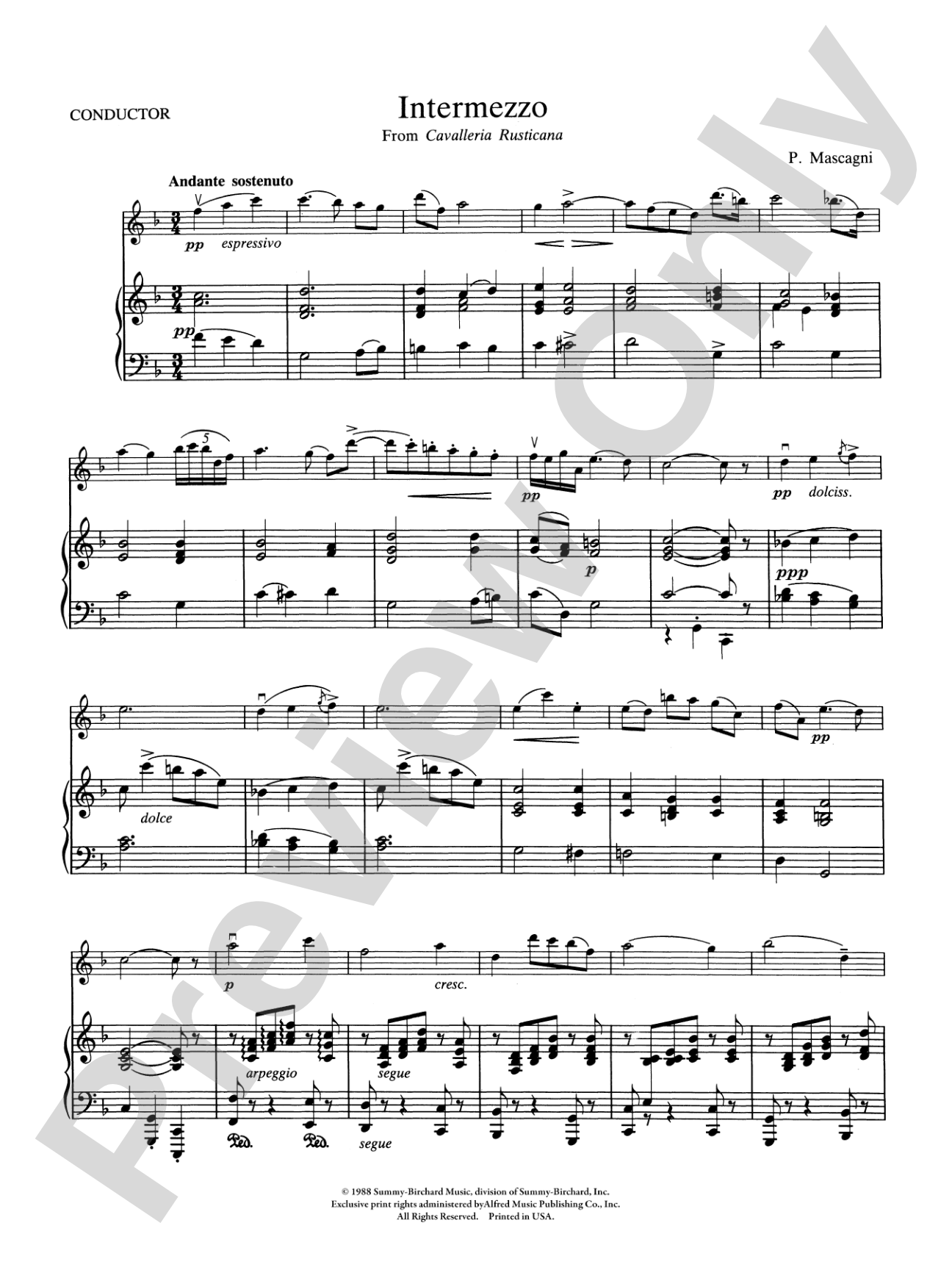
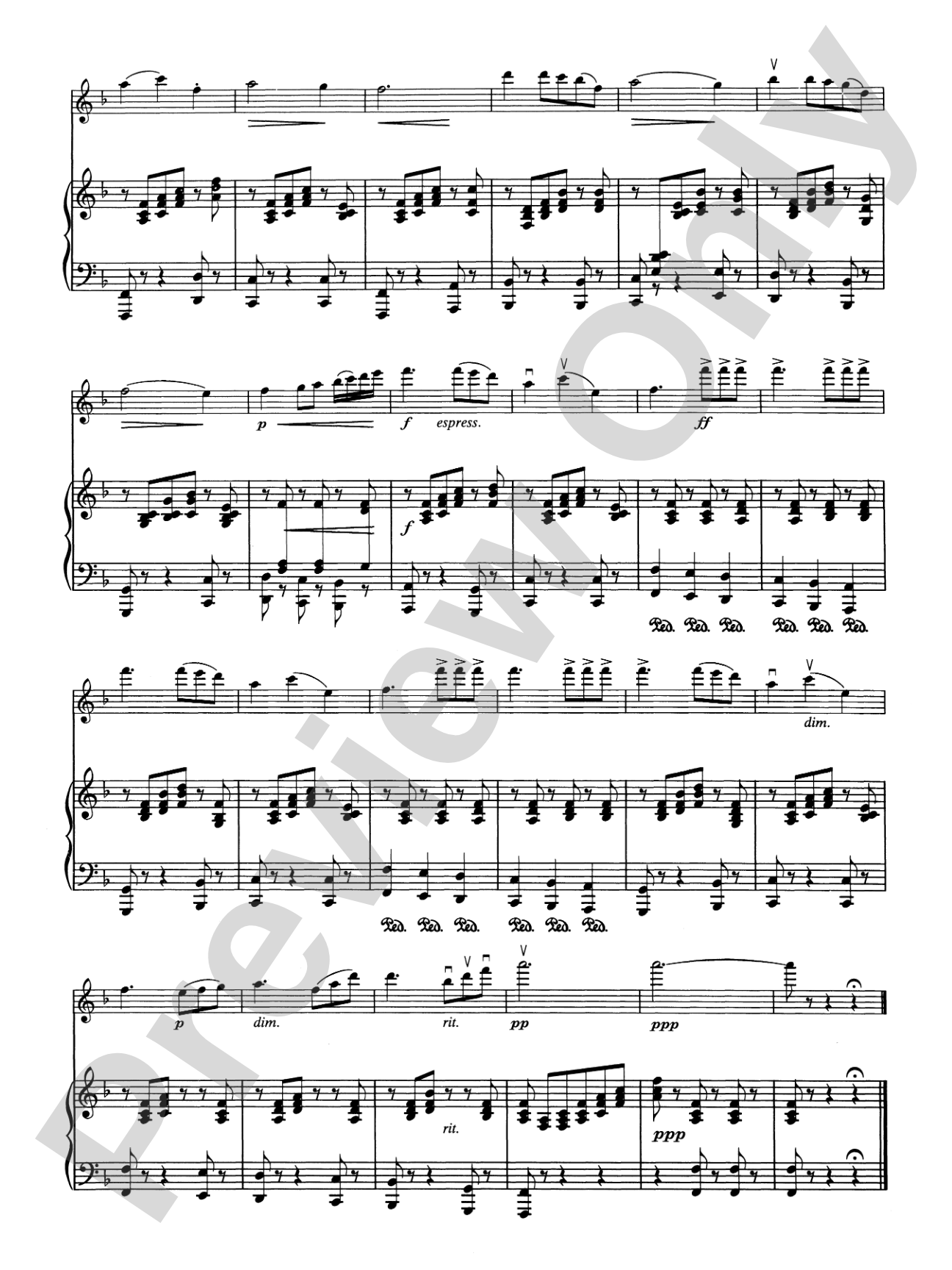

Intermezzo from Cavalleria Rusticana: String Orchestra or Violin Groups with Piano
By Pietro Mascagni / arr. William and Constance Starr
Grade: 2 1/2
Item: 00-PK-0005007

$15.99
Pickup currently not available
Buy Extra Parts (Digital PDF Download)
| Product | Price | Quantity |
|---|---|---|
| Intermezzo from Cavalleria Rusticana: Score | $8.00 | |
| Intermezzo from Cavalleria Rusticana: 1st Violin | $7.99 | |
| Intermezzo from Cavalleria Rusticana: 2nd Violin | $7.99 | |
| Intermezzo from Cavalleria Rusticana: Viola | $7.99 | |
| Intermezzo from Cavalleria Rusticana: Cello | $7.99 |
Parts Added to Cart!
Related Items
Intermezzo from Cavalleria Rusticana: String Orchestra or Violin Groups with Piano |
$15.99
|
View |
Description
These Sounds of the Symphony arrangements are intended to enrich the repertoire of Suzuki violin groups. Teachers are using these arrangements both for the enjoyment and musical development of the children and the welcome variety to the programming of group performances.


Don't just read it, hear it, play along with it, and watch your students grow with it. In MakeMusic Cloud, Intermezzo from Cavalleria Rusticana: String Orchestra or Violin Groups with Piano comes alive with professional accompaniment, adjustable tempo, and built-in practice tools that turn solo practice into real progress.
Open in the Player
Jump straight in and assign it today.
Start Your Free Trial
Open this title and explore the full library in minutes.
Sample Audio
No sample audio found.
Sample Video
No sample videos found.
Additional Details
Series:
Sounds of the Symphony Series
Publisher:
Alfred Music
Page Count:
60
SKU:
00-PK-0005007
Instrumentation:
String Orchestra or Violin Groups with Piano
More about this title
About the Composer: Pietro Mascagni
Pietro Mascagni (1863-1945) composed one of opera's most performed one-act works, Cavalleria Rusticana, at age 26. The opera's immediate international success established him as a major figure of the Italian verismo movement, which brought raw emotion and contemporary settings to operatic stages. Though he composed numerous other operas and instrumental works throughout his career, Cavalleria Rusticana remained his signature achievement and continues to anchor opera repertoire worldwide.
The Intermezzo from Cavalleria Rusticana has become a concert staple far beyond opera houses. Its lyrical melody and emotional directness make it particularly valuable for music educators seeking repertoire that connects young musicians to the operatic tradition without requiring vocal training or a full orchestra.
Why we love this
Mascagni's melodic gift shines through in this arrangement without overwhelming young ensemble players. The piece balances immediate musical gratification with the kind of subtle phrasing and dynamic control that rewards focused rehearsal, making it genuinely rewarding to conduct and play at this level.
What to expect
Warm and deeply expressive, with the quality of a intimate conversation rather than grand spectacle. The melody carries a wistful longing that captures something essential about Italian Romantic sensibility, inviting young players into mature emotional territory they can genuinely understand.
Who it's for
Suzuki violin students around Grade 2.5 who are ready to explore repertoire beyond the core method books. This arrangement works well for mixed-ability ensemble settings where some students may be slightly ahead or behind, since the parts can accommodate flexible grouping.
How to get the most out of it
- Allow the opening melody to breathe; resist the urge to rush into the lyrical passages. A slightly generous tempo gives younger violinists time to shape their phrases without sounding hurried.
- Balance the piano part as a true partner rather than mere accompaniment. The keyboard should support without drowning the string lines, especially during the more introspective sections.
- Shape the dynamic arc as one continuous gesture rather than isolated swells. This creates the sense of forward motion that gives the Intermezzo its dramatic character.
- Work the unison passages with particular attention to bow synchronization among the violin groups. Matching attack and release points strengthens ensemble cohesion and sharpens the piece's emotional impact.
How to use it
Program this as a concert centerpiece for a Suzuki group performance, where its operatic origins and accessible beauty will engage families and elevate the occasion without requiring the orchestral forces of the original. It also serves beautifully in mixed-repertoire settings, bridging contemporary Suzuki selections and classical masterworks.
Skills your students will build
- Sustained legit phrasing in moderate tempo
- Dynamic shaping within a single melodic line
- Ensemble coordination across violin groups
- Listening to and balancing with piano accompaniment
- Expressive vibrato control in lyrical passages
- Coordinated bow changes to support musical phrases