
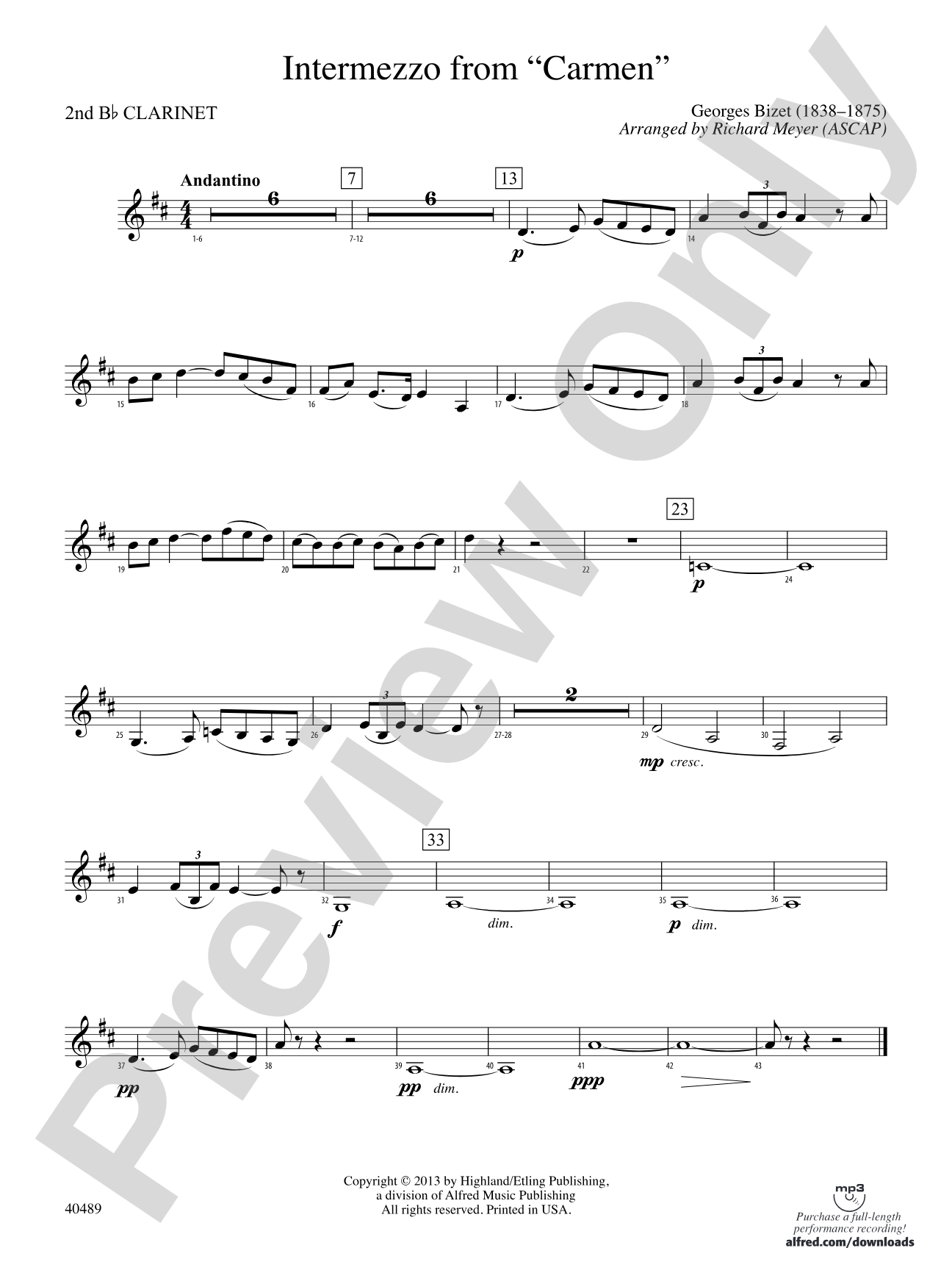

Intermezzo from Carmen: 2nd B-flat Clarinet
By Georges Bizet / arr. Richard Meyer
Grade: 2
Item: 00-PC-0016021_C2
$3.00
Pickup currently not available
Description
This gentle and beatifically melodic selection is the perfect way for your students to develop a sensitive, legato playing style. Suggesting the cool mountain air of an evening in Spain, this intermezzo opens Act II of Bizet's operatic masterpiece with a lyrical flute solo that is eventually taken up by the entire orchestra. Mature-sounding and faithful to the composer's original, the colorful orchestration is sure to keep all sections interested. The piano accompaniment part can be played by harp (as in the original version) or a keyboard with harp setting.
This title is available in MakeMusic Cloud.


This title is available in MakeMusic Cloud.
Don't just read it, hear it, play along with it, and watch your students grow with it. In MakeMusic Cloud, Intermezzo from Carmen: 2nd B-flat Clarinet comes alive with professional accompaniment, adjustable tempo, and built-in practice tools that turn solo practice into real progress.
Open in the Player
Jump straight in and assign it today.
Start Your Free Trial
Open this title and explore the full library in minutes.
Sample Audio
1
Audio File
--:--
0:00
0:00
Sample Video
No sample videos found.
Additional Details
Series:
Highland/Etling First Philharmonic
Publisher:
Alfred Music
Page Count:
104
SKU:
00-PC-0016021_C2
More about this title
About the Composer: Georges Bizet
Georges Bizet (1838-1875) composed Carmen, one of the most performed operas in the world, yet saw only modest success during his lifetime. A French Romantic composer trained at the Paris Conservatory, Bizet mastered orchestration with remarkable clarity and color, gifts that are on full display in the instrumental movements of Carmen. His gift for melody and his ability to blend diverse musical idioms made him a pivotal figure in 19th-century opera, though he died just months after Carmen's premiere.
For young orchestra students, Bizet offers an ideal entry point into operatic literature. His melodies are singable, his harmonies are rich but not overcomplicated, and his orchestrations invite every section to participate in the musical storytelling. Carmen remains a cornerstone of music education precisely because Bizet understood how to write music that sounds mature and emotionally resonant while remaining accessible to developing musicians.
Why we love this
This excerpt captures the lyrical heart of Carmen without requiring the vocal demands of a full operatic performance. The opening flute solo is singable enough for emerging musicians to connect with the melody immediately, and Meyer's Grade 2 arrangement respects Bizet's original orchestration while keeping technical demands reasonable. It's a genuine masterwork that sounds like a masterwork, not a simplified substitute.
What to expect
Gentle and wistful, with an almost dreamlike quality. The opening flute solo floats above soft harmonic support, creating an intimate moment despite the full orchestra texture. There's a lyrical warmth throughout that feels mature and European, yet never demands the technical sophistication of a full-orchestra showpiece.
Who it's for
Grade 2 full orchestras ready to explore operatic literature with an arrangement that honors the original while respecting their developing abilities. This works equally well for ensembles seeking contest or festival repertoire and for programs wanting to introduce students to Bizet's craft.
How to get the most out of it
- Shape the opening flute melody with gentle dynamic swells rather than playing it straight; Bizet's legato marking invites expressive phrasing that suggests the "cool mountain air" of the Spanish setting.
- Balance the harp or keyboard part carefully so it supports without overwhelming the main melodic line; the accompaniment should feel like a gentle backdrop, not a competing voice.
- Conduct with a relaxed, singing beat in the slower tempo; encourage string players especially to use full bow and maintain tone quality through longer phrases.
- Transition smoothly when the melody passes from flute to other instruments; mark these handoffs in rehearsal so each entrance feels like a natural continuation rather than a sudden shift.
How to use it
Program this as a centerpiece for a concert highlighting masterworks arranged for young orchestras, or pair it with other Latin-inspired selections for a thematic evening. Its moderate length and gentle character make it ideal for mid-concert placement, where it can provide a moment of reflection between more energetic pieces.
Skills your students will build
- Sustaining long melodic lines with consistent tone and legato articulation
- Balancing texture when the principal melody shifts between different instruments
- Playing with refined dynamic control to support legato expression
- Listening for and responding to accompaniment parts that sit beneath the main melodic line