
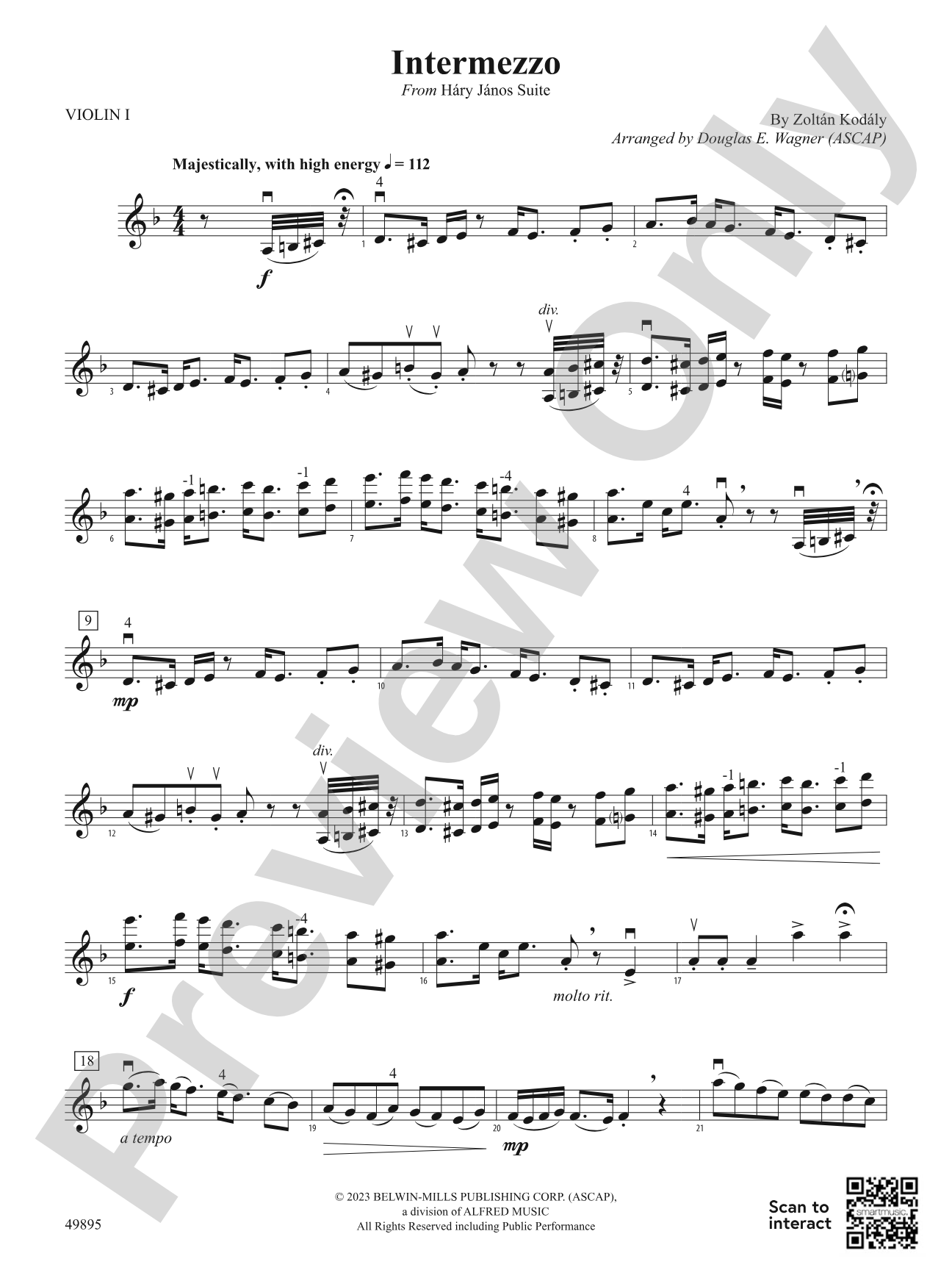

Intermezzo: 1st Violin
From Háry János Suite
By Zoltán Kodály / arr. Douglas E. Wagner
Grade: 3
Item: 00-PC-0018938_VN1
$3.00
Pickup currently not available
Description
Written in the style of a spirited Czardas, a traditional Hungarian folk dance, Intermezzo is the fifth movement of the Háry János Suite, drawn from the opera of the same name. Full of life and endless energy, the music instantly grabs the audience's attention, cheering the spirit with driving rhythms and dynamic themes. An impressive addition to any concert, the work is a worthy upper-level showpiece for spring contests. (4:30)


Don't just read it, hear it, play along with it, and watch your students grow with it. In MakeMusic Cloud, Intermezzo: 1st Violin comes alive with professional accompaniment, adjustable tempo, and built-in practice tools that turn solo practice into real progress.
Open in the Player
Jump straight in and assign it today.
Start Your Free Trial
Open this title and explore the full library in minutes.
Sample Audio
1
Audio File
--:--
0:00
0:00
Sample Video
Additional Details
Series:
Belwin Concert String Orchestra
Publisher:
Alfred Music
SKU:
00-PC-0018938_VN1
More about this title
About the Composer: Zoltán Kodály
Zoltán Kodály (1882–1967) was a Hungarian composer, ethnomusicologist, and music educator whose work fundamentally shaped how music is taught in schools. He spent decades collecting and studying authentic Hungarian folk music, which became the foundation of his compositional voice and his revolutionary approach to music pedagogy. His belief that every child deserves access to music education led him to develop the Kodály method, a system that prioritizes singing, ear training, and cultural repertoire as the core of music instruction.
Kodály's opera Háry János and its orchestral suite remain cornerstones of the string orchestra and concert band repertoire. His music distills the rhythmic vitality and melodic character of Hungarian folk traditions into works that are immediately engaging yet harmonically sophisticated, making them ideal vehicles for teaching authentic cultural expression alongside technical musicianship.
Why we love this
This arrangement captures the infectious energy of the original Czardas without demanding virtuosic technique from your players. Wagner's adaptation distributes the driving rhythms and brilliant themes across the string section in ways that build ensemble confidence and create genuine excitement on stage, making it an ideal choice when you need a piece that sounds impressive and feels rewarding to play.
What to expect
Spirited and irresistible, like a Hungarian village celebration that sweeps everyone along in its momentum. The piece radiates joy and vigor, with driving rhythms and bold melodic gestures that command attention from the opening notes and sustain energy throughout its four-and-a-half-minute arc.
Who it's for
String orchestras at the upper-intermediate level (Grade 3) looking for a concert showpiece with authentic character and proven audience appeal. Directors preparing for spring festivals and contests will find this piece delivers impressive sound and stylistic substance without requiring advanced technical facility.
How to get the most out of it
- Anchor the rhythmic drive by locking the bass line and cello parts; the pulse of this dance is everything, and a secure foundation allows your upper strings to float with confidence over the propulsive accompaniment.
- Bring out the thematic contrasts between the melodic statements and rhythmic accompaniment figures; the Czardas form demands clarity in texture, so balance accordingly rather than blending everything evenly.
- Lean into the dynamic shifts without hesitation. The score's energy comes from crisp articulation and clear contrast between the driving sections and any softer passages, so commit fully to each character change.
- Pay attention to the folk idiom's natural phrasing; Hungarian dance rhythms have their own breathing patterns that may not align with conventional bar phrasing, so listen for where the music wants to breathe and shape accordingly.
How to use it
Program this as a mid-concert spark when you need to reset the room's energy, or use it as your finale if you want to send the audience out with exuberance. It pairs well with quieter, more introspective works and sits comfortably alongside other folk-inspired repertoire, making it flexible for thematic programming around world music or dance traditions.
Skills your students will build
- Playing with rhythmic precision and ensemble cohesion in driving accompaniment patterns
- Recognizing and performing folk music idioms and stylistic inflections (Czardas rhythm and phrasing)
- Balancing melody and accompaniment textures to support thematic clarity
- Responding to dynamic contrasts and articulation changes to shape character and excitement