Intermediate Jazz Conception Tenor Saxophone Cover Image

Intermediate Jazz Conception Tenor Saxophone: Saxophone Book & Online Audio

$25.95 USD
Sale price  $25.95 USD Regular price 
Skip to product information
Intermediate Jazz Conception Tenor Saxophone Cover Image

Intermediate Jazz Conception Tenor Saxophone: Saxophone Book & Online Audio

15 Great Solo Etudes for Jazz Style and Improvisation

By Jim Snidero

Level: Intermediate - Advanced

Item: 01-ADV14781

$25.95
Shipped

One moment…

Description
Intermediate Jazz Conception is another addition to the popular series of etude books created by Jim Snidero, featuring some of the finest jazz musicians in the world. This book/audio set includes 15 etudes based on standards, modal tunes and blues, demonstrated Ted Nash on tenor sax with the incredibly swinging rhythm section of Dave Hazeltine on piano, Peter Washington on Bass and Kenny Washington on Drums. New to Intermediate Jazz Conception is an appendix dedicated to style and improvisation, including a scales syllabus, nomenclature, and over 95 lines and ideas extracted for the study of improvisation!
The recording features two separate versions of each etude; one with the soloist and rhythm section and one with the rhythm section only. Hear how the soloist performs the etudes, play with or without the soloist, and learn about both jazz style and improvisation from some of the best.

Intermediate Jazz Conception Tenor Saxophone: Saxophone Book & Online Audio isn't in MakeMusic Cloud just yet...but it could be. Let us know you'd like to see it, and you'll help shape what comes next. In the meantime, start a free trial and dive into thousands of interactive titles your students can play along with today.

Sample Pages

Sample Audio

track 1

0:00
0:00
Sample Video
Additional Details
Series: Advance Music: Intermediate Jazz Conception
Publisher: Advance Music
UPC: 805095147810
SKU: 01-ADV14781
Instrumentation: Tenor Saxophone In Bb

More about this title

About the Author: Jim Snidero
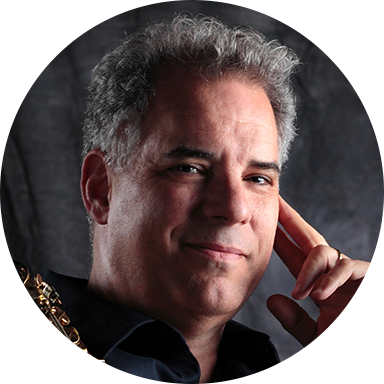
Jim Snidero

Jim Snidero has spent three decades establishing himself as a central voice in contemporary jazz. Recognized by DownBeat Magazine as both a "master musician" and "alto saxophone virtuoso," Snidero's influence extends across performing, composing, arranging, and teaching, with a 2017 DownBeat Critic's Poll placement confirming his ongoing relevance on the international stage.

Snidero's path began in Camp Springs, Maryland, where early mentorship from Phil Woods and studies at the University of North Texas (where he played in the legendary One O'Clock Lab Band) set the foundation for his career. After moving to New York in 1981, he appeared on recordings with Brother Jack McDuff, the Mingus Big Band, the Toshiko Akiyoshi Jazz Orchestra, and Frank Sinatra's Duets II, among many others. His own discography, starting with On Time (1984) and including acclaimed releases like Mixed Bag (1987) and Blue Afternoon (1989), demonstrates both stylistic range and musical consistency.

Why we love this

Snidero curated this collection with exceptional musicianship in mind. The rhythm section of Dave Hazeltine, Peter Washington, and Kenny Washington provides the kind of swinging, conversational accompaniment that makes students want to play along, and the dual-track format (with and without soloist) gives players real flexibility in how they use the material. The appendix transforms this beyond a straight etude book: the scales syllabus, nomenclature guide, and 95+ extracted lines make it a complete jazz language resource that addresses both style and improvisation simultaneously.

What to expect

Swinging and accessible, with a conversational quality that invites you into how real jazz musicians think through standards, modal tunes, and blues. The rhythm section sits in that sweet spot between supportive and demanding, never patronizing but always clear about what the form demands.

Who it's for

Intermediate to advanced tenor saxophonists who are ready to engage seriously with jazz vocabulary and improvisation. This works equally well for students preparing for jazz competitions, jazz studies programs, or simply trying to deepen their command of mainstream jazz language.

How to get the most out of it

  • Start by listening to Ted Nash's solos on the etudes multiple times before playing along. The phrasing, articulation choices, and tone production reveal how jazz conception translates from page to performance.
  • Work through the etudes in order initially, but circle back to earlier ones after you've studied the improvisation appendix. The scales syllabus will deepen your understanding of what Nash is doing harmonically and melodically.
  • Use the rhythm-section-only tracks to build your independence and time feel. Play the etude straight first, then experiment with phrasing variations once the form sits comfortably under your fingers.
  • Extract one or two of the 95 lines from the appendix each week and transpose them into all twelve keys. This cements the vocabulary into your reflexes rather than leaving it as intellectual knowledge.

How to use it

Assign etudes systematically alongside your jazz curriculum; one etude per week gives students consistent exposure to new vocabulary while the appendix supplies the theoretical framework to understand what they're playing. You might also use this as the foundation for a jazz solo recital requirement, having each student perform an etude from memory and then improvise over one of the supporting chord changes.

Skills your students will build

  • Reading and performing jazz articulation and phrasing across standards, modal tunes, and twelve-bar blues
  • Transcribing and applying jazz vocabulary from actual recorded solos
  • Understanding harmonic analysis and chord function through the scales syllabus
  • Building improvisation vocabulary systematically through extracted lines and ideas
  • Developing time feel and rhythmic independence with a professional-level rhythm section
  • Transposing jazz vocabulary into all twelve keys

You May Also Like