
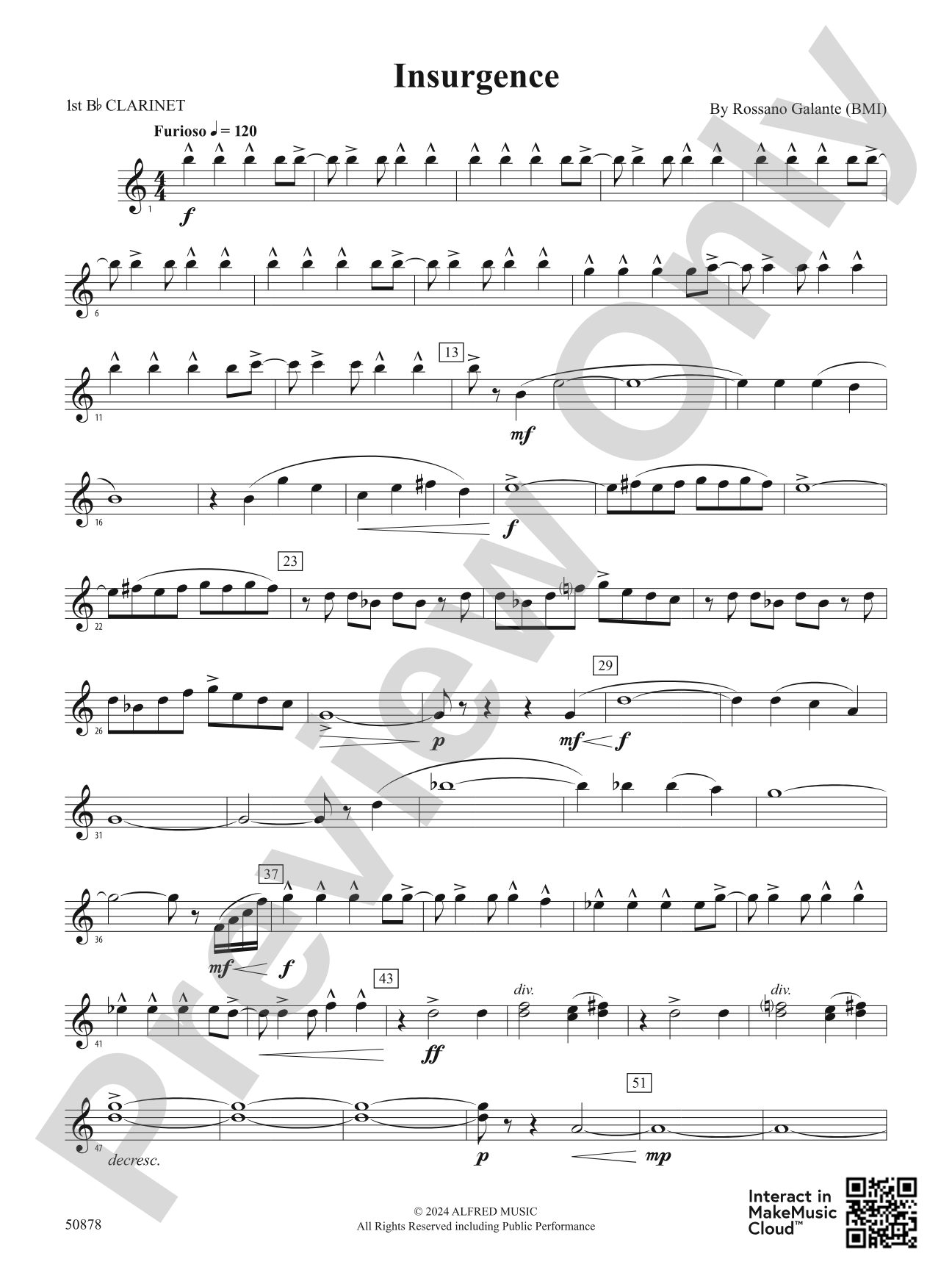

Insurgence: 1st B-flat Clarinet
By Rossano Galante
Grade: 3
Item: 00-PC-0019299_C1
$3.00
Pickup currently not available
Description
In a world where food is rationed based on wealth and status, people experiencing poverty have formed a task force to gain equality. Insurgence, by Rossano Galante, begins with a driving, rhythmic ostinato in the winds, low brass, and percussion. Soaring, aggressive horn lines take the lead in this post-apocalyptic setting. This theme is passed to the trumpets, then the winds, heralding their presence in this work. The piece transitions to a slightly lyrical section, capturing the pain and struggle these humans must endure during these challenging times. The piece recapitulates the main theme with the full ensemble, bringing this composition to a thunderous conclusion. (3:30)


Don't just read it, hear it, play along with it, and watch your students grow with it. In MakeMusic Cloud, Insurgence: 1st B-flat Clarinet comes alive with professional accompaniment, adjustable tempo, and built-in practice tools that turn solo practice into real progress.
Open in the Player
Jump straight in and assign it today.
Start Your Free Trial
Open this title and explore the full library in minutes.
Sample Audio
1
Audio File
--:--
0:00
0:00
Sample Video
Additional Details
Series:
Young Symphonic
Publisher:
Alfred Music
SKU:
00-PC-0019299_C1
More about this title
About the Composer: Rossano Galante

Rossano Galante studied trumpet performance at SUNY Buffalo, graduating in 1992, and was immediately selected as one of nineteen international students accepted to USC's Film Scoring Program. He studied under the late Jerry Goldsmith, the Academy Award-winning composer of The Omen, beginning a distinguished career in orchestration that would span more than eighty studio films.
Since relocating to California in 1999, Galante has collaborated with Oscar-nominated composers Marco Beltrami, Christophe Beck, and Brian Tyler on major motion pictures including the Avengers and A Quiet Place franchises, Fast X, The Super Mario Brothers Movie, and many others. His concert music has been widely commissioned, with over 68 published compositions available through Alfred, Schirmer, Hafabra, C.L. Barnhouse, and other major publishers.
Why we love this
Galante brings his film orchestration expertise to concert band in a way that feels immediate and cinematic without sacrificing musical substance. The programmatic arc is clear enough for younger players to understand their role in the narrative while the orchestration itself demands real musicianship, especially in the horn lines and the transition to the lyrical middle section.
What to expect
The piece opens with relentless forward momentum, a pulse driven by percussion and low voices that feels urgent and propulsive. When the horns rise above that foundation with their aggressive melodic lines, the mood turns confrontational and charged; the shift to the lyrical section brings a moment of vulnerability and reflection before the full ensemble drives toward a powerful, unambiguous conclusion.
Who it's for
Grade 3 concert bands with strong fundamentals in rhythm and sectional balance will find this piece accessible and dramatically engaging. It works especially well for groups ready to tackle music with a clear narrative arc and modest but meaningful technical demands across all sections.
How to get the most out of it
- Establish the driving ostinato as the pulse that locks the entire ensemble together; the low brass and percussion must sit as one rhythmic unit before the winds enter, so balance sectional rehearsal time accordingly.
- Shape the horn melody with directional phrasing that pushes forward even during rests; these lines carry the dramatic weight, so make sure horn players hear the full arc from statement through restatement.
- Contrast the lyrical section by pulling back the tempo slightly and letting the harmonic progression breathe; this emotional shift is the piece's dramatic heart and will feel more impactful if it comes as a true release from the opening intensity.
- Build the final recapitulation gradually across all sections; resist the urge to go full throttle immediately and instead add layers of orchestration as you climb toward the thunderous ending.
How to use it
Program Insurgence as a centerpiece for a concert exploring narrative and social themes in contemporary band music, or as a contrast to lighter or lyrical works earlier in the same program. Its programmatic content and post-apocalyptic setting also make it an effective conversation starter about how concert band music can engage with complex human stories.
Skills your students will build
- Building and maintaining driving rhythmic ostinatos across mixed sections
- Balancing independent melodic lines (horns, trumpets, winds) over a rhythmic foundation
- Executing dynamic control during contrast transitions from aggressive to lyrical material
- Reading and executing programmatic intent through ensemble musicianship rather than technical complexity