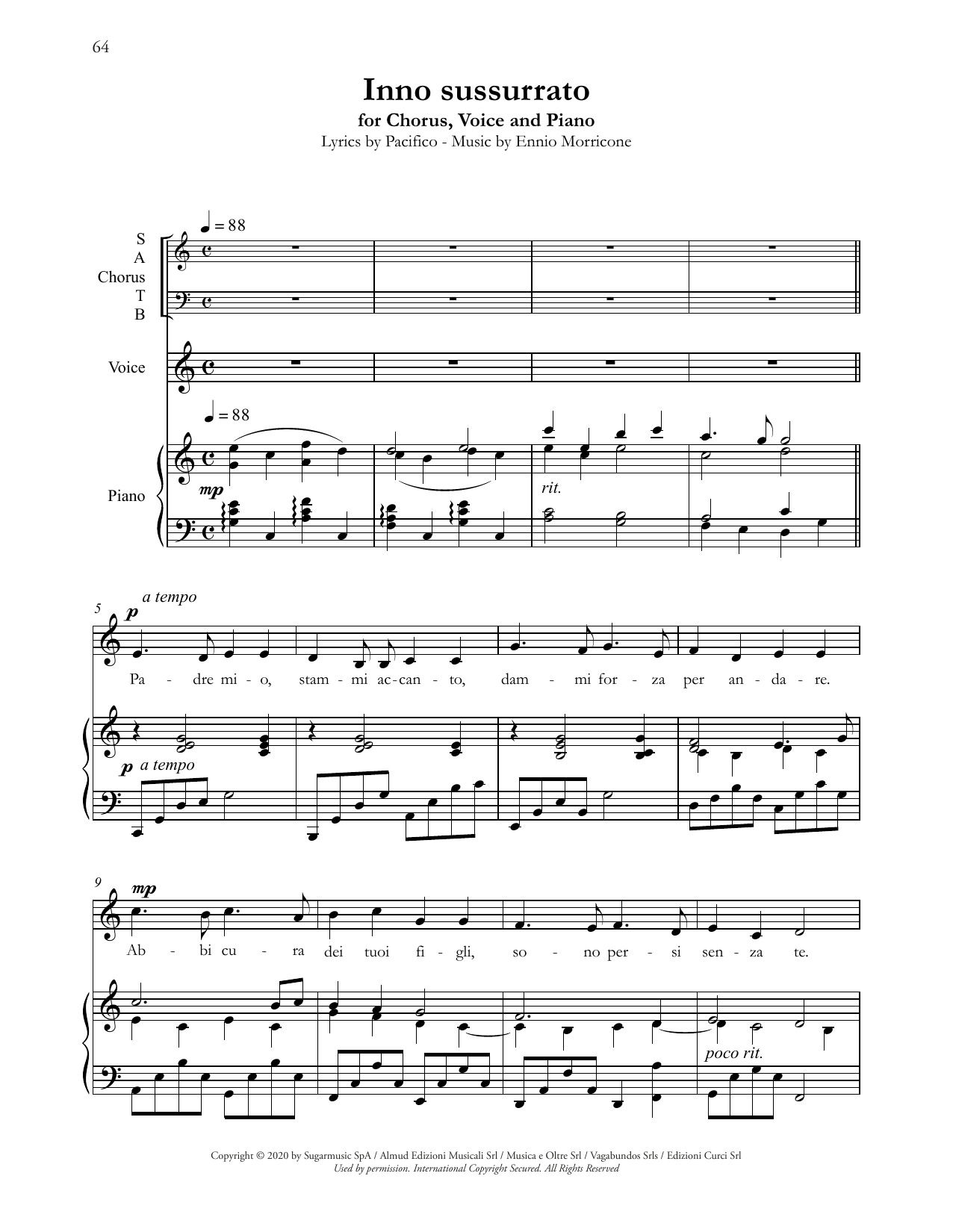
Inno sussurrato: SATB Choral Octavo

As performed by Andrea Bocelli

Item: 35-DS01195379

Digital Download
$2.99
Description

Inno sussurrato: SATB Choral Octavo isn't in MakeMusic Cloud just yet...but it could be. Let us know you'd like to see it, and you'll help shape what comes next. In the meantime, start a free trial and dive into thousands of interactive titles your students can play along with today.

Sample Audio
No sample audio found.
Sample Video
Additional Details
Publisher: Hal Leonard
Page Count: 9
SKU: 35-DS01195379

More about this title

About the Artist: Andrea Bocelli

Andrea Bocelli is an Italian tenor and singer-songwriter whose career spans classical crossover, pop, and operatic repertoire. His work has introduced millions of listeners to vocal music across multiple genres, and his interpretations of both contemporary and classical material demonstrate a commitment to lyrical phrasing and emotional directness that translates effectively to choral settings.

Why we love this

Bocelli's compositions for choir carry the hallmark of his vocal sensibility: they prioritize singing quality over complexity, allowing ensemble voices to shine without technical overreach. This octavo works beautifully as a secular programming choice that bridges classical and contemporary aesthetics, giving choirs access to material that feels both accessible and artistically substantial.

What to expect

Intimate and contemplative, with the quality of a whispered confession (the title "Inno sussurrato" translates to "whispered hymn"). The piece balances a pop sensibility with classical vocal demands, creating something that feels both modern and timeless.

Who it's for

Choirs with solid fundamental blend and intonation who want to expand beyond traditional classical sacred choral literature. The piece suits intermediate-to-advanced ensembles looking for secular material that maintains artistic integrity.

How to get the most out of it

  • Approach the piece with the legato line control Bocelli's vocal style demands; resist the urge to over-articulate or rush phrase endings.
  • Pay close attention to dynamic shape within individual phrases rather than relying on uniform volume throughout sections.
  • Balance the four voices so that no single line dominates unless the score explicitly marks it as prominent; this is ensemble singing, not accompaniment.

How to use it

Position this as a contrasting secular offering on a concert built around traditional choral work, or program it alongside other contemporary classical crossover pieces to showcase your ensemble's range. It works particularly well in spring concerts or programs exploring how classical forms intersect with modern musical voices.

Skills your students will build

  • Maintaining legato line while managing phrase breath points
  • SATB balance without relying on a dominant melody
  • Expressive dynamic control within homophonic textures
  • Interpretation of contemporary classical vocal writing

You May Also Like