Infernal Galop - From <i>Orpheus in the Underworld</i>: Part 2 - B-flat Instruments Sheet Music Preview

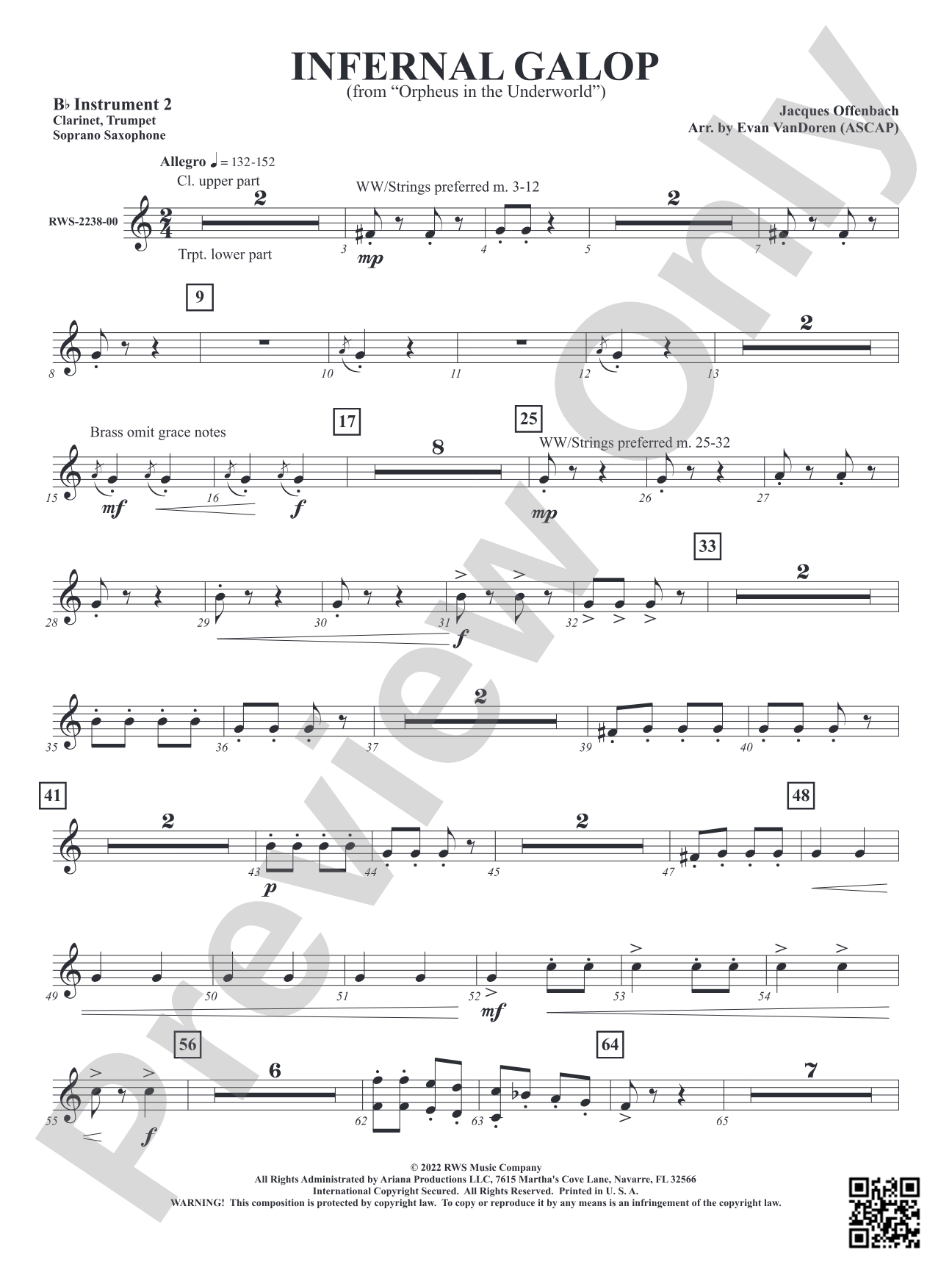
Infernal Galop - From Orpheus in the Underworld: Part 2 - B-flat Instruments

From Orpheus in the Underworld

By Jacques Offenbach / arr. Evan VanDoren

Grade: 3

Item: 98-PC-RWS2238_PART2_BFLAT

Digital Download
$3.99
Description
Jacques Offenbach's "Infernal Galop", or "Can-Can" as it is more often called, has been reimagined throughout history. From classical composers like Saint-Saëns, to more modern uses in movies, television, and even video games, the timeless appeal of Offenbach's melody is without question. Evan VanDoren's new flexible instrumentation arrangement for concert band is a perfect addition to any concert. Particularly effective as a closing selection or encore, this recognizable flourish will have your audience on their feet. Highly recommended!

Original Item#: RWS-2238-00

Infernal Galop - From Orpheus in the Underworld: Part 2 - B-flat Instruments isn't in MakeMusic Cloud just yet...but it could be. Let us know you'd like to see it, and you'll help shape what comes next. In the meantime, start a free trial and dive into thousands of interactive titles your students can play along with today.

Sample Audio
0:00
0:00
Sample Video
Additional Details
Series: RWS - Custom Concert Band
Publisher: RWS Music Company
SKU: 98-PC-RWS2238_PART2_BFLAT

More about this title

About the Composer: Jacques Offenbach

Jacques Offenbach (1819-1880) was a German-born French composer who essentially invented operetta as a musical form. His gift for memorable melody and theatrical wit made him the dominant figure in Parisian musical theater during the Second Empire, composing over 100 stage works across his career.

Offenbach's genius lay in his ability to craft instantly singable melodies that lodged themselves in the public ear while maintaining genuine harmonic sophistication beneath the surface charm. The "Infernal Galop" from Orpheus in the Underworld exemplifies this gift: a tune so contagious it has survived 150 years of reorchestration, parody, and cultural reinvention without losing its essential energy.

Why we love this

This arrangement captures what makes the Can-Can irresistible: forward momentum, bright orchestration, and a melody so recognizable your audience will light up the moment it enters. VanDoren's flexible instrumentation means you're not locked into a specific lineup, making it genuinely playable across different school configurations and still delivering full, satisfying sound.

What to expect

Pure theatrical energy. The Can-Can gallops forward with irrepressible verve, blending comic lightness with genuine orchestral sophistication. It's music that makes people smile before they even realize why.

Who it's for

Concert bands at the Grade 3 level looking for a showstopper that doesn't require specialized instrumentation or extended rehearsal time. Directors seeking a closing number that connects with general audiences will find the recognition factor here invaluable.

How to get the most out of it

  • Keep the tempo buoyant and consistent. The Can-Can lives on rhythmic drive; any sluggishness kills the effect. Mark a clear tempo and hold it through the form.
  • Balance the melody across sections so the tune cuts through without sacrificing the accompaniment's character. This isn't a solo feature; the whole ensemble should feel the lift together.
  • Articulate the rhythmic figures crisply, especially in the accompaniment parts. The galop's charm depends partly on clean, bouncy rhythmic definition.
  • Reserve dynamic contrast for the repeat or return of the main theme. Build gradually into the familiar section so when the Can-Can melody returns, the audience hears it fresh.

How to use it

Program this as your concert closer or encore. The Infernal Galop thrives in the final slot where it can send the audience out energized and satisfied. It pairs well after a ballad or serious work, offering sharp contrast and leaving a lasting impression of joy.

Skills your students will build

  • Maintaining tempo integrity in fast, rhythmically driven music
  • Balancing melody and accompaniment in a flexible instrumentation setting
  • Articulating rhythmic figures with consistency across ensemble sections
  • Understanding historical context of operetta and its influence on concert music

You May Also Like