Indigo Mountain: 1st Violin Sheet Music Preview

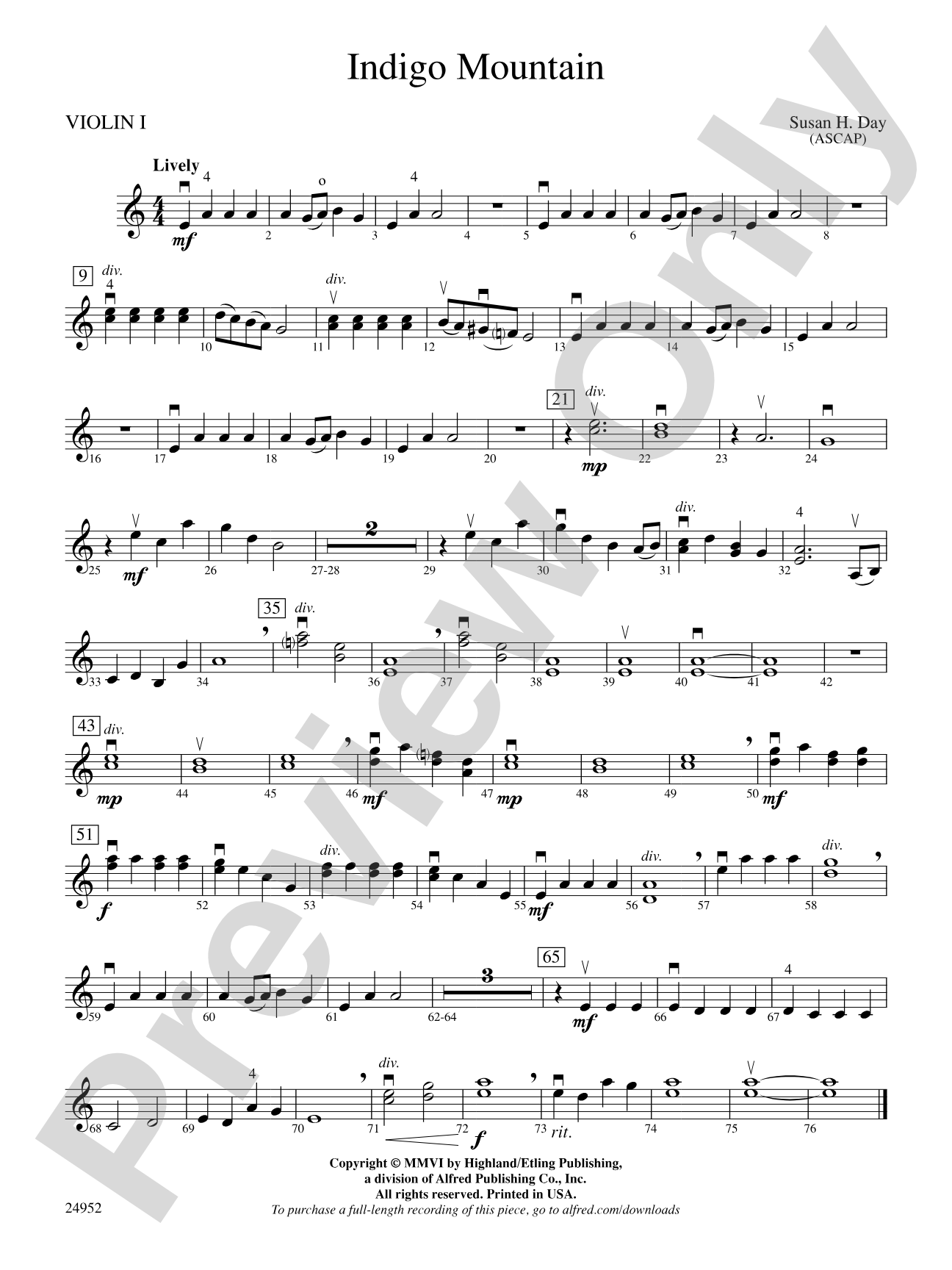
Indigo Mountain: 1st Violin

By Susan H. Day

Grade: 2

Item: 00-PC-0000944_VN1

Digital Download
$5.99
Description
Inspired by the beautiful Colorado Rocky Mountains, the composer uses interesting harmonies, easy rhythms, and a minor melodic line passed around to different sections to make this grade 2 composition a favorite among young string players. Careful attention should be paid to the F naturals throughout. Upper strings can develop the use of 4th finger instead of open strings for a more mature sound.

Don't just read it, hear it, play along with it, and watch your students grow with it. In MakeMusic Cloud, Indigo Mountain: 1st Violin comes alive with professional accompaniment, adjustable tempo, and built-in practice tools that turn solo practice into real progress.

Sample Audio
0:00
0:00
Sample Video
Additional Details
Series: Highland/Etling String Orchestra
Publisher: Alfred Music
Page Count: 62
SKU: 00-PC-0000944_VN1

More about this title

About the Composer: Susan H. Day

Susan H. Day has built a reputation for composing accessible yet musically substantial works for young string ensembles. Her pieces balance technical instruction with genuine musical interest, making her a trusted voice in the Highland/Etling String Orchestra series. Day understands the developmental needs of student musicians and writes with an ear for what engages both players and audiences.

Why we love this

Day writes with young string players in mind, and it shows. The minor melodic line circulates generously through the ensemble so every section gets its moment, and the rhythmic simplicity never becomes bland because the harmonic language stays interesting. This is the kind of piece that builds confidence and musicianship simultaneously.

What to expect

Inspired by Colorado's alpine landscape, the music unfolds with a quiet, contemplative quality. The minor key and gentle harmonic shifts evoke mountain light and shadow, creating something both accessible and genuinely expressive for young players.

Who it's for

String orchestras at the early intermediate level will thrive with this grade 2 piece. It suits ensembles ready to move beyond unison writing and tackle independent section voicing without overwhelming them.

How to get the most out of it

  • Watch intonation carefully around the F naturals, especially when upper strings shift to use the 4th finger instead of open strings. Mark these spots in rehearsal so players anticipate the adjustment.
  • Balance the minor melody as it passes between sections. Use light dynamic shaping to help each section "hand off" the line clearly, preventing it from disappearing into accompaniment figures.
  • Let the upper strings lean into that 4th finger technique. It won't happen automatically; model it yourself and give players permission to use it even if it feels slightly different at first.

How to use it

This works beautifully on a concert that pairs standard classical repertoire with contemporary string writing. Its concert and festival appeal makes it ideal for spring festivals or winter holiday programs seeking a more introspective moment.

Skills your students will build

  • Sustaining tone in minor key passages
  • Reading and executing F naturals in context
  • Shifting to 4th finger for tone quality and intonation
  • Following a melodic line as it moves between sections
  • Balancing melody and accompaniment textures

You May Also Like