Indiana (Back Home Again in Indiana): 2nd E-flat Alto Saxophone Sheet Music Preview

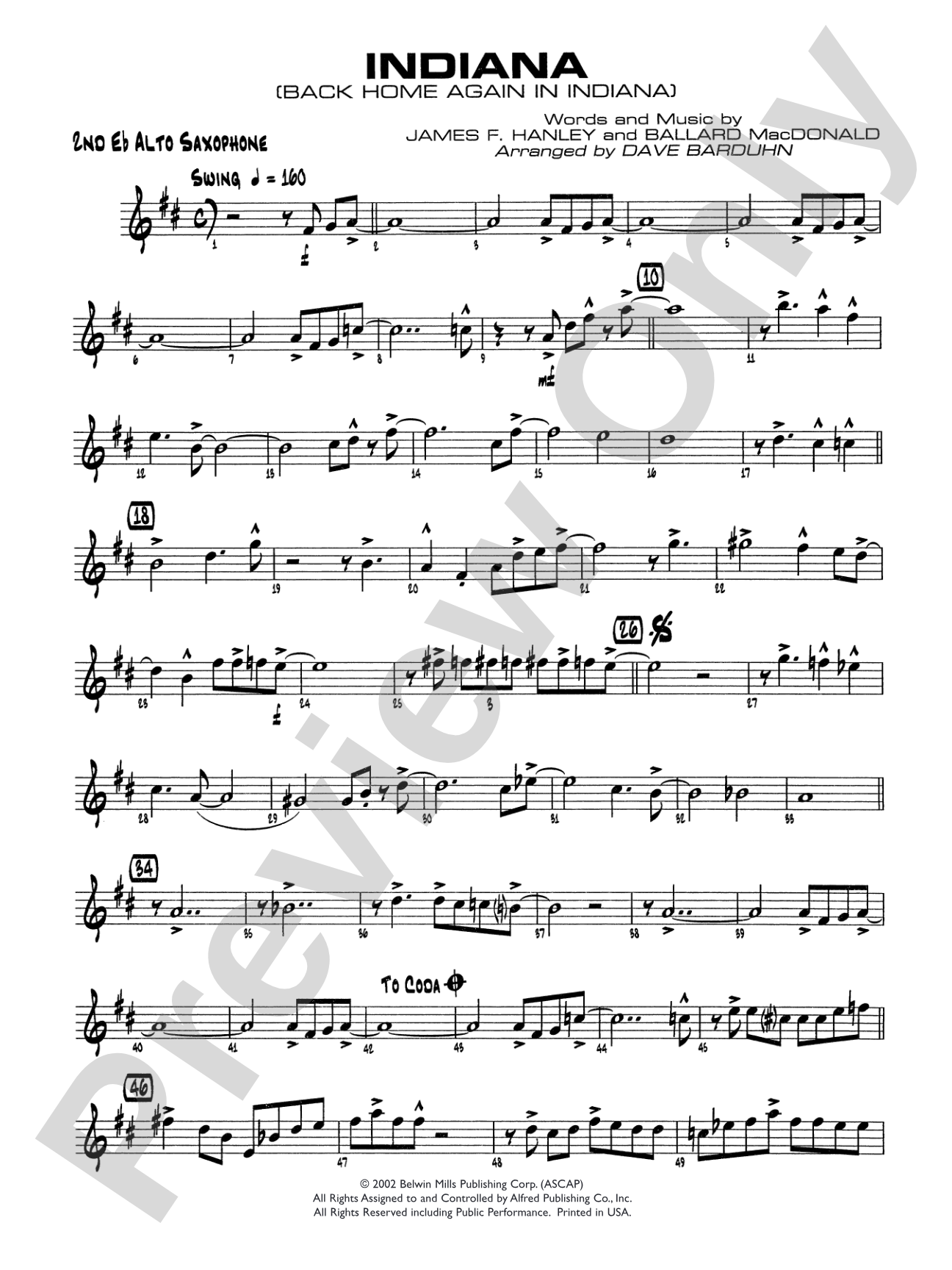
Indiana (Back Home Again in Indiana): 2nd E-flat Alto Saxophone

Words and music by James F. Hanley and Ballard MacDonald / arr. Dave Barduhn

Grade: 3 (Medium)

Item: 00-PC-0002455_AX2

Digital Download
$3.00
Description
Indiana (Back Home in Indiana) deserves a spot in every library! Arranger Dave Barduhn is one of the finest writers around today. In this chart he gives the sax section plenty of chop time and brief drum fills along with some solo piano space round out this swinger. Highly recommended! (3:05)

Don't just read it, hear it, play along with it, and watch your students grow with it. In MakeMusic Cloud, Indiana (Back Home Again in Indiana): 2nd E-flat Alto Saxophone comes alive with professional accompaniment, adjustable tempo, and built-in practice tools that turn solo practice into real progress.

Sample Audio
0:00
0:00
Sample Video
Additional Details
Series: Jazz Band Series
Publisher: Alfred Music
Page Count: 86
SKU: 00-PC-0002455_AX2

More about this title

About the Composer: James F. Hanley

James F. Hanley (1892–1942) was a prolific American composer whose catalog spans Broadway, film, and popular song. He composed the music for the 1924 song "Indiana (Back Home Again in Indiana)," which became one of the most recorded standards in American music. His melodies, marked by singable lines and harmonic accessibility, made his work enduringly popular across generations of performers and arrangers.

Why we love this

Dave Barduhn's arrangement strikes the balance every jazz director seeks: accessible enough for Grade 3 ensembles yet written with real jazz sophistication. The sax section gets substantial time to swing and stretch, while the piano and drums anchor the groove with enough musical substance to keep strong players engaged. It's a straightforward chart that builds confidence without compromising musicality.

What to expect

Warm, accessible swing that recalls the golden age of American standards. The melody sits naturally for most instruments, and the arrangement has the easy confidence of a tune that's been played a thousand times and still swings.

Who it's for

This arrangement serves Grade 3 jazz ensembles looking for a standard that sounds polished and feels fun to play. It works equally well for directors building a jazz program or adding a recognizable title to an existing library. Both developing and competent ensembles will find rewarding material here.

How to get the most out of it

  • Give the sax section room to breathe through their passages. This isn't a section feature that needs conducting precision so much as a chance for them to lock into the swing feel together.
  • Shape the drum fills deliberately so they punctuate rather than rush the form. A patient touch from the ensemble rhythm section will let those moments land.
  • Balance the solo piano space carefully in rehearsal. It's intimate enough that any intonation or timing muddiness in the background parts will show immediately.
  • Let the tune breathe with a relaxed tempo. A swinger at this level works best when the ensemble trusts the groove rather than chasing the beat.

How to use it

Program this as a palate cleanser between heavier or more contemporary charts, or use it as a springboard into jazz history conversations. Its three-minute length makes it ideal for a shorter set segment or as an opener that gets an audience immediately engaged.

Skills your students will build

  • Swing phrasing and articulation in ensemble context
  • Reading and executing jazz rhythmic figures (syncopation, pushing/laying back on the beat)
  • Supporting soloists while maintaining ensemble groove
  • Sectional balance and blend in a jazz texture
  • Form awareness (head, solos, head out)

You May Also Like