Indian Song: Piano Digital Sheet Music

Indian Song: Piano Digital Sheet Music

Dave Brubeck, Al Walloupe

Item: 00-PS-0001004

Digital Download
$3.99
Description

Indian Song: Piano Digital Sheet Music isn't in MakeMusic Cloud just yet...but it could be. Let us know you'd like to see it, and you'll help shape what comes next. In the meantime, start a free trial and dive into thousands of interactive titles your students can play along with today.

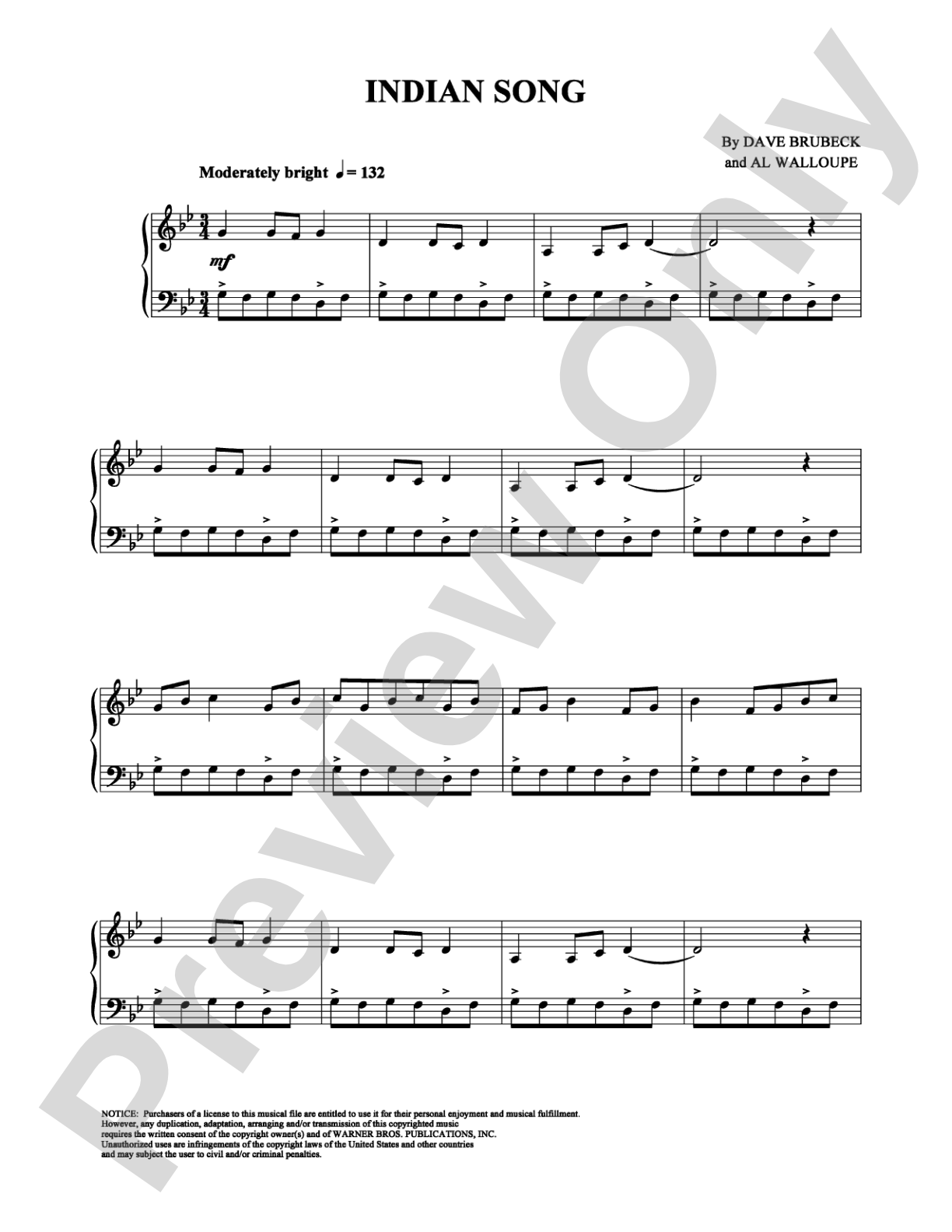
Sample Audio
No sample audio found.
Sample Video
Additional Details
SKU: 00-PS-0001004

More about this title

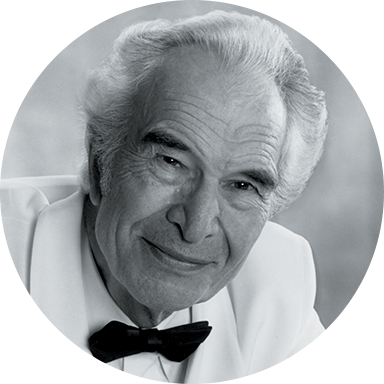
About the Artist: Dave Brubeck

Dave Brubeck

Dave Brubeck stands as one of jazz's most significant composer-pianists, a musician equally comfortable improvising within the jazz tradition and crafting fully scored classical works. His education under Darius Milhaud at Mills College shaped his distinctive approach, which fused jazz languages with classical forms across symphonies, chamber works, ballets, choral pieces, and sacred music. Brubeck's mass "To Hope!" and oratorios have been recorded by major ensembles including the London Symphony Orchestra and performed internationally, while his secular compositions have secured performances by prestigious ballet companies and concert halls.

Beyond his prolific output as a composer, Brubeck is remembered as a groundbreaking performer whose 1959 album "Time Out" became the first jazz recording to achieve over one million sales. His composition "Take Five" remains a cornerstone of jazz repertoire. Throughout his career, he received the Grammy Lifetime Achievement Award, the Presidential Medal of the Arts, and was inducted into the American Classical Music Hall of Fame in 2003, cementing his role in reshaping American musical culture across racial and stylistic boundaries during the mid-twentieth century.

Why we love this

Brubeck's compositions bridge the concert hall and the jazz club with equal authority, making this piece an authentic entry point for pianists exploring the intersection of composed and improvised music. The work carries the distinctive harmonic language and rhythmic sophistication that made Brubeck's writing unmistakable, offering substantial musical content that neither condescends to simplification nor demands virtuosic pyrotechnics beyond reach. Programming a Brubeck piano piece signals to your audience that jazz composition deserves the same serious attention given to classical repertoire.

What to expect

The piece carries the unhurried, introspective quality suggested by its title, with harmonic sophistication that unfolds gradually rather than declaratively. Brubeck's jazz-inflected melody moves through his characteristic harmonic progressions, creating an atmosphere of contemplation seasoned with the rhythmic vitality that defined his artistic voice. The overall effect is spacious and inviting, neither melancholic nor celebratory but grounded in a kind of reflective ease.

Who it's for

Pianists with intermediate to advanced technique who seek meaningful repertoire beyond the standard classical solo canon will find this piece both accessible and artistically substantial. College-level jazz program students and adult amateur pianists with jazz interests are ideal audiences for this work. Solo recitalists programming modern American music benefit from Brubeck's reputation and the piece's immediate appeal.

How to get the most out of it

  • Honor both the notated material and the jazz idiom by balancing rhythmic precision with the subtle swing and rubato that characterizes Brubeck's writing.
  • Attend to harmonic color through voicing and pedal control; Brubeck's chords often gain their character through the relationships between individual notes rather than straightforward block voicing.
  • Let the form breathe naturally rather than metronomically; this piece reflects a composer trained in both classical form and jazz sensibility, each requiring different approaches to phrasing and timing.

How to use it

This digital score works well in a concert celebrating American jazz composers alongside classical works, demonstrating Brubeck's command of both idioms. Pair it with other mid-century piano compositions or other Brubeck pieces to create a thematic program exploring jazz as art music. It also serves effectively as a recital opener or closer for a pianist whose practice encompasses multiple styles.

Skills your students will build

  • Jazz harmonic language and voicing techniques
  • Reading and performing notated swing rhythms accurately
  • Balancing composed structure with interpretive flexibility
  • Pedal control for tonal color in jazz contexts
  • Understanding rubato and phrasing in composed jazz works

You May Also Like