Incense And Peppermints Sheet Music Preview

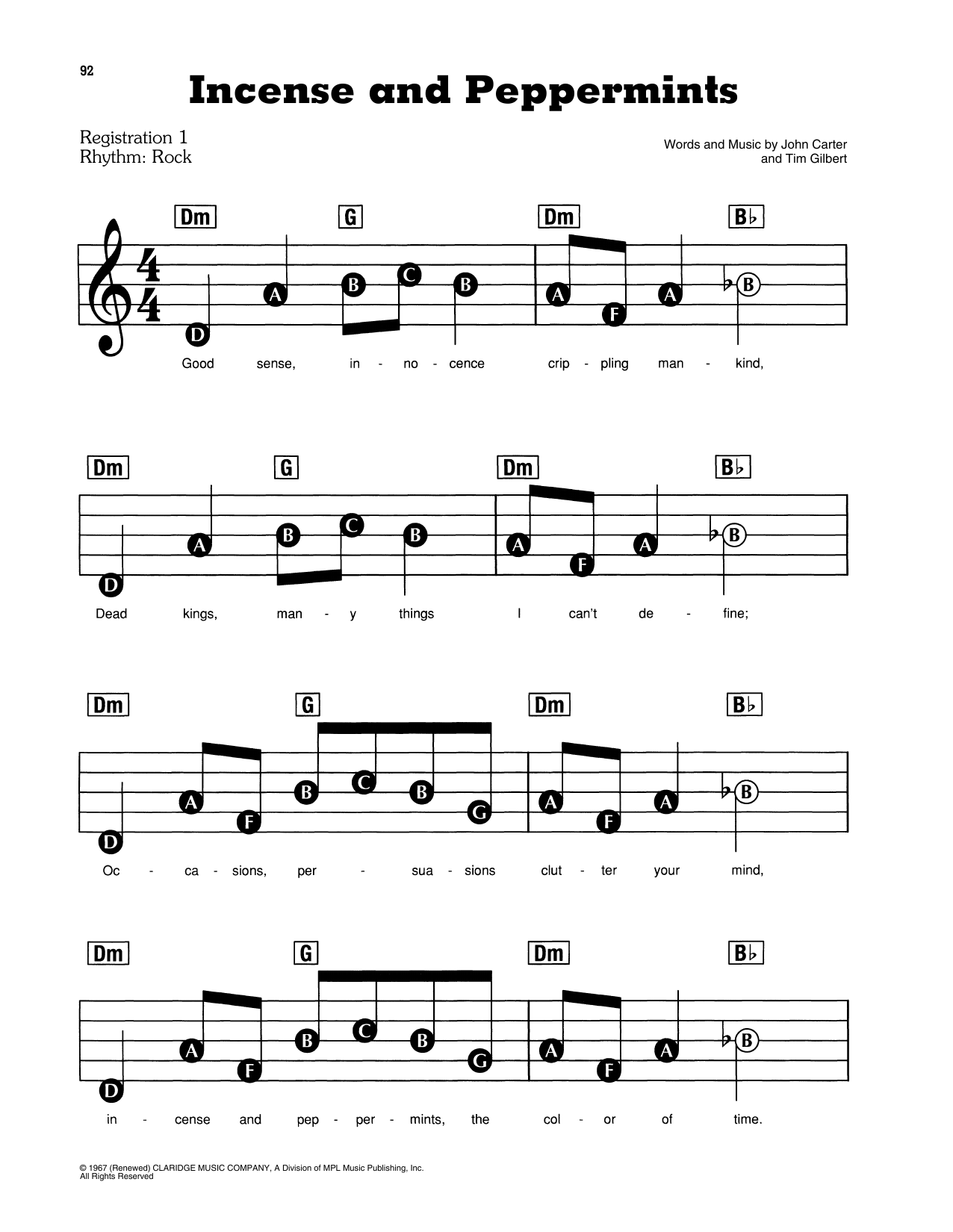
Incense And Peppermints: E-Z Play Today

As performed by Strawberry Alarm Clock

Item: 35-DS00455133

Digital Download
$4.99
Description

Incense And Peppermints: E-Z Play Today isn't in MakeMusic Cloud just yet...but it could be. Let us know you'd like to see it, and you'll help shape what comes next. In the meantime, start a free trial and dive into thousands of interactive titles your students can play along with today.

Sample Audio
No sample audio found.
Sample Video
Additional Details
Publisher: Hal Leonard
Page Count: 4
SKU: 35-DS00455133

More about this title

About the Artist: Strawberry Alarm Clock

Strawberry Alarm Clock emerged from Los Angeles in the mid-1960s as psychedelic rock pioneers who captured the era's experimental spirit with infectious melodies and lush production. Their 1967 hit "Incense and Peppermints" became a defining track of the Summer of Love, reaching number one on the Billboard Hot 100 and showcasing the band's gift for blending accessible pop hooks with the sonic adventurousness of psychedelic music. The song remains a cultural artifact that teachers can use to explore how rock music evolved beyond simple chord progressions into more complex arrangements and studio techniques.

For music students, Strawberry Alarm Clock represents an important bridge between mainstream pop and experimental rock. Their work demonstrates how thoughtful instrumentation, unexpected harmonic choices, and layered production create songs that stick in the listener's ear while rewarding deeper musical analysis. The accessibility of their catalog makes them ideal for engaging students in discussions about arrangement, production choices, and how commercial success and artistic innovation need not be at odds.

Why we love this

This arrangement captures a genuine era landmark without requiring sophisticated harmonic chops, making it an excellent choice for students ready to step beyond children's material but still building technical confidence. The four-page length gives performers something substantial to work with while remaining manageable for rehearsal schedules. Its cultural footprint opens conversations about 1960s music history, studio production, and how pop songs become enduring standards.

What to expect

Trippy yet grounded, with a hypnotic quality that draws the ear inward before releasing it outward. The piece carries the warmth of vinyl-era recording while maintaining the clarity necessary for solo piano performance, creating an almost meditative effect that feels both retro and timeless.

Who it's for

Intermediate pianists with solid rhythm reading skills and enough technical foundation to manage four pages of continuous accompaniment work. This arrangement suits students who engage with pop and rock repertoire and want to understand how iconic songs of the past can translate effectively to the concert setting.

How to get the most out of it

  • Lean into the groove with a steady, almost hypnotic left-hand pulse; this song's success depends on rhythmic consistency rather than rubato or tempo fluctuation.
  • Balance clarity in the melody against the surrounding harmonic texture. Bring out the vocal line without overshadowing the supporting voices beneath it.
  • Explore the arrangement's use of space. Where the original production breathes, your performance should too; resist the urge to fill every moment with sound.
  • Pay attention to how the keyboard color shifts between sections. Different voicings or subtle dynamic shifts can hint at these production choices on acoustic piano.

How to use it

Pair this alongside other 1960s pop standards in a concert exploring that decade's influence on contemporary music, or use it as a bridge between classical repertoire and the songs your students actually listen to outside of lessons. It works equally well as a showcase piece for a student recital or as a fun ensemble arrangement if you adapt it for multiple instruments.

Skills your students will build

  • Sustaining rhythmic consistency across longer passages without conductor dependence
  • Reading and executing straightforward pop-rock voicings and left-hand patterns
  • Balancing melody and accompaniment in a single instrument
  • Interpreting production-inspired dynamic and tonal choices on acoustic piano
  • Connecting musical notation to recorded reference material

You May Also Like