
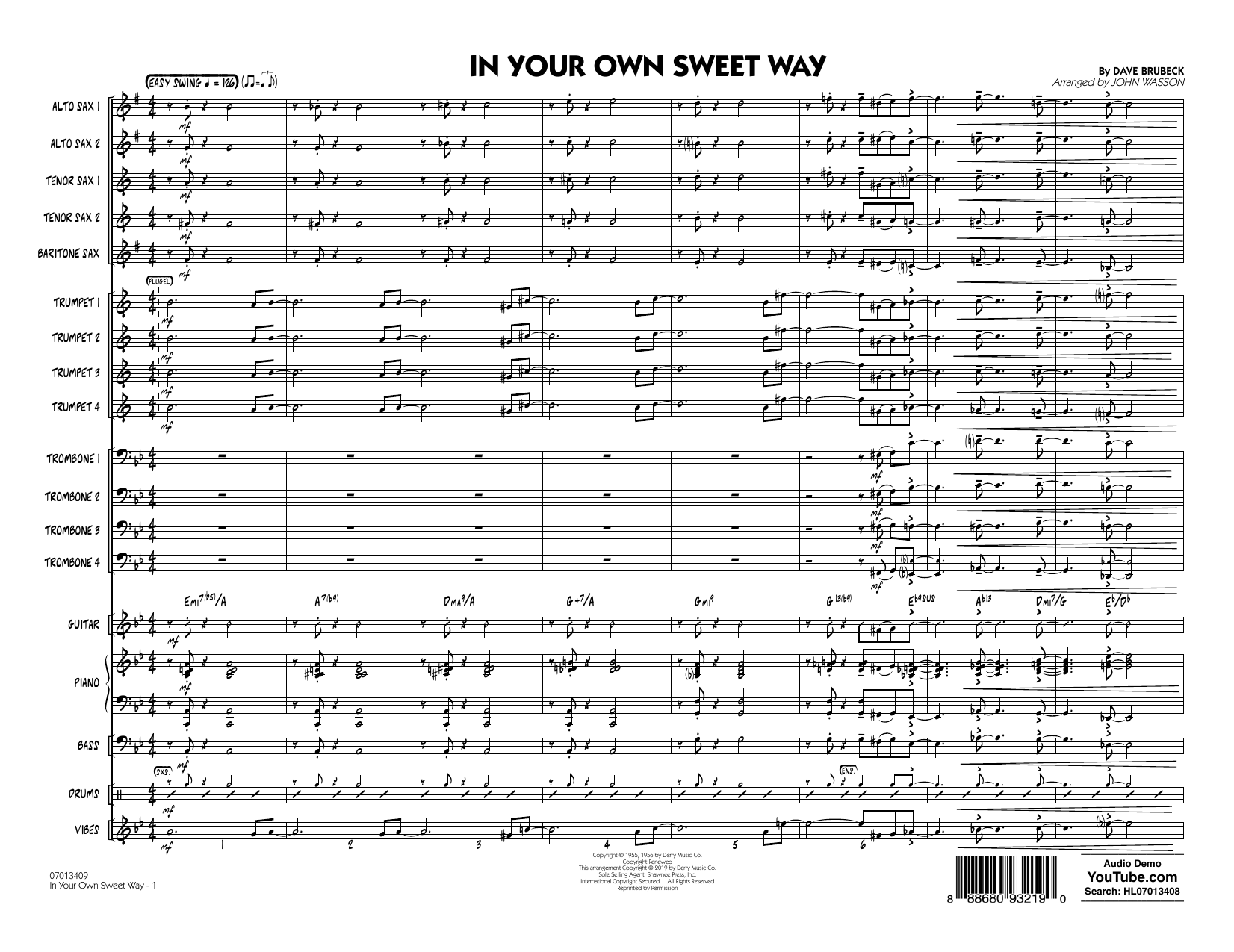

In Your Own Sweet Way (arr. John Wasson): Jazz Ensemble Conductor Score & Parts
By Dave Brubeck / Arranged by John Wasson
Grade: 4
Item: 35-PK00445524
$55.00
Pickup currently not available
Buy Extra Parts (Digital PDF Download)
Parts Added to Cart!
Description
One of the most famous of all Dave Brubeck compositions, this ballad has been recorded by such luminaries as Miles Davis, Sonny Rollins, John Coltrane, and Wes Montgomery. Arranged here in an easy flowing swing style, John Wasson's chart takes full advantage of the many colors of the entire jazz ensemble along with a rich harmonic palette. Solos are included for alto sax and trumpet.


Discover MakeMusic Cloud: thousands of interactive titles your students can play along with today.
Sample Audio
No sample audio found.
Sample Video
Additional Details
Publisher:
Hal Leonard
SKU:
35-PK00445524
More about this title
About the Composer: Dave Brubeck
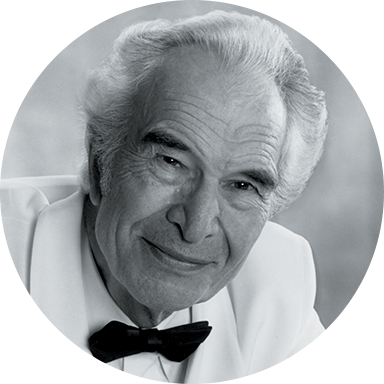
Dave Brubeck shaped modern jazz through both his piano artistry and his prolific compositional output. Beyond his legendary improvisations, he wrote choral works, orchestral pieces, chamber music, and large-scale compositions for chorus and orchestra. His album "Time Out" became the first jazz recording to sell over a million copies, and "Take Five" remains one of the genre's most recognizable compositions. Brubeck studied with Darius Milhaud after World War II, and Milhaud's influence encouraged him to synthesize jazz language with classical forms throughout his career.
Brubeck's impact extended far beyond the recording studio. He was instrumental in breaking racial barriers during the mid-twentieth century, and his sacred works including "To Hope!" and various oratorios have been performed and recorded worldwide by major orchestras and choral ensembles. His compositions have inspired contemporary ballet, and his contributions to jazz earned him a Grammy Lifetime Achievement Award, a Presidential Medal of the Arts, and induction into the American Classical Music Hall of Fame.
Why we love this
Wasson's arrangement preserves what makes this ballad enduringly valuable: its emotional directness and harmonic sophistication. The Grade 4 scoring opens the piece to more ensembles than the original while maintaining the colors and textures that earned this composition recordings by Miles Davis, Coltrane, and Wes Montgomery. Featured solos for alto sax and trumpet give your strongest improvisers a chance to shine.
What to expect
The piece breathes with the unhurried pacing of a late-night conversation. Wasson's orchestration lets the melody float over shimmering harmonic support, creating space where soloists can stretch and develop ideas without fighting the arrangement.
Who it's for
Jazz ensembles at the intermediate level who want a standard repertory piece with proven musical substance. This works equally well for groups building a concert program, for students learning to navigate swing feel and improvisation, and for directors seeking material that challenges harmonic awareness without excessive technical demands.
How to get the most out of it
- Balance the ensemble voicings carefully. The rich harmonic palette can muddy if brass and reeds aren't listening to the overall blend; use rehearsals to shape the sustained chords so no one section drowns the others.
- Establish a relaxed swing feel from the opening. This ballad lives in restraint, not rushing. Lock your rhythm section's pocket early so soloists have a secure foundation for their improvisations.
- Give your soloists concrete guidance on phrasing and chord awareness before they improvise over the changes. A brief run-through of the progression and how the melody relates to it prevents tentative solo sections.
- Consider the dynamic arc across the entire piece rather than pushing volume from the start. A ballad's power comes from control and the ability to grow gradually.
How to use it
Pair this with other Brubeck standards or use it to anchor a "Jazz Classics" section in a concert. Its ballad character makes it an excellent palate cleanser between faster swing charts, and it works particularly well when you want to showcase individual soloists or highlight your ensemble's ability to balance delicate voicings.
Skills your students will build
- Swing feel and rhythmic placement in a ballad context
- Reading and responding to chord changes during improvisation
- Ensemble balance and blend across a multi-color harmonic texture
- Listening and responding to sectional voicings while maintaining a steady harmonic foundation
- Building a solo chorus with shape, phrasing, and harmonic awareness