
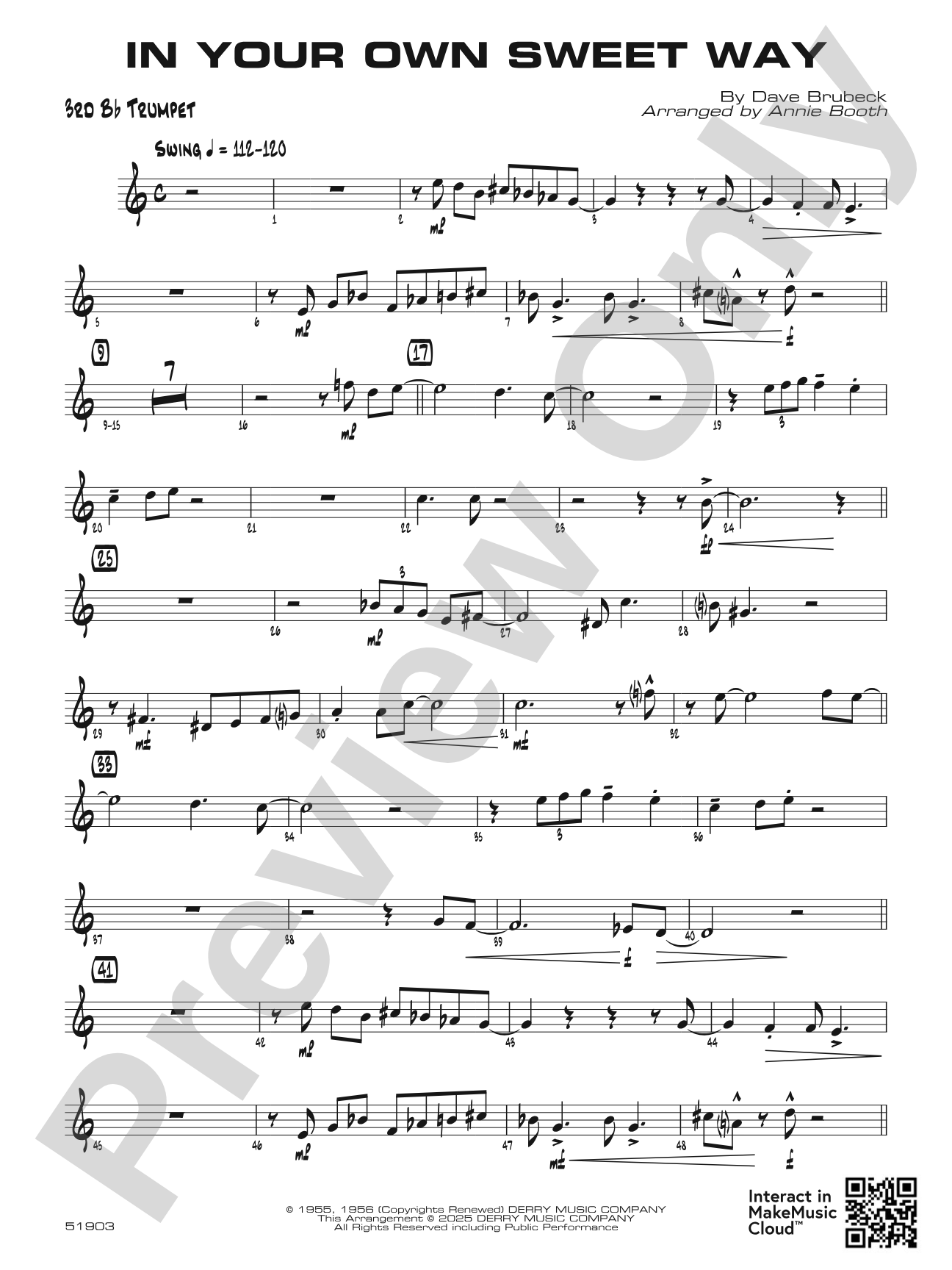

In Your Own Sweet Way: 3rd B-flat Trumpet
By Dave Brubeck / arr. Annie Booth
Grade: 3
Item: 00-PC-0019750_T3
$3.00
Pickup currently not available
Description
Check out this gorgeous Brubeck melody set in an easy swing groove around 120 BPM. Featuring your lead alto player on the melody with suggested written-out solo space. Lead trumpet range is to A above the staff, and all the usual optional parts, including flute and vibes. A tasty chart! (3:15)


In Your Own Sweet Way: 3rd B-flat Trumpet isn't in MakeMusic Cloud just yet...but it could be. Let us know you'd like to see it, and you'll help shape what comes next. In the meantime, start a free trial and dive into thousands of interactive titles your students can play along with today.
Request This Title
Tell us you want it.
Start Your Free Trial
Explore everything that's ready to play right now.
Sample Audio
1
Audio File
--:--
0:00
0:00
Sample Video
Additional Details
Series:
Jazz Band Series
Publisher:
Alfred Music
SKU:
00-PC-0019750_T3
More about this title
About the Composer: Dave Brubeck
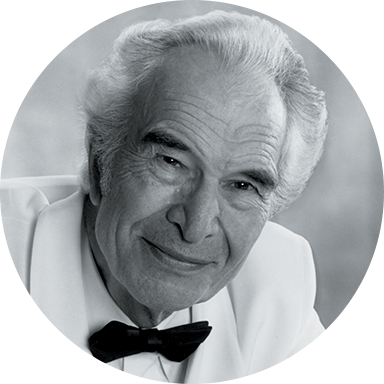
Dave Brubeck stands as one of jazz's most consequential figures, equally accomplished as an improviser at the piano and as a composer crafting fully notated works across genres. His output spanned choral pieces, hymns, orchestral compositions, chamber music, ballet suites, and large-scale works for chorus and orchestra. His album "Time Out" became the first jazz record to exceed a million copies in sales, and "Take Five" achieved legendary status in both jazz and popular music. Beyond his groundbreaking recordings, Brubeck was instrumental in dismantling racial barriers in mid-20th-century music and maintained an active composing career that extended to sacred works performed internationally by ensembles including the London Symphony Orchestra.
After earning his bachelor's degree from College of the Pacific in 1942 and serving in World War II, Brubeck studied composition with Darius Milhaud at Mills College. Milhaud's encouragement to blend jazz language with classical technique became foundational to his artistic identity. Over decades of performing and composing, Brubeck accumulated recognition including the Presidential Medal of the Arts from President Clinton, a Grammy Lifetime Achievement Award, and induction into the American Classical Music Hall of Fame in 2003. His 1962 orchestral work "Elementals" inspired a ballet by choreographer Lar Lubovitch, which remains in the repertory of major dance companies.
Why we love this
Annie Booth's arrangement captures the sophistication that made Brubeck a household name while keeping the ensemble parts accessible. The melody sits naturally in the lead alto voice, and the suggested solo space invites your strongest improviser to shine without requiring extensive jazz solo experience. At Grade 3 with a relaxed swing tempo (120 BPM), this chart delivers genuine Brubeck elegance without the technical barriers that can derail younger ensembles.
What to expect
Elegant and unhurried, with the warmth of a Brubeck piano trio expanded into full ensemble color. The melody unfolds with the kind of natural lyricism that rewards patient phrasing, and the swing groove settles into a comfortable pocket that makes young musicians sound mature without sounding like they're overreaching.
Who it's for
Jazz ensembles at the Grade 3 level working toward their first or second jazz concert, and conductors seeking a standard with real musical substance that doesn't overwhelm younger players. This is ideal for groups where at least one alto saxophonist has shown interest in jazz soloing and the ensemble has basic swing phrasing in place.
How to get the most out of it
- Keep the pulse steady and behind the beat slightly; the "sweet" quality emerges when the ensemble relaxes into the groove rather than rushing it.
- Balance the lead alto melody against the supporting voices so the tune itself is the focal point, not competing with harmonic texture.
- Work out the solo section ahead of time with your soloist. Even if they improvise, knowing the harmonic structure and length prevents hesitation during performance.
- Let the rhythm section lock in the swing feel first (piano comping, bass walking line, drums on the ride), then layer the horns.
How to use it
Program this as the centerpiece of a jazz concert programming that mixes standards with contemporary pieces, or use it as a stepping stone when introducing your ensemble to the Great American Songbook. The modest length (3:15) makes it ideal for a chamber jazz set before or after a big band feature.
Skills your students will build
- Swing articulation and phrasing at a relaxed tempo
- Comping and groove pocket awareness in the rhythm section
- Solo structure and chord changes reading (for improvising soloists)
- Balancing melody against harmonic support in an ensemble texture