
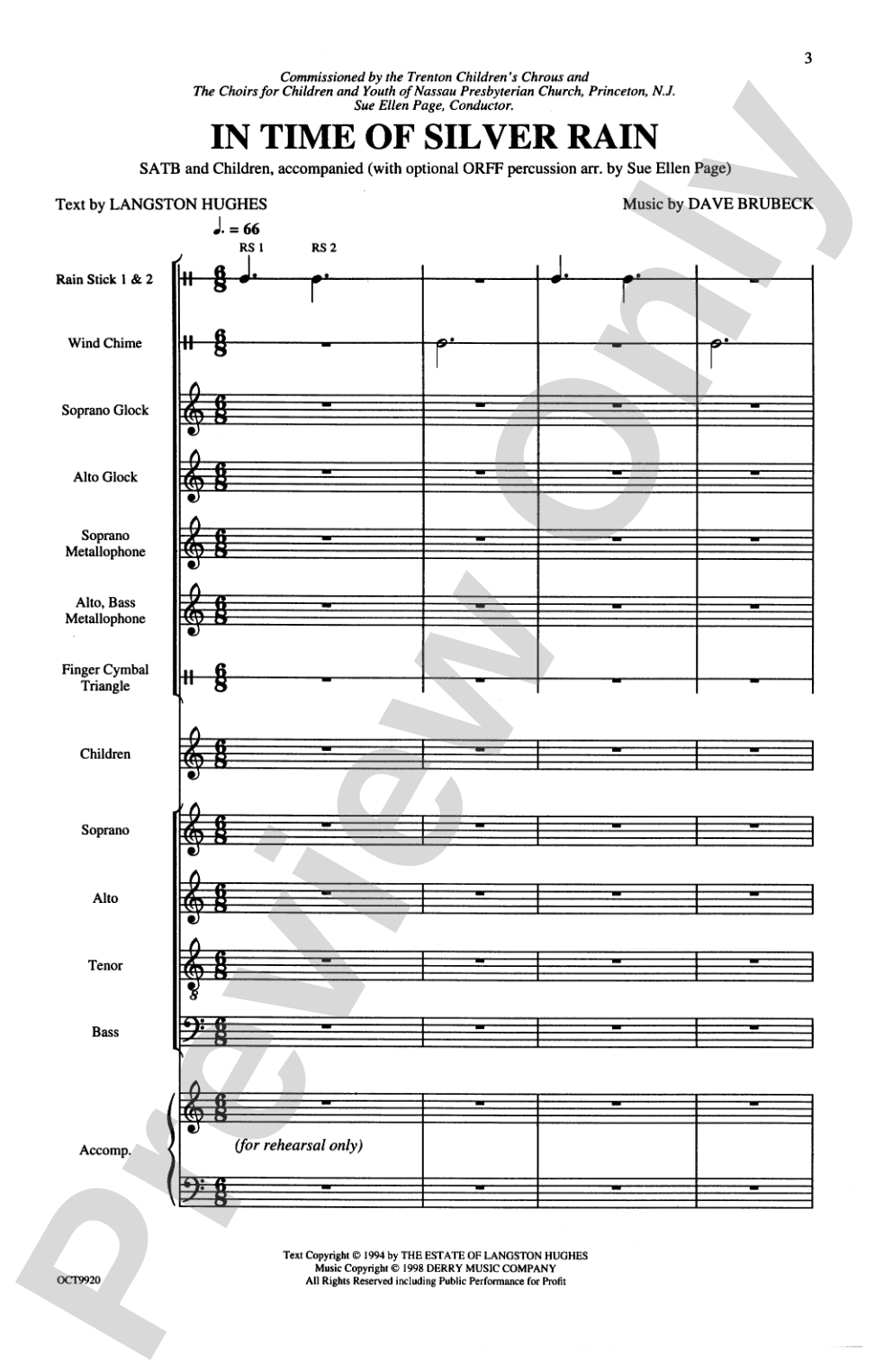
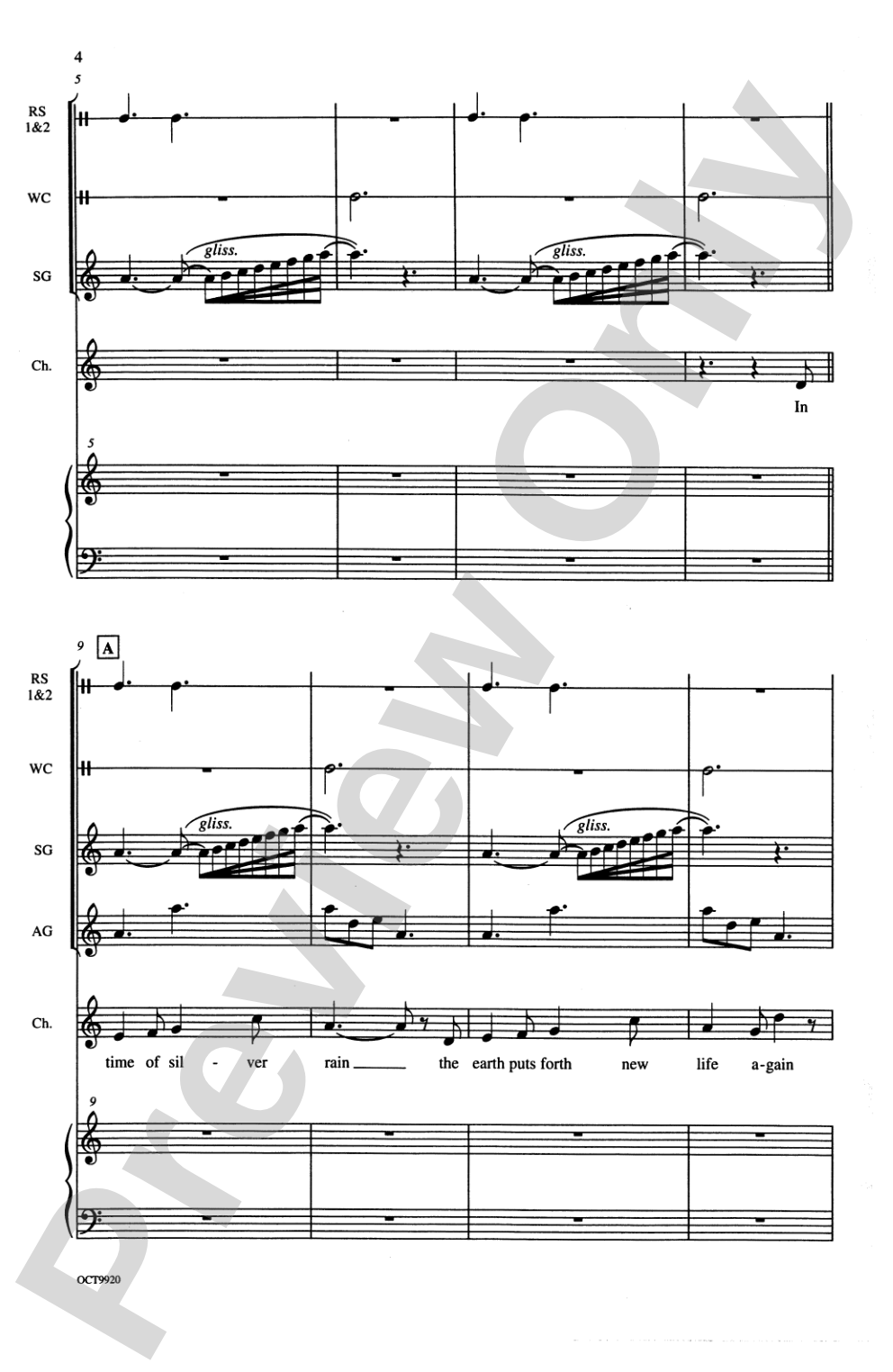
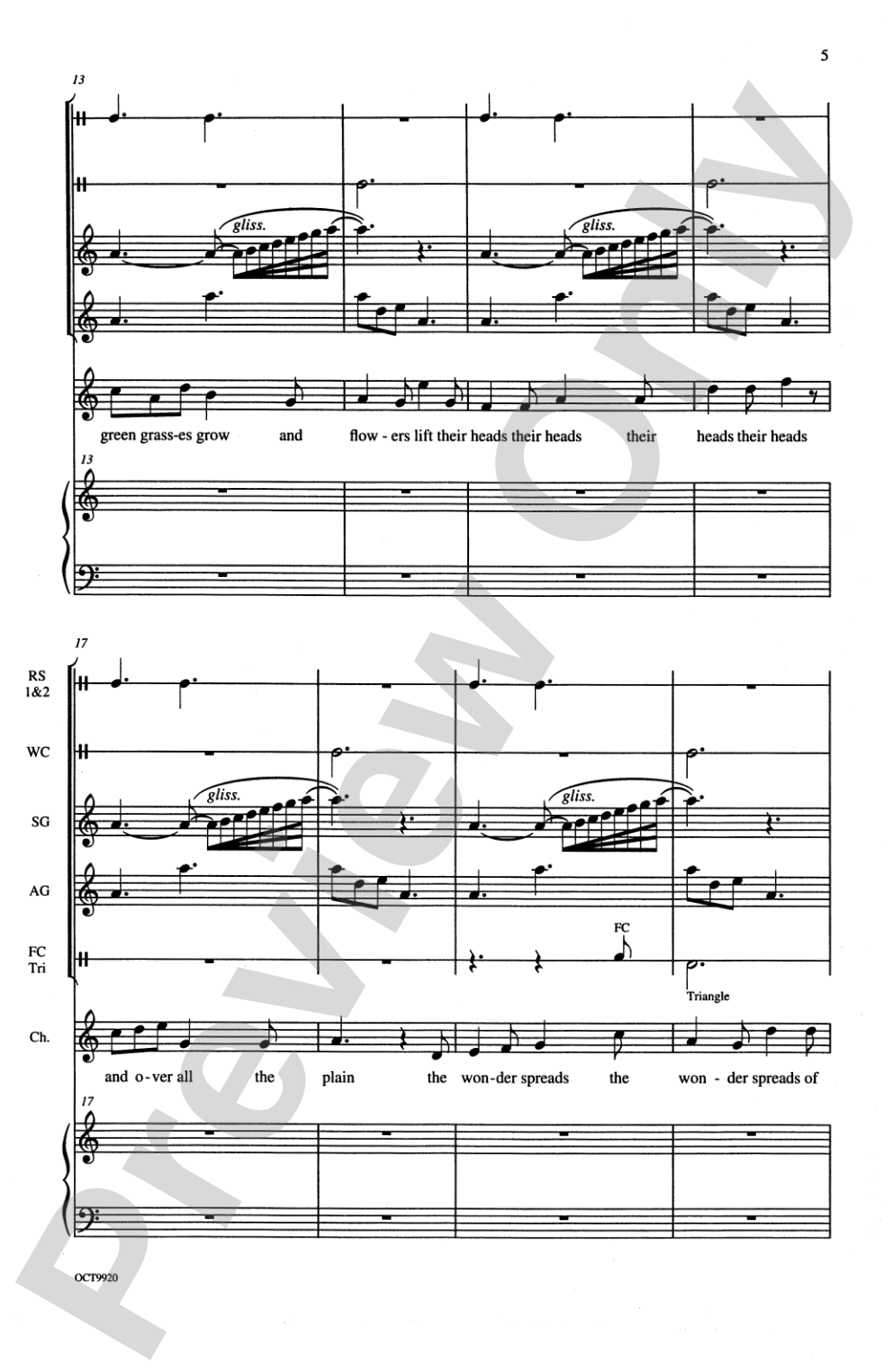

In Time of Silver Rain: Children's and SATB Choral Octavo
Text by Langston Hughes, music by Dave Brubeck
Item: 00-PO-0005162
$2.95
Minimum order quantity: 20 copies
Pickup currently not available
Description
This wonderful piece by Dave Brubeck is part of a series of titles taken from his larger work, "I Dream a World." Brubeck, in his world-famous musical style, has brought to life the powerful poetic text by Langston Hughes. In the world today, where we dream of a world of peace and harmony, the pieces are a joy to every soul that hears them. Although this work is a bit challenging, Brubeck does a wonderful job of making contemporary music accessible to choirs.


In Time of Silver Rain: Children's and SATB Choral Octavo isn't in MakeMusic Cloud just yet...but it could be. Let us know you'd like to see it, and you'll help shape what comes next. In the meantime, start a free trial and dive into thousands of interactive titles your students can play along with today.
Request This Title
Tell us you want it.
Start Your Free Trial
Explore everything that's ready to play right now.
Sample Audio
No sample audio found.
Sample Video
No sample videos found.
Additional Details
Series:
Lawson-Gould: The Dave Brubeck Series
Publisher:
Alfred Music
Page Count:
16
SKU:
00-PO-0005162
More about this title
About the Composer: Dave Brubeck
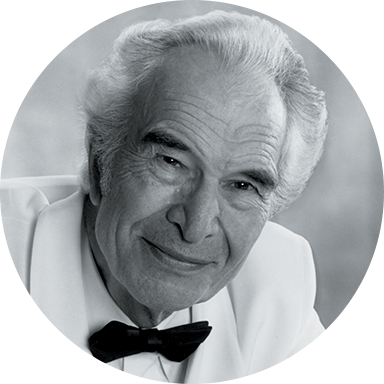
Dave Brubeck built his legacy as both a jazz innovator and a classically trained composer who refused to separate these identities. His improvisational brilliance as a pianist found its way into fully notated works spanning choral pieces, orchestral compositions, chamber music, and large-scale works for chorus and orchestra. Studying under Darius Milhaud after World War II, Brubeck developed a distinctive voice that wove jazz language into classical forms, earning him recognition far beyond the jazz world.
Brubeck's cultural impact extended beyond his music. He championed racial integration in the mid-20th century at considerable personal risk, and his album "Time Out" became the first jazz recording to sell over a million copies. His sacred works, including the widely performed mass "To Hope!" and oratorios such as "The Voice of the Holy Spirit" and "Beloved Son," have been recorded by major orchestras and performed internationally. Throughout his career, Brubeck received the Presidential Medal of the Arts, a Grammy Lifetime Achievement Award, induction into the American Classical Music Hall of Fame, and recognition from institutions including the London Symphony Orchestra.
Why we love this
Brubeck brings his signature harmonic sophistication to Langston Hughes's text without overwhelming younger voices. The piece sits at that rare intersection where contemporary classical writing feels genuinely singable, allowing choirs to explore jazz-inflected voicing and chromatic movement while remaining rooted in accessible ranges and part writing.
What to expect
The piece unfolds with quiet dignity, Hughes's words on peace and harmony finding expression in Brubeck's warm, gently dissonant harmonies. There is an undercurrent of hope tempered by realism, as if the music itself believes in the dream while acknowledging the world's complexity.
Who it's for
This dual-voicing octavo serves choirs with both adult SATB singers and children's voices, or programs flexible enough to perform either arrangement depending on available singers. It appeals to directors seeking contemporary sacred music that honors both accessibility and artistic integrity, particularly those drawn to Brubeck's jazz-informed harmonic language.
How to get the most out of it
- Balance the SATB parts against the children's choir so neither drowns the other; rehearse them separately before combining to establish secure intonation in each group
- Attend to Brubeck's harmonic colors by listening for suspended chords and unexpected resolutions; these moments deserve slight space and clarity rather than rushed phrasing
- Work the text of Hughes's poetry for emotional specificity; the piece's accessibility comes partly from how singers understand and convey the meaning beneath the surface
- Conduct with attention to subtle rhythmic displacements that Brubeck often employs; precise ensemble work will reveal the sophistication of what can sound deceptively straightforward
How to use it
Program this as a meaningful centerpiece for services or concerts exploring themes of social justice and human connection. Its moderate difficulty and dual scoring make it an excellent bridge between children's and adult choral programming, allowing you to build a concert that brings multiple age groups into musical dialogue.
Skills your students will build
- Reading and executing jazz-influenced harmonies and voice leading
- Intonation in contemporary music with chromatic voice movement and suspended chords
- Interpretive singing that honors poetic text with musical sensitivity
- Ensemble blend when combining children's voices with adult SATB voices
- Understanding of how contemporary classical composition can remain singable and expressive